
In the rapidly evolving landscape of digital assets and decentralized finance, few companies have managed to capture the attention of institutional and retail investors quite like CleanSpark, Inc. (Nasdaq: CLSK). Often referred to as “America’s Bitcoin Miner,” CleanSpark has transitioned from a specialized energy software company into one of the largest and most efficient publicly traded Bitcoin mining operations in the world. For investors looking to gain exposure to the cryptocurrency sector without holding the underlying assets directly, CleanSpark represents a sophisticated bridge between traditional equity markets and the high-growth potential of the digital economy.

Understanding CleanSpark requires more than just a surface-level knowledge of Bitcoin; it necessitates an analysis of energy economics, infrastructure scalability, and the strategic financial management required to thrive in a volatile market. As the company continues to expand its “hashrate”—the computational power used to mine Bitcoin—it has positioned itself as a titan of industrial-scale computing, powered by a commitment to renewable energy and operational efficiency.
The Strategic Pivot: How CleanSpark Redefined Its Business Model
CleanSpark was not always the Bitcoin mining powerhouse it is today. Founded originally with a focus on advanced energy software and microgrid technology, the company’s mission was to provide turnkey solutions for power resiliency and energy cost management. This foundational expertise in energy proved to be the ultimate competitive advantage when the company made a strategic pivot toward Bitcoin mining in late 2020.
The decision to enter the mining space was a calculated financial move. Bitcoin mining is essentially the process of converting electricity into a digital store of value. By leveraging its proprietary energy software, CleanSpark realized it could optimize its mining rigs to run more efficiently than its competitors, significantly lowering its cost of production. This transition shifted CleanSpark from a service-based technology provider to an asset-heavy industrial operator with a balance sheet dominated by digital assets and high-performance hardware.
From an investment perspective, this pivot transformed CLSK stock into a “proxy” for Bitcoin. However, unlike many of its peers who struggled during “crypto winters,” CleanSpark’s background in energy management allowed it to maintain higher margins. The company’s ability to manage “load-balancing”—adjusting energy consumption in real-time based on grid demand—has allowed it to secure incredibly low power costs, which is the single most important factor in the long-term profitability of a mining enterprise.
The Financial Engine of Bitcoin Mining: Efficiency and Scale
To understand the value proposition of CleanSpark, one must look at the specific financial metrics that govern the mining industry. In the world of business finance, mining is a race to the bottom in terms of cost and a race to the top in terms of computational power.
The Importance of Hashrate and Fleet Efficiency
CleanSpark’s growth is measured primarily through its hashrate, expressed in exahashes per second (EH/s). This represents the total number of guesses the company’s computers can make every second to solve the Bitcoin algorithm. As of 2024, CleanSpark has aggressively scaled its operations, targeting a hashrate that puts it in the top tier of global miners.
However, hashrate alone does not tell the whole story. The “efficiency” of that hashrate—measured in joules per terahash (J/TH)—is what determines the profit margin. CleanSpark has consistently invested in “fleet upgrades,” replacing older, less efficient machines with the latest hardware from manufacturers like Bitmain. By operating a modern, highly efficient fleet, CleanSpark can produce more Bitcoin for every dollar spent on electricity, providing a cushion against price volatility in the Bitcoin market.
Revenue Generation and the HODL Strategy
CleanSpark generates revenue primarily by earning Bitcoin rewards for securing the network. A critical component of their financial strategy is their “treasury management.” Like many top-tier miners, CleanSpark employs a “HODL” strategy (Hold On for Dear Life), where they retain a significant portion of the Bitcoin they mine on their balance sheet.
For investors, this creates a dual-value proposition. When you buy shares of CleanSpark, you are investing in:
- Operating Cash Flow: The company’s ability to mine Bitcoin at a cost significantly below the market price.
- Asset Appreciation: The value of the Bitcoin held in the company’s treasury, which appreciates if the price of Bitcoin rises.
This strategy requires a delicate balance. The company must sell enough Bitcoin to cover its operational expenses and expansion costs while retaining enough to benefit from future price appreciation. CleanSpark’s management has been widely praised for its disciplined approach to this “at-the-market” (ATM) equity strategy, using stock offerings to fund growth during bull markets to avoid taking on high-interest debt.
Infrastructure and Energy: The Sustainable Competitive Advantage
One of the most significant criticisms of Bitcoin mining is its environmental impact. CleanSpark has tackled this head-on by branding itself as a leader in sustainable mining. This is not just a marketing tactic; it is a core business strategy that impacts the bottom line.
Ownership of Physical Assets
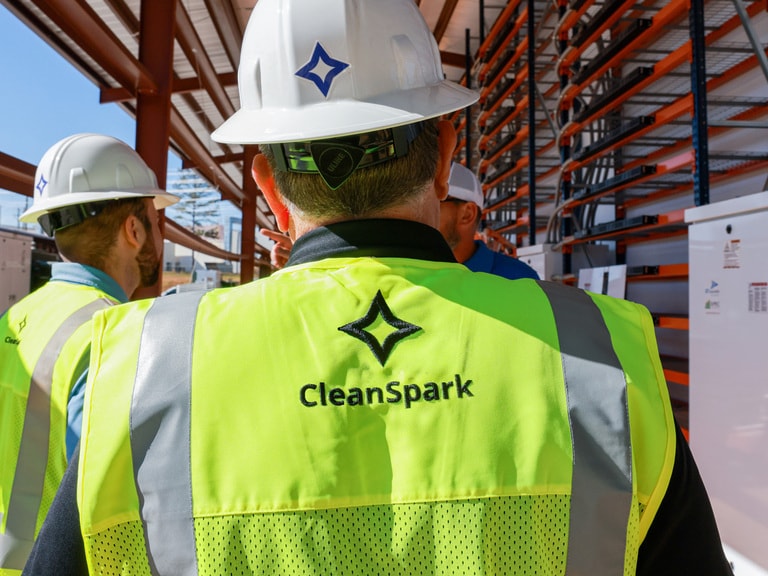
Unlike many miners who host their machines in third-party data centers, CleanSpark focuses on a “wholly owned” infrastructure model. They own the land, the buildings, and the power substations. This vertical integration allows for better control over costs and operational uptime. Their facilities in Georgia and Mississippi are prime examples of this, where they have integrated deeply with local utilities to utilize excess energy, often from carbon-free sources like nuclear and hydroelectric power.
Economic Impact and Grid Stability
CleanSpark’s financial model also relies on being a “good citizen” of the energy grid. Through “demand response” programs, CleanSpark can shut down its mining operations during periods of peak demand (such as heatwaves or winter storms) and sell its power back to the grid. This creates an additional revenue stream and lowers the overall cost of power. By acting as a flexible load, CleanSpark helps stabilize energy prices for local communities, which in turn secures long-term political and regulatory support for their operations.
Investing in CLSK: Market Dynamics and the Bitcoin Halving
For any investor considering CleanSpark, it is essential to understand the “Bitcoin Halving”—a programmatic event that occurs every four years, cutting the reward for mining Bitcoin in half. The most recent halving in 2024 significantly increased the difficulty of the mining business, as revenue (in Bitcoin terms) was slashed overnight.
Survival of the Fittest
The halving acts as a “cleansing” event for the industry, forcing inefficient miners with high power costs or outdated hardware out of business. CleanSpark prepared for this event by aggressively acquiring smaller, struggling mining firms and upgrading their infrastructure. This “consolidation” strategy has allowed CleanSpark to increase its market share even as the total rewards available to the industry decreased.
From a financial analysis perspective, CleanSpark is often viewed as a “compounding” machine. Because they have some of the lowest power costs in the industry (averaging below $0.05 per kWh in many locations), they remain profitable even when Bitcoin’s price dips. This resilience makes CLSK an attractive option for institutional investors like BlackRock and Vanguard, both of whom have taken significant positions in the company.
Stock Performance and Correlation
CLSK stock typically exhibits “high beta” relative to Bitcoin. This means that when Bitcoin’s price moves up 5%, CLSK might move up 10% or 15%. This volatility offers significant upside for active traders and growth-oriented investors. However, it also means that during market corrections, the stock can face sharp drawdowns. Prospective investors must evaluate CleanSpark not just as a technology stock, but as a specialized commodity producer whose “product” is a volatile digital asset.
Future Outlook: Scaling to the Next Frontier
The future of CleanSpark is defined by its ambitious growth targets. The company has laid out a roadmap to reach 50 EH/s and beyond in the coming years. Achieving this will require continued capital expenditure, strategic acquisitions, and the maintenance of their lean operational model.
Beyond just mining, there is growing speculation and potential for CleanSpark to enter the “AI Data Center” space. High-performance computing (HPC) for Artificial Intelligence requires similar infrastructure to Bitcoin mining: massive power capacity, advanced cooling systems, and high-speed connectivity. While Bitcoin remains the primary focus, CleanSpark’s existing real estate and power permits represent a valuable “optionality” for the company to diversify into other forms of industrial computing if the market dynamics shift.
In conclusion, CleanSpark is more than just a participant in the cryptocurrency craze; it is a sophisticated financial and industrial enterprise. By combining advanced energy management with a disciplined approach to capital markets and a commitment to sustainable infrastructure, it has built a formidable moat in one of the world’s most competitive industries. For the investor seeking exposure to the future of money, CleanSpark offers a compelling narrative of efficiency, scale, and strategic foresight in the digital age.
aViewFromTheCave is a participant in the Amazon Services LLC Associates Program, an affiliate advertising program designed to provide a means for sites to earn advertising fees by advertising and linking to Amazon.com. Amazon, the Amazon logo, AmazonSupply, and the AmazonSupply logo are trademarks of Amazon.com, Inc. or its affiliates. As an Amazon Associate we earn affiliate commissions from qualifying purchases.