
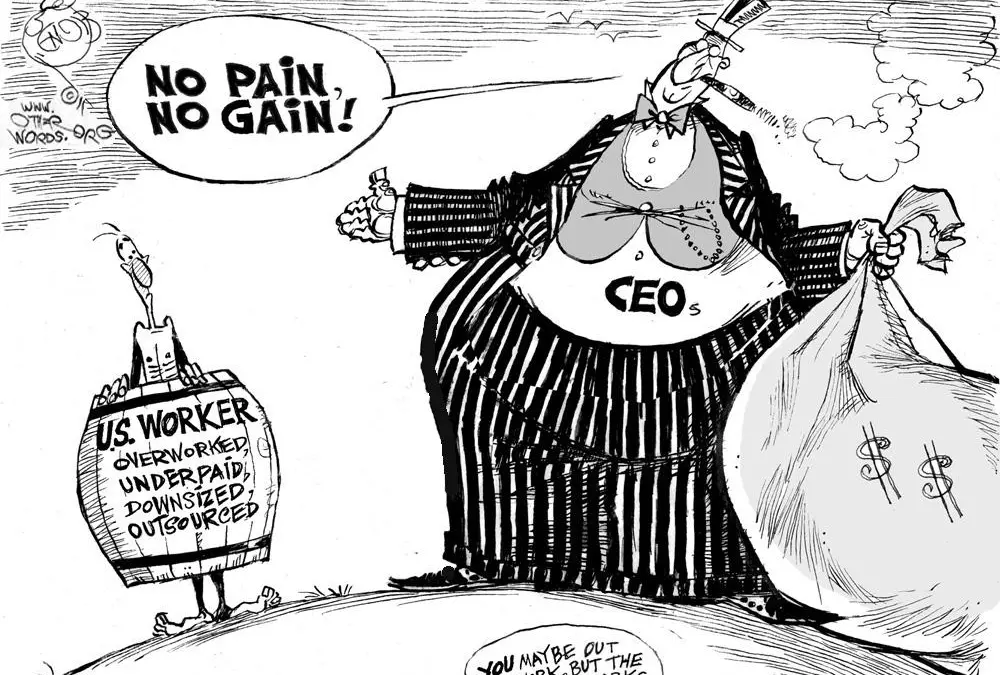
In the modern financial landscape, the term “class warfare” is often dismissed as a provocative political slogan or an outdated relic of 19th-century sociology. However, when viewed through the lens of personal finance, macroeconomics, and investment strategy, class warfare represents a very real and persistent struggle over the distribution of resources, the influence of policy on wealth accumulation, and the structural barriers that separate those who work for money from those whose money works for them.
At its core, class warfare is the tension between different economic strata regarding the laws, taxes, and market structures that govern wealth. For the modern investor or business owner, understanding this dynamic is not just a matter of social awareness; it is a fundamental requirement for navigating a financial system where the rules of the game are often tilted in favor of those with existing capital.
The Core Mechanics: Capital, Labor, and the Wealth Gap
To understand class warfare in a financial context, one must first understand the fundamental divide between “Capital” and “Labor.” This is the primary fault line upon which most economic conflict is built.
Defining the Modern Economic Classes
In a strictly financial sense, the “classes” are no longer defined by titles of nobility, but by their relationship to the means of production. On one side is the Labor class—individuals who derive the vast majority of their income from selling their time and skills. This includes everyone from hourly service workers to high-earning professionals like surgeons or corporate lawyers. If they stop working, their income stops.
On the other side is the Capital class—individuals and entities that derive their primary income from assets. This includes business owners, real estate moguls, and institutional investors. For this group, wealth is self-propagating; the return on invested capital (ROIC) generates the cash flow required to live and reinvest, creating a virtuous cycle of growth that does not require their physical presence or time.
The Velocity of Wealth vs. the Stagnation of Wages
Class warfare manifests most clearly in the widening gap between productivity and compensation. Since the late 1970s, productivity in most developed economies has surged due to technological advancement, yet real wages for the average worker have remained relatively stagnant. The “surplus value” generated by this increased efficiency has flowed almost exclusively to the owners of capital in the form of dividends, stock buybacks, and increased corporate valuations.
When the cost of living—specifically housing, education, and healthcare—outpaces wage growth, the labor class experiences a decline in purchasing power. This leads to a systemic friction where the “Money” category of society thrives during bull markets, while the “Labor” category struggles to maintain a baseline standard of living.
Systemic Engines of Class Warfare in the 21st Century
The struggle for economic dominance is rarely fought with physical weapons; instead, it is fought through tax codes, monetary policy, and regulatory frameworks. These systemic engines determine how wealth is transferred and who bears the burden of economic downturns.
Tax Policy and Capital Gains Elitism
One of the most significant battlefronts in modern class warfare is the disparity between how labor is taxed versus how capital is taxed. In many jurisdictions, the highest marginal tax rate on earned income (wages) is significantly higher than the tax rate on long-term capital gains or dividends.
This creates a structural advantage for the wealthy. An investor living off a $1 million annual dividend yield may pay a lower effective tax rate than a senior manager earning $200,000 in salary. This “Capital Gains Elitism” ensures that wealth remains concentrated at the top, as those with existing assets can compound their gains more efficiently than those trying to build wealth from a paycheck.
The Role of Inflation and “Hidden” Wealth Transfers
Inflation is often described as a “hidden tax,” but its impact is not felt equally across all classes. In fact, inflation can be viewed as a tool of class warfare that redistributes wealth from savers (the middle class) to debtors and asset owners (the wealthy and the government).
When the central bank increases the money supply, the first recipients of that new money—usually large banks and financial institutions—can spend or invest it before prices have risen. By the time the money trickles down to the general public, its purchasing power has diminished. Furthermore, inflation devalues the “nominal” value of debt. Since the wealthy often use low-interest leverage to acquire appreciating assets, inflation allows them to pay back their debts with “cheaper” dollars while their assets (real estate, stocks) soar in value.
The Financial Industry’s Impact: Access to Opportunity

The financial services industry often acts as the gatekeeper of wealth. Class warfare in this sector is defined by who is allowed to participate in high-return opportunities and who is relegated to low-yield, high-fee products.
Barriers to Entry in Sophisticated Investing
For decades, the concept of “Accredited Investors” has served as a regulatory wall. To participate in private equity, venture capital, or hedge funds—asset classes that often outperform the public markets—an individual must meet specific net worth or income thresholds. While these regulations are framed as “investor protection,” they effectively ensure that the most lucrative wealth-building vehicles are reserved for those who are already wealthy.
This creates a bifurcated investment world. The average person is encouraged to put their money into highly liquid, volatile public markets or low-interest savings accounts, while the upper echelon of the “Money” class has access to the “alpha” found in private markets, early-stage startups, and complex tax-advantaged structures.
Debt as a Tool of Economic Suppression
While the wealthy use debt as “leverage” to multiply their returns, the lower and middle classes are often encouraged to use debt for consumption. From high-interest credit cards to predatory payday loans and the burgeoning “Buy Now, Pay Later” (BNPL) industry, debt is frequently used to extract wealth from the labor class.
When a significant portion of a household’s income is dedicated to servicing interest, their ability to transition from Labor to Capital is effectively neutralized. In this sense, the financialization of the economy has turned debt into a modern mechanism of class containment, keeping individuals tied to the treadmill of work to satisfy creditors.
Strategies for Individual Economic Sovereignty
While the macro forces of class warfare may seem overwhelming, the field of personal finance offers a roadmap for individuals to navigate and transcend these systemic barriers. Achieving economic sovereignty requires a shift in mindset from being a participant in the labor market to becoming a participant in the capital market.
Building Assets to Escape the Labor Trap
The only definitive way to win the “class war” on a personal level is to aggressively transition one’s income source from labor to assets. This involves prioritizing the acquisition of income-producing assets—such as dividend-paying stocks, rental properties, or small business interests—above lifestyle inflation.
By focusing on the “Buy and Hold” philosophy and utilizing tax-advantaged accounts (like IRAs or 401ks), individuals can begin to benefit from the same compounding effects that the capital class utilizes. The goal is to reach a “crossover point” where your investment income exceeds your living expenses, effectively liberating you from the fluctuations of the labor market.
Diversification as a Hedge Against Systemic Instability
In an era of political and economic volatility, diversification is more than just a portfolio strategy; it is a defense mechanism. Class warfare often leads to sudden shifts in policy, such as “wealth taxes,” changes in inheritance laws, or aggressive monetary tightening.
A sophisticated approach to money management involves diversifying not just across asset classes, but across jurisdictions and “types” of wealth. This includes holding physical assets (gold, real estate), digital assets (Bitcoin), and international equities. By spreading risk, an individual reduces their vulnerability to the specific legislative or economic “attacks” that may target one class or another in a specific country.
The Future of Economic Conflict: Digital Assets and Decentralization
As we move further into the digital age, the battlefield of class warfare is shifting toward the infrastructure of money itself. The rise of decentralized finance (DeFi) and blockchain technology represents a potential disruption to the traditional class hierarchy.

Will DeFi Bridge the Gap or Widen It?
The promise of decentralized finance is “permissionless” access to financial tools. In a DeFi ecosystem, there are no “accredited investor” rules; anyone with an internet connection can provide liquidity, earn interest, or access collateralized loans. This has the potential to democratize the wealth-building tools that were previously reserved for the elite.
However, there is also the risk that those with the most “digital capital” and technical literacy will simply replicate the old class structures in a new environment. If the barrier to entry shifts from “wealth” to “high-level technical knowledge,” a new class of “techno-capitalists” may emerge, leaving the traditional labor class even further behind.
In conclusion, class warfare is not merely a social grievance; it is the fundamental underlying tension of the global financial system. By understanding the mechanics of how wealth is created, protected, and transferred, individuals can better position themselves to thrive. Whether through aggressive asset accumulation, tax-efficient planning, or the adoption of new financial technologies, the path to financial freedom lies in recognizing the rules of the game and moving from the side of Labor to the side of Capital.
aViewFromTheCave is a participant in the Amazon Services LLC Associates Program, an affiliate advertising program designed to provide a means for sites to earn advertising fees by advertising and linking to Amazon.com. Amazon, the Amazon logo, AmazonSupply, and the AmazonSupply logo are trademarks of Amazon.com, Inc. or its affiliates. As an Amazon Associate we earn affiliate commissions from qualifying purchases.