
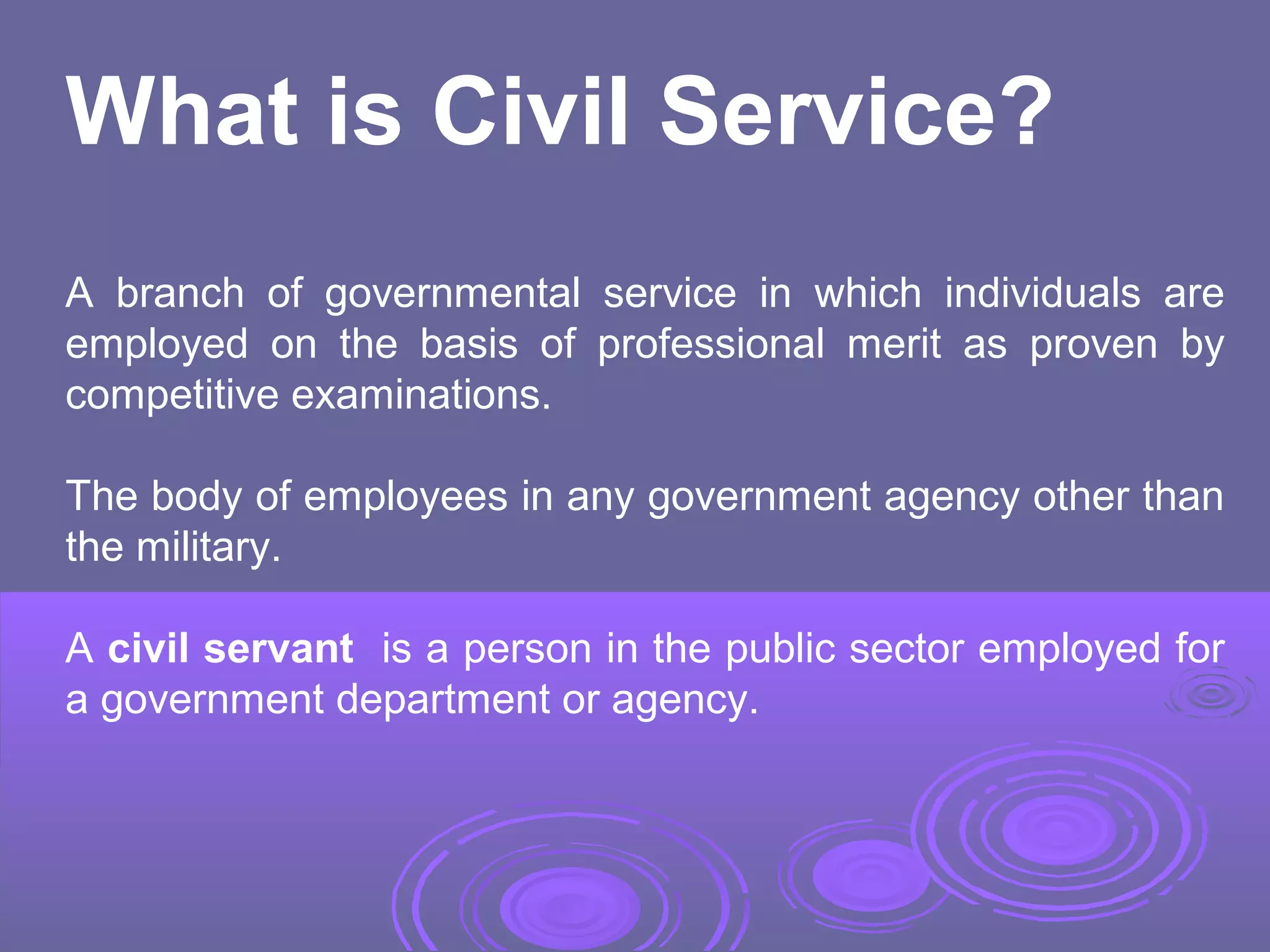
Civil service protection refers to the legal and procedural safeguards that shield public employees from arbitrary dismissal, undue political influence, and unfair treatment. It is a cornerstone of a stable and effective public administration, ensuring that government operations are carried out by individuals who are hired, promoted, and retained based on merit, competence, and adherence to established rules and regulations, rather than personal connections or partisan affiliations. This system is designed to foster a professional, impartial, and dedicated public workforce, capable of serving the public interest without fear of reprisal for performing their duties diligently and ethically.

The concept of civil service protection is deeply rooted in the principles of meritocracy and good governance. Historically, public employment was often characterized by patronage and spoils systems, where government positions were distributed as rewards to political supporters. This led to inefficiency, corruption, and a lack of continuity in government services. The advent of civil service reform movements, particularly in the late 19th and early 20th centuries, aimed to professionalize government by establishing systems that prioritized qualifications, experience, and ethical conduct. Civil service protection is the tangible manifestation of these reforms, providing a framework that balances the need for accountability with the imperative of a secure and stable public service.
The Foundational Pillars of Civil Service Protection
At its core, civil service protection is built upon several key principles that delineate the rights and responsibilities of public employees and their employers. These pillars ensure fairness, transparency, and due process in the management of the civil service.
Merit-Based Employment and Advancement
The most fundamental aspect of civil service protection is the commitment to merit-based employment. This means that individuals are hired and promoted based on their qualifications, skills, and abilities, as demonstrated through objective selection processes such as competitive examinations, structured interviews, and thorough background checks. Political affiliation, personal connections, or favoritism are explicitly excluded as criteria for hiring and promotion. This ensures that the most competent individuals are placed in positions where they can best serve the public.
Tenure and Security of Employment
A significant component of civil service protection is the concept of tenure, which grants public employees a degree of job security. Once an individual has successfully completed an probationary period, they generally cannot be dismissed without cause. This cause must be based on legitimate reasons, such as poor performance, misconduct, or the abolition of a position due to budgetary or organizational changes. This security is not absolute, but it requires that any adverse action taken against an employee be supported by evidence and follow a defined procedural framework.
Protection Against Political Coercion and Patronage
Civil service protection is designed to insulate public employees from political pressure and interference in their day-to-day work. This includes prohibitions against using one’s official position for political campaigning, soliciting political contributions from subordinates, or engaging in partisan political activities while on duty. The aim is to foster an impartial civil service that serves all citizens equally, regardless of their political leanings. This protection is crucial for maintaining public trust in government institutions.
Procedural Safeguards and Due Process
Beyond the underlying principles, civil service protection is operationalized through a robust set of procedural safeguards that guarantee fair treatment and due process for public employees facing disciplinary actions or potential termination. These procedures are designed to prevent arbitrary decisions and ensure that employees have an opportunity to defend themselves.
The Right to Notice and Hearing

When a public employee is accused of misconduct or faces potential dismissal, they are typically entitled to receive formal notice of the charges against them. This notice should be specific and detailed, outlining the alleged infractions. Following the notice, the employee usually has the right to a hearing or an opportunity to present their case, respond to the allegations, and provide evidence in their defense. This hearing may be conducted by an internal review board, an administrative law judge, or another designated authority.
Appeals Processes and Review Mechanisms
Civil service protection mechanisms often include formal appeals processes. If an employee believes that a disciplinary action or termination was unjust, arbitrary, or not supported by evidence, they have the right to appeal the decision. This appeal may be heard by a higher level within the employing agency or by an independent civil service commission or tribunal. These review bodies are tasked with examining the evidence, ensuring that proper procedures were followed, and making a final determination on the validity of the action taken.
Protection from Retaliation and Whistleblower Protections
A critical aspect of civil service protection is safeguarding employees who report waste, fraud, abuse, or illegal activities within their agencies. Whistleblower protection laws are designed to shield these individuals from retaliation, such as demotion, reassignment, or termination, for bringing such matters to light. This encouragement of transparency and accountability is vital for maintaining the integrity of public service and preventing systemic problems.
The Benefits and Challenges of Civil Service Protection
The implementation of civil service protection systems yields significant benefits for both public employees and the broader society. However, these systems are not without their challenges, and ongoing efforts are often required to ensure their effectiveness and adaptability.
Enhancing Public Trust and Government Effectiveness
By ensuring that public positions are filled by qualified and impartial individuals, civil service protection contributes to public trust in government. When citizens know that services are delivered by competent professionals who are not swayed by political winds, they are more likely to have confidence in their government. Furthermore, the stability and continuity provided by job security allow public servants to focus on long-term planning and effective service delivery, free from the distractions of constant political flux.
Fostering Professionalism and Morale
The assurance of fair treatment and job security can significantly boost the morale and professionalism of public employees. Knowing that their career progression is based on merit and that they will not be dismissed without just cause can lead to greater job satisfaction and commitment to public service. This environment encourages employees to develop their skills, take initiative, and contribute to the efficiency and effectiveness of government operations.
Navigating Bureaucratic Inertia and Accountability Issues
Despite its many advantages, civil service protection can sometimes present challenges. One concern is the potential for bureaucratic inertia, where the stringent procedures required for dismissal or disciplinary action can make it difficult to remove underperforming or problematic employees. This can create a perception of a lack of accountability. Striking the right balance between providing adequate protection and ensuring that public servants are held accountable for their actions is an ongoing challenge for many civil service systems.
Adapting to Modern Governance Demands
In an era of rapid technological change and evolving public service needs, civil service protection systems must also adapt. Ensuring that hiring and promotion processes can efficiently identify and recruit individuals with the necessary modern skills, such as digital literacy and data analysis, is crucial. Furthermore, systems must remain flexible enough to accommodate new forms of work, such as project-based assignments and interagency collaboration, while still upholding the core principles of fairness and protection. Continuous review and modernization of civil service regulations and practices are therefore essential to maintain a relevant and effective public service.
aViewFromTheCave is a participant in the Amazon Services LLC Associates Program, an affiliate advertising program designed to provide a means for sites to earn advertising fees by advertising and linking to Amazon.com. Amazon, the Amazon logo, AmazonSupply, and the AmazonSupply logo are trademarks of Amazon.com, Inc. or its affiliates. As an Amazon Associate we earn affiliate commissions from qualifying purchases.