
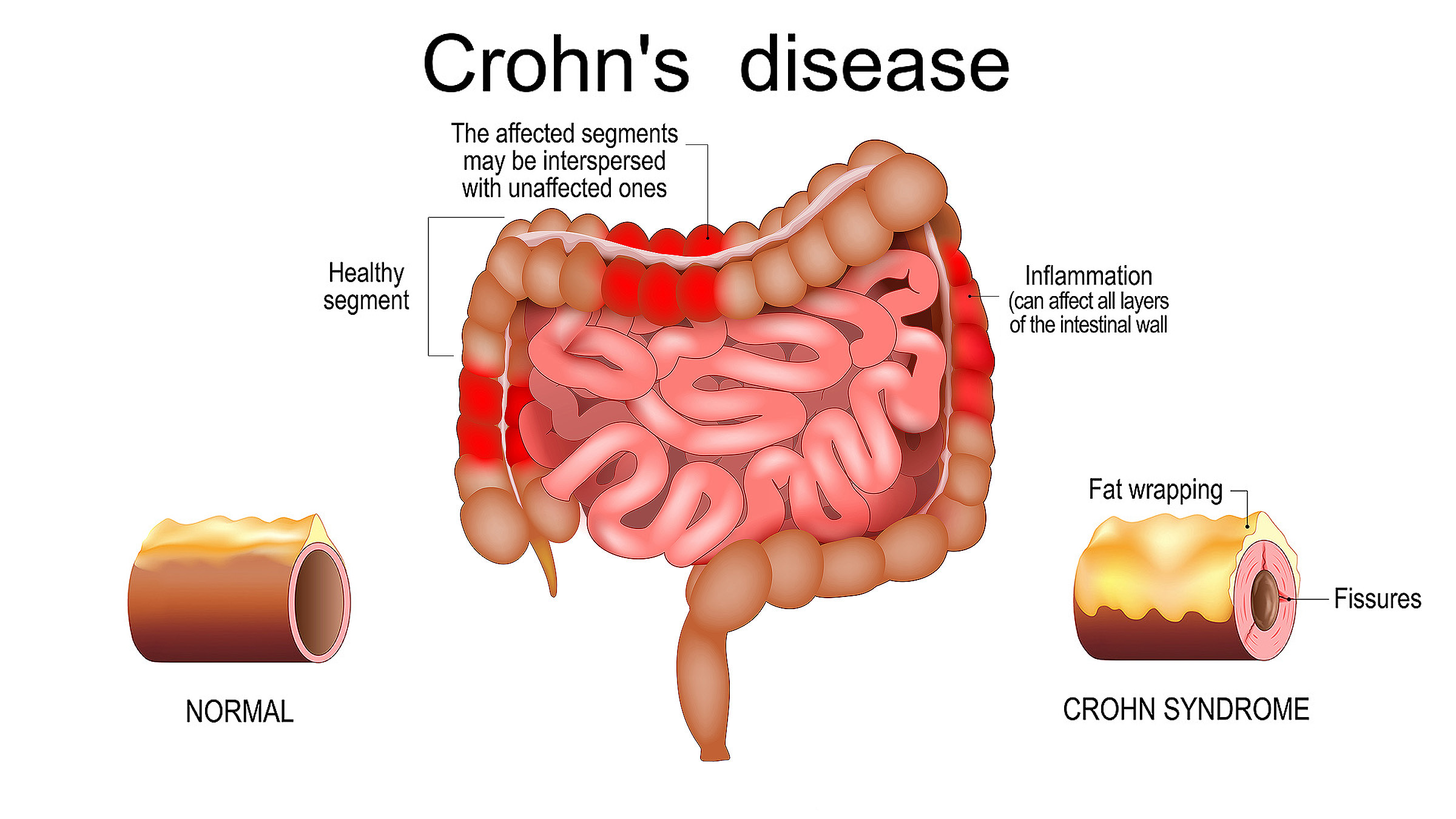
For decades, the medical community viewed Crohn’s disease—a chronic inflammatory bowel disease (IBD)—primarily through the lens of traditional pathology and clinical observation. However, in the contemporary landscape of health-tech, the question “What is Crohn’s disease?” has evolved. Today, it is increasingly defined by data points, algorithmic predictions, and high-tech interventions. The integration of artificial intelligence (AI), wearable sensors, and big data analytics is transforming Crohn’s from a mysterious, unpredictable condition into a manageable digital health challenge.
In this deep dive, we explore how the technology sector is redefining the patient experience, enhancing diagnostic accuracy, and pioneering the next generation of precision medicine for those living with IBD.
The AI Revolution in Endoscopy and Diagnostics
The diagnostic journey for Crohn’s disease has historically been invasive and subjective, relying heavily on the human eye during endoscopic procedures. Technology is fundamentally changing this by introducing layers of computational precision that surpass human visual limits.
Computer-Aided Detection (CADe) and Diagnosis (CADx)
One of the most significant breakthroughs in gastrointestinal tech is the implementation of Computer-Aided Detection (CADe). During a colonoscopy, AI algorithms work in real-time, scanning video feeds for subtle mucosal changes, ulcers, or strictures that might indicate Crohn’s activity. These software tools use deep learning models trained on millions of clinical images to flag abnormalities with a high degree of sensitivity. By reducing “miss rates,” AI ensures that the early stages of the disease are identified long before they escalate into surgical emergencies.
Machine Learning in Histopathology
Once a biopsy is taken, the technological intervention continues in the lab. Digital pathology platforms now utilize machine learning to analyze tissue samples at the cellular level. These AI tools can quantify the degree of inflammation and identify specific architectural changes in the gut wall that define Crohn’s. By automating the grading process, technology eliminates the inter-observer variability that often occurs between different human pathologists, providing a standardized “digital fingerprint” of the patient’s disease state.
The Rise of Capsule Endoscopy and AI Integration
The “PillCam” or video capsule endoscopy has been a staple of IBD tech for years, but its biggest limitation was the hours of footage a doctor had to manually review. Modern software solutions now use AI to automatically edit these videos, skipping over non-diagnostic segments and highlighting only the areas of concern. This drastic reduction in review time allows clinicians to focus on treatment strategy rather than data processing.
Wearable Technology and Remote Patient Monitoring (RPM)
The management of Crohn’s disease is shifting from the clinic to the home. In the tech world, this is known as the shift toward “Digital Biomarkers”—measurable data points collected via hardware that provide a continuous view of a patient’s health.
Smart Pills and In-Vivo Biosensors
The frontier of IBD tech lies in “smart pills”—ingestible sensors that do more than just take pictures. New prototypes are designed to measure gas concentrations (such as hydrogen or methane) and pH levels within the intestinal tract in real-time. This data is transmitted to a smartphone app, providing an internal look at the gut microbiome and inflammatory markers. For a Crohn’s patient, this means the ability to detect a “flare” at the molecular level days or weeks before physical symptoms actually manifest.
Digital Symptom Tracking and Predictive Analytics
The proliferation of mobile health (mHealth) apps has turned the smartphone into a powerful diagnostic tool. Advanced platforms now integrate patient-reported outcomes (PROs) with data from consumer wearables like the Apple Watch or Oura Ring. By monitoring heart rate variability (HRV), sleep patterns, and physical activity, predictive algorithms can identify the physiological stress signals associated with systemic inflammation. This creates a “Personalized Early Warning System,” allowing patients to adjust their medication or diet in consultation with their doctors before a full relapse occurs.
Telemedicine and Virtual Specialized Care
Digital security and high-speed connectivity have enabled a new era of decentralized care. Remote Patient Monitoring (RPM) platforms allow GI specialists to track their patients’ vitals and lab results through secure, cloud-based dashboards. This technological infrastructure is particularly vital for Crohn’s patients living in rural areas, ensuring that specialized care is no longer gated by geography.

The Role of Big Data and Precision Medicine
Perhaps the most ambitious intersection of tech and Crohn’s disease is the move toward precision medicine. In this context, “What is Crohn’s disease?” is answered through large-scale data integration, or “Omics.”
Genomic Sequencing and Bioinformatics
Crohn’s is a polygenic disease, meaning it involves hundreds of different genetic variations. Tech-driven genomic sequencing allows researchers to map a patient’s entire DNA to identify specific susceptibility genes. Bioinformatics platforms then cross-reference this genetic data with protein expression (proteomics) and metabolic outputs (metabolomics). The result is a high-resolution model of the disease that allows tech-savvy clinicians to move away from a “trial and error” approach to medication, instead selecting biologics that are genetically most likely to work for that specific individual.
Blockchain for Secure Health Data Exchange
As the amount of sensitive health data grows, so does the need for robust digital security. Blockchain technology is being explored as a method for securing “EHR” (Electronic Health Records). By using a decentralized ledger, patients can have total ownership over their medical data while allowing researchers to access anonymized datasets for large-scale studies. This ensures that while the data is used to fuel AI training models, the privacy and security of the Crohn’s community remain uncompromised.
Digital Twins and Algorithmic Modeling
One of the most exciting trends in health-tech is the creation of a “Digital Twin”—a virtual model of a patient’s biological system. By feeding an algorithm a patient’s historical data, current inflammation levels, and lifestyle factors, researchers can run simulations to see how they might respond to a new drug or a specific surgical intervention. This “in silico” testing represents the pinnacle of computational biology, offering a glimpse into a future where the risks of Crohn’s treatment are mitigated by software simulation.
Future Frontiers: Robotics and Nanotechnology
The hardware of Crohn’s treatment is evolving just as fast as the software. We are moving into an era where micro-scale technology can perform tasks that were previously the stuff of science fiction.
Nanomedicine and Targeted Drug Delivery
One of the biggest challenges in treating Crohn’s is the systemic side effects of powerful immunosuppressants. Nanotechnology offers a solution through “smart” drug delivery systems. Engineers are developing nanoparticles that can be programmed to release their medicinal payload only when they encounter specific inflammatory enzymes in the gut. This localized delivery, managed by biochemical triggers, maximizes the efficacy of the drug while minimizing its impact on the rest of the body.
Robotic-Assisted Surgery for IBD
When complications like strictures or fistulas occur, surgery is often necessary. The introduction of robotic platforms like the Da Vinci system has revolutionized IBD surgery. These robots provide surgeons with 3D high-definition visualization and “wristed” instruments that have a greater range of motion than the human hand. For the Crohn’s patient, this translates to smaller incisions, less blood loss, and significantly faster recovery times—all enabled by cutting-edge mechanical engineering.
The Microbiome-on-a-Chip
In research labs, “Organ-on-a-Chip” technology is replacing animal testing. By microfluidically mimicking the environment of the human gut on a small silicone chip, tech companies can test how Crohn’s-affected tissue reacts to various stimuli or pathogens. This allows for rapid iteration in drug development, shortening the timeline from the lab to the pharmacy shelf.

Conclusion: The Tech-Enabled Future of Crohn’s Care
In the final analysis, “What is Crohn’s disease?” is no longer a question with a purely biological answer. In the modern era, it is a condition being solved by the convergence of software, hardware, and data science. From the AI that detects the first sign of an ulcer to the blockchain that protects a patient’s genetic profile, technology is the silent partner in the fight against IBD.
As we look toward the future, the boundary between the patient and the digital ecosystem will continue to blur. With the integration of AI-driven diagnostics, wearable monitoring, and precision genomics, the tech industry is not just helping patients live with Crohn’s—it is systematically re-engineering the way we understand, treat, and eventually, perhaps, cure the disease. For the millions of people affected, this technological evolution represents more than just “gadgets”; it represents a path toward a life defined not by their diagnosis, but by the data-driven freedom to live well.
aViewFromTheCave is a participant in the Amazon Services LLC Associates Program, an affiliate advertising program designed to provide a means for sites to earn advertising fees by advertising and linking to Amazon.com. Amazon, the Amazon logo, AmazonSupply, and the AmazonSupply logo are trademarks of Amazon.com, Inc. or its affiliates. As an Amazon Associate we earn affiliate commissions from qualifying purchases.