
The query “what is Chinese language” often conjures images of ancient characters and intricate tones. However, in the 21st century, understanding what the Chinese language is demands a deep dive into its digital representation, processing, and application within technology. Far from being a static linguistic system, Chinese language is a dynamic digital entity, continuously shaped by computational challenges and AI innovations. From encoding its vast character set to enabling real-time global communication, technology defines much of its modern essence and functionality.
Unpacking its Digital Foundations
To grasp Chinese language from a technological standpoint, one must first understand how its fundamental components are represented and managed within digital systems. Its unique logographic nature presents distinct challenges and opportunities compared to alphabetic languages.

The Anatomy of Chinese Characters in Computing
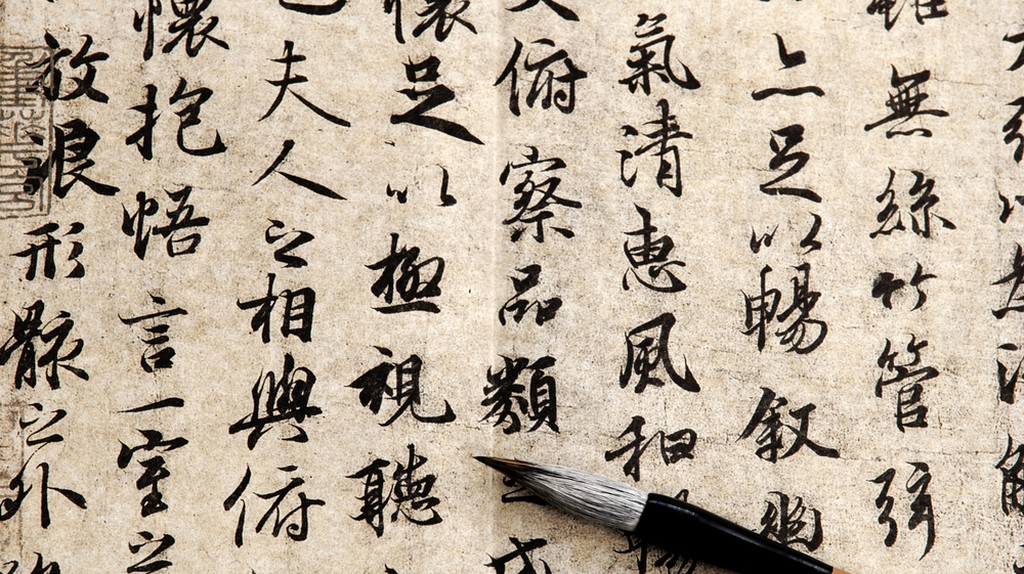
At its core, the Chinese language, particularly Mandarin, is defined by its characters, known as hànzì. Unlike the 26 letters of the Latin alphabet, the standard set of frequently used Chinese characters numbers in the thousands, with tens of thousands existing historically. In the digital realm, this sheer volume necessitates sophisticated encoding systems. Unicode, specifically UTF-8, has become the universal standard for representing these characters, assigning a unique numerical identifier to each one. This allows characters like “你好” (nǐ hǎo – hello) to be consistently rendered across diverse operating systems and applications worldwide. The structure of hànzì—often composed of radicals and strokes—further complicates its digital rendering, requiring robust font technologies that can accurately display their intricate details at various scales without loss of fidelity. The definition of a Chinese character, therefore, extends beyond its semantic meaning to its unique Unicode codepoint and the complex vector data required for its graphical representation.
Navigating Input: From Pinyin to Strokes
The process of inputting Chinese characters into digital devices is a crucial aspect of what the language is in a technological context. Since there isn’t a one-to-one mapping between keyboard keys and characters, various input methods have evolved, defining how users interact with the digital form of the language. The most prevalent method is Pinyin input, where users type the phonetic pronunciation of a character using the Latin alphabet. Sophisticated algorithms then present a list of homophonic characters, relying on contextual prediction and frequency analysis to suggest the most likely choice. This predictive capability is a defining feature, making the language experience intuitive despite its character complexity. Other methods include stroke-based input (Wubi, Cangjie) which allows users to reconstruct characters based on their graphic components, and handwriting recognition, where advanced neural networks interpret handwritten input. These input systems are not merely tools; they are an integral part of what the Chinese language is in digital form, bridging the gap between human intent and machine representation through intelligent algorithmic interpretation.
Chinese Language and the AI Frontier
The Chinese language poses a formidable, yet highly rewarding, challenge for artificial intelligence and natural language processing (NLP). Its characteristics necessitate advanced AI models to achieve meaningful comprehension and generation, defining the cutting edge of what the language is in terms of machine intelligence.
The Nuances of NLP for Mandarin
For AI, Chinese language is defined by its inherent complexities that differ significantly from many Indo-European languages. Firstly, Chinese is an analytic language with virtually no inflection, meaning words do not change form based on tense, number, or gender. This absence of morphological cues places a greater burden on word order and contextual understanding for meaning extraction. More critically for NLP, Chinese text typically lacks explicit word boundaries; sentences are written as continuous streams of characters. This requires AI systems to perform “word segmentation” as a foundational step, a non-trivial task that relies on statistical models and large corpora to identify meaningful units. Furthermore, Chinese is a tonal language, where the same Pinyin pronunciation can signify entirely different characters and meanings based on tone. This polysemy and homophony mean that AI must not only understand written characters but also infer meaning from context and, in speech processing, accurately distinguish tones. Thus, from an AI perspective, Chinese language is a complex system demanding advanced statistical, neural network, and deep learning architectures specifically tailored to these characteristics.
Advancements in Machine Translation and Speech Recognition

The Chinese language defines a benchmark for innovation in machine translation (MT) and speech recognition (SR). For MT, bridging the semantic and syntactic gaps between Chinese and other languages requires sophisticated neural machine translation (NMT) models. These models learn complex mappings between entire phrases and sentences, going beyond word-for-word translation to capture nuanced meaning and context. What Chinese language is in this domain is a testament to the power of massive datasets and computational power, enabling services like Google Translate and Baidu Translate to achieve remarkable fluency. In speech recognition, the tonal nature of Mandarin presents a unique hurdle. AI systems must accurately identify the four main tones (plus a neutral tone) to differentiate between words that sound similar but carry distinct meanings (e.g., “ma” can mean mother, hemp, horse, or scold depending on tone). Advanced deep learning models, particularly recurrent neural networks (RNNs) and transformer architectures, have been instrumental in achieving high accuracy by analyzing acoustic features alongside linguistic context. Consequently, what the Chinese language is today, from a technological perspective, is a prime driver for pushing the boundaries of AI’s ability to understand and process human communication.
Software Ecosystems and Digital Communication
The widespread adoption of the Chinese language in the digital sphere is profoundly influenced by the robust ecosystem of software applications designed to facilitate learning, communication, and information processing. These tools define what the Chinese language is for millions of users worldwide, making it accessible and functional in daily digital life.
Learning Platforms and Intelligent Tutoring Systems
For individuals attempting to learn Chinese, the language is increasingly defined by the interactive and intelligent software platforms available. Apps like Duolingo, HelloChinese, and HSK Online leverage gamification, spaced repetition algorithms, and AI-driven feedback to teach characters, vocabulary, grammar, and pronunciation. These platforms break down the overwhelming complexity of Chinese into manageable units, providing structured lessons and personalized learning paths. Intelligent tutoring systems analyze a learner’s progress, identify areas of weakness, and adapt content dynamically, making the learning process more efficient and engaging. In this context, what Chinese language is becomes a systematically deconstructed and technologically mediated learning experience, where AI acts as a patient, ever-present tutor, guiding users through the intricacies of its writing and tonal systems.
Digital Dictionaries, OCR, and Real-time Interpretation
Beyond learning, various software tools streamline the use and understanding of Chinese language in practical scenarios. Digital dictionaries, such as Pleco or Hanping, define what the language is by providing comprehensive access to character definitions, stroke orders, pinyin, and example sentences at the tap of a finger. These are not merely digital versions of physical books; they often integrate optical character recognition (OCR), allowing users to point their phone camera at a Chinese character and instantly receive its translation and definition. This capability fundamentally transforms how users interact with the written language in the real world. Furthermore, real-time interpretation apps, powered by advanced NLP and speech recognition, enable instant spoken translation, breaking down communication barriers. For example, apps like iFlytek Voice Translator can process spoken Chinese and render it into another language, and vice-versa, nearly instantaneously. These technologies fundamentally redefine what Chinese language is in the digital age: a dynamic, instantly decipherable, and globally accessible medium.
The Future Trajectory in Technology
The evolution of Chinese language in technology continues at a rapid pace, pushing the boundaries of AI’s capabilities and shaping global digital interactions. The future defines an even more integrated and intelligent understanding of what the language is.
Semantic Understanding and AI-Generated Content
The future of Chinese language in technology lies in deeper semantic understanding. While current AI excels at translation and basic comprehension, the next frontier involves AI that can truly grasp the cultural nuances, idiomatic expressions, and subtle implications embedded within Chinese text. This advanced semantic understanding will enable AI to generate high-quality, culturally relevant content in Chinese, from marketing copy and news articles to creative writing and legal documents, with minimal human oversight. This means that what Chinese language is will increasingly include outputs directly crafted by AI, embodying not just grammatical correctness but also appropriate style and tone for specific contexts. The development of sophisticated AI models that can generate coherent, contextually aware, and stylistically appropriate Chinese prose and poetry will mark a significant milestone in defining the language’s technological essence.
Cross-Lingual Interoperability and Digital Identity
As global digital platforms expand, the Chinese language is becoming a critical component of cross-lingual interoperability and digital identity. Technology is enabling Chinese speakers to interact seamlessly across language barriers, whether in business, social media, or entertainment. This extends beyond simple translation to creating personalized digital experiences that adapt to the user’s linguistic and cultural background. What Chinese language is in this context is a key to unlocking vast user bases and fostering deeper global connections. Furthermore, as biometric and digital identity systems become more prevalent, the ability of AI to process spoken and written Chinese for authentication and identification purposes will grow. This defines the language as a vital element in securing digital interactions and affirming individual identities in an interconnected world. The continuous advancement in AI and computational linguistics promises to make the Chinese language even more integrated, intelligent, and influential in the technological landscape of tomorrow.
aViewFromTheCave is a participant in the Amazon Services LLC Associates Program, an affiliate advertising program designed to provide a means for sites to earn advertising fees by advertising and linking to Amazon.com. Amazon, the Amazon logo, AmazonSupply, and the AmazonSupply logo are trademarks of Amazon.com, Inc. or its affiliates. As an Amazon Associate we earn affiliate commissions from qualifying purchases.