
In the dynamic and often tumultuous world of technology, understanding market adoption patterns is paramount for the survival and success of any innovative product or service. Among the most critical concepts in this domain is “the chasm,” a term coined and popularized by Geoffrey Moore in his seminal work, Crossing the Chasm. This concept describes a formidable gap that separates the early market from the mainstream market within the technology adoption lifecycle, posing a significant challenge for tech companies attempting to scale their innovations. Failing to traverse this chasm often leads to promising technologies languishing in niche markets or vanishing entirely before ever reaching their full potential.
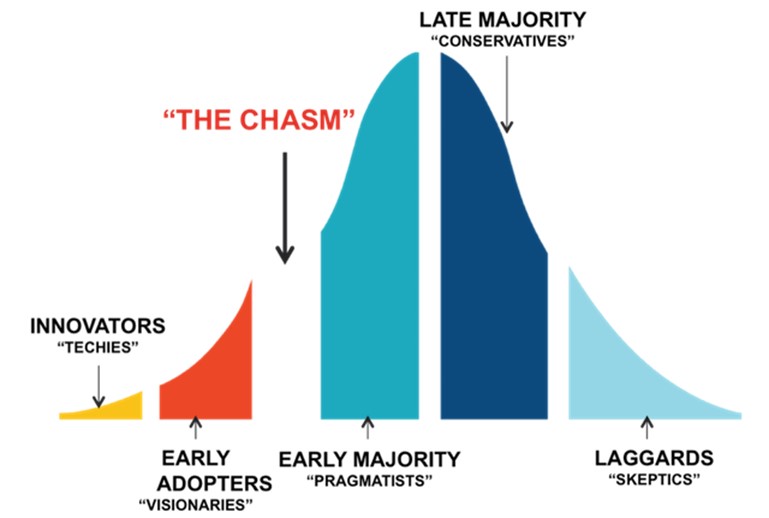
The Technology Adoption Lifecycle and the Great Divide
To fully grasp the significance of the chasm, it’s essential to first understand the overarching framework of the technology adoption lifecycle. This model categorizes customers into distinct groups based on their willingness and ability to adopt new technologies.
The Innovators and Early Adopters
At the very beginning of the lifecycle are the Innovators. These are the visionaries, the risk-takers who are actively seeking out new technologies, often for their inherent novelty and potential. They are eager to experiment, possess a deep understanding of the technology itself, and are forgiving of imperfections. For a new software solution or a groundbreaking AI tool, innovators are the first beta testers, the earliest users who provide critical initial feedback.
Following innovators are the Early Adopters. These individuals or organizations are also visionaries, but they are more pragmatic than innovators. They are looking for a revolutionary breakthrough that can give them a strategic advantage. They have a strong imagination and can envision the potential benefits of a nascent technology, even if it’s not yet fully mature or perfectly integrated. Early adopters are willing to take risks, but they need to see a compelling reason to invest their time and resources. They are often technology enthusiasts who appreciate the strategic implications of new gadgets or digital security protocols.
The Early Majority and Mainstream Market
Beyond the early adopters lies the vastly larger and significantly more cautious Early Majority. These are the pragmatists who drive the mainstream market. Unlike early adopters, they are not interested in technology for technology’s sake. They want solutions that are proven, reliable, and integrate seamlessly into their existing workflows. They require testimonials, case studies, and a clear demonstration of practical benefits. They are risk-averse and value evolution over revolution. For a new AI-powered analytics platform or a cloud-based collaboration tool, gaining traction with the early majority means achieving widespread commercial success.
Following them are the Late Majority, who are skeptics and prefer established products with extensive support and a proven track record. They adopt technology only when it has become an industry standard or a social necessity. Finally, the Laggards are traditionalists who resist technological change until absolutely necessary.
The chasm is the profound gap that lies between the early adopters and the early majority. It is the point where many promising tech products stall, unable to transition from niche appeal to mass-market acceptance.
Pinpointing the Chasm in Tech Adoption
The chasm is not merely a quantitative difference in market size; it represents a fundamental qualitative shift in customer expectations, motivations, and purchasing behaviors. Crossing it requires a complete reorientation of a tech company’s strategy.
Characteristics of the Chasm
The chasm is characterized by several critical factors that differentiate the early market from the mainstream:
- Customer Profiles: Early adopters are technology enthusiasts and visionaries. The early majority are pragmatists who demand complete solutions and demonstrable ROI. They don’t want to be pioneers; they want to buy proven technology.
- Buying Motives: Early adopters buy into a vision of future advantage. The early majority buys proven productivity improvements and risk mitigation.
- Product Requirements: Early adopters are content with a basic, sometimes incomplete product if the core innovation is compelling. The early majority requires a “whole product solution”—meaning not just the core technology (e.g., software, AI algorithm) but also all the peripheral components necessary for it to function effectively and provide value (e.g., training, support, integration, complementary hardware/software, robust digital security).
- Communication Channels: Early adopters are influenced by tech journals, conferences, and opinion leaders. The early majority relies on peer references, industry-specific publications, and established sales channels.
- Competition: In the early market, competition is often about who has the most innovative technology. In the mainstream, it’s about who offers the most reliable, complete, and cost-effective solution.
Why Companies Struggle to Cross It
Many tech startups and even established firms falter at the chasm for several reasons:
- Misunderstanding the Mainstream Market: Companies often assume that the success achieved with early adopters will naturally translate to the early majority. They fail to recognize the fundamental difference in needs and risk tolerance.
- Lack of a “Whole Product” Solution: A groundbreaking AI tool might impress early adopters, but the early majority won’t adopt it without robust integration APIs, comprehensive documentation, professional support, and strong cybersecurity measures. Many companies ship a core product but neglect the ecosystem required for its practical use.
- Insufficient Resources for Focused Attack: Attempting to serve all potential segments of the mainstream market simultaneously dilutes resources and message. Without a concentrated effort on a specific, reachable niche, the early majority remains unconvinced.
- Messaging Mismatch: Communication strategies tailored to visionary early adopters often fall flat with pragmatic early majority customers, who prioritize reliability, ease of use, and integration over revolutionary potential.
- Negative References: Early adopters, if disappointed, can become a source of negative references, making it even harder to convince the risk-averse early majority.
Strategies for Crossing the Chasm with Tech Products
Successfully navigating the chasm requires a deliberate, focused, and often counter-intuitive approach. It involves shifting from a product-centric or technology-centric mindset to a market-centric one.
Targeting a Niche Beachhead
The most crucial strategy for crossing the chasm is to focus intense resources on winning a single, well-defined niche market within the early majority. This chosen segment acts as a “beachhead” from which to launch further expansion. Instead of trying to be everything to everyone, a tech company must become everything to a specific group of customers. For example, an AI transcription service might initially target legal firms specializing in intellectual property rather than all businesses. This focused approach allows the company to:
- Concentrate Resources: Direct sales efforts, marketing spend, and product development to address the precise needs of this niche.
- Build Momentum: Achieve early, undeniable success within a small, definable market, creating positive references and case studies.
- Develop Deep Expertise: Become the undisputed leader in that specific application, accumulating invaluable industry knowledge.
Whole Product Solution Development
To satisfy the early majority, a tech product must be delivered as a “whole product solution.” This means providing not just the core technology (e.g., a SaaS platform, a new gadget’s OS, an AI module) but also all the necessary ancillary products and services that ensure the customer achieves their desired outcome. This often includes:
- Hardware and Software Integration: Ensuring compatibility with existing systems.
- Installation and Configuration: Providing tools and support for seamless setup.
- Training and Support: Offering comprehensive guides, tutorials, and customer service.
- Digital Security and Compliance: Addressing concerns about data privacy, regulatory adherence, and threat protection, which are paramount for the early majority.
- Complementary Products and Services: Partnering with other vendors to fill gaps in the offering.
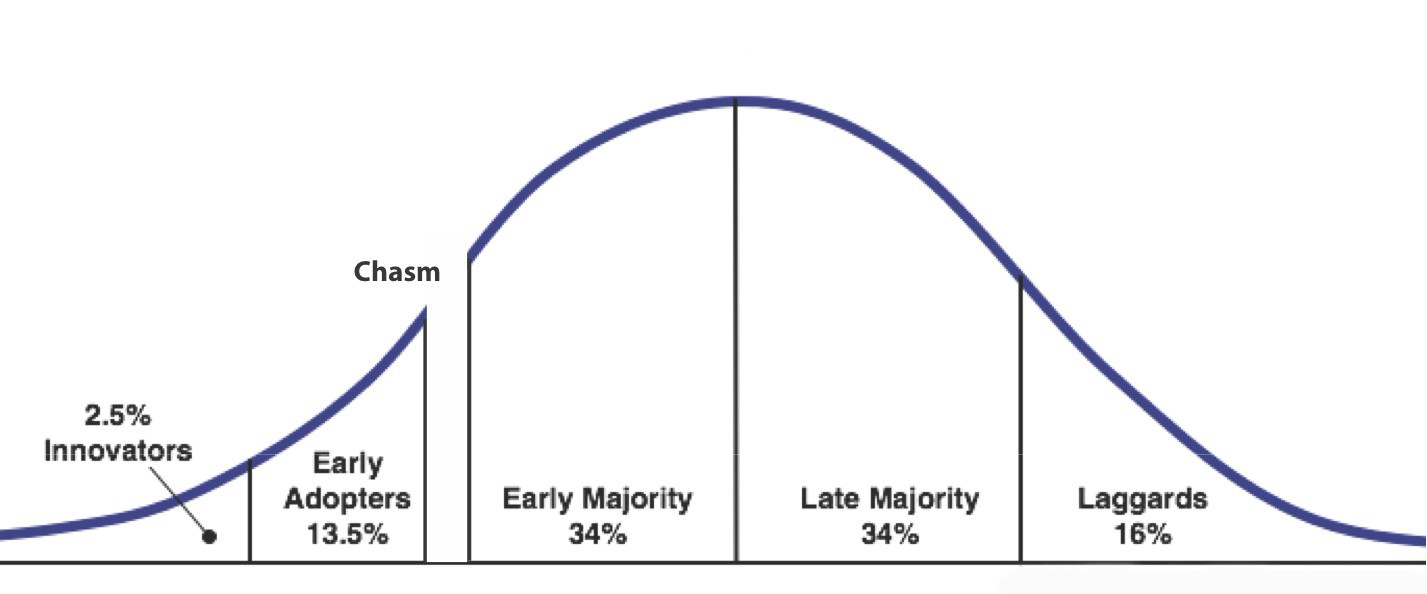
For instance, an enterprise AI solution isn’t just the algorithm; it’s the integration layer, the user interface, the data governance framework, and the ongoing support plan.
Building a Unique Value Proposition for Pragmatists
The messaging must shift dramatically when addressing the early majority. Instead of highlighting technological brilliance or futuristic potential, the value proposition must articulate clear, quantifiable benefits in terms of productivity, cost savings, competitive advantage, or risk reduction. The emphasis moves from “what it is” to “what it does for me.” Case studies, testimonials, and ROI calculators become essential marketing tools. For example, instead of touting “a revolutionary quantum computing algorithm,” the message becomes “reduce processing time for financial models by 80%.”
Strategic Partnerships and Ecosystem Development
Forging strong alliances can be instrumental in crossing the chasm. Partnering with established companies that already serve the target niche can provide credibility, access to sales channels, and help in building the whole product solution. This might involve:
- System Integrators: To help deploy complex software or AI systems.
- Resellers: To expand market reach for apps or gadgets.
- Complementary Technology Providers: To create a more complete and robust offering, especially crucial for digital security solutions that need to integrate with existing infrastructure.
Modern Contexts: AI, SaaS, and Emerging Technologies
The concept of the chasm remains highly relevant today, especially with the rapid evolution of technologies like AI, SaaS, and advanced digital security.
AI Tools and the Chasm
Many AI tools and platforms currently exist in the early market, captivating innovators and early adopters with their potential. However, for mainstream adoption, these tools must demonstrate:
- Robustness and Reliability: AI models need to be consistently accurate and resilient to diverse inputs.
- Ease of Integration: Seamless APIs and connectors are crucial for adoption into existing enterprise systems.
- Explainability and Trust: Particularly in regulated industries, understanding why an AI made a decision is vital for pragmatists.
- Clear ROI: Quantifiable benefits, not just abstract intelligence.
The chasm for AI will be crossed when these tools become indispensable, reliable, and integrated components of everyday business operations, moving beyond experimental applications.
SaaS Platforms and Mainstream Adoption
Software-as-a-Service (SaaS) has democratized access to powerful software, yet even mature SaaS categories face mini-chasms when new entrants try to displace incumbents or capture new segments. For new SaaS applications:
- User Experience (UX) and Onboarding: Intuitive design and easy setup are paramount for the early majority.
- Scalability and Performance: Reliability is non-negotiable.
- Data Security and Compliance: Enterprise customers, in particular, demand rigorous security certifications and compliance with industry regulations.
- Ecosystem Integrations: The ability to connect with other essential business applications is a key differentiator.
The Role of Digital Security in Chasm Crossing
Digital security solutions often present a unique chasm challenge. While innovators and early adopters might embrace novel encryption methods or threat intelligence platforms, the early majority demands:
- Simplicity and Automation: Security tools that are complex to deploy or manage will be rejected.
- Proactive Protection: They want solutions that prevent breaches, not just detect them post-mortem.
- Integration with Existing Stacks: Seamless operation with firewalls, identity management systems, and endpoint protection.
- Regulatory Compliance: Assurance that the solution helps meet industry standards and legal requirements.
For security products, crossing the chasm involves moving from specialized, expert-driven deployment to broadly accessible, easily manageable, and implicitly trustworthy solutions.
Beyond the Chasm: Sustaining Growth and Market Leadership
Successfully crossing the chasm is not the end goal; it’s a critical milestone. Once a tech product establishes a foothold in the mainstream market, the focus shifts to sustaining growth and expanding market leadership.
Expanding from the Initial Niche
After dominating the initial beachhead, the company can leverage its success and credibility to target adjacent niche markets. This involves a methodical expansion, taking lessons learned and product enhancements from the first market to conquer subsequent ones. This phased approach minimizes risk and maximizes resource efficiency.

Continuous Innovation and Adaptation
The technology landscape is constantly evolving. To maintain leadership, companies must continue to innovate, adapt their products to changing customer needs, and anticipate future technology trends. This includes:
- Feature Expansion: Adding new functionalities that appeal to a broader segment of the early majority and even the late majority.
- Performance Optimization: Ensuring the product remains fast, reliable, and scalable.
- Security Enhancements: Staying ahead of emerging threats and maintaining a robust digital security posture.
- Customer Feedback Loops: Continuously engaging with customers to understand pain points and opportunities for improvement.
In essence, the chasm serves as a powerful reminder that groundbreaking technology alone is rarely enough. True success lies in understanding the distinct psychological and sociological forces that govern technology adoption and strategically navigating the perilous gap between early enthusiasm and mainstream acceptance. For any tech company, identifying the chasm and formulating a concrete strategy to cross it is not just advisable—it’s imperative for survival and sustained prosperity.
aViewFromTheCave is a participant in the Amazon Services LLC Associates Program, an affiliate advertising program designed to provide a means for sites to earn advertising fees by advertising and linking to Amazon.com. Amazon, the Amazon logo, AmazonSupply, and the AmazonSupply logo are trademarks of Amazon.com, Inc. or its affiliates. As an Amazon Associate we earn affiliate commissions from qualifying purchases.