
In the expansive ecosystem of modern gaming software, few titles offer as much technical depth in their itemization systems as Minecraft. Within this sandbox environment, the trident stands out as a versatile, high-tier tool introduced during the “Update Aquatic” (Java Edition 1.13 and Bedrock Edition 1.4.0). While the trident itself is a formidable weapon for both melee and ranged combat, its true utility is unlocked through a sophisticated system of enchantments. Among these, “Channeling” represents one of the most visually impressive and strategically significant technical features in the game’s combat engine.
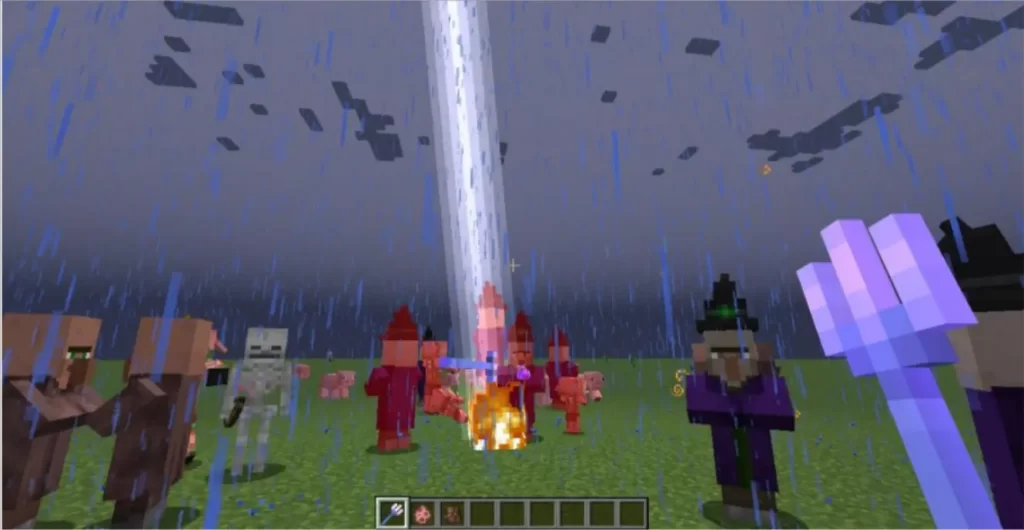
Channeling is a specific enchantment that allows a player to summon a bolt of lightning upon a target when the trident is thrown. However, unlike standard weapon buffs that offer static damage increases, Channeling operates on a complex set of environmental variables and logical triggers. Understanding how this mechanic functions requires a look at the software’s weather systems, entity detection, and technical limitations.
Understanding the Technical Mechanics of the Channeling Enchantment
At its core, the Channeling enchantment is a conditional trigger coded into the trident’s projectile logic. When a trident is enchanted with Channeling, the game engine performs a series of checks every time the projectile impacts an entity. If these conditions are met, the software executes a command to spawn a lightning bolt at the exact coordinates of the target.
How the Code Triggers Weather-Dependent Events
The most critical condition for the Channeling enchantment is the current weather state of the game world. The enchantment is programmed to function exclusively during thunderstorms. In the codebase, there is a distinct difference between “rain” and a “thunderstorm.” While rain lowers light levels and allows for certain mechanics like Enderman teleportation or fire extinction, only the thunderstorm state enables the lightning-strike variable required by the Channeling logic.
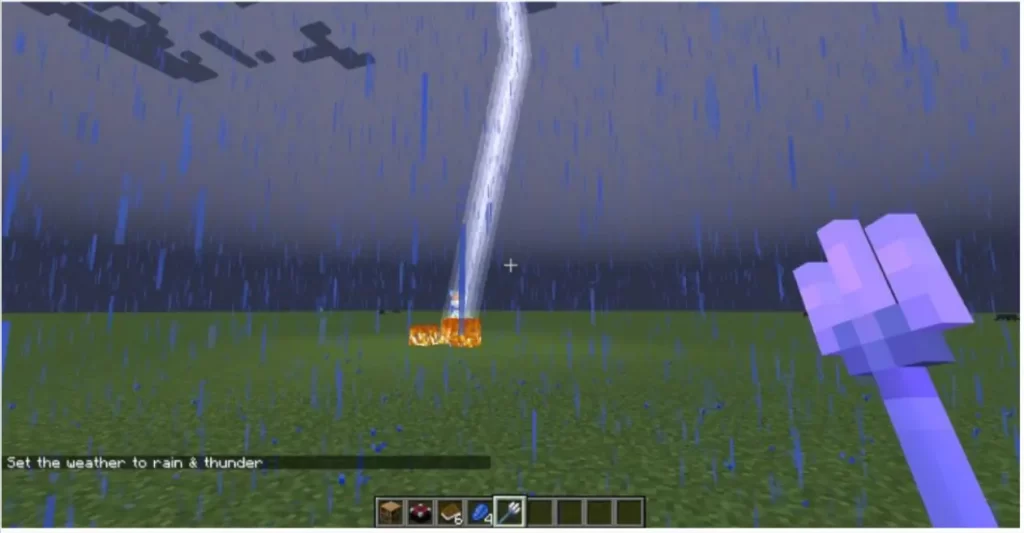
From a technical standpoint, this means that if a player throws an enchanted trident during a clear day or a standard rainstorm, the trident will behave as a normal projectile, dealing only its base physical damage. The game’s weather cycle is often randomized, but it can be manipulated on servers or in creative modes using the /weather thunder command, which immediately sets the boolean flag for thunderstorms to “true,” thereby activating the Channeling capability.
The Logical Requirements: Storms and Open Skies
Beyond the global weather state, the Channeling enchantment requires specific spatial conditions to execute. The target entity must be exposed to the sky. The game engine calculates this by checking the blocks directly above the target; if there is a solid block (or a “non-transparent” block) obstructing the path to the top of the world height, the lightning bolt will fail to spawn.
This “open sky” requirement prevents players from using the enchantment in caves, underwater (unless the target is near the surface and unobstructed), or inside buildings. This adds a layer of tactical complexity to the software’s combat loop, as players must maneuver themselves and their enemies into specific environmental configurations to utilize the enchantment’s full power.
Acquisition and Technical Implementation
The trident is a rare item, as it cannot be crafted via a traditional crafting table. It must be obtained as a drop from “Drowned” mobs, which are the underwater variant of zombies. Once a player secures a trident, the process of applying the Channeling enchantment involves interacting with the game’s enchantment table or using an anvil with an enchanted book.
Obtaining the Enchantment through Loot and Trading
The Channeling enchantment exists as a single-level enchantment (Channeling I). There are no higher tiers, as the effect is binary: it either strikes lightning or it does not. Players can find Channeling books through various technical means within the game:
- Librarian Villagers: One of the most efficient ways to acquire specific software upgrades in Minecraft is through “trading halls.” By resetting a Librarian villager’s workstation, players can eventually lock in a trade for a Channeling book.
- Loot Tables: Channeling books are included in the loot tables for shipwrecks, strongholds, and desert temples.
- Fishing: The fishing mechanic includes a small percentage chance to reel in enchanted books, which may include Channeling.
Using the Anvil for Enchantment Merging
To apply the enchantment, a player must use an Anvil, which requires an investment of “Experience Levels”—a form of in-game currency earned through technical tasks like mining, smelting, or defeating mobs. The anvil also allows players to combine the trident with other functional enchantments, such as “Loyalty” or “Unbreaking.” However, the software prevents certain enchantments from coexisting on the same item to maintain balance.

Strategic Applications in Gameplay and Resource Management
Channeling is not merely an aesthetic addition; it provides a unique set of technical “exploits” or advanced features that allow players to manipulate the game world and its inhabitants. By summoning lightning on demand, players can trigger specific mob transformations that are otherwise incredibly rare in the natural environment.
Mob Transformation: The Science of Charged Creepers and Brown Mooshrooms
One of the most valuable uses of the Channeling enchantment is the creation of “Charged Creepers.” When a standard Creeper is struck by lightning, its metadata changes, surrounding it with a blue aura and significantly increasing its explosion radius and damage output. More importantly, if a Charged Creeper kills a Zombie, Skeleton, or another Creeper in its blast, that mob will drop its “head”—a rare decorative and functional block used for crafting and boss summoning.
Similarly, striking a red Mooshroom with a Channeling trident transforms it into a brown Mooshroom, which is necessary for obtaining “Suspicious Stews” with specific status effects. Villagers struck by lightning turn into Witches, and Pigs turn into Zombified Piglins. These transformations allow players to bypass RNG (random number generation) and create specialized farms for rare resources.
Combat Efficiency in High-Risk Environments
In a combat scenario, the lightning strike summoned by Channeling adds a secondary damage source that ignores certain types of armor. The lightning deals five points (2.5 hearts) of damage, which is added to the trident’s base projectile damage. Furthermore, the strike provides a brief moment of area-of-effect (AoE) damage, potentially hitting multiple entities if they are crowded together. This makes the Channeling trident an excellent tool for “crowd control” during outdoor nighttime survival scenarios.
Technical Limitations and Compatibility Conflicts
While the Channeling trident is powerful, the game’s developers implemented specific code restrictions to prevent it from becoming an “all-in-one” weapon. These limitations force players to make strategic choices regarding their gear loadout.
Riptide vs. Channeling: Mutually Exclusive Code
The most significant limitation is the incompatibility between Channeling and “Riptide.” Riptide is an enchantment that launches the player through the air or water when the trident is thrown. In the game’s logic, a trident cannot possess both of these enchantments simultaneously.
From a design perspective, this creates two distinct classes of tridents: the “Movement Trident” (Riptide) and the “Combat/Utility Trident” (Loyalty + Channeling). If the software allowed both, a player could theoretically fly into the air and summon lightning from above, which was deemed unbalanced during the testing phases of the Update Aquatic.
Target Proximity and Safety Parameters
Another technical nuance involves the safety of the user. Because the lightning strike occurs exactly where the trident hits, a player who uses a Channeling trident at point-blank range will also be struck by the lightning. This causes the player to take fire damage and knockback, potentially leading to accidental death. Consequently, the software encourages a ranged playstyle, requiring the player to master the arc of the trident’s flight path to hit targets from a safe distance.
The Evolution of Trident Mechanics in Software Updates
Since its introduction, the trident and its enchantments have seen various tweaks to ensure parity between the Java and Bedrock versions of the game. For instance, in earlier versions of the Bedrock Edition, Channeling could function during standard rain, but this was later patched to align with the Java Edition’s more restrictive thunderstorm requirement.
This evolution reflects a broader trend in game development where “magic” systems are grounded in logical, weather-based triggers. By tying the Channeling mechanic to the atmospheric state of the world, the developers have created a tool that feels rewarding because it requires the player to pay attention to the environment. It transforms the trident from a simple weapon into a conductor for the game’s internal physics and weather engines.
In conclusion, “Channeling” on a trident is a sophisticated enchantment that bridges the gap between combat mechanics and environmental interaction. By understanding the software requirements—such as the necessity of a thunderstorm and an unobstructed sky—players can effectively harness one of the most powerful forces in the game. Whether it is used for high-level mob farming or as a specialized tool for atmospheric combat, the Channeling trident remains a pinnacle of technical item design within the Minecraft ecosystem.
aViewFromTheCave is a participant in the Amazon Services LLC Associates Program, an affiliate advertising program designed to provide a means for sites to earn advertising fees by advertising and linking to Amazon.com. Amazon, the Amazon logo, AmazonSupply, and the AmazonSupply logo are trademarks of Amazon.com, Inc. or its affiliates. As an Amazon Associate we earn affiliate commissions from qualifying purchases.