
In an increasingly complex world of official processes, paperwork, and digital submissions, proving that you’ve taken the initial step is often as crucial as receiving final approval. This is where the often-underestimated Certificate of Application comes into play. Far more than just a mere receipt, this document serves as tangible evidence that a formal request, proposal, or submission has been officially lodged with the relevant authority. For individuals and businesses alike, navigating the intricate landscape of finance, business operations, and personal advancement frequently involves initiating numerous applications, each with its own set of requirements and implications. Understanding the nature, purpose, and importance of a Certificate of Application is fundamental to safeguarding your interests, ensuring process integrity, and managing expectations throughout various critical financial and business-related journeys.
Understanding the Certificate of Application: Your Initial Proof
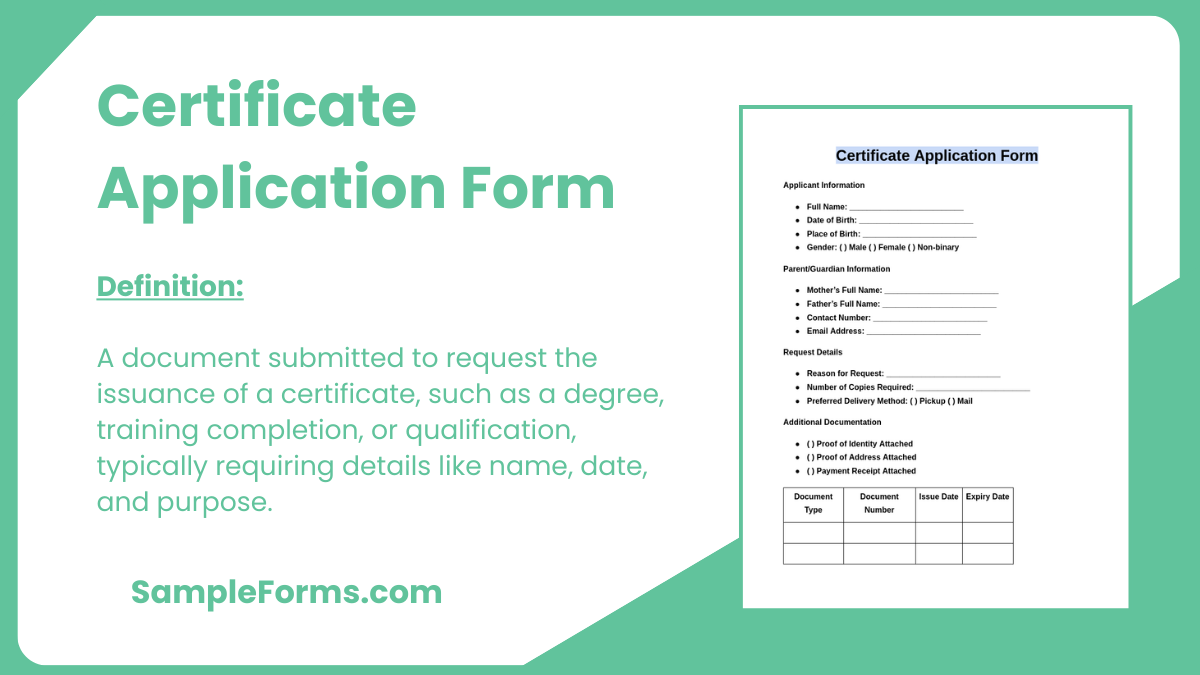
At its core, a Certificate of Application is an official acknowledgment from an authority that you have formally submitted a request for something. It’s the first concrete piece of evidence that your journey through a particular administrative or legal process has begun.
Definition and Core Purpose
A Certificate of Application is a document, digital or physical, issued by a governmental body, financial institution, educational establishment, or other official entity, confirming the receipt of an application. It typically includes key details such as:
-
Applicant’s Information: Name, address, identification numbers.
-
Application Type: What specifically is being applied for (e.g., business license, visa, loan, grant).
-
Date of Application: The precise date the application was received.
-
Reference Number: A unique identifier for tracking the application’s progress.
-
Issuing Authority: The name of the organization or department that received the application.
The primary purpose of this certificate is twofold: to provide the applicant with proof of submission and to create an official record for the receiving authority. This proof is invaluable for subsequent inquiries, tracking, and dispute resolution, offering a crucial layer of accountability for both parties involved.
Why it’s More Than Just a Receipt
While a standard receipt merely confirms a transaction (like payment for an application fee), a Certificate of Application carries greater weight and implications. It signifies the formal initiation of a process that often has significant legal, financial, or personal consequences. A receipt might only confirm a monetary exchange, whereas a Certificate of Application confirms the action of applying itself, establishing a timestamp that can be vital for deadlines, priority claims, or establishing legal standing. For instance, in competitive scenarios like grant applications or patent filings, the “date of application” can determine eligibility or priority over other applicants. It shifts the burden of proof from the applicant needing to prove they applied to the authority needing to process it.
Critical Applications in the Financial and Business Landscape
The relevance of a Certificate of Application is particularly pronounced in scenarios directly impacting financial well-being, business operations, and economic opportunities. From starting a company to securing a loan or moving to a new country for work, this document plays a silent yet crucial role.
Business Registration and Licensing
Launching a new business or expanding an existing one often involves a myriad of registrations and licenses at local, state, and federal levels. This includes incorporation papers, trade name registrations, industry-specific licenses (e.g., for food service, construction, financial advisory), and tax IDs. A Certificate of Application for these documents proves that your business has taken the necessary steps to operate legally. Without it, your business could face legal penalties, fines, or even closure. For example, a certificate of application for a business license allows a company to demonstrate to potential partners, clients, or lenders that they are in the process of becoming fully compliant, thereby maintaining credibility even before final approval.
Loans, Grants, and Funding Applications
Securing financial backing is a cornerstone of both personal and business growth. Whether applying for a mortgage, a student loan, a business loan, or a government grant, the application process can be lengthy and competitive. A Certificate of Application for these funding sources is essential proof that your request is officially under review. This can be critical for:
-
Follow-up: Enabling you to track the status of your application with a specific reference.
-
Contingency Planning: Allowing you to explore alternative funding options while your initial application is pending, knowing you have official proof of its submission.
-
Meeting Deadlines: Confirming your application was submitted by a specific cut-off date, which is often a strict requirement for grants and competitive loans.
For a business, this might be crucial for drawing down initial seed funding or demonstrating progress to investors. For an individual, it might be the difference between securing an education or a home.
Immigration and Work Permits
For individuals seeking to live, work, or study in a foreign country, immigration processes are often labyrinthine and time-sensitive. A Certificate of Application for a visa, work permit, or residency status is an exceptionally vital document. It confirms that you have formally applied and are awaiting a decision. In many cases, it grants an applicant certain provisional rights, such as the ability to remain in a country legally while their application is being processed, or to start a new job offer that requires proof of application for a work visa. Its absence could lead to severe consequences, including deportation or denial of entry.
Professional Certifications and Trade Licenses
Many professions, from medicine and law to engineering and financial planning, require specific licenses or certifications to practice legally. Applying for these professional accreditations can be a rigorous process involving background checks, examinations, and experience verification. A Certificate of Application acts as official confirmation that you have begun the process to become a licensed professional. This can be important for securing provisional roles, demonstrating commitment to professional standards, and ensuring your eligibility to practice once the final approval is granted. For instance, a recent graduate might use proof of application for their professional license to secure an entry-level position that requires licensing within a certain timeframe.
The Immediate Benefits and Provisional Status
Beyond merely confirming submission, a Certificate of Application often bestows several immediate benefits and indicates a provisional status that can be strategically important.
Establishing a Date of Application
The date stamped on your Certificate of Application is more than just a chronological detail; it can have significant legal and financial ramifications. In scenarios where multiple applications are submitted for limited resources (e.g., government grants, limited business licenses), the earliest submission date might grant priority. For intellectual property (patents, trademarks), the application date can establish “first-to-file” rights, preventing others from claiming the same innovation or brand element. Even for financial products, demonstrating a consistent application history can sometimes aid future creditworthiness or eligibility.
Provisional Rights and Protections
In specific contexts, a Certificate of Application can grant temporary or provisional rights. For example, certain immigration processes allow an applicant to remain in the country or even commence specific work activities while their full application is being adjudicated, provided they hold a valid Certificate of Application. Similarly, some business regulations might allow for temporary operational permits upon receiving a Certificate of Application for a full license, recognizing the time lag in processing. This provisional status can mitigate business interruption and ensure continuity, allowing an individual or entity to proceed with certain activities under the assumption that final approval is forthcoming, pending no disqualifying factors.
Facilitating Communication and Follow-up
The unique reference number provided on a Certificate of Application is indispensable for tracking progress and communication. It allows applicants to easily inquire about their status without having to resubmit basic information. This streamlined communication saves time for both the applicant and the issuing authority. Moreover, in cases where additional documentation or clarification is required, the Certificate of Application acts as a clear reference point, ensuring that all correspondence relates to the correct application, minimizing potential errors and delays.
Navigating the Application Process and Ensuring Validity
Obtaining and managing your Certificate of Application requires attention to detail and proactive measures to ensure its authenticity and utility.
Steps to Obtain Your Certificate
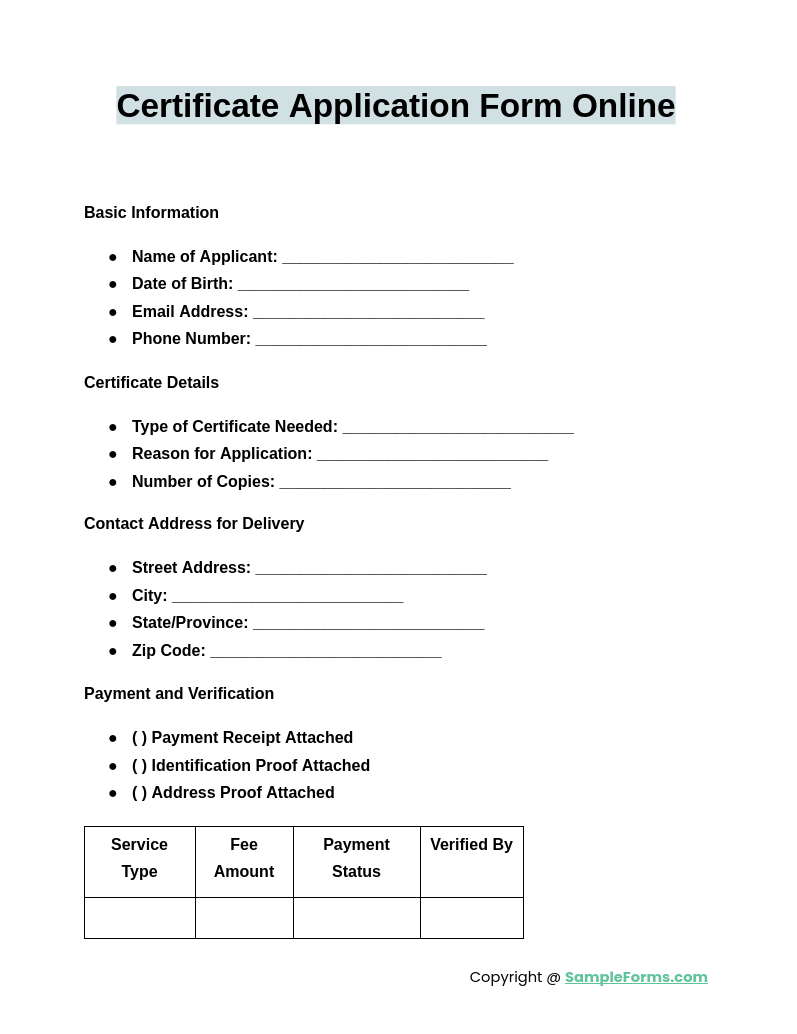
The process for obtaining a Certificate of Application varies based on the nature of the application and the issuing authority. Generally, it involves:
-
Completing the Application: Filling out all required forms accurately and completely.
-
Submitting Supporting Documents: Attaching all necessary evidence, identification, or financial records.
-
Paying Applicable Fees: Settling any required administrative or processing charges.
-
Official Submission: Submitting the complete package through the designated channel (online portal, mail, in-person).
-
Receiving Confirmation: The Certificate of Application is typically issued immediately upon online submission or mailed shortly after manual receipt. Always ensure you receive one. If not provided automatically, inquire about it.
Verifying Authenticity and Safeguarding Your Document
It is crucial to verify the authenticity of any Certificate of Application you receive. Check for official seals, watermarks, digital signatures, or other security features. Digital certificates should be verifiable through official online portals. Once received, safeguard this document diligently. For physical copies, store them in a secure, fireproof location, and consider making digital backups. For digital certificates, ensure they are stored on secure cloud drives or encrypted local storage. Losing this certificate can complicate follow-up processes and may even require re-applying or proving submission through alternative, often more cumbersome, means.
Common Pitfalls to Avoid
Applicants should be aware of potential issues that can invalidate or complicate the utility of their Certificate of Application:
-
Incomplete Information: An application that is later deemed incomplete may render the certificate invalid for certain purposes.
-
Fraudulent Applications: Any misrepresentation or false information can lead to the revocation of the application and severe penalties, regardless of holding a certificate.
-
Expired Provisional Status: Be mindful of any deadlines or expiry dates associated with provisional rights granted by the certificate.
-
Not Retaining Proof: Failing to keep a copy of your application or the certificate itself can hinder tracking and dispute resolution.
Beyond the Certificate: What Comes Next?
While the Certificate of Application is a crucial milestone, it is rarely the final destination. It signifies the start of a journey, not its conclusion.
The Waiting Period and Further Requirements
After receiving your Certificate of Application, an often-unpredictable waiting period ensues. During this time, the issuing authority will review your application, verify information, and potentially conduct background checks or interviews. Be prepared for requests for additional information or clarification. Promptly responding to these requests is vital to avoid delays or rejection. Maintaining organized records of your application and all correspondence will be invaluable during this phase.
Differentiating from Final Approval
It is paramount to understand that a Certificate of Application is distinctly different from final approval. The former confirms submission; the latter confirms success. Many applicants confuse the two, leading to premature actions or expectations. Final approval usually comes with a separate, definitive document (e.g., a business license, a visa stamp, a loan disbursement letter) that grants the full rights or benefits applied for. Do not make irreversible financial or life decisions based solely on holding a Certificate of Application unless its provisional rights explicitly permit it.

The Long-Term Value of Your Application Records
Even after final approval is granted, the Certificate of Application and all associated application records retain long-term value. They serve as historical proof of compliance, can be necessary for renewals, audits, or future applications. For businesses, maintaining a robust archive of application certificates and approvals is a key aspect of corporate governance and financial transparency. For individuals, these documents contribute to a comprehensive personal financial and legal history, useful for everything from tax purposes to estate planning.
In conclusion, the Certificate of Application, while seemingly a minor administrative detail, is a profoundly significant document across numerous financial, business, and personal processes. It’s your official entry ticket, your timestamp of diligence, and often, your first line of defense. Understanding its nuances, securing its authenticity, and preserving its existence are fundamental steps for anyone navigating the bureaucratic pathways to financial growth, operational compliance, and personal advancement.
aViewFromTheCave is a participant in the Amazon Services LLC Associates Program, an affiliate advertising program designed to provide a means for sites to earn advertising fees by advertising and linking to Amazon.com. Amazon, the Amazon logo, AmazonSupply, and the AmazonSupply logo are trademarks of Amazon.com, Inc. or its affiliates. As an Amazon Associate we earn affiliate commissions from qualifying purchases.