
At the heart of every robust economy lies a powerful, often enigmatic institution: the central bank. Far from being just another financial entity, a central bank acts as the guardian of a nation’s monetary and financial system, wielding immense influence over everything from the cost of borrowing a home loan to the stability of the entire economy. Understanding central banking is crucial for anyone keen to grasp the mechanics of finance, appreciate the forces shaping investment landscapes, or navigate the intricacies of personal financial planning. This comprehensive exploration will demystify central banking, shedding light on its core objectives, primary functions, the delicate balance of independence and accountability, and its profound impact on your financial life.
The Core Mandates and Objectives of Central Banks
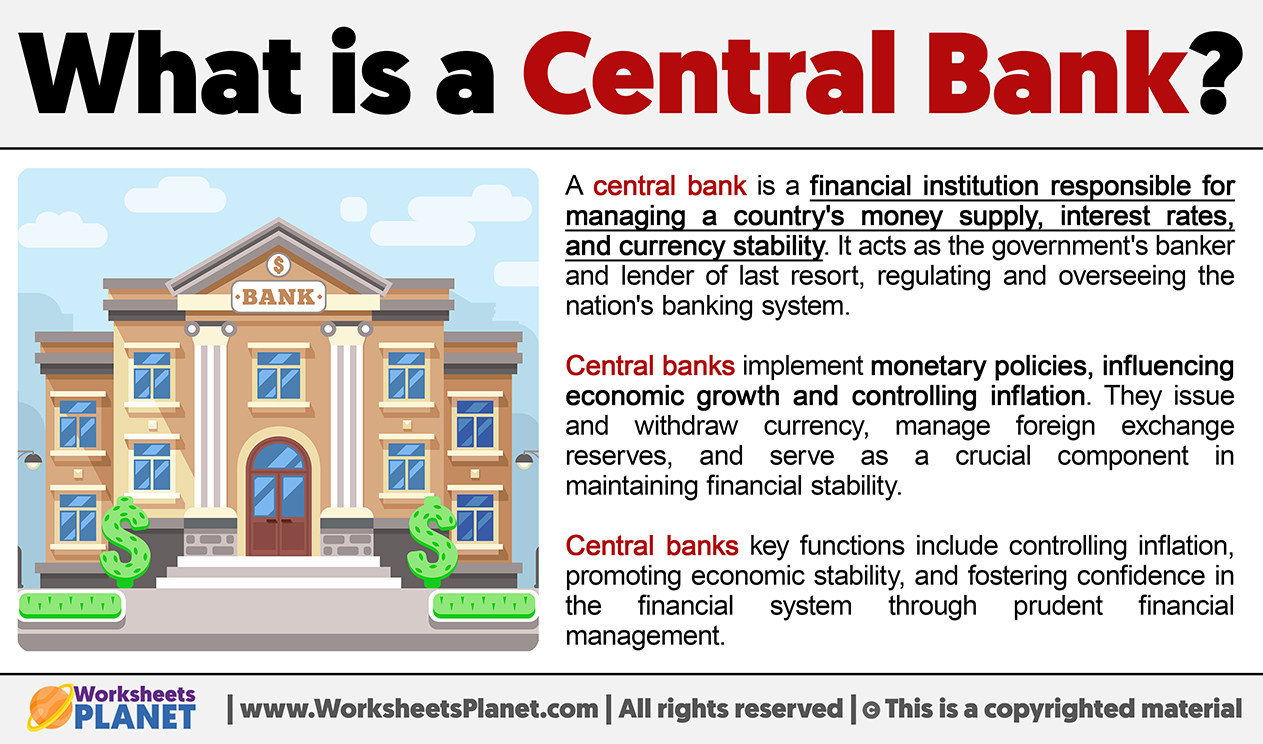
Central banks are entrusted with a suite of critical responsibilities, often enshrined in legislation, that define their overarching purpose. While specific mandates can vary slightly from country to country, a few universal objectives stand out as pillars of central banking philosophy. These mandates guide their policy decisions and are fundamental to fostering a stable and prosperous economic environment.
Price Stability and Inflation Control
Perhaps the most universally recognized and primary objective of modern central banks is maintaining price stability, which effectively means controlling inflation. Inflation—the rate at which the general level of prices for goods and services is rising, and subsequently, purchasing power is falling—can be corrosive to an economy. High and volatile inflation erodes savings, makes business planning difficult, and disproportionately affects those on fixed incomes. Central banks aim to keep inflation at a low, stable, and predictable level (often around 2%) to foster confidence, encourage investment, and protect the value of money. They achieve this primarily by influencing interest rates, making it more or less expensive to borrow, and thus affecting aggregate demand in the economy.
Full Employment and Economic Growth
Beyond price stability, many central banks, notably the U.S. Federal Reserve, operate under a “dual mandate” that also includes promoting maximum sustainable employment and moderate long-term interest rates, which are conducive to economic growth. While there can sometimes be a trade-off between fighting inflation and stimulating employment, central banks strive to achieve a balance. During economic downturns, they might lower interest rates to encourage borrowing, spending, and investment, thereby boosting job creation. Conversely, during periods of overheating, they might raise rates to cool demand and prevent unsustainable booms that could lead to subsequent busts. The goal is to facilitate an environment where businesses can thrive, create jobs, and contribute to a healthy expansion of the national income.
Financial Stability and Systemic Risk Management
Another critical, albeit often less visible, mandate is ensuring the stability of the financial system. This involves safeguarding against financial crises, managing systemic risks, and acting as a “lender of last resort.” Central banks supervise and regulate commercial banks, ensuring they operate prudently and maintain adequate capital reserves. In times of crisis, they can inject liquidity into the banking system to prevent widespread failures and restore confidence. By doing so, they protect depositors, maintain the flow of credit, and prevent financial shocks from cascading through the economy, thus shielding the broader financial market, including investment and debt markets, from collapse.
Key Functions and Tools of a Central Bank
To fulfill their mandates, central banks employ a sophisticated toolkit of functions and instruments. These actions directly impact the money supply, credit conditions, and overall economic activity, making them central to a nation’s financial health.
Monetary Policy Implementation
The cornerstone of central banking is the implementation of monetary policy, which involves managing the money supply and credit conditions.
- Interest Rate Adjustments: The most prominent tool is setting the policy interest rate (e.g., the federal funds rate in the U.S., the bank rate in the UK). By raising or lowering this benchmark rate, central banks influence the entire spectrum of interest rates in the economy—from bank lending rates to mortgage rates and bond yields. Lower rates encourage borrowing and spending; higher rates discourage them.
- Open Market Operations (OMOs): Central banks buy or sell government securities in the open market to inject or withdraw money from the banking system. Buying securities increases banks’ reserves, enabling them to lend more; selling securities reduces reserves.
- Quantitative Easing (QE) and Tightening (QT): In extraordinary circumstances, especially when conventional interest rate cuts are insufficient (e.g., during a severe recession), central banks may resort to QE. This involves large-scale asset purchases (beyond short-term government securities) to lower long-term interest rates and inject significant liquidity. Conversely, QT involves reducing the central bank’s balance sheet to absorb liquidity.
Currency Issuance and Management
Central banks are typically the sole authority for issuing a nation’s currency. They are responsible for printing banknotes and minting coins, ensuring an adequate supply to meet public demand, and maintaining the integrity and security of the currency. This function underpins public trust in the national money and facilitates smooth transactions across the economy.
Banker to Banks and Government
Central banks serve as the “bankers’ bank,” holding commercial banks’ reserve deposits, processing interbank payments, and providing liquidity through lending facilities (e.g., the discount window). They also act as the government’s bank, managing its accounts, processing payments, and advising on financial matters. This dual role ensures the smooth functioning of both the commercial banking system and government financial operations.
Financial Regulation and Supervision
To uphold financial stability, central banks often play a crucial role in regulating and supervising commercial banks and other financial institutions. They establish rules concerning capital adequacy, risk management, and lending practices to prevent excessive risk-taking and protect depositors. This oversight helps maintain public confidence in the financial system and prevents individual bank failures from spiraling into broader systemic crises.
Independence and Accountability
A hallmark of effective central banking in modern economies is a carefully calibrated balance between operational independence and public accountability. This balance is critical for the credibility and efficacy of monetary policy.
The Rationale for Central Bank Independence
Central bank independence refers to the ability of the central bank to make monetary policy decisions free from direct political interference. The rationale is compelling:
- Long-Term Focus: Elected politicians often prioritize short-term gains (e.g., boosting the economy before an election) which can lead to inflationary policies in the long run. An independent central bank can focus on long-term price stability, which benefits the entire economy.
- Credibility: An independent central bank’s commitment to fighting inflation is more credible, which helps anchor inflation expectations and makes monetary policy more effective.
- Avoidance of Fiscal Dominance: Independence prevents governments from forcing the central bank to print money to finance budget deficits, a practice that inevitably leads to hyperinflation.
Mechanisms of Accountability
While independent, central banks are not autonomous entities operating without oversight. They are accountable to the public and their respective governments through various mechanisms:
- Transparency: Central banks routinely publish minutes of their policy meetings, economic forecasts, and research papers, providing insight into their decision-making processes.
- Reporting: Many central bank governors are required to report regularly to legislative bodies (e.g., Congress, Parliament) on economic conditions and monetary policy decisions.
- Clear Mandates: Their objectives are often legally defined, providing a framework against which their performance can be judged.
- Audits: Their financial operations are typically subject to independent audits.
This accountability ensures that their independence is used responsibly and in the public interest.
Impact on Personal Finance and Business
The actions of central banks might seem abstract, but their effects ripple through every corner of the economy, directly influencing your personal financial well-being and the operational landscape for businesses.
Interest Rates and Borrowing Costs
One of the most immediate and tangible impacts is on interest rates. When a central bank raises its policy rate, commercial banks typically follow suit, increasing the cost of borrowing for consumers and businesses. This means higher interest rates on mortgages, car loans, credit cards, and business loans. Conversely, rate cuts make borrowing cheaper, potentially stimulating housing markets, consumer spending, and business expansion. Understanding the central bank’s stance on interest rates is crucial for anyone planning to take out a loan or refinance existing debt.
Inflation and Purchasing Power
The central bank’s success in maintaining price stability directly affects your purchasing power. If inflation is high and unchecked, the money you save today will buy less tomorrow. Your salary, investments, and retirement savings can all be eroded. Conversely, stable, low inflation protects the value of your money, allowing you to plan for the future with greater certainty and ensuring that your hard-earned cash retains its worth over time. This directly impacts financial planning and the real returns on your investments.
Investment and Savings Decisions
Monetary policy significantly influences investment landscapes. Lower interest rates can make savings accounts less attractive, pushing investors towards riskier assets like stocks or real estate in search of higher returns. Bond yields are directly influenced by central bank policy, affecting the attractiveness of fixed-income investments. Higher rates can make bonds more appealing, potentially drawing capital away from equities. For businesses, interest rate changes impact the cost of capital, influencing decisions on investment in new projects, expansion plans, and overall growth strategies. Understanding these dynamics is vital for effective portfolio management.
Business Investment and Growth
Businesses rely on access to affordable credit to fund operations, invest in new equipment, research and development, and expand their workforce. When central banks ease monetary policy by lowering rates, it reduces borrowing costs, making it cheaper for businesses to invest and grow. This stimulates economic activity, creates jobs, and can lead to increased profitability. Conversely, tight monetary policy can constrain business investment, slow growth, and potentially lead to job losses as companies face higher financing costs.
Conclusion
Central banking, while complex, is an indispensable pillar of modern financial systems. From its overarching mandates of ensuring price stability and fostering full employment to its intricate functions of monetary policy implementation and financial supervision, the central bank’s influence is pervasive. Its delicate balance of independence and accountability allows it to make tough, long-term decisions that are vital for economic health, shielding the economy from political whims and systemic risks. For individuals and businesses alike, understanding the role and actions of a central bank is not merely an academic exercise; it is a practical necessity. Its decisions directly impact the value of your money, the cost of your loans, the returns on your investments, and the overall economic environment in which you live and operate. By grasping the fundamentals of central banking, one gains a deeper appreciation for the intricate forces that shape our financial world and empower better financial decision-making.
aViewFromTheCave is a participant in the Amazon Services LLC Associates Program, an affiliate advertising program designed to provide a means for sites to earn advertising fees by advertising and linking to Amazon.com. Amazon, the Amazon logo, AmazonSupply, and the AmazonSupply logo are trademarks of Amazon.com, Inc. or its affiliates. As an Amazon Associate we earn affiliate commissions from qualifying purchases.