
In the intricate tapestry of global finance, certain institutions stand as pillars, quietly guiding the flow of capital, shaping economic landscapes, and ultimately influencing the daily lives of billions. Among these, the central bank holds a paramount position. Far from being just another financial entity, a central bank is the apex monetary authority of a nation or a group of nations, entrusted with the critical responsibility of managing the money supply, controlling inflation, ensuring financial stability, and fostering economic growth. Its actions, often complex and far-reaching, reverberate through everything from the interest rates on personal loans and mortgages to the profitability of multinational corporations and the stability of global markets. Understanding “what is a central bank” is not merely an academic exercise; it’s a fundamental step towards comprehending the forces that govern our financial present and future.
The Foundational Role of a Central Bank
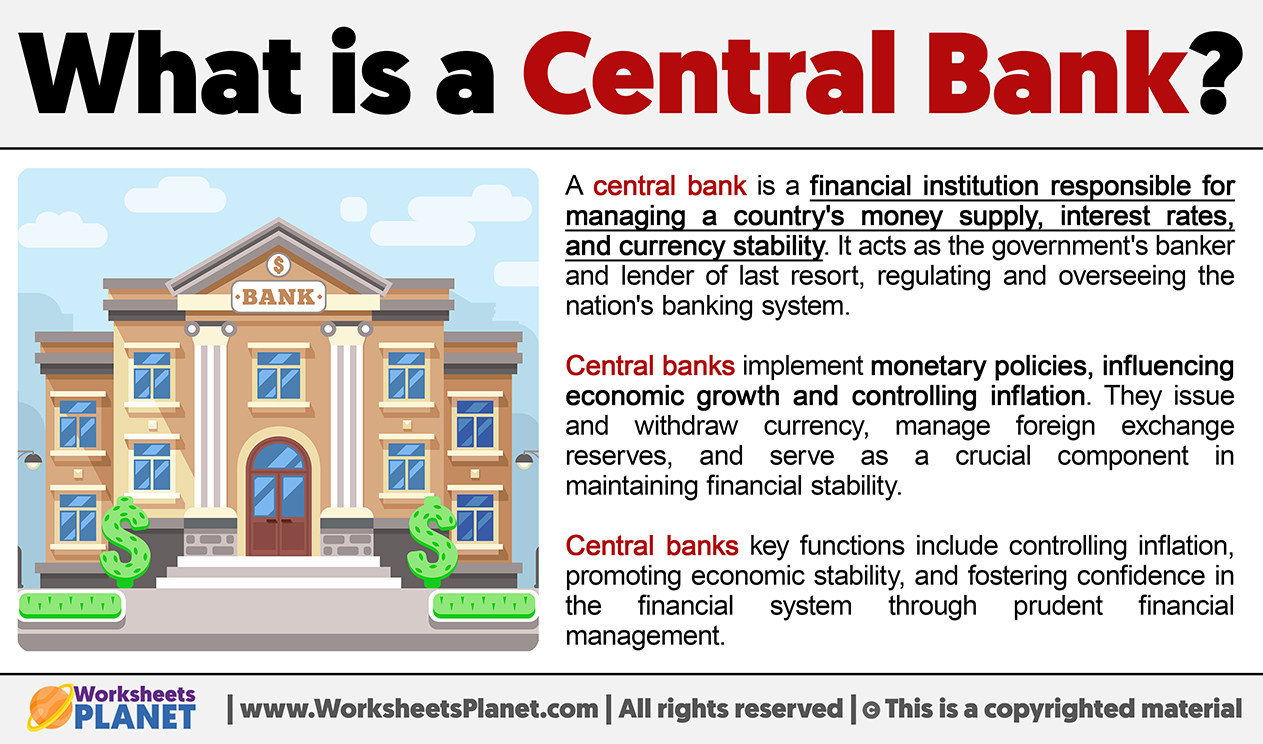
At its core, a central bank is an institution designed to oversee the monetary system and financial stability of a state or monetary union. Unlike commercial banks, which focus on profit generation through lending and deposit-taking, central banks operate with a broader mandate focused on public welfare and macroeconomic stability. They are typically non-commercial entities, often state-owned or quasi-public, and are granted unique powers to influence the economy in ways no other institution can.
Defining a Central Bank
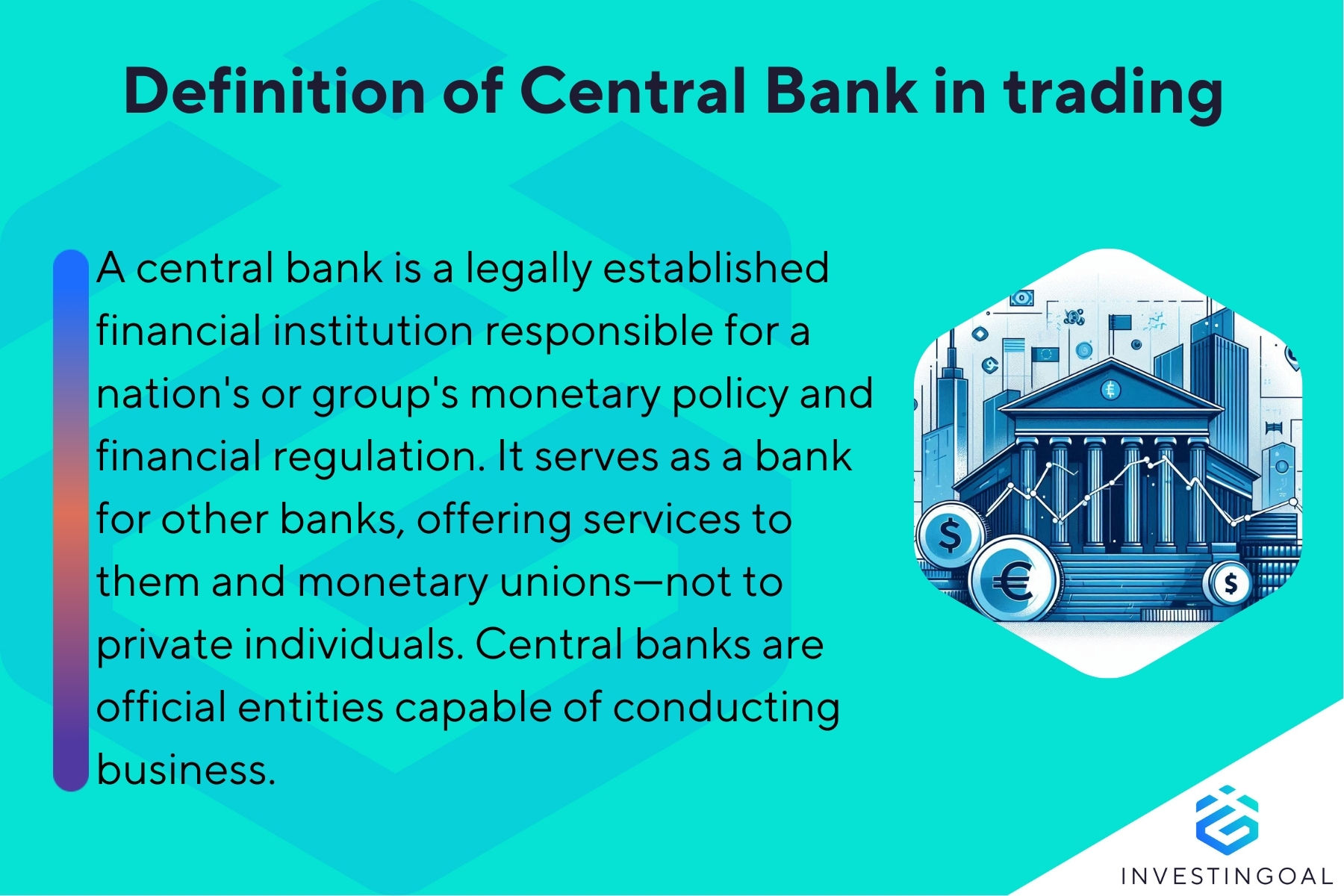
A central bank can be defined as an independent or quasi-independent financial institution that performs a range of public functions related to monetary policy, financial regulation, and the provision of banking services to commercial banks and governments. Its primary objective is usually price stability (controlling inflation) and often full employment, alongside maintaining the stability and integrity of the financial system. This distinction from commercial banks is crucial: commercial banks serve individuals and businesses; central banks serve the financial system itself, acting as its ultimate backstop and architect.
Historical Context and Evolution
The concept of central banking evolved over centuries, initially as a means for governments to finance wars and manage public debt. Early central banks, such as the Bank of England (established in 1694), began as private entities providing loans to the government, gradually acquiring broader public functions. The 20th century saw a significant expansion of central banking, particularly after the Great Depression, which highlighted the need for a robust institutional framework to prevent financial crises and manage economic downturns. Today, nearly every country has a central bank, each tailored to its unique economic structure but sharing common fundamental goals. The development of institutions like the Federal Reserve in the United States (1913) and the European Central Bank (1998) demonstrates a global recognition of their vital role in modern economies.
Independence and Accountability
A cornerstone of modern central banking is its independence from direct political influence. While central banks are ultimately accountable to the public and typically operate under a legislative mandate, operational independence is considered crucial for their effectiveness. This independence allows them to make difficult, sometimes unpopular, decisions necessary for long-term economic stability without succumbing to short-term political pressures. For instance, raising interest rates to curb inflation might be politically unpopular in the short term but essential for sustainable economic health. However, this independence is not absolute; central banks are generally required to report to legislative bodies, publish their financial statements, and provide transparency regarding their policies and decisions. This balance between independence and accountability is vital for maintaining public trust and legitimacy.
Core Functions and Responsibilities
The functions of a central bank are diverse and critical, forming the bedrock of a nation’s financial system and economic policy. These responsibilities extend far beyond simply printing money, encompassing a sophisticated array of tools and strategies to achieve their macroeconomic objectives.
Monetary Policy Implementation
Perhaps the most recognized function of a central bank is the implementation of monetary policy. This involves managing the supply of money and credit to influence economic activity. The primary tools include:
- Setting Interest Rates: Central banks typically set a benchmark interest rate (e.g., the federal funds rate in the US, the main refinancing operations rate in the Eurozone) that influences other interest rates throughout the economy. By raising rates, they make borrowing more expensive, slowing down economic activity to combat inflation. By lowering rates, they encourage borrowing and spending, stimulating the economy during downturns.
- Open Market Operations: This involves the buying and selling of government securities in the open market. Purchasing securities injects money into the financial system, increasing the money supply, while selling them withdraws money.
- Quantitative Easing (QE) and Tightening (QT): These are unconventional monetary policy tools, particularly utilized during and after major financial crises. QE involves large-scale asset purchases to lower long-term interest rates and inject liquidity when conventional tools are insufficient. QT is the reverse, reducing the central bank’s balance sheet to absorb liquidity.
- Reserve Requirements: Central banks can mandate the fraction of deposits that commercial banks must hold in reserve, influencing the amount of money banks have available for lending.
Financial System Stability
A central bank acts as the guardian of financial stability, preventing crises and mitigating their impact.
- Lender of Last Resort: In times of financial distress, when commercial banks face liquidity shortages and cannot borrow from other sources, the central bank steps in to provide emergency loans. This prevents widespread bank runs and systemic collapse, assuring depositors and maintaining trust in the banking system.
- Bank Supervision and Regulation: Many central banks (or related agencies under their purview) are responsible for supervising and regulating commercial banks and other financial institutions. This involves setting capital requirements, liquidity rules, and conducting stress tests to ensure banks operate safely and soundly, protecting depositors and the broader financial system from excessive risk-taking.
- Payment System Oversight: Central banks often oversee and operate national payment systems (e.g., interbank clearing systems), ensuring the secure, efficient, and reliable transfer of funds between financial institutions.
Issuing Currency and Managing Foreign Exchange Reserves
The central bank is the sole issuer of a nation’s currency, ensuring its integrity and managing its circulation.
- Currency Issuance: It controls the printing and distribution of banknotes and coinage, replacing worn currency and ensuring adequate supply to meet demand. This control over physical money is distinct from managing the broader money supply through monetary policy.
- Foreign Exchange Reserves: Central banks hold and manage a country’s foreign exchange reserves (holdings of foreign currencies, gold, and other international assets). These reserves are crucial for defending the national currency’s value, facilitating international trade, and intervening in foreign exchange markets to stabilize the exchange rate if necessary.
Banker to the Government and Commercial Banks
Central banks provide essential banking services to both the government and commercial banks.
- Banker to the Government: They manage the government’s accounts, process payments, and act as an agent for issuing government debt (bonds and treasury bills). They provide short-term financing to the government when needed, though this is typically subject to strict rules to prevent excessive government reliance on the central bank.
- Banker to Commercial Banks: Commercial banks hold accounts with the central bank, which they use to settle interbank transactions, meet reserve requirements, and access liquidity through borrowing facilities.
Impact on Everyday Money and the Economy
The actions of a central bank, while seemingly remote, have a profound and tangible impact on every individual’s financial well-being, investment decisions, and the overall economic climate.
Influencing Inflation and Employment
One of the central bank’s primary mandates is price stability, typically defined as keeping inflation at a low and stable level (e.g., around 2%). High inflation erodes purchasing power, making goods and services more expensive and reducing the value of savings. By adjusting interest rates and other monetary tools, central banks aim to keep inflation in check. Conversely, during economic downturns, they may prioritize supporting employment by stimulating growth, even if it means tolerating slightly higher inflation. The delicate balance between these objectives is a constant challenge for policymakers.
Stability for Personal Finance and Investing
For individuals, central bank policies directly influence the cost of borrowing and the returns on savings and investments. Lower interest rates make mortgages, car loans, and credit card debt cheaper, potentially boosting consumer spending and investment. Higher rates, conversely, make borrowing more expensive but can offer better returns on savings accounts and fixed-income investments. A stable economic environment, fostered by effective central bank policies, provides predictability for financial planning, making it easier for individuals to save for retirement, invest in the stock market, or plan major purchases without the disruptive volatility of hyperinflation or deep recessions.
Supporting Business Growth and Economic Cycles
Businesses rely heavily on access to credit for operations, expansion, and innovation. When central banks lower interest rates, it reduces the cost of capital, encouraging businesses to invest, hire more employees, and expand production. This stimulates economic growth. Conversely, when the economy is overheating, and inflation threatens, tighter monetary policy can cool down demand, preventing speculative bubbles and ensuring sustainable growth. By smoothing out the peaks and troughs of economic cycles, central banks contribute to a more predictable and robust environment for entrepreneurial activity and job creation.
Key Central Banks Around the World
While the general principles of central banking are universal, each major central bank operates within its unique economic and political context, employing slightly different strategies to achieve similar goals.
The Federal Reserve (USA)
Commonly known as “The Fed,” the Federal Reserve System is the central bank of the United States. Established in 1913, it has a dual mandate: maximum employment and price stability. It consists of a Board of Governors in Washington, D.C., and twelve regional Federal Reserve Banks. The Federal Open Market Committee (FOMC) is its primary monetary policymaking body, setting the federal funds rate and conducting open market operations.
The European Central Bank (Eurozone)
The ECB is the central bank for the 19 countries that have adopted the euro currency. Established in 1998, its primary objective is to maintain price stability within the euro area, defined as keeping inflation rates below, but close to, 2% over the medium term. It works in conjunction with the national central banks of the Eurozone countries, forming the Eurosystem.
The Bank of England (UK)
Founded in 1694, the Bank of England is one of the world’s oldest central banks. Its primary objectives are monetary stability (achieving the government’s inflation target) and financial stability. The Monetary Policy Committee (MPC) is responsible for setting interest rates and other monetary policy tools.
The Bank of Japan (Japan)
The Bank of Japan (BOJ) is Japan’s central bank, founded in 1882. Its mandate includes price stability and ensuring the stability of the financial system. For decades, the BOJ has grappled with deflation and low economic growth, leading it to implement unconventional monetary policies, including negative interest rates and massive asset purchases.
Challenges and the Future of Central Banking
Central banks constantly face evolving economic landscapes and new challenges that test their adaptability and foresight.
Navigating Economic Crises
From the Global Financial Crisis of 2008 to the COVID-19 pandemic, central banks have been at the forefront of responding to major economic shocks. These events have often pushed them to deploy unconventional tools, expand their mandates, and collaborate internationally to prevent global financial collapse. The experience gained informs future crisis management strategies, emphasizing agility and comprehensive analytical capabilities.
The Rise of Digital Currencies and FinTech
The proliferation of cryptocurrencies and the emergence of Central Bank Digital Currencies (CBDCs) present both opportunities and challenges for central banks. Cryptocurrencies challenge traditional monetary sovereignty and control, while CBDCs offer potential benefits in terms of payment efficiency, financial inclusion, and monetary policy transmission, though they also raise significant questions about privacy, cybersecurity, and systemic risk. Central banks are actively researching and, in some cases, piloting CBDCs to understand their implications.
Climate Change and ESG Considerations
Increasingly, central banks are recognizing climate change as a source of financial risk (e.g., through physical damage to assets, transition risks from shifting to a green economy). Some are beginning to incorporate climate-related factors into their financial stability assessments, stress tests, and even asset purchase programs, moving beyond their traditional mandates to address broader societal challenges. This expansion into Environmental, Social, and Governance (ESG) factors marks a significant evolution in central banking thought.
Conclusion
A central bank is far more than an abstract government body; it is the linchpin of a modern financial system, an indispensable guardian of economic stability and prosperity. From influencing the cost of borrowing for an individual’s mortgage to preventing systemic financial crises and navigating the complexities of a rapidly evolving global economy, its functions are vast and its impact profound. By meticulously managing monetary policy, ensuring the soundness of financial institutions, and adapting to new challenges, central banks strive to create an environment where personal finances are stable, businesses can thrive, and the broader economy can achieve sustainable growth. Understanding their role is not just about knowing how money works; it’s about appreciating the powerful forces that shape our financial present and pave the way for a more secure economic future.
aViewFromTheCave is a participant in the Amazon Services LLC Associates Program, an affiliate advertising program designed to provide a means for sites to earn advertising fees by advertising and linking to Amazon.com. Amazon, the Amazon logo, AmazonSupply, and the AmazonSupply logo are trademarks of Amazon.com, Inc. or its affiliates. As an Amazon Associate we earn affiliate commissions from qualifying purchases.