
In our hyper-connected era, the expectation of being “always on” is no longer a luxury—it is a baseline requirement. Whether you are traveling for business across international borders or simply driving through a rural stretch of highway, your mobile device’s ability to maintain a signal is powered by a complex technical process known as cell roaming.
At its core, cell roaming allows a mobile subscriber to automatically make and receive voice calls, send and receive data, or access other services when travelling outside the geographical coverage area of their home network. This seamless transition between different carriers’ infrastructures is a marvel of telecommunications engineering, involving intricate protocols, global agreements, and real-time data exchange.
1. The Technical Architecture of Cell Roaming
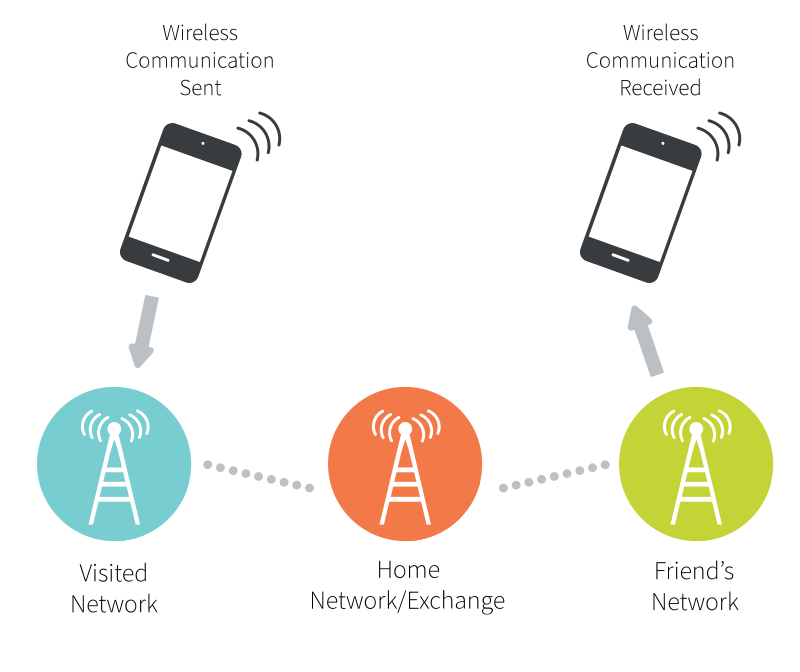
To understand how roaming works, one must first understand the infrastructure of a Public Land Mobile Network (PLMN). Every mobile user belongs to a “Home Network,” which is the carrier where their SIM card is registered and their billing profile resides. When you move beyond the reach of your home network’s towers, your device begins a “handshake” process with a “Visited Network.”
The Role of HLR and VLR
The technical backbone of roaming relies on two primary databases: the Home Location Register (HLR) and the Visitor Location Register (VLR).
- Home Location Register (HLR): This is the central database managed by your home carrier. It contains your permanent subscriber data, including your identity (IMSI), service profile, and your current location.
- Visitor Location Register (VLR): When you enter a new territory, the visited network’s VLR detects your device. It sends a request to your home HLR to verify your identity and check if you are authorized to roam.
Signaling Protocols and Data Exchange
Historically, this exchange was handled via Signaling System No. 7 (SS7). As we have transitioned into 4G LTE and 5G environments, the industry has shifted toward the Diameter protocol. This protocol facilitates the exchange of authentication, authorization, and accounting (AAA) information. When the visited network confirms your credentials, a temporary profile is created in the VLR, allowing the local towers to route your calls and data packets back to your home network’s gateway.
The Backhaul and Routing Process
When you use data while roaming, your traffic doesn’t just disappear into the local internet. In a “Home Routed” roaming scenario, your data is tunneled from the visited network back to your home network’s GGSN (Gateway GPRS Support Node) or P-GW (Packet Data Network Gateway). This ensures that your IP address remains associated with your home country, which is why your streaming services often show your home library even when you are abroad.
2. Differentiating Between Domestic and International Roaming
Roaming is not a monolithic concept; it functions differently depending on geographical and commercial boundaries. Understanding these distinctions is vital for grasping how carriers manage network capacity and costs.
Domestic Roaming: Bridging the Coverage Gap
Domestic roaming occurs when you stay within your home country but move into an area where your primary carrier does not have towers. In large nations like the United States, Canada, or Australia, major carriers often sign “reciprocal roaming agreements.” For example, if Carrier A has a strong presence in cities but lacks coverage in the mountains, they may pay Carrier B to allow their users to hop onto Carrier B’s towers in those rural zones. To the user, this transition is often invisible, though data speeds may occasionally be throttled.
International Roaming: The Global Handshake
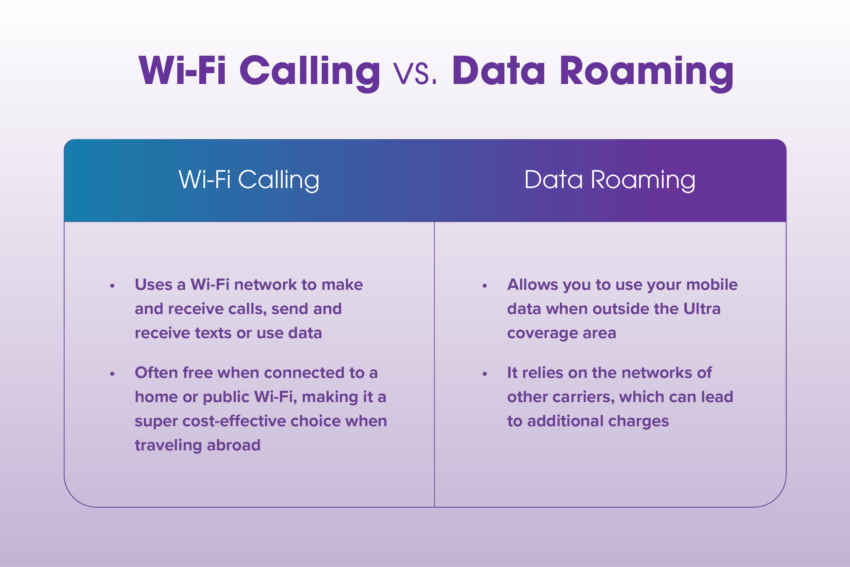
International roaming is significantly more complex because it involves crossing regulatory jurisdictions and differing frequency bands. For international roaming to work, carriers must enter into International Roaming Agreements (IRAs). These legal and technical frameworks define the “inter-operator tariff” (the wholesale cost one carrier charges another) and the technical standards required to ensure compatibility.
Data vs. Voice Roaming
In the legacy era, voice roaming was the primary concern. Today, data roaming dominates the landscape. Data roaming involves the transfer of packets over a “GPRS Roaming Exchange” (GRX) or an “IP Exchange” (IPX). These are private, secure IP networks that sit between global carriers, ensuring that your data travels safely from a tower in Tokyo back to a server in London or New York.
3. The Evolution of Roaming: From 2G to 5G and VoLTE
As mobile technology has evolved from the analog days of 1G to the gigabit speeds of 5G, the mechanism of roaming has undergone a radical transformation.
The Shift to VoLTE (Voice over LTE)
In the 2G and 3G eras, voice calls were handled through circuit-switching. With the advent of 4G LTE, the industry moved to packet-switching. However, roaming with VoLTE proved technically challenging because it required both the home and visited networks to support specific IMS (IP Multimedia Subsystem) configurations. For years, many 4G phones would “drop down” to 3G to complete a call while roaming. As 3G networks are decommissioned globally, the industry is rushing to implement “S8 Home Routed” (S8HR) architectures to ensure seamless high-definition voice roaming.
5G Roaming and Network Slicing
5G introduces a new paradigm called Network Slicing. In a roaming context, 5G allows a visited network to “slice” a portion of its bandwidth specifically for roaming users, ensuring guaranteed latency and speed. This is particularly important for the Internet of Things (IoT). For instance, a connected car roaming across Europe requires a low-latency 5G connection that cannot be interrupted by high-volume traffic from local smartphone users.
The Role of eSIM Technology
The hardware of roaming is also changing. Traditionally, roaming was tied to a physical SIM card. The rise of eSIM (embedded SIM) technology allows users to download “roaming profiles” or secondary local profiles over the air. This has shifted the power dynamic, allowing tech-savvy users to bypass expensive carrier roaming fees by instantly switching to a local or global data provider via software.
4. Digital Security and Privacy in Roaming Environments
While roaming provides convenience, it also introduces specific technical vulnerabilities. When you roam, you are essentially trusting a foreign infrastructure with your digital identity.
The Threat of Rogue Base Stations
In a roaming scenario, your phone is constantly searching for the strongest available signal. Sophisticated attackers can use “IMSI Catchers” (sometimes called Stingrays) to mimic a legitimate roaming tower. Because the device is programmed to prioritize connectivity, it may connect to this rogue station, allowing the attacker to intercept unencrypted traffic or track the user’s location.
Signaling Vulnerabilities (SS7 and Diameter)
The signaling protocols used for roaming (SS7) were designed in an era when telecommunications was a “closed club” of trusted state-run monopolies. Today, these protocols have known vulnerabilities that can allow hackers to intercept SMS-based two-factor authentication codes or redirect calls. Modern carriers are combatting this by implementing Signaling Firewalls that scrutinize the traffic entering their network from roaming partners.
Best Practices for Secure Roaming
To mitigate these risks, technical experts recommend several layers of defense:
- Use of VPNs: A Virtual Private Network creates an encrypted tunnel for your data, ensuring that even if the visited network or an intermediary exchange is compromised, your actual data remains unreadable.
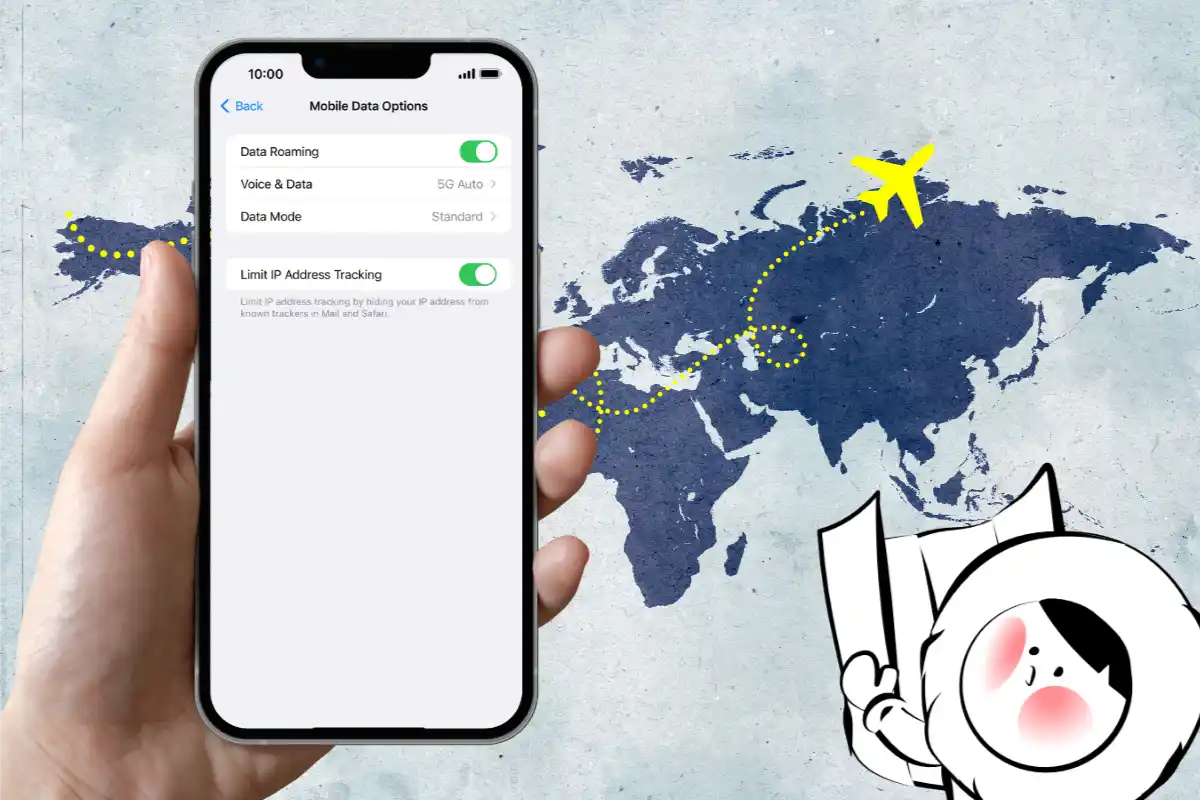
- Disabling “Auto-Join”: Users can configure their devices to manually select networks rather than allowing the phone to hop onto any available signal.
- VoLTE and 5G Encryption: Newer standards offer significantly better air-interface encryption than legacy 2G/3G networks, making it harder for passive eavesdroppers to capture data.
5. The Future of Roaming: Universal Connectivity
The future of cell roaming is moving toward a world where “roaming” as a distinct state might disappear entirely. We are entering an era of “Seamless Global Connectivity.”
Satellite-to-Cell Roaming
One of the most exciting trends in the tech sector is the integration of satellite technology with standard mobile devices. Companies are working on “Direct-to-Cell” satellite roaming, where your phone can roam onto a satellite network when there are no terrestrial towers available. This effectively eliminates “dead zones” globally, using the same LTE and 5G protocols your phone already supports.
The Economics of Zero-Cost Roaming
Regulatory shifts, such as the European Union’s “Roam Like at Home” initiative, have forced carriers to rethink their business models. Technically, this has led to more efficient routing and peering agreements. As data becomes a commodity, the focus is shifting from charging per megabyte to providing a unified global experience where the transition between a Wi-Fi network, a local 5G tower, and a satellite link is entirely managed by AI-driven software on the device.
In conclusion, cell roaming is a sophisticated orchestration of hardware, software, and international cooperation. It represents the pinnacle of global interoperability. As we move deeper into the 5G era and toward the horizon of 6G, the protocols governing how our devices talk to foreign networks will continue to prioritize speed, security, and invisible integration, ensuring that the world remains small even as our digital needs grow.
aViewFromTheCave is a participant in the Amazon Services LLC Associates Program, an affiliate advertising program designed to provide a means for sites to earn advertising fees by advertising and linking to Amazon.com. Amazon, the Amazon logo, AmazonSupply, and the AmazonSupply logo are trademarks of Amazon.com, Inc. or its affiliates. As an Amazon Associate we earn affiliate commissions from qualifying purchases.