
For nearly half a decade, a specific corner of the internet was obsessed with a single, pixelated mystery known as “Celebrity Number Six.” What began as a curiosity regarding an unidentified face on a piece of patterned fabric transformed into one of the most significant case studies in modern digital sleuthing, open-source intelligence (OSINT), and the evolving capabilities of facial recognition technology. The journey to identify this individual serves as a profound narrative on how technology bridges the gap between human memory and the vast, often unindexed, digital archives of our past.
The Digital Origins of the Great Internet Mystery
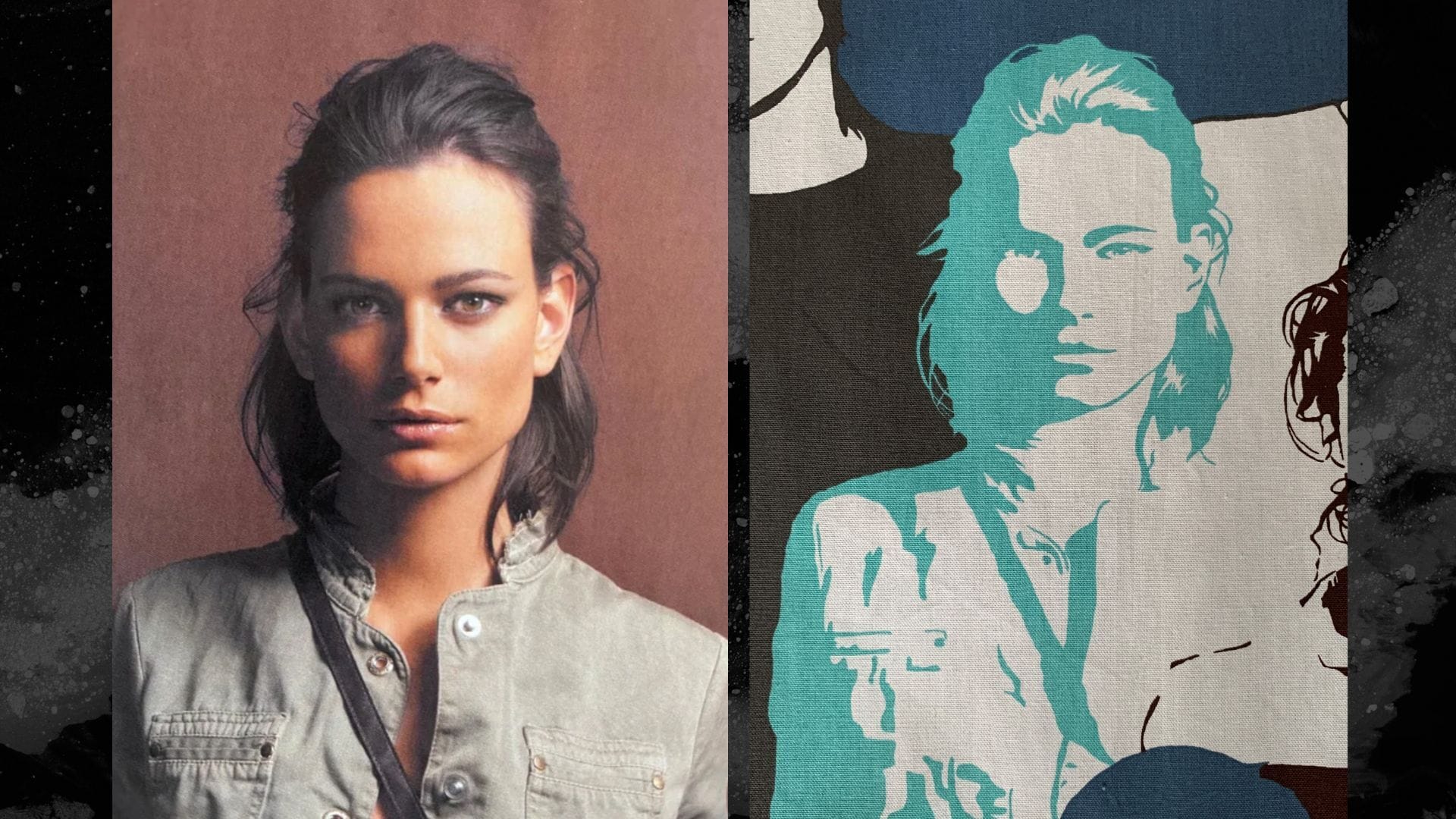
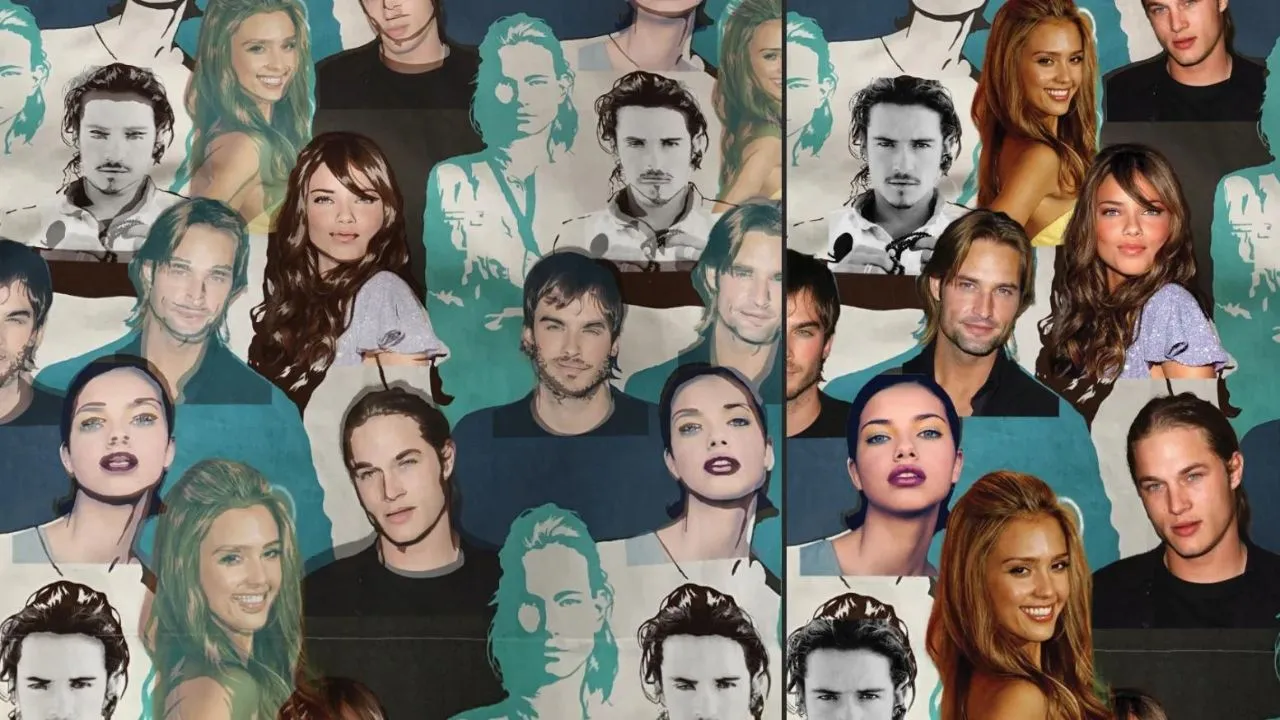
The mystery originated in 2020 on the r/CelebrityNumberSix subreddit, where a user posted a photo of a fabric print featuring eight stylized celebrity portraits. While household names like Adriana Lima, Josh Holloway, and Jessica Alba were identified almost instantly, the sixth face remained an enigma. This was not merely a pop-culture puzzle; it was a technical challenge that highlighted the limitations of current image-processing algorithms.
From Analog Fabric to Digital Subreddits
The source material was a piece of textile—likely a curtain or duvet cover—manufactured in the late 2000s. The artist had transformed real-life photographs into high-contrast, two-tone vector art. This transformation was the first technological hurdle. Vectorization strips away the fine details—skin texture, subtle gradients, and micro-expressions—that modern facial recognition software relies on to create a biometric template. For the digital community, the task was to reverse-engineer a stylized graphic back into its photographic source.
The Constraints of Low-Resolution Visual Data
In the early stages of the search, the primary obstacle was the quality of the digital assets. Users were working with photographs of fabric, which introduced physical distortions like folds, shadows, and fabric weave interference (moiré patterns). Tech-savvy sleuths attempted to “clean” these images using Photoshop and AI upscaling tools, but every iteration risked introducing “hallucinations”—details created by the AI that weren’t in the original photo. This highlighted a core issue in digital forensics: the delicate balance between enhancing an image and preserving its evidentiary integrity.
The Evolution of Image Recognition Technology in the Search
The search for Celebrity Number Six spanned several years, a period during which facial recognition technology underwent a radical transformation. The tools available to the average user in 2024 are exponentially more powerful than those available when the search began, and this evolution was mirrored in the community’s methodology.
Reverse Image Search Engines and Their Limitations
In the beginning, users relied on traditional reverse image search (RIS) engines like Google Images, Bing Visual Search, and TinEye. These tools work primarily through “hashing” and color-histogram matching. However, because the fabric was a stylized interpretation of a photo, the pixel-to-pixel match was non-existent. Traditional RIS is excellent at finding copies of the same image, but it struggles significantly with finding the source of an artistic transformation. This forced the community to look toward more advanced biometric-based search tools.
Leveraging Neural Networks for Facial Reconstruction
As the search intensified, sleuths turned to AI-powered facial recognition platforms like PimEyes and FaceCheck.ID. Unlike Google, these platforms use deep learning neural networks to map facial landmarks—the distance between eyes, the bridge of the nose, and the contour of the jawline—rather than looking at pixel data.
The tech community within the subreddit began using Generative Adversarial Networks (GANs) to “de-stylize” Celebrity Number Six. By training models on the other identified celebrities from the fabric (using their known photos vs. their vector versions), they attempted to create a predictive model of what the original photograph of “Six” might look like. This was a sophisticated application of machine learning usually reserved for professional forensic labs.
The Role of Crowdsourced OSINT (Open-Source Intelligence)

While AI provided the tools, the search’s success was rooted in the principles of Open-Source Intelligence (OSINT). This involved the systematic collection and analysis of publicly available data to solve a mystery.
Collaborative Databases and Metadata Extraction
The search wasn’t just about looking at a face; it was about the metadata of the mid-2000s fashion industry. Sleuths built massive, searchable databases of fashion magazine covers (Vogue, Elle, Glamour) from 2003 to 2009. They utilized web scraping scripts to aggregate thousands of images from stock photo sites like Getty Images and Alamy. By using Python scripts to filter results by “blonde,” “female,” “high forehead,” and “year,” they narrowed down millions of possible images to a few thousand candidates. This demonstrated the power of combining automated data scraping with manual human verification.
Social Engineering and the Human-Tech Hybrid Approach
Technology alone could not solve the mystery because the source photograph was not indexed in a way that AI could easily find. The community eventually employed “social engineering” techniques—reaching out via LinkedIn and Instagram to photographers, talent agents, and graphic designers who worked in the industry during the mid-2000s. This hybrid approach—using digital communication platforms to track down “analog” human memories—eventually led to a breakthrough. It proved that in the age of AI, the human element remains a vital component of the technological ecosystem.
How AI Finally Cracked the Code
In September 2024, the mystery was finally solved. The individual was identified as Leticia Sardá, a Spanish model, photographed for a 2006 supplement of Woman magazine. The discovery was a triumph of persistent digital investigation.
Advanced Facial Analysis Algorithms
The final identification happened when a user utilized a combination of precise keyword searching and advanced image filtering on archival sites. Once the original photo was found, the community used overlay technology to prove the match. By using transparency layers in digital editing software, they aligned the vector art from the fabric with the rediscovered photograph. The mathematical alignment of the hairline, shadows on the neck, and the specific glint in the eye provided a 100% match, a feat that would have been impossible without high-precision digital overlay tools.
The Breakthrough: From Pixelated Noise to Photographic Match
The resolution of the Celebrity Number Six mystery was not just a win for the subreddit; it was a validation of the “long-tail” of internet data. The photo of Leticia Sardá existed in a digital “blind spot”—a scan of a physical magazine that hadn’t been properly tagged or SEO-optimized. The fact that it was found underscores the increasing capability of the internet to act as a collective, persistent memory. It also highlighted the efficacy of modern AI noise-reduction tools, which allowed sleuths to maintain hope that a match existed somewhere in the “noise” of the internet’s vast archives.
The Future of Digital Identification and Privacy
The search for Celebrity Number Six is more than a fun internet story; it is a precursor to the future of digital identification. The same technologies used to find a forgotten model are being refined for a variety of high-stakes applications.
Ethical Implications of Ubiquitous Facial Recognition
The ease with which a group of hobbyists used AI to track down an individual from a 15-year-old stylized drawing raises significant questions about privacy. If a decentralized group can find a person based on a distorted curtain print, what can a state actor or a corporation do with high-resolution CCTV footage? The “Number Six” case serves as a proof of concept for the power of modern biometric surveillance, highlighting the need for robust digital privacy frameworks.
What the Search for Number Six Teaches Us About Big Data
Finally, this saga illustrates the reality of Big Data. We live in an era where almost nothing is truly “lost.” If an image was ever digitized, it exists somewhere in the cache of a search engine or the archives of a defunct website. The challenge is no longer storing information, but retrieving it. As AI tools for searching unindexed data become more sophisticated, the “mysteries” of the analog past will continue to be solved by the digital tools of the present.
Celebrity Number Six was a ghost in the machine—a remnant of the pre-social media era that was finally caught by the net of 21st-century technology. The project’s success is a testament to the power of community, the evolution of AI, and the relentless nature of the digital age.
aViewFromTheCave is a participant in the Amazon Services LLC Associates Program, an affiliate advertising program designed to provide a means for sites to earn advertising fees by advertising and linking to Amazon.com. Amazon, the Amazon logo, AmazonSupply, and the AmazonSupply logo are trademarks of Amazon.com, Inc. or its affiliates. As an Amazon Associate we earn affiliate commissions from qualifying purchases.