
In the dynamic world of business, making informed decisions is paramount to success. From launching a new product to investing in cutting-edge technology, every choice carries potential rewards and inherent risks. Navigating this landscape effectively often hinges on a fundamental analytical framework: Cost-Benefit Analysis (CBA). But what exactly is CBA in a business context, and how can it be leveraged across the key domains of Tech, Brand, and Money to drive strategic advantage?
This article delves deep into the concept of CBA, exploring its core principles, its application within different business functions, and its significance for achieving optimal outcomes. We’ll uncover how a robust CBA can illuminate the path forward, ensuring that resources are allocated wisely and that investments align with overarching business objectives.
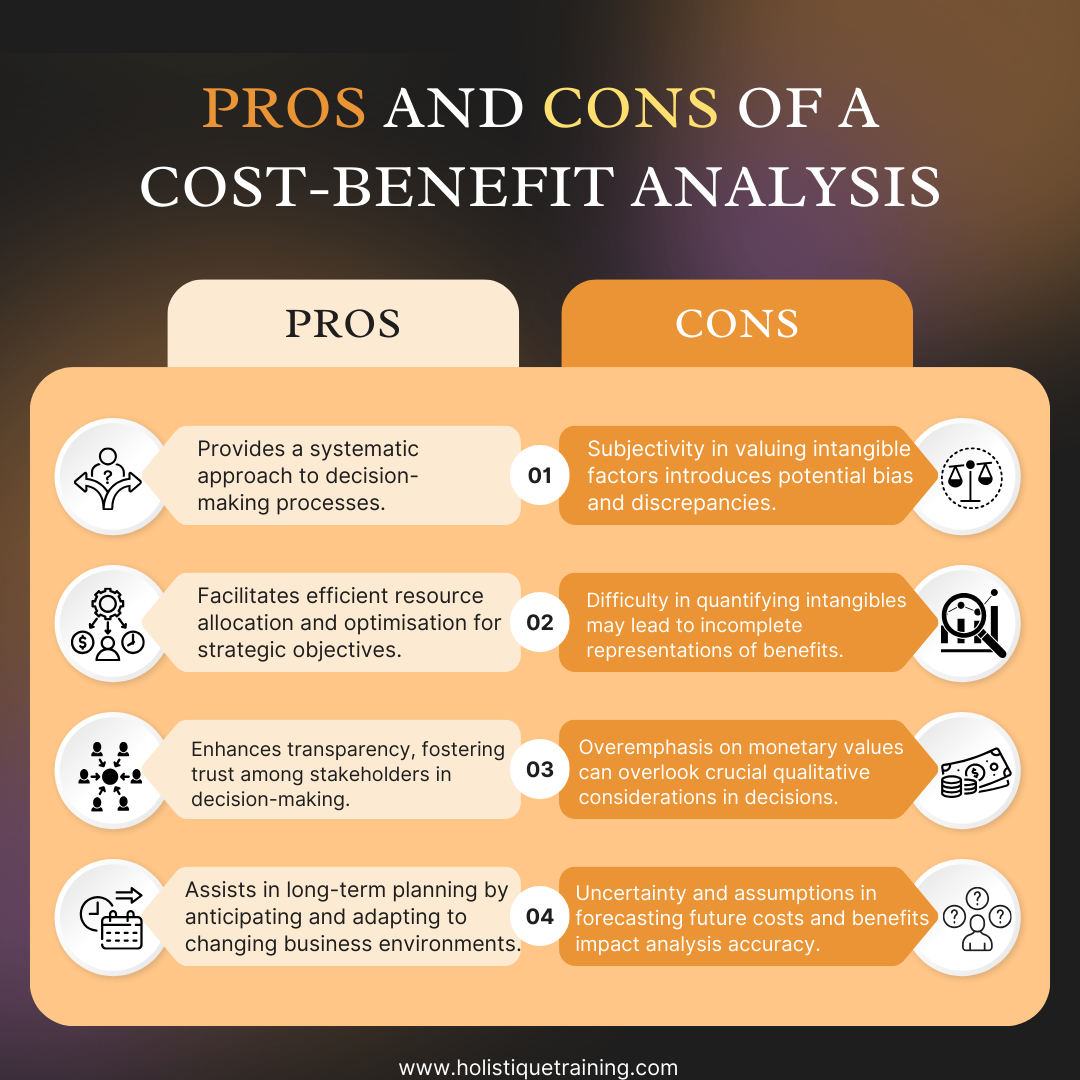
The Foundation of Cost-Benefit Analysis: A Strategic Framework
At its heart, Cost-Benefit Analysis is a systematic process used to evaluate the desirability of a given decision or project. It involves comparing the total expected costs against the total expected benefits, typically in monetary terms, to determine whether the potential advantages outweigh the potential disadvantages. The fundamental goal of CBA is to provide a quantitative basis for decision-making, moving beyond intuition and gut feelings to a more objective assessment.
Understanding the Components of CBA
To effectively implement CBA, it’s crucial to grasp its two primary components:
-
Costs: These encompass all expenses associated with undertaking a particular action or project. Costs can be direct or indirect, tangible or intangible.
- Direct Costs: These are expenses directly attributable to the project. Examples include the purchase of new software, the cost of hiring additional staff for a specific initiative, or the price of raw materials for a new product.
- Indirect Costs (Overhead): These are expenses that are not directly tied to a specific project but are necessary for the overall operation of the business. This could include rent for office space, utilities, or administrative salaries. In CBA, allocating these indirectly can sometimes be complex, but it’s crucial for a complete picture.
- Tangible Costs: These are costs that can be easily quantified in monetary terms. Examples include equipment purchases, salary expenses, and material costs.
- Intangible Costs: These are costs that are harder to quantify but can have a significant impact. This might include a decline in employee morale due to a new, disruptive policy, a negative impact on brand reputation from a failed project, or the opportunity cost of not pursuing a more profitable alternative.
-
Benefits: These represent the positive outcomes or advantages expected from a particular decision or project. Like costs, benefits can also be direct or indirect, tangible or intangible.
- Direct Benefits: These are the immediate and measurable positive outcomes. Examples include increased revenue, cost savings achieved through a new process, or improved efficiency leading to higher output.
- Indirect Benefits: These are less direct but still valuable positive outcomes. This could include enhanced customer satisfaction leading to greater loyalty, improved employee productivity due to better tools, or a stronger brand image resulting from successful innovation.
- Tangible Benefits: Similar to tangible costs, these are benefits that can be readily measured in monetary terms. This might be an increase in sales figures, a reduction in waste leading to cost savings, or improved profit margins.
- Intangible Benefits: These are benefits that are more qualitative and difficult to assign a precise monetary value to. Examples include improved employee morale, enhanced brand recognition, increased customer loyalty, or a better understanding of market trends. While harder to quantify, these benefits are often critical for long-term business health.
The Process of Conducting a CBA
The process of conducting a Cost-Benefit Analysis typically involves several key steps:
- Identify the Decision/Project: Clearly define the specific decision or project you are evaluating. This could be anything from adopting a new CRM system to investing in an AI-powered marketing platform.
- Identify All Relevant Costs: Brainstorm and list every potential cost associated with the decision, both direct and indirect, tangible and intangible, over the project’s lifecycle.
- Identify All Relevant Benefits: Similarly, brainstorm and list all anticipated benefits, again considering direct and indirect, tangible and intangible, and their potential impact.
- Quantify Costs and Benefits: Assign a monetary value to each identified cost and benefit. This is where intangible aspects become challenging, requiring estimation or the use of proxies.
- Discount Future Costs and Benefits: For decisions with long-term implications, it’s crucial to account for the time value of money. Future costs and benefits are discounted to their present value using a predetermined discount rate. This acknowledges that money today is worth more than money in the future due to inflation and potential investment returns.
- Compare Total Costs and Total Benefits: Sum up the present values of all costs and all benefits.
- Calculate the Net Benefit or Cost-Benefit Ratio:
- Net Benefit = Total Discounted Benefits – Total Discounted Costs: A positive net benefit indicates that the project is financially viable.
- Cost-Benefit Ratio = Total Discounted Benefits / Total Discounted Costs: A ratio greater than 1 suggests that the benefits outweigh the costs.
- Perform Sensitivity Analysis: Test how changes in key assumptions (e.g., discount rate, cost estimates, benefit projections) affect the outcome. This helps understand the robustness of the analysis.
- Make a Decision: Based on the quantitative analysis and consideration of qualitative factors, make an informed decision about whether to proceed with the project or decision.
CBA in Action: Navigating Tech, Brand, and Money
The power of CBA lies in its adaptability. It’s not just a theoretical concept; it’s a practical tool that can be applied across various business functions to optimize resource allocation and strategic planning.
Leveraging CBA in Technology Investments
The tech landscape is constantly evolving, with new software, AI tools, and gadgets emerging at an unprecedented pace. For businesses, deciding which technologies to adopt is a critical and often costly endeavor. CBA provides a structured approach to this decision-making process.
Evaluating Software and AI Tool Adoption
When considering a new piece of software, whether it’s a project management tool, a customer relationship management (CRM) system, or a sophisticated AI-powered analytics platform, businesses must conduct a thorough CBA.
-
Costs:
- Direct Costs: This includes licensing fees, implementation costs (consultant fees, internal IT time), training expenses for employees, and potential hardware upgrades to support the new software.
- Indirect Costs: Downtime during implementation, potential resistance from employees to adopt new workflows, and the ongoing cost of maintenance and support.
- Intangible Costs: Disruption to existing processes, potential learning curves that temporarily reduce productivity, and the risk of the chosen software becoming obsolete quickly.
-
Benefits:
- Tangible Benefits: Increased efficiency and productivity leading to higher output, reduced operational costs (e.g., automating manual tasks, reducing errors), improved data accuracy for better decision-making, and potential revenue growth through enhanced customer insights or faster product development cycles.
- Intangible Benefits: Improved employee satisfaction by providing better tools, enhanced collaboration among teams, a more streamlined user experience for customers (if customer-facing software), and a competitive edge by leveraging advanced technological capabilities.
Example: A company considering an AI-powered customer service chatbot.
- Costs: Development or subscription fees, integration with existing systems, training the AI model, and ongoing maintenance.
- Benefits: Reduced customer service staffing costs, 24/7 availability, faster response times, improved customer satisfaction, and freeing up human agents for more complex issues.
Assessing Gadget and Hardware Investments
From upgrading office equipment to investing in specialized machinery, decisions around gadgets and hardware also benefit from CBA.
- Costs: Purchase price, installation, maintenance, energy consumption, and disposal costs at the end of its lifecycle.
- Benefits: Increased speed and efficiency of operations, improved quality of output, enhanced worker safety, and potential for new capabilities that were previously impossible.
Example: A manufacturing firm evaluating the purchase of a new, automated production line.
- Costs: The significant capital expenditure for the machinery, installation, training for operators, and ongoing maintenance contracts.
- Benefits: Higher production volume, reduced labor costs per unit, improved product consistency and quality, and the ability to produce more complex designs.
Enhancing Brand Strategy with CBA

Brand is a cornerstone of any successful business, and strategic decisions related to brand building and management require careful evaluation. CBA can help ensure that brand investments yield the desired returns.
Evaluating Marketing and Design Initiatives
Every marketing campaign and design overhaul comes with associated costs and the expectation of brand enhancement.
- Costs: Advertising spend (digital ads, print, television), creative agency fees, content creation costs, website redesign expenses, and the cost of producing marketing materials.
- Benefits: Increased brand awareness, improved brand perception and reputation, higher customer engagement and loyalty, increased market share, and ultimately, revenue growth.
Example: A company planning a major rebranding effort.
- Costs: Market research, logo and visual identity design, website overhaul, new packaging, advertising campaigns to communicate the change, and internal training.
- Benefits: A refreshed and modern brand image, better alignment with target audience values, increased memorability, improved competitive positioning, and potentially attracting new customer segments.
Analyzing Reputation Management Strategies
Protecting and enhancing brand reputation is crucial, and proactive strategies require investment.
- Costs: Public relations retainers, crisis communication planning, social media monitoring tools, and employee training on customer interaction.
- Benefits: Mitigation of negative publicity, enhanced trust and credibility, improved customer retention, and a stronger positive public image that can withstand challenges.
Example: A company investing in a robust social media monitoring and response system.
- Costs: Software subscriptions, dedicated social media management team.
- Benefits: Early detection and mitigation of negative sentiment, proactive engagement with customers, identification of emerging trends and opportunities, and improved brand responsiveness.
Optimizing Financial Decisions with CBA
In the realm of Money, CBA is perhaps most intuitively understood, as it directly deals with financial gains and losses. However, its application extends beyond simple budgeting to encompass strategic financial planning and investment decisions.
Analyzing Personal Finance and Investment Choices
For individuals and businesses alike, personal finance decisions often involve a CBA.
- Costs: Investment capital, transaction fees, taxes, potential loss of capital.
- Benefits: Potential for capital appreciation, dividend income, interest earnings, or achieving financial goals (e.g., retirement).
Example: Deciding whether to invest in stocks or bonds.
- Costs: Initial investment amount, brokerage fees, potential market volatility.
- Benefits: Potential for higher returns (stocks) versus greater security (bonds), income generation, and long-term wealth building.
Evaluating Online Income and Side Hustle Opportunities
For those looking to generate additional income, CBA helps in assessing the viability of different ventures.
- Costs: Time investment, startup costs (e.g., website, equipment, inventory), marketing expenses, platform fees.
- Benefits: Additional income streams, skill development, flexibility, potential for business growth.
Example: Starting an e-commerce side hustle selling handmade crafts.
- Costs: Cost of materials, platform fees (e.g., Etsy), marketing expenses, shipping costs, time spent creating products and managing orders.
- Benefits: Extra income, creative outlet, potential to build a small business.
Making Business Finance Decisions
From securing loans to investing in new equipment, business finance decisions are ripe for CBA.
- Costs: Loan interest payments, upfront capital expenditure, opportunity cost of capital.
- Benefits: Increased production capacity, improved efficiency leading to cost savings, expansion into new markets, or the ability to take on larger projects.
Example: A business considering taking out a loan to purchase new equipment.
- Costs: Principal repayment, interest charges, potential impact on cash flow.
- Benefits: Increased productivity, reduced operational costs, ability to fulfill larger orders, and ultimately, increased revenue and profitability.

The Indispensable Role of CBA in Modern Business
In conclusion, Cost-Benefit Analysis is far more than just a financial calculation; it’s a strategic compass that guides businesses toward optimal decisions. By systematically evaluating the potential costs against the anticipated benefits, organizations can:
- Prioritize investments: Focus resources on projects with the highest potential return and strategic alignment.
- Mitigate risks: Identify potential downsides early and develop strategies to address them.
- Enhance efficiency: Optimize resource allocation and operational processes.
- Drive innovation: Make informed decisions about adopting new technologies and strategies.
- Improve accountability: Provide a clear, data-driven justification for strategic choices.
Whether you’re evaluating the latest AI tool, crafting a new brand identity, or making a crucial financial investment, a well-executed Cost-Benefit Analysis is an indispensable tool in the modern business arsenal. It empowers leaders to move beyond guesswork and make decisions that are not only sound but also strategically aligned for sustainable growth and success. By embracing CBA, businesses can navigate the complexities of today’s competitive landscape with greater confidence and achieve their most ambitious goals.
aViewFromTheCave is a participant in the Amazon Services LLC Associates Program, an affiliate advertising program designed to provide a means for sites to earn advertising fees by advertising and linking to Amazon.com. Amazon, the Amazon logo, AmazonSupply, and the AmazonSupply logo are trademarks of Amazon.com, Inc. or its affiliates. As an Amazon Associate we earn affiliate commissions from qualifying purchases.