
The automotive world is a fascinating realm of engineering marvels, performance aspirations, and intricate systems designed to balance power, efficiency, and environmental responsibility. Among the most commonly discussed and modified components, particularly in performance-oriented vehicles, is the exhaust system. Within this system, the downpipe plays a crucial role, connecting the turbocharger to the rest of the exhaust. When enthusiasts delve into performance upgrades, the term “catless downpipe” frequently emerges, signaling a significant modification with profound technical, performance, and regulatory implications.
The Foundation: Exhaust Systems and Catalytic Converters
To truly grasp the essence of a catless downpipe, it’s essential to understand the standard components and their functions within a modern vehicle’s exhaust system. This complex network is designed to channel exhaust gases away from the engine, reduce noise, and, critically, mitigate harmful emissions.
Standard Exhaust Components
A typical exhaust system comprises several key elements:
- Exhaust Manifold: Collects exhaust gases from the engine’s cylinders.
- Downpipe: Connects the turbocharger (in forced induction engines) or the exhaust manifold directly to the catalytic converter or the rest of the exhaust system. This is the focus of our discussion.
- Catalytic Converter (Cat): A device containing a catalyst (often platinum, palladium, or rhodium) that converts toxic pollutants in exhaust gas into less toxic substances.
- Resonator: A chamber designed to cancel out specific sound frequencies, reducing overall exhaust noise.
- Muffler: Further reduces exhaust noise using a series of baffles and chambers.
- Tailpipe: The final section from which exhaust gases exit the vehicle.
The Catalytic Converter’s Function
The catalytic converter is a cornerstone of modern emissions control technology. Introduced widely in the 1970s, its primary purpose is to chemically transform three major pollutants produced by internal combustion engines:
- Nitrogen Oxides (NOx): Converted into nitrogen gas (N2) and oxygen gas (O2).
- Carbon Monoxide (CO): Oxidized into carbon dioxide (CO2).
- Unburnt Hydrocarbons (HC): Oxidized into carbon dioxide (CO2) and water vapor (H2O).
This conversion process relies on a honeycomb structure coated with precious metals, which act as catalysts. As hot exhaust gases flow through these channels, chemical reactions occur, significantly reducing the environmental impact of the vehicle’s emissions. The presence of a catalytic converter, while vital for air quality, introduces a degree of restriction to exhaust gas flow, which can be a point of contention for performance enthusiasts.
Unpacking the Catless Downpipe
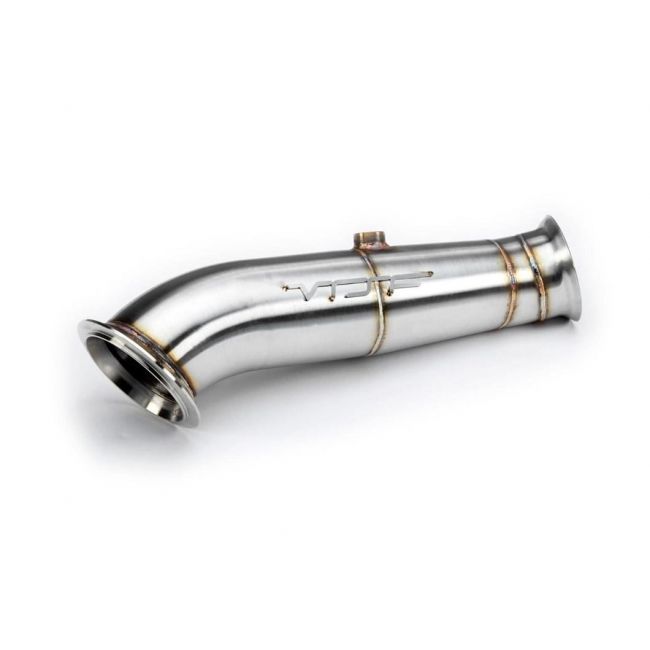
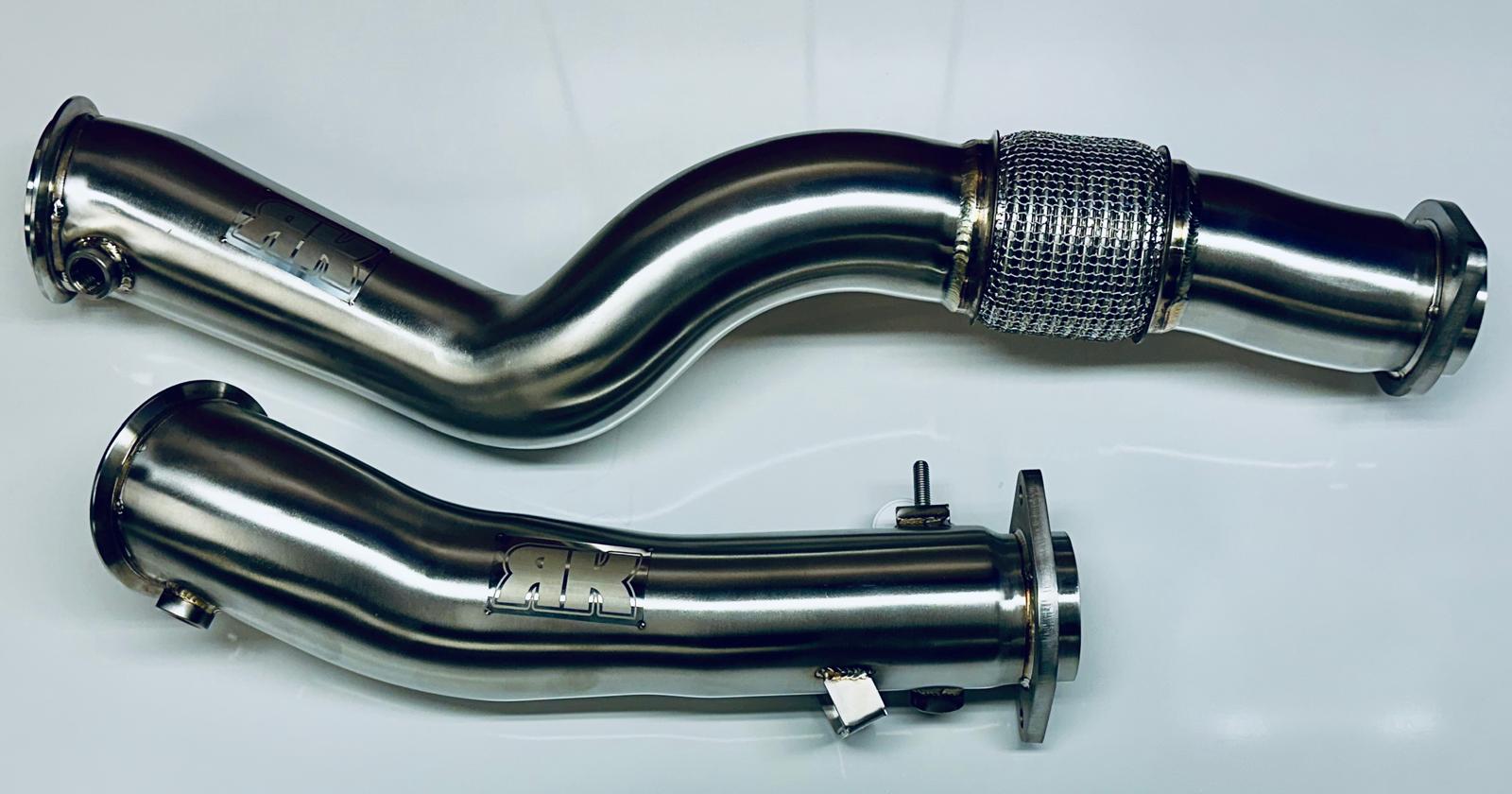
A catless downpipe, as its name suggests, is a downpipe that explicitly lacks a catalytic converter. It is designed as a direct replacement for the OEM (Original Equipment Manufacturer) downpipe, which invariably includes one or more catalytic converters, especially in turbocharged vehicles where the downpipe is strategically placed to accommodate the catalytic converter directly after the turbocharger.
Design and Materials
Catless downpipes are typically constructed from high-grade stainless steel (e.g., T304 stainless steel) for durability, corrosion resistance, and heat tolerance. Their design prioritizes a smooth, unobstructed pathway for exhaust gases. This often means a larger diameter pipe with fewer bends or less restrictive curves compared to a stock unit, aiming to maximize exhaust flow.
Instead of the catalyst-filled honeycomb matrix found in catted downpipes, a catless downpipe features a straight-through design. Some designs might incorporate a small resonator, but the defining characteristic is the absence of catalytic material. This design philosophy is rooted in the pursuit of minimizing backpressure and maximizing turbocharger efficiency and engine power.
How it Differs from a Catted Downpipe
The fundamental difference lies in the presence of the catalytic converter.
- Catted Downpipe (OEM or Aftermarket High-Flow): Contains one or more catalytic converters. Aftermarket high-flow catalytic converters aim to reduce flow restriction while still performing emissions conversion, often using a less dense “cell count” honeycomb structure than OEM cats.
- Catless Downpipe: Completely omits the catalytic converter. This eliminates all the flow restriction imposed by the catalyst brick, allowing for the freest possible exhaust gas evacuation.
The absence of the catalytic converter is the technical modification that leads to all the subsequent performance changes and regulatory considerations associated with catless downpipes.
Technical Performance Implications
The decision to install a catless downpipe is almost always driven by a desire for enhanced vehicle performance. The technical mechanisms by which this component influences an engine’s output are directly related to exhaust gas dynamics.
Enhanced Exhaust Flow and Backpressure Reduction
The primary performance benefit of a catless downpipe stems from its ability to dramatically reduce exhaust backpressure. The catalytic converter, despite its environmental benefits, acts as a significant impediment to exhaust gas flow due to its dense, tortuous internal structure. By removing this restriction, exhaust gases can exit the turbocharger and engine more rapidly and efficiently.
For turbocharged engines, reduced backpressure translates directly into:
- Faster Spool Time (Reduced Turbo Lag): The turbocharger can accelerate to its operating speed more quickly because there’s less resistance against the exhaust turbine. This results in a more immediate and responsive power delivery.
- Increased Turbocharger Efficiency: With less resistance to overcome, the turbocharger operates more efficiently, potentially allowing it to generate higher boost pressures with less effort.
- Improved Volumetric Efficiency: The engine can “breathe” better. Less residual exhaust gas remains in the cylinders after the exhaust stroke, allowing for a fuller charge of fresh air and fuel in the subsequent intake stroke.

Impact on Engine Tuning and Power Output
The installation of a catless downpipe necessitates changes to the engine’s ECU (Engine Control Unit) calibration, commonly known as “tuning.” A vehicle’s ECU is programmed from the factory to operate optimally with the stock exhaust system, including its catalytic converters.
- Fueling and Ignition Timing Adjustments: With significantly reduced backpressure and altered exhaust gas characteristics, the engine’s air-fuel ratio and ignition timing need to be recalibrated to take full advantage of the improved flow. Without proper tuning, the engine might run too lean or too rich, potentially causing damage or suboptimal performance.
- Oxygen Sensor Readings: Modern vehicles utilize multiple oxygen sensors (O2 sensors) in the exhaust stream. Typically, one sensor is before the catalytic converter (upstream) and another after it (downstream). The downstream sensor monitors the catalytic converter’s efficiency. With a catless downpipe, the downstream O2 sensor will detect a rich exhaust gas mixture, indicating that the catalyst is not functioning (because it’s absent). This will trigger a “Check Engine Light” (CEL) on the dashboard, accompanied by specific diagnostic trouble codes (DTCs) like P0420 (Catalyst System Efficiency Below Threshold). Proper tuning often involves “fooling” or reprogramming the ECU to ignore these readings or compensate for the missing catalyst, preventing the CEL.
- Significant Power and Torque Gains: When properly tuned, a catless downpipe can unlock substantial power and torque increases, especially in turbocharged applications. Gains of 20-50 horsepower are not uncommon, depending on the vehicle, engine, and specific tune. These gains are realized throughout the RPM range, with noticeable improvements in mid-range torque and top-end power.
Sound Profile Alterations
Removing the catalytic converter also has a pronounced effect on the vehicle’s exhaust note. The catalyst material acts as a sound attenuator, absorbing and dampening exhaust pulses.
- Louder Exhaust: Without the catalytic converter, the exhaust sound becomes significantly louder and often more aggressive.
- Richer Tone: Many enthusiasts describe the sound as deeper, more guttural, and less muffled, often with increased crackles and pops on deceleration.
- Rattling/Metallic Sounds: In some cases, especially with cheap or poorly designed systems, rattling or metallic resonance can occur.
The subjective “quality” of the sound is a matter of personal preference, but the objective increase in volume and change in tone are undeniable technical outcomes.
Environmental and Legal Considerations
While the performance benefits of a catless downpipe are clear, its installation carries significant environmental and legal ramifications that demand serious consideration.
Emissions Impact
The most direct and critical consequence of a catless downpipe is the drastic increase in harmful emissions. Without the catalytic converter, the exhaust gases contain high levels of:
- Unburnt Hydrocarbons (HC)
- Carbon Monoxide (CO)
- Nitrogen Oxides (NOx)
These pollutants contribute to smog, acid rain, and respiratory issues, among other environmental and health problems. From an environmental standpoint, a catless downpipe fundamentally undermines decades of progress in reducing automotive pollution.
Legal Ramifications and Compliance
The legality of catless downpipes varies significantly by region, often depending on local environmental protection laws and vehicle inspection standards.
- Federal Regulations (e.g., EPA in the US): In many countries, federal law prohibits the removal or tampering with emissions control devices on street-driven vehicles. This means installing a catless downpipe on a vehicle used on public roads is often illegal.
- State/Regional Inspection Programs: Many states or regions have mandatory emissions testing or safety inspections. Vehicles equipped with catless downpipes will almost certainly fail these tests due to elevated emissions levels or the presence of a CEL.
- Off-Road Use Only: Manufacturers and vendors of catless downpipes often explicitly state that these products are “for off-road use only” or “for racing applications only.” This disclaimer aims to protect them from liability, but it places the responsibility entirely on the end-user for compliance with local laws.
- Fines and Penalties: Owners caught operating vehicles with illegal emissions modifications can face substantial fines, vehicle impoundment, or forced remediation (requiring the reinstallation of a catalytic converter).
OBD-II and CEL Issues
Modern vehicles utilize On-Board Diagnostics II (OBD-II) systems to monitor engine performance and emissions controls. The downstream O2 sensor, located after the catalytic converter, is a crucial component of this system. When a catless downpipe is installed, this sensor will detect that the catalytic converter is not performing its function (as there’s no catalyst to perform it), leading to:
- Check Engine Light (CEL): The ECU will illuminate the CEL on the dashboard.
- Diagnostic Trouble Codes (DTCs): Specific codes related to catalyst inefficiency (e.g., P0420, P0430) will be stored.
- Potential “Limp Mode”: In some vehicles, the ECU may enter a “limp mode” or reduce engine power to prevent potential damage, believing there’s a critical fault.
While aftermarket tuning can often suppress the CEL and prevent limp mode by reprogramming the ECU to ignore the downstream O2 sensor’s readings, this does not make the vehicle compliant with emissions laws and may still fail inspections that check for monitor readiness status.
Installation and Maintenance Considerations
Installing a catless downpipe is a significant mechanical undertaking that impacts the vehicle’s performance and longevity in several ways.
Professional Installation Recommendations
Due to the complexity of the exhaust system, the tight clearances often found around turbochargers, and the critical nature of proper sealing, professional installation is highly recommended.
- Specialized Tools and Expertise: Removing an old, heat-cycled downpipe can be challenging, often requiring specialized tools and experience to avoid damaging bolts or other components.
- Proper Fitment and Sealing: Correct installation ensures no exhaust leaks, which can lead to performance loss, dangerous exhaust fumes entering the cabin, and inaccurate O2 sensor readings.
- Integration with Other Components: The downpipe must integrate seamlessly with the turbocharger’s exhaust housing and the rest of the exhaust system.
Potential Wear and Tear
While a catless downpipe can enhance performance, it can also introduce certain stresses on other engine components if not managed properly.
- Increased Exhaust Gas Temperatures: In some scenarios, especially under heavy load, removing the catalyst might slightly alter exhaust gas temperatures, which could theoretically impact the turbocharger’s longevity, though this is often negligible with proper tuning.
- Turbocharger Longevity: While reduced backpressure is generally beneficial for turbos, improper tuning after installation can lead to excessive boost pressure or lean conditions, which can negatively affect turbo longevity.
- Vibration and Resonance: Without the dampening effect and mass of the catalytic converter, the exhaust system might experience different vibration characteristics, potentially leading to increased wear on hangers or other exhaust components over time if not properly supported.
In conclusion, a catless downpipe is a powerful performance modification for turbocharged vehicles, primarily by drastically reducing exhaust backpressure and enhancing exhaust gas flow. This technical alteration can yield significant gains in horsepower and torque, improve turbocharger response, and dramatically change the vehicle’s exhaust note. However, these technical advantages come with substantial environmental costs due to increased emissions and severe legal consequences in many jurisdictions. The decision to install a catless downpipe requires a thorough understanding of these multifaceted implications and is a modification typically reserved for off-road or racing applications where emissions regulations do not apply.
aViewFromTheCave is a participant in the Amazon Services LLC Associates Program, an affiliate advertising program designed to provide a means for sites to earn advertising fees by advertising and linking to Amazon.com. Amazon, the Amazon logo, AmazonSupply, and the AmazonSupply logo are trademarks of Amazon.com, Inc. or its affiliates. As an Amazon Associate we earn affiliate commissions from qualifying purchases.