
Cation Exchange Capacity (CEC) is a fundamental concept in various scientific disciplines, particularly soil science, environmental science, and chemistry. It refers to the ability of a soil or other material to retain and exchange positively charged ions, or cations. Understanding CEC is crucial for a variety of applications, from optimizing agricultural productivity and managing soil health to understanding the fate and transport of contaminants in the environment. This article delves into the intricacies of CEC, exploring its definition, the mechanisms behind it, its significance, and its practical implications, all viewed through the lens of its profound impact on the realm of Tech, specifically in areas like environmental monitoring, agricultural technology, and advanced materials.

Understanding the Fundamentals of Cation Exchange
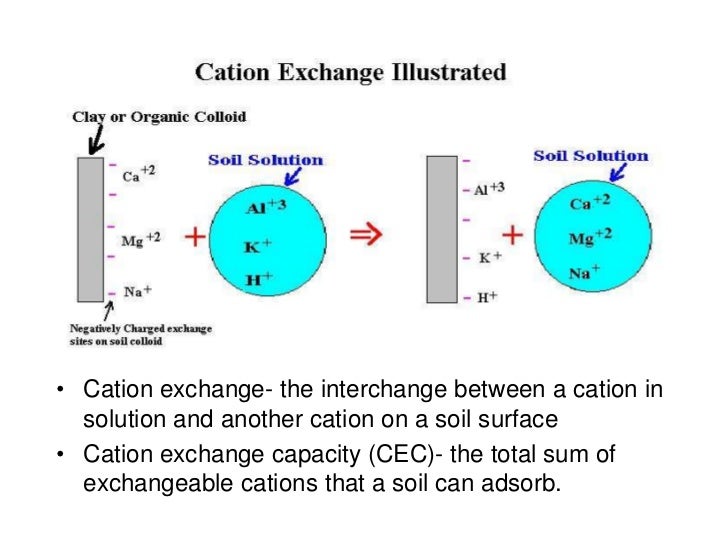
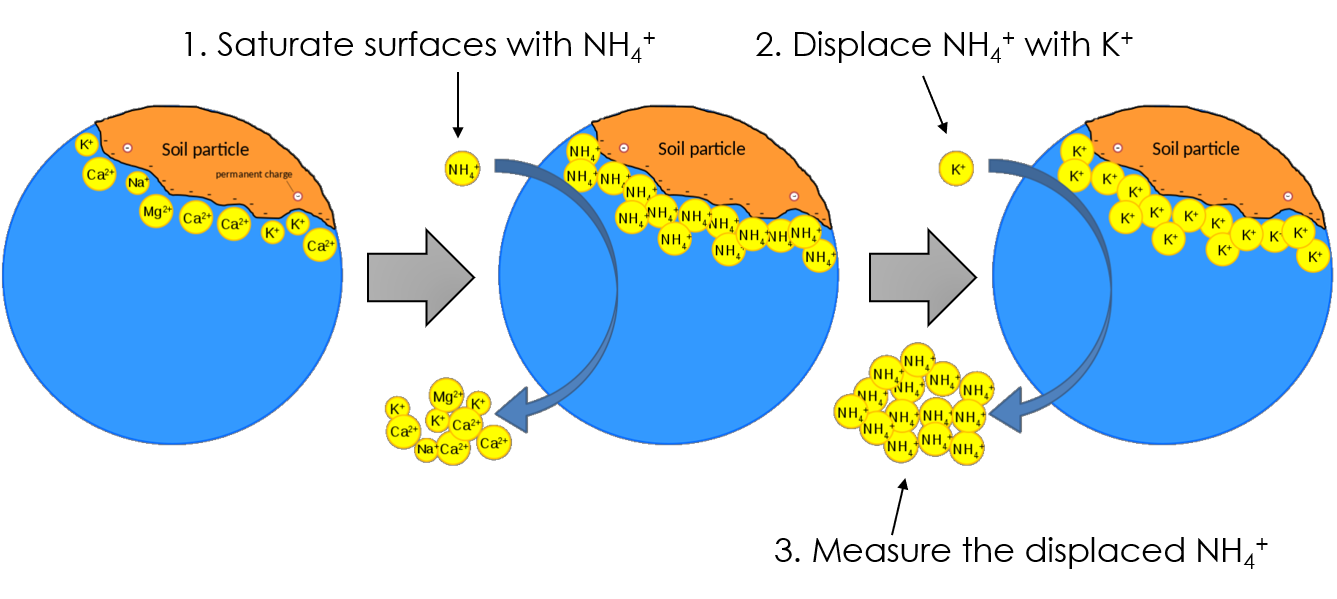
At its core, cation exchange is a reversible chemical process where a cation that is loosely bound to a charged surface is displaced by another cation in solution. Imagine a negatively charged surface, like a soil particle. This surface attracts and holds onto positively charged ions (cations) from the surrounding environment. These cations are not permanently attached; they can be exchanged for other cations present in the soil solution.
The Role of Negative Charges
The “capacity” in Cation Exchange Capacity refers to the total number of negatively charged sites on a given amount of material. These negative charges are primarily found on the surfaces of soil colloids, which include clay minerals and organic matter.
- Clay Minerals: These are microscopic particles of soil with a layered structure. Many clay minerals, especially those with 2:1 layer structures like smectites (e.g., montmorillonite), develop negative charges through isomorphic substitution. This occurs when a positively charged ion in the mineral lattice (e.g., aluminum) is replaced by an ion of lower positive charge (e.g., silicon or magnesium). This substitution leaves a net negative charge on the clay surface. Edge sites of clay minerals can also develop negative charges, especially at higher pH.
- Organic Matter: Decomposed organic matter, known as humus, is a complex mixture of organic compounds with a high CEC. The breakdown of organic molecules releases functional groups, such as carboxyl (-COOH) and phenolic hydroxyl (-OH) groups, which can deprotonate and become negatively charged. These negative charges are pH-dependent, meaning their abundance increases as the soil pH rises.
The Exchangeable Cations
The cations most commonly found on these negatively charged sites in soils are essential plant nutrients, including:
- Calcium (Ca²⁺): A vital nutrient for plant cell wall structure and function.
- Magnesium (Mg²⁺): A component of chlorophyll and essential for enzyme activity.
- Potassium (K⁺): Crucial for water regulation, enzyme activation, and photosynthesis.
- Sodium (Na⁺): While less abundant in most healthy soils, excessive sodium can be detrimental to soil structure and plant growth.
Other cations, such as ammonium (NH₄⁺), aluminum (Al³⁺), and various trace elements, can also participate in cation exchange. The strength with which these cations are held by the negative sites varies. Divalent cations (with a +2 charge, like Ca²⁺ and Mg²⁺) are generally held more strongly than monovalent cations (with a +1 charge, like K⁺ and Na⁺). Similarly, cations with a higher charge density (charge per unit volume) tend to be more tightly bound.
Units of Measurement
CEC is typically expressed in milliequivalents per 100 grams of soil (meq/100g) or centimoles of positive charge per kilogram of soil (cmol(+)/kg). A milliequivalent is the amount of an ion that will react with one milligram of hydrogen. Centimoles of positive charge per kilogram is the more modern and preferred SI unit, representing the number of moles of positive charge in one kilogram of material.
The Technological Significance of CEC in Environmental and Agricultural Systems
The ability to quantify and understand CEC is not merely an academic exercise; it underpins significant technological advancements and applications, particularly in environmental management and precision agriculture.
Environmental Monitoring and Remediation Technologies
CEC plays a critical role in how pollutants behave in the environment. Many toxic heavy metals, such as lead (Pb²⁺), cadmium (Cd²⁺), and copper (Cu²⁺), are cations. Soils and sediments with high CEC act as natural filters, adsorbing these potentially harmful cations and preventing them from leaching into groundwater or entering the food chain.
- Contaminant Sequestration: Technologies for remediating contaminated sites often leverage the principles of CEC. For instance, amendment of contaminated soils with materials high in CEC, such as biochar or certain types of clays, can effectively immobilize toxic metal cations, reducing their bioavailability and mitigating their environmental impact.
- Groundwater Protection: Understanding the CEC of soils is vital for assessing the risk of groundwater contamination from agricultural runoff, industrial spills, or waste disposal sites. Geospatial modeling tools, incorporating CEC data, can predict the movement and fate of cation-based pollutants, informing the design of protective barriers and management strategies.
- Wastewater Treatment: In industrial wastewater treatment, materials with high CEC, like ion-exchange resins, are widely used to remove dissolved cations (e.g., heavy metals, calcium, magnesium) from water. These resins are specifically engineered with functional groups that provide a high density of negative charges, enabling efficient capture of target cations. The development of advanced, selective ion-exchange materials is an active area of research in environmental engineering.
Precision Agriculture and Smart Farming Solutions
CEC is a cornerstone of soil fertility management, directly influencing nutrient availability to plants and the efficacy of fertilizer applications. Modern agricultural technologies are increasingly incorporating CEC data to optimize crop production and minimize environmental waste.
- Nutrient Management Software: Advanced agricultural software platforms analyze soil test results, including CEC, to develop site-specific nutrient management plans. These systems can predict how much of a particular cation nutrient (e.g., potassium) can be held by the soil and how much might be leached. This allows farmers to apply fertilizers more precisely, at the right time and in the right amounts, maximizing uptake by crops and reducing losses to the environment.
- Variable Rate Application (VRA) Technology: VRA systems, integrated with GPS and soil sensing technologies, can adjust the application rate of fertilizers or soil amendments across a field based on localized soil properties, including CEC. Fields can be mapped for CEC variations, and then VRA equipment can deliver higher rates of nutrients or buffering agents to areas with low CEC and lower rates to areas with high CEC, ensuring that each zone receives what it needs without over-application.
- Soil Amendments and Conditioners: Technologies focused on soil health often involve the application of amendments to improve CEC. For example, the use of compost and biochar has gained significant traction in sustainable agriculture. These organic amendments increase the organic matter content of soils, thereby boosting their CEC. This enhanced CEC leads to better retention of essential cation nutrients, improved water holding capacity, and a more stable soil structure, all of which contribute to healthier and more productive crops. The development of these organic amendments and their efficient application methods represent a key area of agritech innovation.
- Sensor Development for Real-time CEC Estimation: While traditional soil testing for CEC is laboratory-based and time-consuming, research is ongoing to develop in-field sensors that can provide near real-time estimates of CEC. These sensors could utilize spectroscopic techniques (e.g., near-infrared spectroscopy) or electrochemical methods to infer CEC based on the interaction of electromagnetic radiation or electrical signals with soil components. Such advancements would revolutionize precision agriculture by enabling immediate adjustments to management practices.
The Economic Impact and Strategic Applications of CEC-Related Technologies
The implications of CEC extend beyond purely scientific or environmental concerns, significantly influencing economic outcomes and driving strategic decisions in various sectors.
Optimizing Resource Efficiency and Cost Savings
In agriculture, understanding and managing CEC directly translates to economic benefits through improved resource efficiency.
- Reduced Fertilizer Costs: When soils have a high CEC, they can hold more positively charged nutrient ions. This means that a larger proportion of applied fertilizers remains available to plants rather than being lost through leaching or runoff. By optimizing fertilizer application based on CEC, farmers can reduce the total amount of fertilizer needed, leading to significant cost savings.
- Enhanced Nutrient Uptake and Yield: By ensuring that essential cation nutrients are retained in the root zone, high CEC soils contribute to better plant nutrition. This improved nutrient status can lead to stronger plant growth, increased resistance to stresses, and ultimately, higher crop yields, further enhancing profitability.
- Sustainable Land Management: For large-scale land management projects, such as reforestation or agricultural development, understanding the inherent CEC of the land is crucial for long-term economic viability. Soils with low CEC may require more intensive management and higher inputs to maintain fertility, which can be economically prohibitive. Conversely, soils with naturally high CEC offer a more stable and less input-dependent foundation for agricultural or ecological endeavors.
Advancements in Materials Science and Industrial Processes
The principles of cation exchange are fundamental to the development of advanced materials with diverse industrial applications.
- Ion-Exchange Resins for Water Purification and Softening: The global water treatment industry relies heavily on ion-exchange resins. These synthetic polymers are engineered with specific functional groups to selectively remove cations like Ca²⁺ and Mg²⁺ (responsible for water hardness) or heavy metals from water. The efficiency and selectivity of these resins are directly linked to their CEC. Continued innovation in resin chemistry and manufacturing aims to create more durable, cost-effective, and environmentally friendly water treatment solutions, impacting municipalities and industries alike.
- Catalysis and Chemical Separation: In the chemical industry, materials with high CEC, such as zeolites and clays, are used as catalysts or catalyst supports. Their ability to adsorb and concentrate reactant cations can accelerate chemical reactions. Furthermore, these materials are employed in separation processes, where their CEC is exploited to selectively remove or purify specific ionic species from complex mixtures. This has implications for the production of petrochemicals, pharmaceuticals, and fine chemicals.
- Development of Smart Materials: Emerging areas of research involve the development of “smart” materials that can respond to changes in their chemical environment, often mediated by cation exchange. This includes stimuli-responsive gels, membranes, and sensors. For instance, a material with CEC could be designed to swell or change its optical properties when exposed to specific cation concentrations, opening doors for novel diagnostic tools or responsive packaging.
Strategic Considerations in Environmental Policy and Investment
The economic and environmental importance of CEC also informs strategic decision-making at policy and investment levels.
- Environmental Regulations and Compliance: Understanding how CEC influences the fate of pollutants is critical for developing effective environmental regulations. Policies related to hazardous waste disposal, agricultural runoff management, and industrial discharge limits often implicitly or explicitly consider the cation exchange properties of soils and water bodies. Companies must invest in technologies and practices that ensure compliance with these regulations, often leveraging CEC principles.
- Investment in AgTech and Environmental Tech: The growing demand for sustainable food production and environmental protection has spurred significant investment in agricultural technology (AgTech) and environmental technology (EnviroTech). Companies developing sensors, software, and materials that utilize or enhance CEC are well-positioned to attract venture capital and achieve market growth. Strategic investments in these areas can yield substantial economic returns while addressing critical global challenges.
In conclusion, Cation Exchange Capacity is a vital property with far-reaching implications. While rooted in fundamental chemistry, its understanding and application are increasingly intertwined with technological innovation. From optimizing the efficiency of agricultural practices through smart farming solutions and environmental monitoring technologies to driving advancements in materials science and shaping economic strategies, CEC remains a pivotal concept for a sustainable and technologically advanced future.
aViewFromTheCave is a participant in the Amazon Services LLC Associates Program, an affiliate advertising program designed to provide a means for sites to earn advertising fees by advertising and linking to Amazon.com. Amazon, the Amazon logo, AmazonSupply, and the AmazonSupply logo are trademarks of Amazon.com, Inc. or its affiliates. As an Amazon Associate we earn affiliate commissions from qualifying purchases.