
In the rapidly evolving landscape of digital finance, mobile payment applications like Cash App have become indispensable tools for millions. They simplify transactions, streamline money management, and even facilitate investments, blurring the lines between traditional banking and innovative FinTech. A common, yet crucial, question that often arises among users is: “What is Cash App’s bank name?” This inquiry isn’t just about curiosity; it delves into the fundamental mechanics of how these platforms operate, how user funds are held and protected, and the regulatory framework that underpins their services.
The straightforward answer is that Cash App, developed by Block, Inc. (formerly Square, Inc.), is not a bank itself. Instead, it partners with several established, FDIC-insured financial institutions to provide its services. This distributed banking model is characteristic of many modern FinTech companies, allowing them to innovate on the user experience while relying on the licensed infrastructure and regulatory compliance of traditional banks. Primarily, for most of its core banking services, including the issuance of the Cash Card and the holding of customer deposits, Cash App partners with Sutton Bank and Lincoln Savings Bank. However, depending on the specific service or feature, other banks like Wells Fargo might be involved behind the scenes for certain transactional processing. Understanding this multi-bank approach is key to comprehending the security, regulatory compliance, and functional scope of your digital wallet.
The Decentralized Banking Model of FinTech
The traditional banking sector operates on a model where a single institution holds deposits, issues cards, processes loans, and manages all related financial services under its own charter. FinTech companies, however, have largely disrupted this model by specializing in user experience and technology while outsourcing the back-end banking operations to regulated partners. This decentralized approach allows for greater agility, scalability, and focused innovation.
More Than One Bank: A Network of Financial Partnerships
Cash App exemplifies this networked model perfectly. When you set up an account, deposit funds, or use a Cash Card, you are indirectly engaging with a constellation of financial institutions. The most prominent partners are:
- Sutton Bank: A state-chartered, FDIC-insured bank based in Attica, Ohio. Sutton Bank is the primary issuing bank for the Cash Card (a Visa debit card). This means when you use your Cash Card, the transactions are processed through Sutton Bank’s systems, leveraging their existing infrastructure and regulatory compliance as a card issuer.
- Lincoln Savings Bank: Based in Reinbeck, Iowa, Lincoln Savings Bank is another FDIC-insured institution that partners with Cash App. It plays a significant role in holding user funds, particularly those designated for direct deposit or simply held within the Cash App balance. This ensures that user deposits are maintained within a regulated, insured entity.
- Other Potential Partners: While Sutton Bank and Lincoln Savings Bank handle the core deposit and card issuance functions, complex financial ecosystems like Cash App might integrate with other banks for specific services. For instance, large-scale ACH (Automated Clearing House) transfers, specific types of investments, or certain merchant services could involve other banking partners or payment processors like Wells Fargo or JPMorgan Chase, albeit less directly visible to the end-user. The crucial takeaway is that your money, even when displayed in your Cash App balance, ultimately resides with one of these regulated banking partners.
Why the Multi-Bank Approach?
This distributed banking model isn’t just a matter of convenience; it’s a strategic choice with several compelling advantages for FinTechs and, by extension, their users:
- Scalability: Partnering with multiple banks allows FinTech platforms to scale their operations rapidly without needing to obtain their own banking charters, which is a complex and capital-intensive process. Each bank can handle a segment of the user base or specific transaction types, distributing the load.
- Specialization: Banks often specialize in particular areas, such as card issuance, deposit accounts, or specific types of lending. FinTechs can leverage these specialized capabilities without having to build them from scratch. For example, Sutton Bank is a well-known issuer of prepaid and debit cards for various FinTechs.
- Regulatory Compliance: Operating as a bank is subject to stringent regulations from federal and state authorities. By partnering with existing banks, FinTechs can piggyback on their partners’ established compliance frameworks for anti-money laundering (AML), know-your-customer (KYC) protocols, and consumer protection laws. This significantly reduces the regulatory burden and operational risk for the FinTech company.
- Risk Diversification: Spreading financial operations across multiple banking partners can mitigate risk. If one partner experiences technical issues or regulatory challenges, the FinTech might be able to pivot or rely more heavily on other partners, ensuring continuity of service.
Navigating Your Money: How Cash App Funds Are Held and Insured
One of the most critical aspects for any user of a digital financial service is understanding how their money is protected. This is where the partnership with FDIC-insured banks becomes paramount, offering a layer of security comparable to traditional banking.
FDIC Insurance: Protecting Your Deposits
The Federal Deposit Insurance Corporation (FDIC) is an independent agency of the United States government that protects depositors in the event of a bank failure. It generally insures deposits up to $250,000 per depositor, per insured bank, for each account ownership category.
- Coverage for Cash App Users: Since Cash App partners with FDIC-insured banks like Sutton Bank and Lincoln Savings Bank, funds held in your Cash App balance are generally eligible for FDIC pass-through insurance. This means that if Sutton Bank or Lincoln Savings Bank were to fail, your eligible Cash App deposits would be protected up to the standard $250,000 limit, just as they would be in a traditional bank account.
- Important Nuances: It’s vital to remember that FDIC insurance applies specifically to deposits held by the partner bank. Funds that are in transit (e.g., money sent but not yet received by the recipient) or funds invested in non-deposit products (like stocks or Bitcoin within Cash App, which are discussed later) are not covered by FDIC insurance. Users should always refer to Cash App’s official terms of service for the most up-to-date and specific information regarding FDIC coverage for their particular account and balance.
The Role of Partner Banks in Fund Segregation
A cornerstone of consumer protection in the financial industry is the segregation of customer funds. This means that the money you deposit into a financial service like Cash App must be kept separate from the operating capital of Cash App itself.
- Protection Against FinTech Insolvency: Cash App’s partner banks are legally required to segregate customer funds from the bank’s own assets and from Cash App’s operational funds. This segregation ensures that even if Cash App (the technology company) were to face financial difficulties or declare bankruptcy, your money, held by the partner bank, would not be considered an asset of Cash App and would therefore be protected from its creditors.
- Regulatory Scrutiny: This segregation is a heavily regulated area. Bank partners are subject to strict audits and oversight to ensure they comply with these requirements, providing an additional layer of security for users’ money. It reinforces the idea that while Cash App provides the interface, the underlying financial safety net is provided by its regulated banking partners.
Beyond the Bank Name: Financial Tools and Features of Cash App
Understanding Cash App’s banking partners also provides insight into the diverse range of financial services it can offer, leveraging the established infrastructure of the banking system.
Peer-to-Peer Payments: Instant Transfers and Daily Limits
The core functionality of Cash App, enabling users to send and receive money instantly, relies heavily on the underlying banking network. When you send money, it often involves rapid transfers between accounts held at Cash App’s partner banks or between different banks via the ACH network.
- Facilitating Speed: The speed of these transfers is a testament to the efficient integration between Cash App’s technology and its banking partners’ processing systems.
- Regulatory Compliance (AML/KYC): Transaction limits (daily, weekly, monthly) for sending and receiving funds are not arbitrary. They are often tied to regulatory requirements, particularly Anti-Money Laundering (AML) and Know Your Customer (KYC) regulations, which aim to prevent financial crime. Partner banks, being regulated entities, ensure that these limits are adhered to and that user identities are verified where necessary.

Cash Card: A Debit Card Powered by Partner Banks
The Cash Card is a physical or virtual Visa debit card that allows users to spend their Cash App balance anywhere Visa is accepted. As mentioned, this card is issued by Sutton Bank.
- Direct Access to Funds: The Cash Card essentially turns your Cash App balance into a functional checking account for everyday spending, directly linked to the funds held by the partner bank.
- Enhanced Financial Control: It offers features like Boosts (instant discounts), ATM withdrawals (with associated fees), and the ability to link to Apple Pay or Google Pay, all enabled by the robust payment processing network of Visa and the issuing bank.
Direct Deposit and Bill Pay: Leveraging Traditional Banking Infrastructure
Cash App has evolved beyond simple peer-to-peer payments to offer features traditionally associated with full-service banks. Users can receive direct deposits of paychecks, government benefits, or tax refunds directly into their Cash App account.
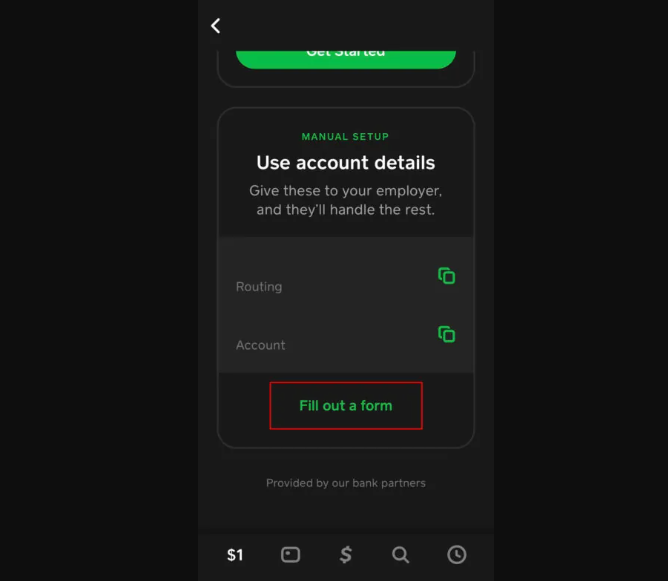
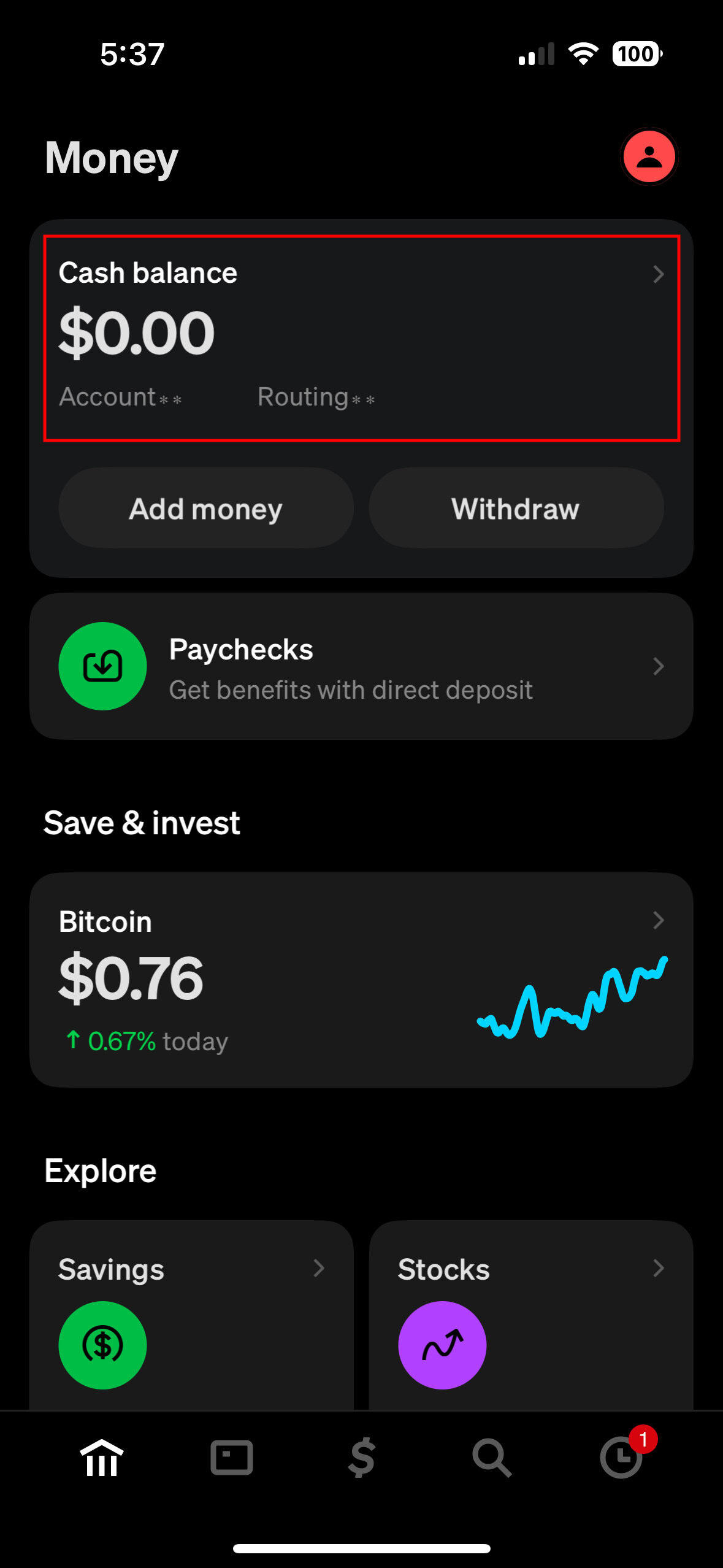
- Account and Routing Numbers: To facilitate direct deposits, Cash App provides users with unique account and routing numbers. These aren’t just generic numbers; they are effectively sub-accounts or identifiers tied to the master accounts held at Cash App’s partner banks (e.g., Lincoln Savings Bank). When your employer sends a direct deposit, the funds are routed through the traditional banking network and deposited into the relevant account at the partner bank, then reflected in your Cash App balance.
- Expanding Utility: This feature significantly enhances Cash App’s utility as a primary financial tool, allowing users to manage their income and potentially pay bills from a single app.
Investing and Bitcoin: Diverse Financial Offerings
Beyond basic banking functions, Cash App also offers the ability to buy and sell stocks and Bitcoin. These features highlight the platform’s ambition to be a comprehensive financial hub.
- Separate Regulatory Frameworks: It’s crucial for users to understand that these investment features operate under different regulatory frameworks and insurance schemes.
- Stocks: Stock investing on Cash App is facilitated through a separate brokerage service provided by Cash App Investing LLC, a FINRA-registered broker-dealer and a member of the Securities Investor Protection Corporation (SIPC). SIPC protects customers of its members up to $500,000 (including $250,000 for cash claims) in case the brokerage firm fails, but it does not protect against a decline in the market value of securities.
- Bitcoin: Bitcoin purchases and sales are also offered directly through Cash App. However, cryptocurrencies like Bitcoin are largely unregulated in the same way traditional securities or bank deposits are. They are not FDIC-insured or SIPC-protected, meaning their value can fluctuate wildly, and there are no government guarantees for your investment. This distinction underscores the importance of understanding the underlying financial mechanics and protections for each type of asset within the app.
Why Understanding Cash App’s Banking Partnerships Matters for Your Money
For the savvy consumer, delving into the banking partnerships behind FinTech apps like Cash App isn’t just an academic exercise; it’s a critical component of informed financial decision-making.
Security and Fraud Prevention
While Cash App employs its own advanced security measures (encryption, fraud monitoring, multi-factor authentication), its banking partners provide an essential layer of institutional security.
- Bank-Level Security: Partner banks operate with robust, long-established security protocols, compliance departments, and fraud detection systems that complement Cash App’s technology. This combined effort creates a more resilient defense against security threats and fraud.
- Dispute Resolution: In cases of unauthorized transactions or disputes, the involvement of regulated banks means that transactions are often governed by consumer protection laws (like Regulation E for electronic funds transfers), offering avenues for resolution and recourse that might not exist with unregulated services.
Regulatory Oversight and Consumer Protection
The financial industry is one of the most heavily regulated sectors, and for good reason. Understanding that your funds are held by FDIC-insured banks means your money is under the watchful eye of several regulatory bodies.
- Federal and State Regulators: Partner banks are subject to oversight by federal agencies (like the FDIC, Federal Reserve, OCC) and state banking departments. This means Cash App, through its partners, indirectly adheres to a broad spectrum of banking laws designed to protect consumers, ensure fair practices, and maintain financial stability.
- Building Trust: This regulatory framework provides a fundamental level of trust and accountability that purely unregulated platforms cannot offer, ensuring a degree of protection for your financial interests.
Informed Financial Decision-Making
Ultimately, knowing who Cash App’s bank partners are empowers you to make more informed choices about where and how you manage your money.
- Evaluating Risk: It allows you to assess the level of risk associated with keeping significant balances in your Cash App account versus a traditional bank account, understanding the FDIC insurance limits and conditions.
- Understanding Limitations: It clarifies the limitations of the service. While Cash App is incredibly convenient, it may not offer all the services of a full-fledged bank (e.g., complex loans, wealth management, physical branch access).
- Long-Term Planning: For larger sums or long-term savings goals, understanding the distinction between funds held by partner banks and funds invested in non-insured products within Cash App is crucial for proper financial planning and risk management.
Conclusion
Cash App is a groundbreaking financial technology application that has revolutionized how millions manage their money. However, it achieves its expansive functionality not by being a bank itself, but by skillfully leveraging partnerships with established, FDIC-insured financial institutions. Primarily, Sutton Bank issues the Cash Card, and Lincoln Savings Bank holds many of the user deposits, ensuring that your funds benefit from traditional bank-level security and FDIC insurance up to $250,000.
This multi-bank model allows Cash App to innovate rapidly in areas like user experience and instant payments while relying on its partners for the robust regulatory compliance and fund segregation necessary to protect consumer assets. While the app offers unparalleled convenience for peer-to-peer payments, direct deposits, and even investments in stocks and Bitcoin, it’s paramount for users to distinguish between these various financial offerings and their respective protections.
For anyone entrusting their money to a digital wallet, understanding the financial plumbing—who the banking partners are, how funds are insured, and the regulatory environment—is not just good practice; it’s essential for making secure and informed financial decisions in the increasingly complex world of FinTech. Always consult Cash App’s official terms of service and FAQs for the most current and detailed information pertaining to your account.
aViewFromTheCave is a participant in the Amazon Services LLC Associates Program, an affiliate advertising program designed to provide a means for sites to earn advertising fees by advertising and linking to Amazon.com. Amazon, the Amazon logo, AmazonSupply, and the AmazonSupply logo are trademarks of Amazon.com, Inc. or its affiliates. As an Amazon Associate we earn affiliate commissions from qualifying purchases.