
In the evolving landscape of personal finance, digital tools have become indispensable for managing money efficiently and conveniently. Among these, Cash App stands out as a versatile mobile payment service that transcends simple peer-to-peer transactions, offering a robust suite of features designed to empower users with greater control over their financial lives. Far more than just a means to send and receive money, Cash App functions as a comprehensive financial platform, integrating banking, investing, and budgeting capabilities into a single, user-friendly interface. Understanding its multifaceted applications is key to leveraging its full potential as a modern financial tool.

Cash App as a Core Financial Tool for Everyday Transactions
At its heart, Cash App revolutionized how individuals handle daily financial interactions, offering speed, simplicity, and accessibility. It addresses the fundamental need for quick and secure money movement, making it a go-to choice for a wide array of personal and household financial activities.
Sending and Receiving Money Instantly
The most widely recognized and utilized feature of Cash App is its ability to facilitate instant peer-to-peer (P2P) money transfers. Users can send money to friends, family, or colleagues with just a few taps, using a unique identifier called a “$Cashtag,” email address, or phone number. This immediacy eliminates the delays associated with traditional bank transfers, making it ideal for splitting bills, contributing to group gifts, or quickly repaying small debts. The funds are typically available in the recipient’s Cash App balance almost instantly, providing unparalleled convenience in personal financial management. This core functionality underpins its utility as a modern financial communication tool, streamlining what used to be cumbersome exchanges of cash or checks.
Direct Deposits and Bill Payments
Beyond P2P transfers, Cash App extends its utility to more conventional banking functions. Users can set up direct deposit for their paychecks, tax refunds, and other government benefits directly into their Cash App account. Each user is provided with an account and routing number, effectively turning their Cash App balance into a functional checking account. This feature not only provides quick access to funds but also appeals to individuals who may be unbanked or underbanked, offering a digital alternative to traditional banking services. Furthermore, with funds readily available, users can easily pay bills through various methods, whether by sending money directly to service providers that accept Cash App, or by utilizing the linked Cash Card for online and in-store payments. This integration of direct deposit capabilities transforms Cash App from a mere payment app into a primary financial hub for many individuals, enhancing their financial autonomy and simplifying income management.
Using the Cash Card for Purchases
Complementing its digital transfer capabilities is the Cash Card, a customizable, free debit card linked directly to a user’s Cash App balance. This Visa debit card can be used anywhere Visa is accepted—online, in stores, and at ATMs—drawing funds directly from the user’s Cash App balance. The Cash Card provides a tangible link between the digital wallet and real-world spending, offering flexibility and control over daily expenditures. It eliminates the need to transfer funds to a traditional bank account before making purchases, streamlining the spending process. Furthermore, the Cash Card often comes with “Boosts,” which are instant discounts at specific retailers or for certain categories of purchases. These Boosts function as a loyalty program, providing immediate savings that directly impact a user’s disposable income and spending power, making the Cash Card an active tool for financial optimization rather than just a passive payment method.
Expanding Your Financial Capabilities with Cash App
Cash App has strategically ventured into the investment arena, democratizing access to financial markets and enabling users to build wealth directly from their mobile devices. These features position Cash App as an all-in-one platform for not just spending and saving, but also for growing one’s financial portfolio.
Seamless Bitcoin Investing
Recognizing the growing interest in cryptocurrencies, Cash App offers an accessible gateway to Bitcoin investing. Users can buy, sell, and store Bitcoin directly within the app, simplifying a process that traditionally required navigating complex exchanges. This feature is particularly appealing to novice investors or those looking to dabble in cryptocurrency without extensive technical knowledge. Cash App allows users to invest with as little as a few dollars, making Bitcoin accessible regardless of one’s budget. By integrating Bitcoin trading alongside traditional money management, Cash App introduces users to alternative assets, fostering financial literacy and offering diversification opportunities within their personal finance strategies. It removes significant barriers to entry, enabling a broader demographic to participate in the digital asset economy.
Effortless Stock Investing (Fractional Shares)
In a similar vein to Bitcoin, Cash App also empowers users to invest in stocks and exchange-traded funds (ETFs) with remarkable ease. Crucially, it supports fractional share investing, meaning users can buy a portion of a company’s stock for as little as $1. This eliminates the barrier of high stock prices, allowing individuals to invest in blue-chip companies like Apple or Amazon without needing to purchase an entire share. This feature democratizes stock market participation, making investing less intimidating and more inclusive. For individuals building an investment portfolio, this means they can diversify across various companies and industries with a modest budget, gradually building wealth over time. Cash App’s intuitive interface demystifies stock market participation, providing real-time market data and enabling users to track their investments and make informed decisions directly within the app.
Managing Your Money Effectively with Cash App
Effective money management goes beyond simple transactions and investments; it involves thoughtful tracking, strategic saving, and robust security. Cash App integrates several features designed to support users in maintaining financial health and peace of mind.
Budgeting and Transaction Tracking
While Cash App doesn’t offer sophisticated budgeting tools comparable to dedicated personal finance software, its integrated activity feed and transaction history provide a foundational level of financial oversight. Every transaction, whether it’s a P2P transfer, a Cash Card purchase, or a direct deposit, is meticulously recorded and easily accessible within the app. Users can review their spending habits, track income sources, and gain a clear picture of their financial inflows and outflows. This readily available data empowers users to identify spending patterns, categorize expenses (albeit manually), and make more informed decisions about their money. For those who prefer a minimalist approach to budgeting, the transparency offered by Cash App’s transaction history can be a valuable tool for maintaining financial discipline and preventing overspending.
Boosts and Savings Features
Beyond the transactional benefits of the Cash Card, its “Boosts” program actively contributes to user savings. By offering instant discounts on specific purchases, Boosts effectively reduce the cost of everyday expenses, allowing users to keep more of their money. Whether it’s a discount at a coffee shop or a percentage off groceries, these immediate savings accumulate, freeing up funds that can be allocated towards other financial goals or simply retained. While Cash App does not currently offer traditional interest-bearing savings accounts, the combination of Boosts and the seamless ability to invest in Bitcoin or stocks means users can actively work towards growing their funds rather than just holding them. The convenience of these integrated features makes saving and investing a more proactive and less burdensome part of daily financial routines.
Enhancing Financial Security within the App
In an age where digital financial tools are prevalent, security is paramount. Cash App employs robust security measures to protect user funds and personal information. These include encryption, fraud detection technology, and customizable security settings such as PIN entry, Touch ID, or Face ID for transactions. Users receive instant notifications for all account activity, enabling them to quickly identify and report any unauthorized transactions. Furthermore, features like the ability to pause the Cash Card directly from the app provide an immediate safeguard against unauthorized use if the card is lost or stolen. By prioritizing security and offering users control over their account protections, Cash App builds trust and ensures that its financial tools can be used with confidence, making it a reliable platform for managing sensitive financial data.
Cash App for Businesses and Side Hustles
Cash App’s utility extends beyond individual personal finance, proving to be an invaluable tool for small businesses, freelancers, and individuals engaged in side hustles. Its simple interface and low transaction fees make it an attractive option for managing business-related financial activities.
Accepting Payments for Goods and Services
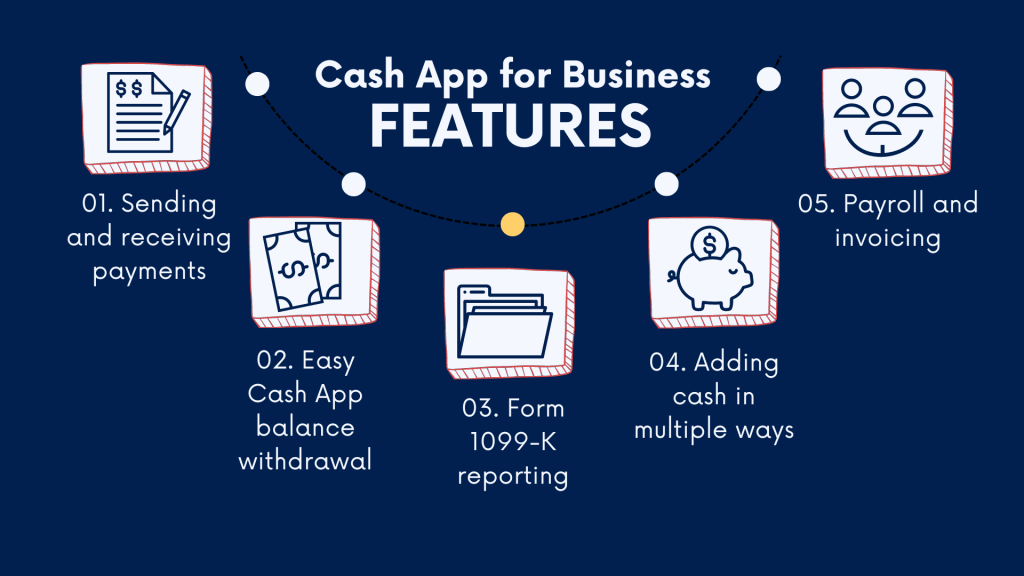
For small business owners, entrepreneurs, and freelancers, Cash App offers a straightforward and cost-effective way to accept payments. By creating a business account, users can receive payments from customers directly into their Cash App balance, often with competitive processing fees compared to traditional merchant services. The unique “$Cashtag” serves as a convenient and memorable payment identifier, simplifying the invoicing and payment collection process. This functionality is particularly beneficial for businesses that operate primarily online, at pop-up events, or that deal with a younger, tech-savvy clientele. It eliminates the need for complex POS systems or traditional bank transfers, providing immediate access to funds and streamlining revenue collection, which is crucial for maintaining cash flow in a small operation.
Managing Business Expenses
While Cash App isn’t a full-fledged accounting suite, its direct deposit and Cash Card features can simplify the management of business expenses. Freelancers and small business owners can direct income into their Cash App account and then use the linked Cash Card for business-related purchases, such as supplies, software subscriptions, or travel expenses. The clear transaction history within the app provides a basic record of these expenditures, which can be useful for internal tracking or for exporting data to more comprehensive accounting software. This method helps separate business finances from personal finances, a critical step for accurate bookkeeping and tax preparation, even if the primary account is shared. The convenience of having business funds and spending capabilities integrated allows for agile financial management, especially for sole proprietors or micro-businesses.
Facilitating Freelance Income
The gig economy thrives on quick, reliable payment systems, and Cash App perfectly fits this niche for freelancers. Whether offering creative services, ridesharing, or personal training, freelancers can easily receive payments from clients without the hassle of checks or delayed bank transfers. The immediacy of funds being available in their Cash App balance means freelancers have quicker access to their earnings, improving cash flow and financial stability. This is particularly advantageous for those juggling multiple clients or irregular income streams, as it provides a consistent and predictable method for receiving compensation. Furthermore, the ability to direct deposit into Cash App can simplify tax calculations for self-employed individuals by consolidating income in one accessible location, making it easier to track gross earnings and prepare for tax obligations.
The Broader Impact of Cash App on Personal Finance
Cash App represents a significant shift in how individuals interact with their money, embodying the principles of modern fintech to offer greater accessibility, convenience, and control. Its multifaceted features collectively contribute to a more dynamic and inclusive financial ecosystem.
Financial Inclusion and Accessibility
One of Cash App’s most profound impacts is its contribution to financial inclusion. For the millions of unbanked or underbanked individuals globally, Cash App offers a lifeline, providing access to essential financial services without the prerequisites or fees often associated with traditional banks. By offering direct deposit capabilities, a debit card, and investment opportunities through a mobile device, Cash App empowers individuals who might otherwise be excluded from the mainstream financial system. This accessibility can lead to greater financial independence, enabling users to participate more fully in the digital economy, manage their income more effectively, and even begin building wealth, irrespective of their banking status or credit history. It democratizes financial tools, ensuring that essential services are within reach for a broader population.
Convenience and Speed in Financial Management
The overarching theme of Cash App’s utility is convenience and speed. In today’s fast-paced world, immediate access to funds and swift transaction processing are not just luxuries but necessities. Cash App excels in these areas, offering instant peer-to-peer transfers, rapid direct deposits, and real-time investment capabilities. This efficiency reduces financial friction in daily life, saving users time and effort that would otherwise be spent on navigating traditional banking processes. The ability to handle diverse financial tasks—from splitting a dinner bill to buying a share of stock—all within a single, intuitive app significantly streamlines personal financial management. This enhanced convenience fosters greater engagement with one’s finances, encouraging more proactive and informed financial decision-making.
Future Trends and Evolution in Fintech
Cash App’s continuous evolution—from a simple P2P app to a comprehensive financial platform—reflects and shapes broader trends in the fintech industry. Its integration of banking, investing (stocks and crypto), and spending tools into a single ecosystem points towards a future where financial services are increasingly consolidated, personalized, and mobile-first. As technology advances, we can anticipate Cash App, and similar platforms, to further incorporate AI-driven insights for budgeting, more sophisticated savings mechanisms, and potentially even lending or credit services. The platform’s commitment to making complex financial activities accessible to the masses signals a future where financial literacy and empowerment are fostered through intuitive digital tools, continually pushing the boundaries of what consumers can expect from their financial applications.
In conclusion, “what is Cash App used for” unveils a comprehensive answer that transcends its initial reputation as a mere payment app. It is a powerful financial tool that supports everyday transactions, enables investment in stocks and cryptocurrencies, aids in money management, and serves as a vital resource for small businesses and freelancers. By consolidating a range of financial services into an accessible mobile platform, Cash App empowers users with unprecedented control and flexibility over their money, making it an indispensable component of modern personal finance.
aViewFromTheCave is a participant in the Amazon Services LLC Associates Program, an affiliate advertising program designed to provide a means for sites to earn advertising fees by advertising and linking to Amazon.com. Amazon, the Amazon logo, AmazonSupply, and the AmazonSupply logo are trademarks of Amazon.com, Inc. or its affiliates. As an Amazon Associate we earn affiliate commissions from qualifying purchases.