
For most households, a vehicle represents the second-largest financial investment after a home. However, unlike real estate, which historically appreciates, a car is a rapidly depreciating asset. In the world of personal finance, “car maintenance” is often mischaracterized as a chore or an unwelcome expense. In reality, car maintenance is a sophisticated financial strategy designed to mitigate depreciation, reduce the Total Cost of Ownership (TCO), and protect one’s liquid capital from the shock of emergency repairs.
To understand car maintenance through the lens of wealth management, one must view it as a form of preventative insurance. It is the systematic process of inspecting, servicing, and replacing components of a vehicle to ensure it operates at peak efficiency. From a financial perspective, it is the difference between a controlled, predictable line item in a budget and an unpredictable, catastrophic financial liability.
The Financial Foundation: Why Maintenance is a Budgeting Priority
The core of personal finance is the management of cash flow. Unplanned expenses are the primary disruptors of financial stability. Car maintenance, when executed correctly, transforms high-stakes mechanical risks into manageable, low-cost maintenance cycles.
Depreciation vs. Preservation
The moment a vehicle is driven off the lot, its value begins to erode. While market forces dictate much of this decline, the physical condition of the asset is the only variable the owner can control. A vehicle with a documented history of meticulous maintenance retains a significantly higher percentage of its original value compared to one that has been neglected. In the secondary market, “mechanical integrity” is a premium feature. By investing in regular upkeep, you are essentially slowing the rate of depreciation, ensuring that when it comes time to trade in or sell the asset, you recover a larger portion of your initial capital.
The “Deferred Maintenance” Trap
In financial circles, “deferred maintenance” refers to the practice of pushing off necessary repairs to save cash in the short term. While this may provide a temporary boost to a monthly budget, it is a high-interest debt against the vehicle’s future. For example, neglecting a $100 coolant flush can lead to overheating, which may eventually warp an engine head, resulting in a $4,000 repair bill. The ROI (Return on Investment) of timely maintenance is often measured in the thousands of percent. Avoiding the deferred maintenance trap is essential for anyone looking to build long-term wealth without being sidelined by “emergency” costs that were actually predictable.
The Core Pillars of Preventative Maintenance for Value Retention
To manage a vehicle as a financial asset, one must understand which maintenance tasks yield the highest protection of value. These are not merely mechanical tasks; they are capital preservation strategies.
Fluid Management and Engine Longevity
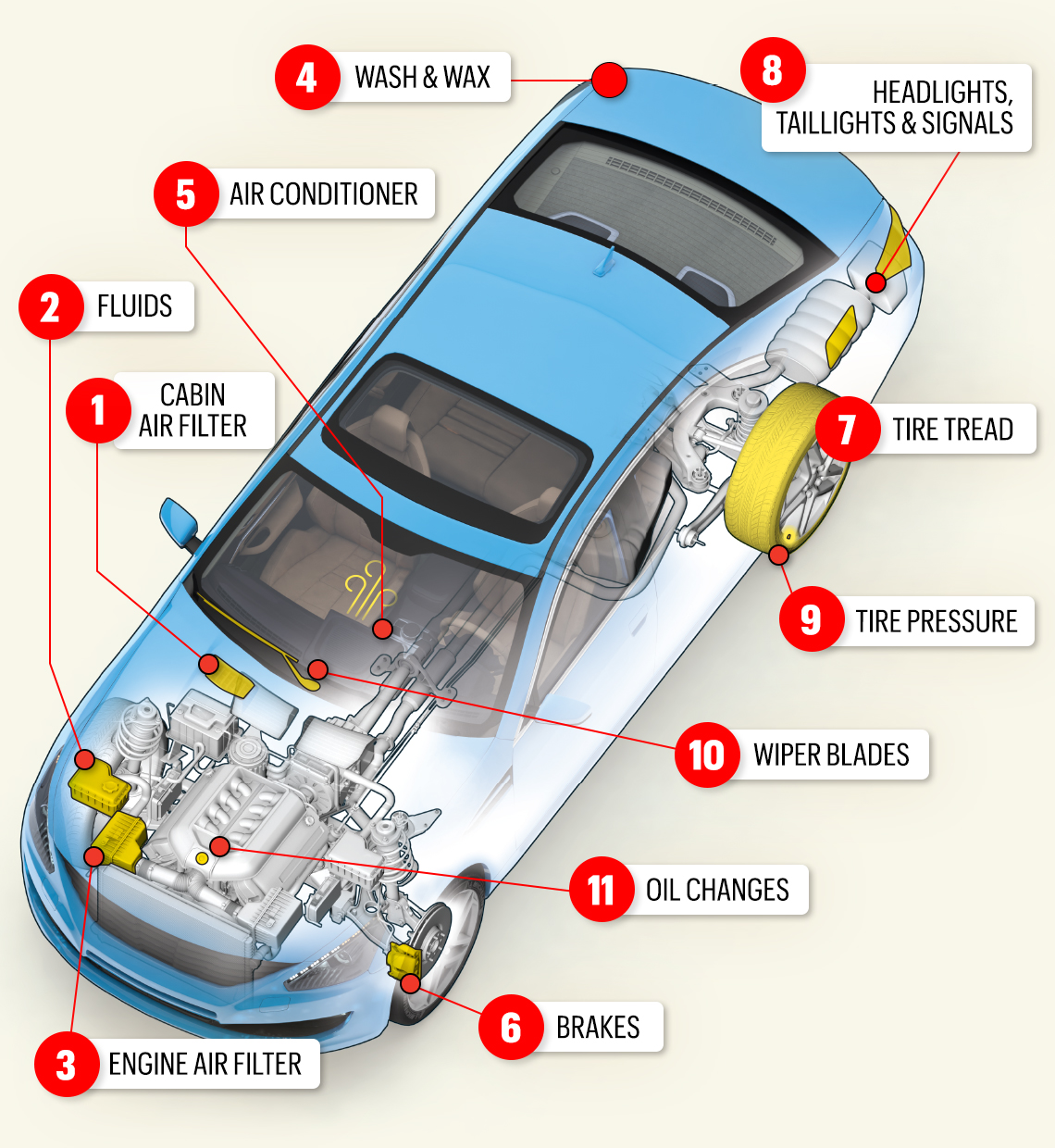
The engine and transmission are the “capital equipment” of your vehicle. Their failure often renders the vehicle a total financial loss, as the cost of replacement frequently exceeds the car’s book value. Regular oil changes, transmission fluid flushes, and coolant replacements are the most cost-effective ways to extend the life of these components. From a money management perspective, an oil change is a low-cost subscription service that protects a multi-thousand-dollar engine. Modern synthetic oils and high-quality filters extend the intervals between these costs, allowing for better cash flow management while still providing superior protection.
Safety Systems and Insurance Implications
Maintenance also extends to tires, brakes, and suspension. While these are often viewed through the lens of safety, they have significant financial implications. Well-maintained tires and aligned wheels improve fuel economy, directly reducing your monthly energy expenditure. Furthermore, maintaining the safety integrity of a vehicle can prevent accidents that lead to increased insurance premiums, loss of use, and potential medical liabilities. Protecting your physical safety is, fundamentally, a way to protect your ability to earn an income and avoid the wealth-destroying impact of a total loss.
Wear-and-Tear Components as Capital Expenditures
Items like timing belts, spark plugs, and batteries have fixed lifespans. In a professional business environment, these would be treated as scheduled capital expenditures. By tracking the manufacturer’s recommended service intervals, a vehicle owner can predict exactly when these costs will arise. This allows for “sinking fund” budgeting—setting aside a small amount of money each month so that when a $800 timing belt replacement is due, the capital is already available, and the household’s monthly disposable income remains unaffected.

Strategic Cost Management: DIY vs. Professional Service
A key component of financial literacy is knowing when to perform a task yourself and when to outsource it to a professional. Car maintenance offers ample opportunities for both, depending on one’s “hourly rate” and technical aptitude.
Evaluating the ROI of Professional Expertise
For complex tasks—such as diagnostic electrical work or internal engine repairs—hiring a certified technician is often the most financially sound decision. Professional mechanics possess specialized tools and diagnostic software that prevent “parts cannon” spending (the expensive habit of replacing random parts hoping to fix a problem). Furthermore, professional service provides a paper trail. In the eyes of a future buyer or a dealership, a stamped service book from a reputable shop is a “certificate of value” that can add thousands to the resale price.
Tooling Up: When Personal Labor Makes Financial Sense
Conversely, many basic maintenance tasks—such as replacing cabin air filters, wiper blades, or even oil changes—have a high labor markup at dealerships. For an individual looking to optimize their “Side Hustle” or “Online Income” mindset, performing these tasks personally can save hundreds of dollars an hour in labor costs. However, the financial trade-off must include the cost of tools and the value of one’s time. If spending three hours changing your own oil prevents you from earning more in your primary profession or business, it may actually be a net financial loss. Strategic car maintenance requires a cold, calculated look at the value of time versus the cost of labor.
Car Maintenance as a Resale Value Catalyst
The “exit strategy” is a vital part of any investment. For a car, the exit strategy is the eventual sale or trade-in. This is where the true financial benefit of car maintenance is realized.
The Importance of Documentation and Service Records
In the world of finance, data is king. A car with a thick folder of receipts and a clean vehicle history report (VHR) is a “transparent asset.” Buyers are willing to pay a premium for transparency because it reduces their risk. When you maintain a car, you aren’t just fixing a machine; you are building a data set that proves the asset’s worth. Digital maintenance trackers and apps can help consolidate this data, making it easy to present to a prospective buyer. This documentation can often result in a sale price 10% to 20% higher than the “Fair Market Value” for a vehicle in “Good” rather than “Excellent” condition.
Market Psychology and Mechanical Integrity
Curb appeal matters in finance. A vehicle that has been mechanically maintained usually reflects an owner who also cared for the aesthetic condition—the paint, the interior, and the undercarriage. This holistic approach to maintenance signals to the market that the asset is high-quality. In a high-inflation environment where the cost of new and used cars is rising, maintaining your current vehicle to a high standard is a hedge against inflation. It allows you to delay the purchase of a new, more expensive asset, thereby keeping your capital invested in other areas, such as the stock market or high-yield savings accounts.

Building a Maintenance Fund: Integrating Car Care into Your Financial Plan
To truly master car maintenance as a financial discipline, it must be integrated into your broader financial plan. It should not be an afterthought or a surprise.
The most effective way to handle car maintenance is through the “1% Rule” or a dedicated “Auto Sinking Fund.” Many financial experts suggest setting aside 1% of the car’s purchase price every month for maintenance and repairs. Alternatively, calculating the expected costs over the next 30,000 miles and dividing that by the number of months it will take to drive that distance provides a precise monthly savings goal.
By automating this savings process, car maintenance stops being a “cost” and starts being a “pre-funded liability.” This psychological shift is crucial. It removes the stress associated with the mechanic’s shop and replaces it with the confidence of an investor who has already accounted for the necessary overhead of their assets.
In conclusion, what is car maintenance? It is the disciplined management of a depreciating asset. It is a commitment to protecting your net worth by preventing small issues from becoming financial disasters. By viewing every oil change, tire rotation, and brake inspection as a strategic move in your personal finance journey, you ensure that your vehicle serves your wealth-building goals rather than detracting from them. Professional maintenance is not an expense; it is a vital reinvestment in your own financial mobility.
aViewFromTheCave is a participant in the Amazon Services LLC Associates Program, an affiliate advertising program designed to provide a means for sites to earn advertising fees by advertising and linking to Amazon.com. Amazon, the Amazon logo, AmazonSupply, and the AmazonSupply logo are trademarks of Amazon.com, Inc. or its affiliates. As an Amazon Associate we earn affiliate commissions from qualifying purchases.