
In the early decades of automotive manufacturing, a vehicle was a purely mechanical beast. To turn on a headlight, a physical switch closed a high-current circuit that traveled directly to the bulb. To measure engine temperature, a dedicated wire ran from a sensor to a needle on the dashboard. As consumer demand for safety, comfort, and efficiency grew, so did the complexity of these internal systems. By the 1980s, the “wiring harness”—the bundle of cables connecting every electrical component—had become a heavy, expensive, and fragile nightmare of copper.
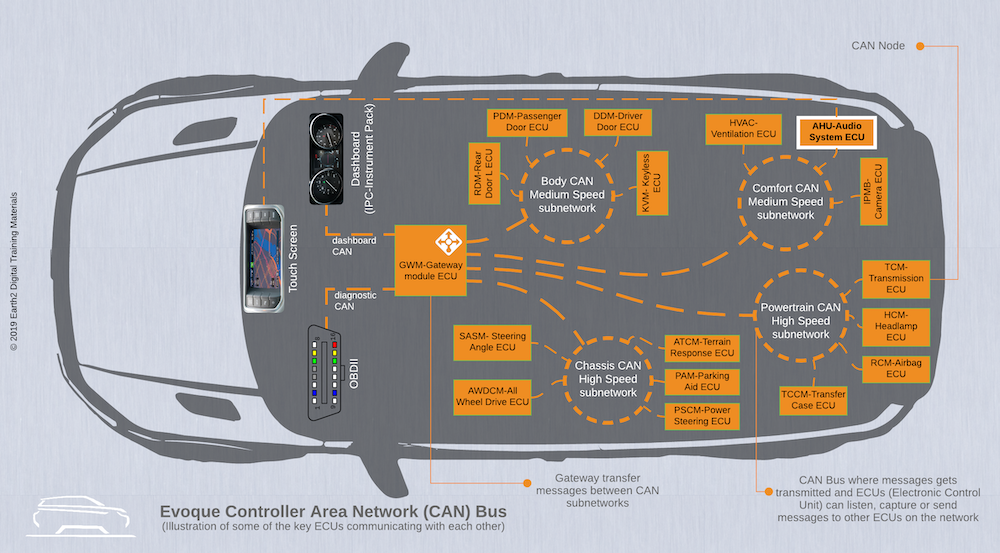
Enter the CAN bus (Controller Area Network). Developed by Robert Bosch GmbH and first introduced in 1986, this communication protocol transformed the car from a collection of isolated parts into a sophisticated, interconnected digital network. Today, the CAN bus is the “central nervous system” of every modern vehicle, enabling real-time communication between dozens of microcomputers known as Electronic Control Units (ECUs). Understanding the CAN bus is essential for anyone looking to grasp how modern software-defined vehicles operate, how digital security affects road safety, and how the future of autonomous driving is being built.
The Foundational Mechanics of CAN Bus Technology
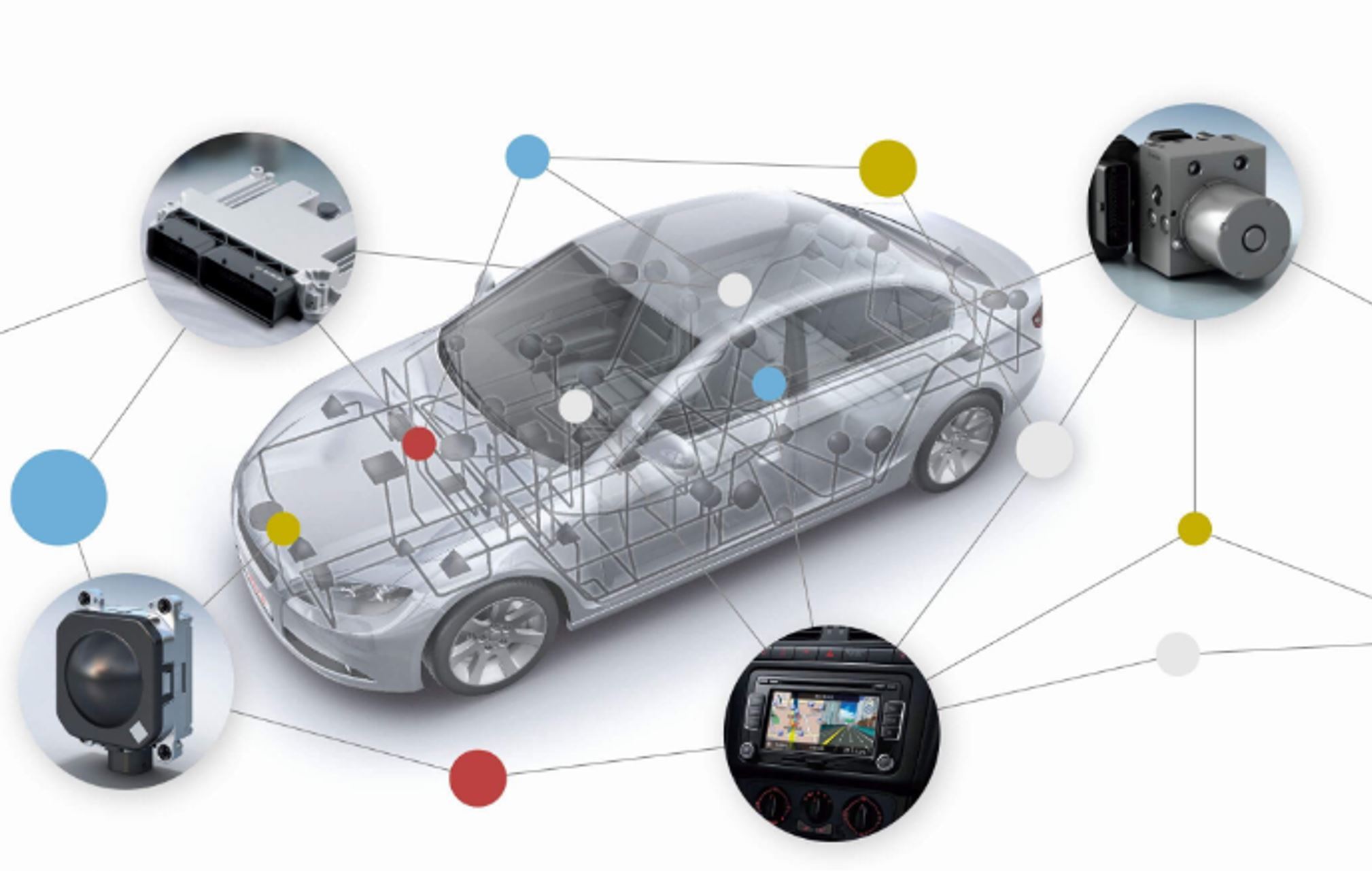
To understand the CAN bus, one must first understand the problem it solved. In a traditional point-to-point wiring system, if the engine needed to tell the transmission its current RPM, a specific wire had to connect them. If the dashboard also needed that data, another wire was required. This created a “rat’s nest” of wiring that added significant weight and thousands of potential failure points.
The CAN bus replaced this mess with a single “bus”—a shared communication path that allows all components to talk to one another using just two wires: CAN High and CAN Low.
The Power of Two-Wire Differential Signaling
The physical layer of the CAN bus is an engineering marvel designed for the harsh, electronically “noisy” environment of an internal combustion engine. Because cars are filled with electric motors, ignition coils, and alternators, they generate massive amounts of electromagnetic interference (EMI). A standard digital signal would be easily corrupted in such an environment.
CAN bus uses differential signaling to solve this. The system sends the same data across both the CAN High and CAN Low wires but with opposite voltages. The receiver looks at the difference between the two voltages rather than the absolute voltage of a single wire. Because EMI usually affects both wires equally, the difference between them remains constant, allowing the data to remain intact even in the presence of severe electrical noise. This robustness is the primary reason CAN bus became the global standard for automotive tech.
Decentralization and Nodes
Unlike many computer networks that rely on a central server to route traffic, the CAN bus is decentralized. Every component on the network—the Anti-lock Braking System (ABS), the engine control module, the power windows, and the infotainment system—is a “node.”
Each node consists of a host CPU (the “brain”), a CAN controller (which formats the data), and a CAN transceiver (which handles the electrical signals on the wires). This decentralized architecture means that if one non-critical node fails (like a window motor), the rest of the network continues to function. In the high-stakes environment of a moving vehicle, this redundancy is a critical safety feature.
The Evolution of Vehicle Intelligence: Why the Protocol Matters
The adoption of CAN bus was not just a hardware upgrade; it was a paradigm shift in how vehicles are designed and diagnosed. It paved the way for the “Software-Defined Vehicle,” where a car’s behavior can be changed through code rather than mechanical adjustments.
Radical Weight Reduction and Efficiency
By using a shared bus, manufacturers were able to reduce the amount of wiring in a vehicle by miles and the weight by dozens of pounds. This reduction directly translates to better fuel efficiency and lower manufacturing costs. More importantly, it allowed for the inclusion of features that would have been physically impossible with traditional wiring. Modern luxury vehicles can have upwards of 70 to 100 ECUs; connecting these via point-to-point wiring would require a harness so thick it would be impossible to route through the car’s chassis.
Real-Time Diagnostic Capabilities
One of the most visible benefits of CAN bus technology to the average consumer is the On-Board Diagnostics (OBD-II) port. Located under the dashboard, this port provides a direct gateway to the vehicle’s CAN bus.
When a “Check Engine” light appears, it is because a node on the CAN bus has detected a parameter outside of its normal operating range and broadcasted an error code. Because every node shares the same bus, a diagnostic tool can listen to the entire network simultaneously. This transparency allows technicians to pinpoint a faulty sensor or a misfiring cylinder in seconds, a task that once took hours of manual testing.
Deep Dive into the Protocol: How Data Travels
If the wires are the nerves, the CAN protocol is the language the car speaks. It is a “broadcast” protocol, meaning every message sent is heard by every node on the network. There are no “addresses” in the traditional sense; instead, the system relies on message identifiers.
The Structure of a CAN Frame
A single “packet” of data on the CAN bus is called a frame. It contains several key fields:
- Identifier (ID): This defines the type of data being sent (e.g., “Engine Speed”) and determines the message’s priority.
- Control Field: Tells the nodes how much data is in the frame.
- Data Field: The actual information (the current RPM, the temperature, the tire pressure).
- CRC (Cyclic Redundancy Check): A mathematical check to ensure the data wasn’t corrupted during transmission.
- Acknowledgement (ACK): Confirms that at least one node received the message correctly.
Arbitration: Solving the Priority Conflict
Since all nodes share the same two wires, what happens if two ECUs try to talk at the exact same time? This is where the concept of “arbitration” comes in. CAN bus uses a “non-destructive bitwise arbitration” process.
The lower the numerical value of the Identifier, the higher the priority of the message. For example, a message from the collision avoidance system (High Priority, Low ID) will always “win” the bus over a message from the air conditioning system (Low Priority, High ID). The low-priority node detects that a higher-priority message is being sent and immediately stops transmitting, waiting for the bus to clear. This ensures that safety-critical functions always have the fastest possible access to the network.
Cybersecurity and the Modern Tech Frontier
While the CAN bus is exceptionally reliable and efficient, it was designed in an era before cars were connected to the internet. This has led to significant challenges in the modern tech landscape, particularly regarding digital security.
The Security Vulnerability Gap
The greatest strength of the CAN bus—its broadcast nature—is also its greatest security weakness. Because every node “trusts” every message it sees, there is no built-in encryption or authentication. If a malicious actor gains access to the bus (either physically via the OBD-II port or remotely via a compromised infotainment system or cellular link), they can send “spoofed” messages. They could theoretically tell the car it is traveling at 0 mph while it is actually on the highway, or trigger the brakes remotely.
In response, the tech industry is implementing “Secure CAN” protocols and hardware security modules (HSMs) within ECUs. These systems add a layer of digital signatures to messages, ensuring that the engine only responds to commands that are verified as coming from a legitimate source.
The Transition to CAN FD and Automotive Ethernet
As vehicles incorporate more high-bandwidth technology like high-resolution cameras and LiDAR for autonomous driving, the standard CAN bus is reaching its limits. The traditional CAN protocol maxes out at a data rate of 1 Mbps.
To address this, the industry is transitioning to CAN FD (Flexible Data-rate), which allows for larger data payloads and speeds up to 5 Mbps or more. Furthermore, many luxury and electric vehicles are now using Automotive Ethernet alongside CAN bus. While CAN bus remains the gold standard for simple, critical control tasks (like steering and braking), Ethernet handles the massive data throughput required for 4K infotainment screens and autonomous sensor suites.

The Future of CAN Bus in the Age of AI
As we move toward a future of fully autonomous driving and AI-integrated vehicle health monitoring, the CAN bus remains as relevant as ever. AI algorithms are now being deployed to analyze CAN bus traffic in real-time to predict mechanical failures before they happen. By monitoring subtle fluctuations in data patterns—such as a specific vibration frequency reported by a sensor—AI can alert a driver that a bearing is likely to fail in the next 500 miles.
Furthermore, the CAN bus is the primary data source for “Black Box” event data recorders. In the event of a collision, the millisecond-by-millisecond data stored from the CAN bus allows investigators to see exactly what the car was doing—the throttle position, the brake pressure, and the steering angle—providing a level of insight that was once impossible.
The CAN bus is a testament to the longevity of well-designed technology. Despite being nearly four decades old, its core principles of robustness, efficiency, and priority-based communication continue to underpin the most advanced transportation technology on the planet. As cars evolve into “computers on wheels,” the CAN bus will continue to serve as the silent, reliable backbone that keeps the digital and physical worlds in sync.
aViewFromTheCave is a participant in the Amazon Services LLC Associates Program, an affiliate advertising program designed to provide a means for sites to earn advertising fees by advertising and linking to Amazon.com. Amazon, the Amazon logo, AmazonSupply, and the AmazonSupply logo are trademarks of Amazon.com, Inc. or its affiliates. As an Amazon Associate we earn affiliate commissions from qualifying purchases.