
For any business owner or real estate investor, the lease agreement is a foundational document that dictates the financial health of an enterprise. While base rent is the most visible figure in these contracts, it is often the secondary costs—specifically Common Area Maintenance (CAM) charges—that have the most significant impact on a company’s monthly cash flow and long-term profitability. Understanding CAM charges is not merely a matter of administrative compliance; it is a critical component of strategic financial management.
CAM charges represent the costs incurred by a landlord for the operation, repair, and maintenance of the shared spaces within a commercial property. These are the areas that all tenants benefit from but no single tenant owns or occupies exclusively. From the parking lot and elevators to the landscaping and security services, CAM charges ensure that the property remains functional, safe, and aesthetically pleasing. For the landlord, these charges are a mechanism to pass through the operational risks and costs of property ownership to the tenants. For the tenant, they represent a variable expense that must be carefully audited and managed.

The Financial Mechanics of Common Area Maintenance
At its core, the concept of CAM charges is built upon the principle of shared responsibility. In a multi-tenant commercial building—whether it is a retail shopping center, an industrial park, or a high-rise office complex—the “common areas” are the connective tissue of the property. Because these areas facilitate the commerce of all tenants, the costs associated with them are distributed among the occupants.
The financial structure of CAM charges typically falls into two categories: fixed and variable. Fixed CAM charges are predetermined amounts set at the beginning of a lease term, often with a small annual escalation clause. This provides the tenant with budget predictability but may result in the landlord over-collecting or under-collecting based on actual expenses. Variable CAM charges, which are more common in Triple Net (NNN) leases, are based on the actual costs incurred by the landlord during the year. Under this model, tenants pay their “pro-rata share” of the total operating expenses.
The pro-rata share is calculated by dividing the square footage of the tenant’s specific unit by the total leasable square footage of the entire building. For example, if a business occupies 2,000 square feet in a 20,000-square-foot shopping center, their pro-rata share is 10%. Consequently, they are responsible for 10% of the total CAM expenses. While this sounds straightforward, disputes often arise regarding how “total leasable square footage” is defined—specifically whether it refers to the space currently occupied by tenants or the total capacity of the building. In a building with high vacancy, a landlord might attempt to shift a larger burden onto the existing tenants unless the lease specifically protects against this through “gross-up” provisions.
What’s Included: Breaking Down the Components of CAM Fees
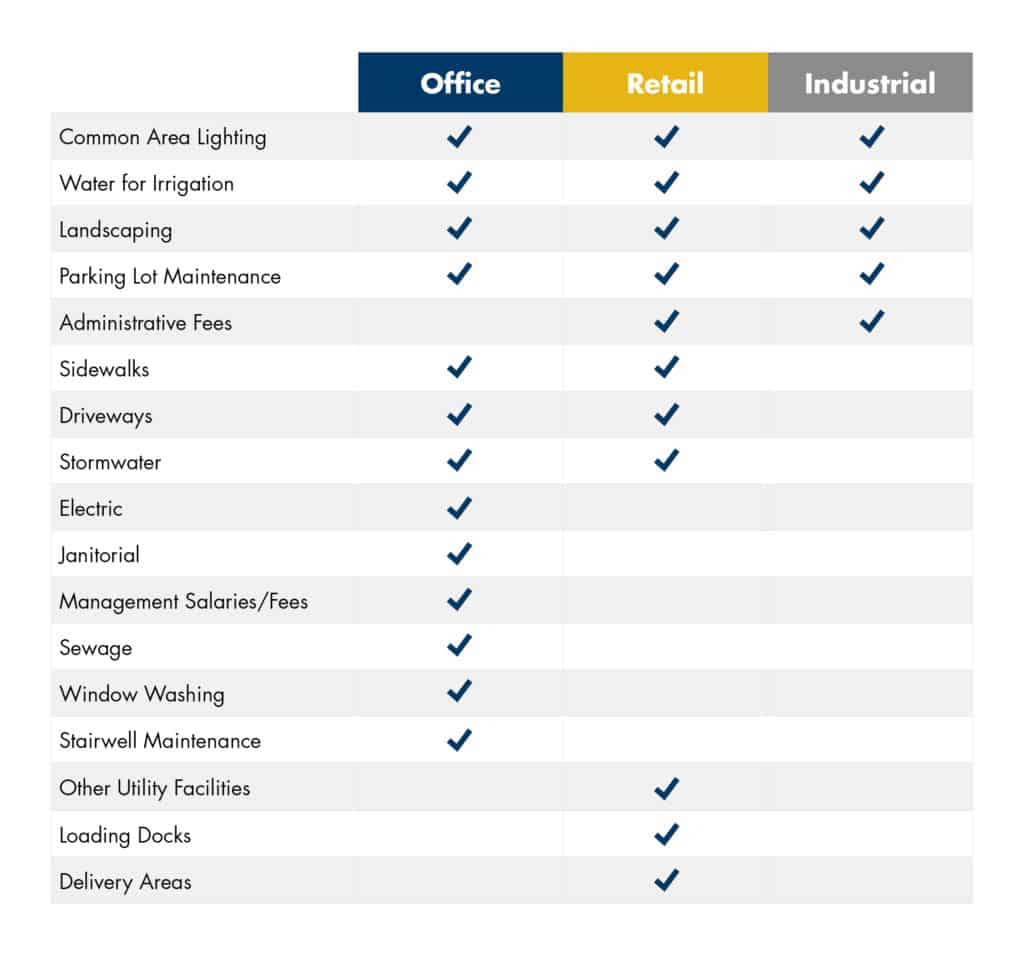
To manage business finance effectively, one must look beyond the total CAM figure and scrutinize the line items. Not all CAM charges are created equal, and the specific inclusions can vary wildly depending on the asset class and the specific lease language. Generally, these costs are divided into controllable and non-controllable expenses.
Maintenance and Repairs
This is the most visible category of CAM. It includes the physical upkeep of the property, such as roof repairs, parking lot striping, pothole filling, and elevator maintenance. It also covers “soft” maintenance like janitorial services for lobbies and restrooms, window washing, and pest control. In retail environments, this may also include seasonal decorations or the maintenance of central signage that displays all tenant names.
Utilities and Security
Shared utilities are a significant portion of CAM charges. This includes electricity for parking lot lights and hallway lighting, water for shared restrooms and irrigation systems, and heating or cooling for common lobbies. Additionally, security costs—ranging from on-site guards and patrols to the maintenance of CCTV systems and gated entries—are passed through to tenants. In modern “smart” buildings, the costs of maintaining high-speed communal Wi-Fi or advanced building management systems are also included here.
Landscaping and Seasonal Services
For suburban office parks and retail centers, curb appeal is vital for attracting customers. CAM charges cover lawn care, tree trimming, flower planting, and—critically in colder climates—snow and ice removal. Snow removal is often one of the most volatile CAM expenses, as a harsh winter can cause these costs to skyrocket, significantly impacting a tenant’s year-end reconciliation.
Administrative and Management Fees
Landlords typically charge a fee for the administration of the property. This covers the salary of the property manager, the cost of accounting services to calculate CAM reconciliations, and the general overhead of running the property. Financial savvy tenants often look for a “cap” on these fees, as they can sometimes be used as a profit center for the landlord rather than a simple reimbursement of costs.
Lease Structures and Their Impact on CAM
The way CAM charges are billed is inextricably linked to the type of lease agreement signed. Understanding these structures is essential for any business performing a cost-benefit analysis on a potential location.
Triple Net (NNN) Leases
In a Triple Net lease, the tenant is responsible for virtually all operating expenses, including CAM, property taxes, and insurance. The base rent is usually lower, but the tenant takes on the full financial risk of rising expenses. For investors, NNN leases are attractive because they provide a stable, predictable income stream with minimal management responsibility. For tenants, they require a high degree of financial diligence.
Gross Leases and Modified Gross Leases
In a “Full Service Gross” lease, the tenant pays a flat fee that includes base rent and all operating expenses. The landlord assumes the risk; if CAM charges spike, the landlord’s profit margin shrinks. A “Modified Gross” lease is a middle ground where the tenant might pay a base rent that includes CAM for the first year (the “base year”), but is responsible for any increases in CAM expenses in subsequent years. This protects the landlord against inflation while giving the tenant an initial period of cost certainty.
The Reconciliation Process
Most variable CAM charges are paid as estimates throughout the year. At the end of the fiscal year, the landlord performs a “reconciliation.” If the actual expenses were higher than the estimates, the tenant receives an invoice for the difference. If the expenses were lower, the tenant receives a credit. This year-end adjustment can be a source of significant financial stress if a business has not set aside a contingency fund for potential CAM underpayments.
Strategic Negotiation and Financial Protection
Because CAM charges can be opaque and fluctuate year-over-year, businesses must approach lease negotiations with a focus on financial protection. A poorly negotiated CAM clause can lead to “bracket creep” where the total occupancy cost becomes unsustainable.
Implementing CAM Caps
One of the most effective ways to protect a business’s bottom line is to negotiate a “CAM Cap.” This is a limit on how much the CAM charges can increase in a single year. For example, a 5% cumulative cap ensures that even if the landlord’s costs double due to unforeseen circumstances, the tenant’s liability is limited to a 5% increase over the previous year. It is important to distinguish between “cumulative” and “non-cumulative” caps, as the math behind them can lead to very different financial outcomes over a five- or ten-year lease.
Audit Rights and Transparency
Financial transparency is paramount. A well-drafted lease should grant the tenant the right to audit the landlord’s books and records once a year. This allows the tenant’s accountants to verify that the expenses being passed through are legitimate, accurately calculated, and consistent with the lease terms. Common audit findings include the landlord improperly including “capital expenditures” (such as a total roof replacement) in CAM charges, rather than “operating expenses” (such as a roof patch). Capital expenditures should generally be depreciated over time or paid for by the landlord, not passed through as a one-time maintenance expense.
Exclusions and Carve-outs
Sophisticated tenants will negotiate specific exclusions from CAM. These might include costs related to the landlord’s marketing of vacant spaces, legal fees for negotiating leases with other tenants, or repairs necessitated by the landlord’s negligence. By narrowing the definition of what constitutes a “common area expense,” a business can significantly reduce its financial exposure.

The Bottom Line: CAM as a Factor in Business Profitability
In the world of business finance, the “true cost” of a location is never just the rent per square foot. CAM charges represent a significant portion of the total occupancy cost and can be the difference between a profitable quarter and a deficit. For the landlord, effective CAM management ensures the long-term value and appreciation of the real estate asset. For the tenant, understanding and managing these charges is a vital part of operational efficiency.
By treating CAM charges not as a fixed utility but as a negotiable and auditable business expense, organizations can better forecast their cash flow and protect their margins. Whether you are an entrepreneur looking for your first storefront or a CFO managing a national portfolio of office space, a deep understanding of Common Area Maintenance is an indispensable tool in your financial arsenal. Mastery of these details ensures that your capital is being deployed toward growth and value creation, rather than being eroded by unmanaged overhead.
aViewFromTheCave is a participant in the Amazon Services LLC Associates Program, an affiliate advertising program designed to provide a means for sites to earn advertising fees by advertising and linking to Amazon.com. Amazon, the Amazon logo, AmazonSupply, and the AmazonSupply logo are trademarks of Amazon.com, Inc. or its affiliates. As an Amazon Associate we earn affiliate commissions from qualifying purchases.