
In the landscape of international business, communication serves as the bedrock of corporate identity. Whether you are expanding your brand into the DACH region—Germany, Austria, and Switzerland—or managing remote teams across European borders, the way you conclude your correspondence speaks volumes about your professional maturity and cultural intelligence. The phrase “bye” in German is not a monolithic term; it is a nuanced tool that, when wielded correctly, strengthens your brand positioning and fosters deeper client relationships.
Decoding the Cultural Context of German Farewells
When conducting business in Germany, communication is characterized by a blend of directness and formal hierarchy. Unlike the casual “see ya” often exchanged in Silicon Valley startups, the German market places significant weight on the distinction between Sie (formal) and du (informal). Mastering the art of saying “bye” is essentially an exercise in brand alignment.

The Formal Standard: Auf Wiedersehen
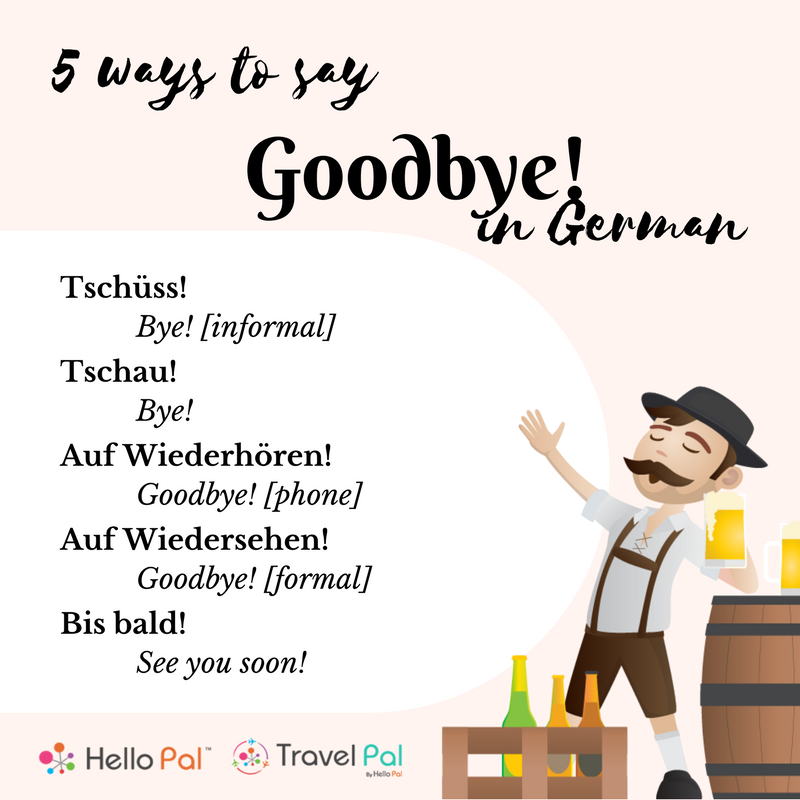
The term Auf Wiedersehen is the quintessential formal goodbye. Derived from the verb wiedersehen (to see again), it carries a professional promise of continuity. Using this in your corporate communications—whether in a client meeting or a final email—signals respect for protocol. For a brand, utilizing this term demonstrates that you value the longevity of the business relationship. It is the gold standard for maintaining a professional image in high-stakes corporate settings.
The Telephone Equivalent: Auf Wiederhören
A unique facet of the German language is the distinction between visual and auditory farewells. When concluding a business call, Auf Wiederhören (literally “until we hear each other again”) is the correct choice. Using Auf Wiedersehen over the phone can be perceived as a minor, yet noticeable, linguistic blunder. For companies emphasizing precision and operational excellence, ensuring your team uses Auf Wiederhören on support calls is a subtle but effective way to project competence.
Digital Etiquette: Crafting the Professional Email Sign-off
The digital medium has transformed the way brands interact with their audience. In written communication, the farewell is your final touchpoint—the lasting impression that determines whether your client remembers you as a transactional vendor or a strategic partner.
Mit freundlichen Grüßen: The Industry Benchmark
In almost every formal business context, Mit freundlichen Grüßen is the equivalent of “Sincerely” or “Best regards.” While it translates to “With friendly greetings,” it is the standard, neutral, and safe sign-off for any email to a new lead, a government office, or a formal business contact. From a brand strategy perspective, defaulting to this phrase ensures that your corporate identity remains safe, reliable, and grounded in standard business etiquette. It is the “suit and tie” of email sign-offs.
High-Level Variations for Relationship Building
Once a relationship has been established, you have more flexibility. Using Beste Grüße (Best regards) or Herzliche Grüße (Warm regards) signals that your brand has moved from a cold lead to a trusted partner. For personal branding, choosing the right sign-off is a strategic decision:
- Beste Grüße: Useful for established project partners and recurring vendors.
- Herzliche Grüße: Best reserved for long-term relationships where a personal rapport has been established.
- Viele Grüße: A slightly more relaxed version, suitable for internal communication or collaborative team environments.

Misstepping here can lead to a perceived lack of professional boundaries. If you use Herzliche Grüße too early in a negotiation, you risk appearing overly familiar, which can undermine your authoritative market position. Always match your sign-off to the stage of the customer journey.
Casual Interactions and the Evolution of Modern German
As global markets become increasingly intertwined with pop culture and international startup norms, the German language has adopted shorter, more casual farewells. While these are rarely appropriate for a contract negotiation or a formal corporate proposal, they hold a significant place in the marketing landscape, particularly for brands targeting Gen Z or the creative industries.
The Rise of “Tschüss” and its Variants
Tschüss is the most common informal way to say goodbye in Germany. It is energetic, efficient, and friendly. Brands that use a conversational tone of voice—perhaps in a social media campaign or a direct-to-consumer email newsletter—might find Tschüss to be a perfect fit. It breaks down the barrier between company and consumer, fostering a sense of accessibility.
Variations such as Tschüssi or Tschüssikowski are highly colloquial and playful. While these have no place in a B2B finance email, they can be powerful tools in a brand’s social media strategy, provided that the brand’s identity is centered on humor, youthfulness, or disruptive marketing. However, caution is advised: using an overly casual farewell with a traditional German executive could result in a loss of credibility.
Strategic Implementation for Global Brands
Developing a comprehensive strategy for your brand’s communication in Germany requires more than just a list of vocabulary. It requires an understanding of how these phrases integrate into your broader marketing and client-retention efforts.
Consistency in Tone Across Channels
One of the most common pitfalls for international firms is a lack of consistency. If your website uses formal language, but your social media team is using overly casual slang in the comments, your brand identity becomes fragmented. Establish a “Global Communication Style Guide” that explicitly defines which farewells are appropriate for different departments.
- Sales/Account Management: Use Mit freundlichen Grüßen for initial outreach, transition to Beste Grüße as the partnership matures.
- Customer Support: Use Auf Wiederhören on calls; use Mit freundlichen Grüßen in ticket resolutions to maintain professional distance.
- Social Media/Marketing: Use Tschüss or Viele Grüße to create a friendly, engaging brand voice that invites community interaction.
The “Localized” Advantage
Ultimately, taking the time to understand the nuances of saying “bye” in German is a form of brand investment. It signals to your German-speaking audience that your company is not just interested in extraction, but in integration. When you respect the linguistic and cultural norms of a market, you earn trust. In a competitive global economy, that trust is often the deciding factor in whether a contract is signed or a client moves on to a competitor.
As you refine your approach, remember that language is never static. Just as your brand evolves, so too will your communication style. By remaining intentional about how you conclude your interactions, you ensure that your brand remains memorable, professional, and firmly embedded in the professional culture of your target market. Whether you sign off with the steadfast Auf Wiedersehen or the contemporary Tschüss, ensure that the choice aligns with the core identity you have worked so hard to cultivate.
aViewFromTheCave is a participant in the Amazon Services LLC Associates Program, an affiliate advertising program designed to provide a means for sites to earn advertising fees by advertising and linking to Amazon.com. Amazon, the Amazon logo, AmazonSupply, and the AmazonSupply logo are trademarks of Amazon.com, Inc. or its affiliates. As an Amazon Associate we earn affiliate commissions from qualifying purchases.