
In the highly competitive landscape of global aviation, a brand is often defined by its most premium offering. For United Airlines, “Business Class” is no longer just a service tier; it is a meticulously crafted sub-brand known as United Polaris. Understanding what business class is on United Airlines requires more than a look at seat dimensions or menu options—it requires an analysis of a multi-billion dollar brand strategy designed to reclaim market share and redefine corporate identity in the transcontinental and international sectors.
The transition from a standard “Business Class” to the “United Polaris” brand represents one of the most significant pivots in modern airline marketing. By moving away from a generic functional description and toward a lifestyle-oriented brand identity, United Airlines has attempted to create an emotional connection with the high-yield traveler.

Reimagining the Skies: The Strategic Rebranding of United Business Class
The genesis of United Polaris was born out of a necessity to simplify a fragmented brand architecture. Historically, United offered a confusing array of premium products, including “United Business,” “United First,” and “Global First.” This dilution of the brand made it difficult for consumers to understand the value proposition. The launch of Polaris was a strategic move to consolidate these offerings into a singular, powerhouse brand that promised a consistent, high-end experience.
Shifting from Utility to Luxury
Before the introduction of Polaris, business class was largely marketed as a utility—a way to get from point A to point B with more legroom. United’s brand strategists recognized that to compete with the “ME3” (Middle East Three: Emirates, Qatar, and Etihad), they needed to shift from a utility-based message to a luxury-based narrative.
The rebranding focused on “the journey, not just the destination.” By emphasizing sleep—specifically “the best sleep in the sky”—United identified a universal pain point for business travelers. This focus allowed the brand to move beyond the technical specifications of the aircraft and into the realm of wellness and performance, positioning the airline as a partner in the traveler’s professional success.
The Birth of the ‘Polaris’ Moniker
Naming is a critical component of brand strategy. The name “Polaris”—the North Star—was chosen to evoke feelings of guidance, reliability, and celestial wonder. In a world of alphanumeric seat types and generic “Executive Class” labels, Polaris stands out as a poetic and aspirational brand name.
This naming convention serves a dual purpose: it creates a “halo effect” for the rest of the United fleet while providing a clear, premium identity that can be marketed independently of the parent company. When a traveler sees the Polaris star logo, they are conditioned to expect a specific standard of service that transcends the standard United Airlines economy experience.
The Customer Experience as Brand Equity
In the world of corporate branding, “brand equity” is the value added to a product by its brand name. United has built this equity by ensuring that the physical touchpoints of the Polaris experience are distinct and memorable. From the moment a passenger enters the airport to the moment they deplane, the brand identity is reinforced through sensory details and exclusive environments.
Uniformity and Visual Identity
The visual identity of United Polaris is rooted in a sophisticated palette of deep blues, greys, and metallic accents. This color scheme was intentionally designed to evoke a sense of calm and professionalism. Unlike the vibrant, high-energy colors often used in low-cost carrier branding, the Polaris aesthetic is muted and premium.
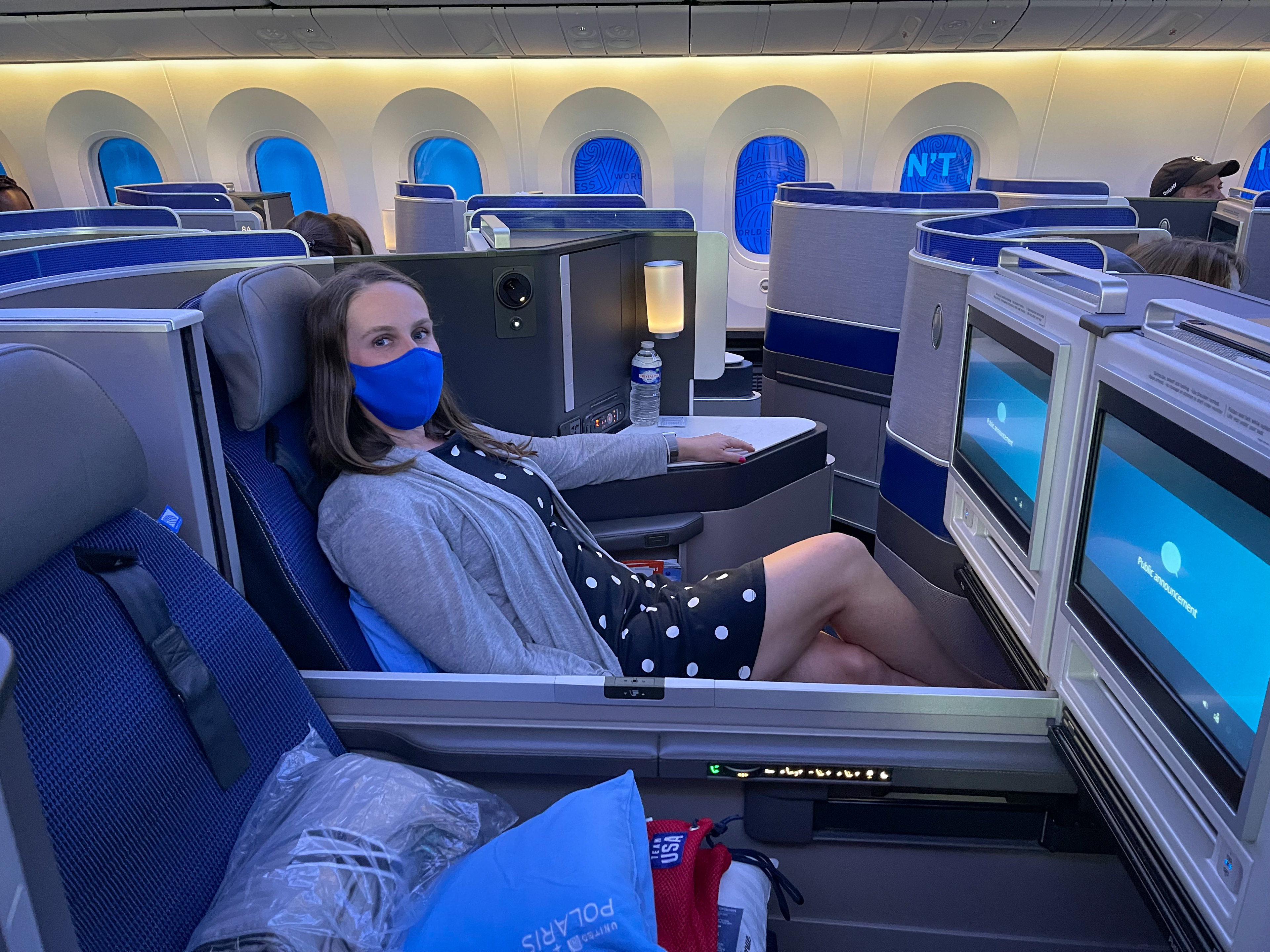
Consistency is key to brand trust. United invested heavily in retrofitting its widebody fleet (the Boeing 777, 787 Dreamliner, and 767) to ensure that the “1-2-1” configuration—where every passenger has direct aisle access—became a hallmark of the brand. By standardizing the physical product, United reduced the “fleet roulette” that often plagues legacy carriers, thereby strengthening the brand’s reputation for reliability.
The Polaris Lounge: Creating an Exclusive Ecosystem
Perhaps the most potent expression of the United Polaris brand is the dedicated Polaris Lounge. Unlike standard United Clubs, which are open to a wider range of members and credit card holders, Polaris Lounges are strictly reserved for international business class passengers.

This exclusivity is a core component of the brand’s “scarcity marketing” strategy. By creating a space that features sit-down dining, “nap pods,” and high-end showers, United has turned the airport waiting period into a desirable part of the brand experience. The lounges act as a physical manifestation of the brand’s commitment to the “high-end traveler,” serving as a clubhouse for the global elite and further differentiating the Polaris sub-brand from the general United ecosystem.
Marketing the “Best Sleep in the Sky”
A successful brand strategy often relies on strategic alliances that bolster credibility. For United Polaris, the cornerstone of their marketing campaign was a focus on restorative sleep, supported by a high-profile partnership that brought “Main Street” luxury to the “Blue Skies.”
Strategic Partnerships: The Saks Fifth Avenue Connection
One of the most brilliant moves in United’s brand execution was its partnership with Saks Fifth Avenue. By co-branding the bedding—including plush duvets, day blankets, and pillows—United leveraged the existing prestige of a luxury retail icon to validate its own premium claims.
This partnership serves as a classic case study in brand association. Travelers who might be skeptical of an airline’s claims of “luxury” are more likely to believe it when it is backed by a century-old luxury department store. This move transformed the business class cabin into a “boutique hotel” environment, significantly raising the perceived value of the ticket without drastically increasing the airline’s operational costs.
Digital Integration and the Omnichannel Experience
In the digital age, a brand is only as strong as its app. United has integrated the Polaris experience into its digital platforms to create a seamless omnichannel journey. Through the United app, Polaris passengers can track their bags, preview their in-flight menus, and even pre-order meals.
This digital sophistication reinforces the brand’s identity as a modern, tech-forward leader in the industry. By reducing friction through technology, United reinforces the “stress-free” promise of the Polaris brand, ensuring that the premium experience begins long before the passenger reaches the gate.
Competitive Positioning in a Saturated Market
To understand what business class is on United Airlines, one must look at how it sits within the broader market. United does not operate in a vacuum; it is constantly competing with domestic rivals Delta and American Airlines, as well as international giants.
United vs. The “Big Three” Rivalry
The “Big Three” U.S. carriers—United, Delta, and American—are in a perpetual arms race for the business traveler’s wallet. Delta has “Delta One,” and American has “Flagship Business.” United’s strategy with Polaris was to go “all-in” on the sleep and privacy aspect, which has become its primary differentiator.
While Delta focuses on the “suite” experience (closing doors for privacy), United has focused on the “soft product” (the service and amenities). This subtle difference in brand positioning allows United to target a specific segment of travelers who prioritize comfort and rest over the novelty of a sliding door. The brand’s messaging is consistently professional and focused on the “rested executive,” a narrative that resonates deeply with its core corporate client base.
Measuring the Success of the Rebrand
The success of a brand strategy is ultimately measured by its impact on the bottom line and its ability to shift public perception. Since the launch of Polaris, United has seen a significant increase in its premium cabin revenue. More importantly, the brand has successfully moved away from the negative “legacy carrier” stereotypes of the early 2010s.
United Polaris has become a benchmark for how a legacy airline can reinvent itself through disciplined brand management. By focusing on a clear niche (sleep and productivity), establishing high-end partnerships, and maintaining a consistent visual and physical identity, United has transformed “Business Class” from a mere seat on a plane into a world-class luxury brand.
In conclusion, “United Polaris” is a masterclass in brand evolution. It demonstrates how a massive, traditional corporation can pivot its identity to meet the changing expectations of a global audience. For the traveler, it is a premium way to fly; for the strategist, it is a testament to the power of a well-executed brand promise. Through Polaris, United Airlines has successfully navigated the complexities of the modern market, proving that in the world of business, your brand is your most valuable asset.
aViewFromTheCave is a participant in the Amazon Services LLC Associates Program, an affiliate advertising program designed to provide a means for sites to earn advertising fees by advertising and linking to Amazon.com. Amazon, the Amazon logo, AmazonSupply, and the AmazonSupply logo are trademarks of Amazon.com, Inc. or its affiliates. As an Amazon Associate we earn affiliate commissions from qualifying purchases.