
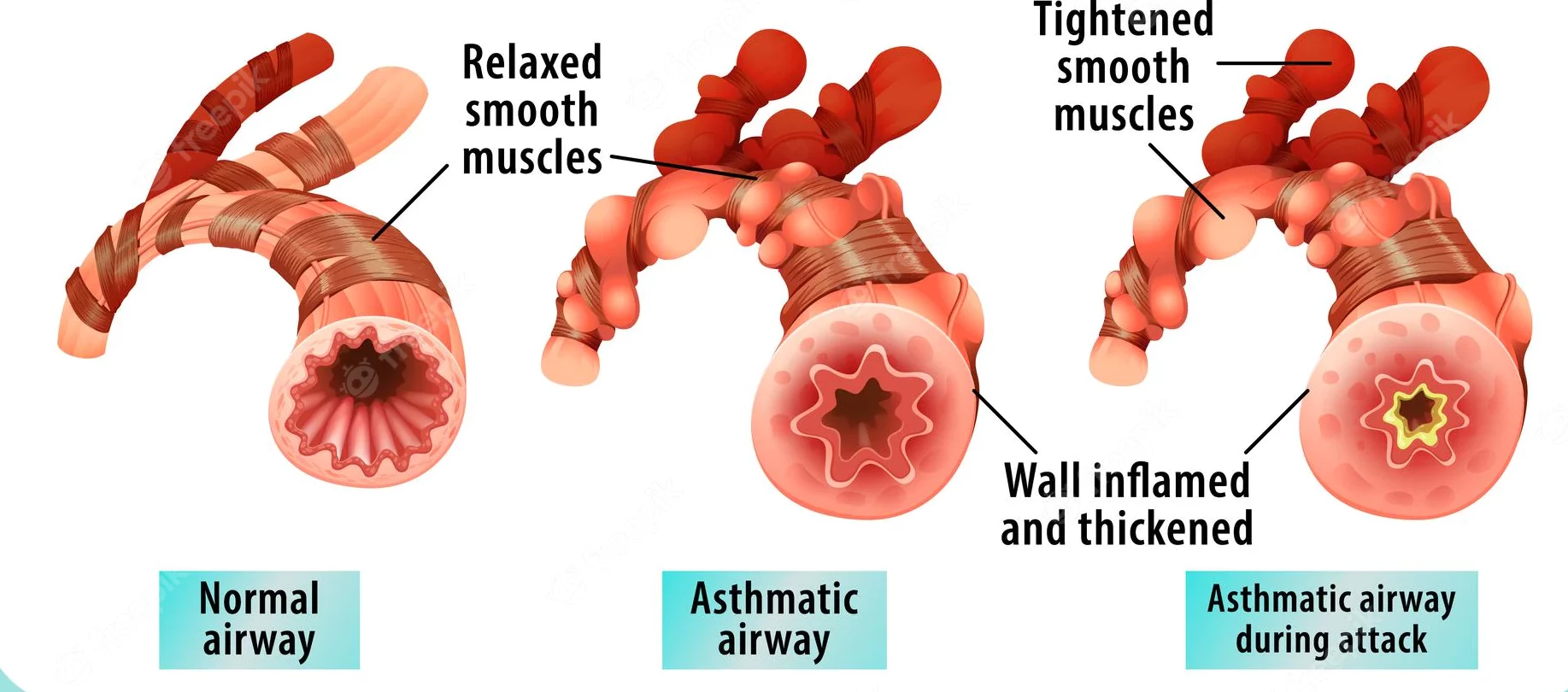
For decades, the answer to the question “what is bronchial asthma” was confined to clinical descriptions of airway inflammation and bronchial hyperresponsiveness. However, in the modern digital era, the definition of asthma management has transcended the walls of the doctor’s office and entered the realm of high-tech innovation. Today, bronchial asthma represents one of the most significant frontiers for HealthTech, where software, artificial intelligence, and sophisticated gadgets are converging to transform a chronic condition into a data-driven personal health journey.
This article explores how technology is redefining the landscape of respiratory care, moving beyond traditional pharmacology into a world of predictive analytics and connected devices.

1. The Rise of Smart Inhalers and IoT Ecosystems
At the heart of the digital transformation of bronchial asthma is the Internet of Things (IoT). For years, the greatest challenge in treating asthma was non-adherence—patients either forgetting to take their medication or using their inhalers incorrectly. Tech innovators have addressed this through “Smart Inhalers.”
The Hardware: Sensors and Connected Gadgets
Smart inhalers are standard delivery devices equipped with sophisticated sensors. These gadgets, produced by companies like Propeller Health and Teva, track the date, time, and geographical location of every puff. By utilizing Bluetooth Low Energy (BLE), these devices sync seamlessly with smartphone applications. This is not just about logging data; it is about creating a comprehensive digital footprint of a patient’s respiratory health.
Software Integration and Real-Time Adherence Tracking
The software component of these devices is where the real value lies. Mobile apps provide users with intuitive dashboards that visualize their medication usage. For a developer or a tech-savvy user, the beauty of these systems is the automated feedback loop. If a patient misses a dose of their controller medication, the app sends a push notification. More impressively, if a patient uses their rescue inhaler frequently in a specific GPS location, the software cross-references environmental data—such as high pollen counts or pollution levels—to identify localized triggers.
Tutorials for the Digital Patient
The integration of tutorial-based software within these apps helps solve the problem of poor technique. Using the smartphone’s camera and AI-driven image recognition, some apps can now “watch” a patient use their inhaler and provide real-time corrections. This utilizes computer vision, a branch of AI, to ensure that the mechanical delivery of the drug is optimized, effectively turning a simple plastic canister into a high-tech medical assistant.
2. Artificial Intelligence and Predictive Modeling
If IoT is the “nervous system” of modern asthma care, then Artificial Intelligence (AI) is the “brain.” The tech industry is currently leveraging machine learning (ML) to move from reactive treatment to proactive prevention.
Machine Learning for Flare-up Prediction
The most exciting application of AI in the niche of bronchial asthma is predictive analytics. By feeding historical patient data—heart rate, sleep patterns, inhaler usage, and atmospheric conditions—into ML algorithms, software can now predict an asthma attack before the patient even feels symptomatic. These AI tools identify subtle patterns in respiratory rate or nocturnal cough frequency that are invisible to the human eye, providing a “forecast” for the patient’s lungs.
Natural Language Processing (NLP) in Digital Diagnostics
AI is also revolutionizing how asthma is diagnosed and monitored through sound analysis. Digital tools now exist that use Natural Language Processing and audio signal processing to analyze the sound of a cough or a wheeze through a smartphone microphone. This software-as-a-medical-device (SaMD) can distinguish between an asthmatic cough and a common cold with high degrees of accuracy. This eliminates the need for expensive, bulky equipment like spirometers for daily monitoring, bringing diagnostic-grade technology into the palm of the hand.
Big Data and Population Health Management
On a macro level, tech companies are using big data to assist cities in “smart” respiratory management. By aggregating anonymous data from thousands of smart inhalers, software platforms can create “hotspot maps” of asthma triggers. This information allows urban planners to see exactly where air quality is impacting health in real-time, showcasing the power of data-driven corporate and civic strategy.
3. Mobile Health (mHealth) and the Democratization of Care
The proliferation of health-focused apps has led to the democratization of asthma management. No longer is a patient’s data locked in a paper file; it is now accessible, portable, and actionable.
The UI/UX of Respiratory Health
The success of asthma management apps depends heavily on User Interface (UI) and User Experience (UX) design. Modern apps focus on “gamification” to encourage younger users to maintain their treatment plans. Through badges, streaks, and clear visualizations of “lung age,” developers are using psychological tech triggers to improve health outcomes. Insightful design ensures that complex medical data is translated into easy-to-understand metrics for the end-user.
Telehealth and Remote Patient Monitoring (RPM)
The software infrastructure for Telehealth has bridged the gap between patients and specialists. Remote Patient Monitoring (RPM) platforms allow pulmonologists to view a patient’s real-time data via a secure cloud portal. This tech-enabled shift means that doctor visits are no longer based on a calendar, but on clinical need. If the software flags a decline in a patient’s lung function, an automated alert can trigger a virtual consultation, preventing an emergency room visit.
Digital Security and HIPAA Compliance
With the rise of mHealth comes the critical need for digital security. The tech niche is currently obsessed with the “Privacy by Design” movement. Developers of asthma tools must implement end-to-end encryption and robust authentication protocols to protect sensitive health data. In the era of frequent data breaches, the security architecture of an asthma app is just as important as its medical functionality. This involves rigorous penetration testing and compliance with global standards like GDPR and HIPAA.
4. The Future: Digital Therapeutics and Genomics
As we look toward the horizon, the intersection of bronchial asthma and technology is moving toward “Digital Therapeutics” (DTx)—software that is itself the treatment.
Software as a Treatment
Digital Therapeutics for asthma involves evidence-based software programs designed to prevent or manage the disease. These may include immersive Virtual Reality (VR) environments for stress-induced asthma, helping patients regulate their breathing through biofeedback. Here, the tech is not just monitoring; it is actively intervening in the physiological process.
The Integration of Genomics and Big Data
The next frontier is the integration of genomic data into asthma management software. By sequencing a patient’s DNA, AI tools can predict which specific medications will be most effective for their unique biological makeup. This “Precision Medicine” approach relies on massive computational power to analyze billions of genetic markers. When combined with real-time IoT data, we reach a level of “Personalized Tech” that was previously the stuff of science fiction.
The Digital Twin Concept
In the world of high-end software engineering, the “Digital Twin” is a virtual model of a physical process. We are now seeing the emergence of digital twins of the human respiratory system. By creating a virtual replica of a patient’s lungs, doctors can use software to simulate how different triggers or medications will affect that specific individual. This allows for risk-free experimentation in a digital environment before any physical treatment is administered.

5. Conclusion: A New Definition of Respiratory Health
What is bronchial asthma in the 2020s? It is no longer just a biological condition; it is a data challenge. It is an opportunity for software engineers, AI researchers, and hardware designers to collaborate on solutions that save lives and improve the quality of living.
From the IoT sensors on a smart inhaler to the predictive AI models running in the cloud, technology has transformed asthma management from a reactive struggle into a proactive, data-driven lifestyle. As digital security improves and AI becomes more sophisticated, the “Tech” of asthma will continue to evolve, eventually making the “attack” a relic of the past. For the tech-savvy patient and the healthcare provider alike, the future of bronchial asthma is not just in a pill or a pump—it is in the code.
aViewFromTheCave is a participant in the Amazon Services LLC Associates Program, an affiliate advertising program designed to provide a means for sites to earn advertising fees by advertising and linking to Amazon.com. Amazon, the Amazon logo, AmazonSupply, and the AmazonSupply logo are trademarks of Amazon.com, Inc. or its affiliates. As an Amazon Associate we earn affiliate commissions from qualifying purchases.