
The acronym “BRCM” may not immediately ring a bell for everyone, yet its underlying entity, Broadcom Inc., is a colossal force silently powering much of the digital world we inhabit. From the fundamental chips in our smartphones and Wi-Fi routers to the complex software that orchestrates vast enterprise data centers and cloud infrastructure, Broadcom’s technological footprint is profoundly pervasive. More than just a semiconductor company, Broadcom has evolved through strategic acquisitions into a diversified technology giant, deeply embedded in critical communication, storage, and software ecosystems globally.
Understanding “what is BRCM” requires a journey into the heart of modern technology infrastructure. It’s about recognizing a company that designs, develops, and supplies a wide array of semiconductor and infrastructure software products. Its components are the unsung heroes enabling the high-speed data transfer, robust network connectivity, and secure digital operations that are the bedrock of contemporary society. This article delves into Broadcom’s core business, its transformative acquisition strategy, its burgeoning software empire, and its indelible impact on the technological landscape, establishing its identity as a critical pillar of the digital age.
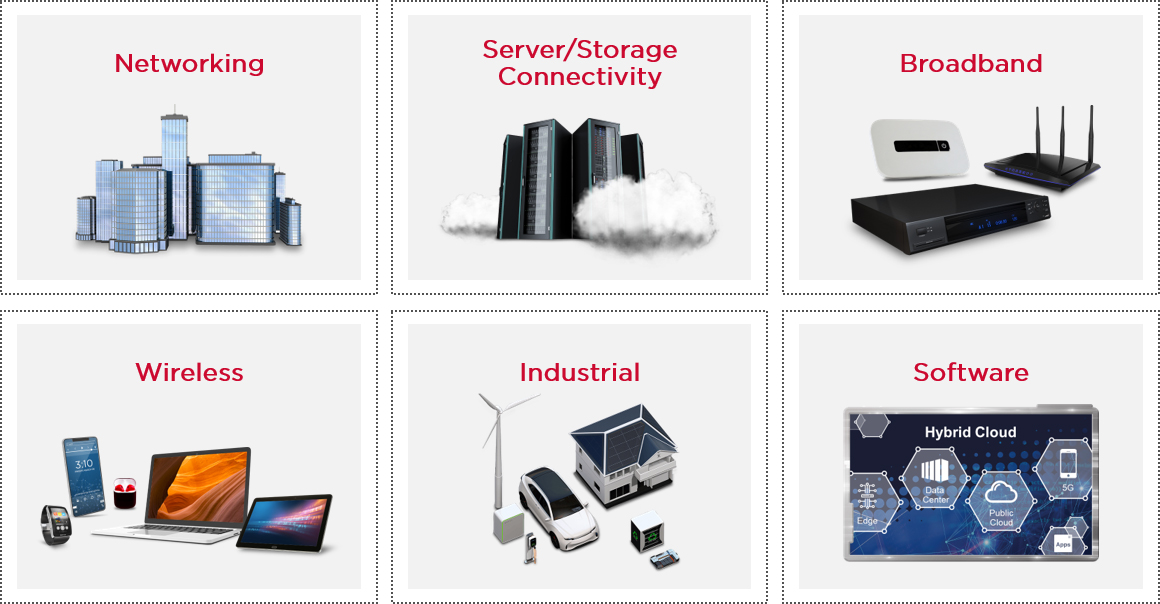
Broadcom’s Core Business: A Semiconductor Powerhouse
At its genesis, and still a significant part of its identity, Broadcom has been a preeminent designer and developer of semiconductors. These aren’t just any chips; they are specialized, high-performance integrated circuits that form the backbone of countless electronic devices and network infrastructures. The company’s expertise lies in creating highly integrated, low-power, and cost-effective solutions that deliver unparalleled performance in demanding environments.
From Communications to Enterprise Storage
Broadcom’s origins are deeply rooted in communications technology. The company initially gained prominence for its pioneering work in broadband communication chips, which became integral to cable modems, DSL modems, and set-top boxes, enabling the digital transformation of home entertainment and internet access. This early success established Broadcom as a leader in connectivity solutions, driving the proliferation of high-speed data.
Over the years, Broadcom recognized the expanding needs of the digital economy, particularly the explosion of data and the imperative for efficient storage and retrieval. This led to a strategic diversification into enterprise storage solutions. Through internal development and key acquisitions, Broadcom expanded its portfolio to include crucial components for data centers, such as Fibre Channel host bus adapters (HBAs) and switches, RAID controllers, and other storage connectivity chips. These products are vital for ensuring the reliability, speed, and scalability of enterprise-grade storage systems, forming the bedrock of cloud computing and corporate data infrastructure. This expansion allowed Broadcom to move beyond consumer-facing communication devices into the mission-critical systems that power global businesses.
Key Product Categories and Market Leadership
Broadcom’s semiconductor portfolio is exceptionally broad, segmented into several critical areas where the company often holds significant market share:
- Networking: This segment includes a vast array of products from Ethernet controllers and physical layer devices (PHYs) to complex network switches and routers. Broadcom’s Jericho and Tomahawk series are workhorses in data center networking, facilitating ultra-high-speed data transfer. Their chips power everything from small enterprise switches to hyperscale cloud data centers, ensuring reliable and efficient network operations.
- Broadband Communication: Remaining true to its roots, Broadcom continues to be a dominant player in broadband communication. Its chips are found in virtually every piece of networking equipment connecting homes and businesses to the internet, including cable modems, DSL modems, PON (Passive Optical Network) solutions, and Wi-Fi access points. These components are critical for delivering the high-speed internet services that modern society relies upon.
- Storage: In the enterprise storage domain, Broadcom provides an extensive suite of products. This includes SAS/SATA/NVMe controllers for solid-state drives (SSDs) and hard disk drives (HDDs), Fibre Channel host bus adapters (HBAs) and switches, and various other components that enable high-performance, resilient storage area networks (SANs) and network-attached storage (NAS) systems. Their solutions are fundamental to data protection, backup, and rapid data access in large-scale computing environments.
- Wireless: While not always the most visible, Broadcom’s wireless chips are ubiquitous. They supply Wi-Fi and Bluetooth connectivity solutions for a wide range of devices, from smartphones and tablets to smart home devices, automotive systems, and IoT (Internet of Things) applications. Their continuous innovation in wireless standards helps drive the evolution of interconnected devices and pervasive wireless access.
Broadcom’s market leadership in these areas is a testament to its engineering prowess and strategic focus on critical, high-performance components. These semiconductors are foundational, often unseen, but absolutely essential to the functioning of our digital world.
Strategic Acquisitions: Fueling Growth and Diversification
Broadcom’s journey from a leading semiconductor firm to a technology conglomerate has been defined by a series of bold and transformative strategic acquisitions. Under the leadership of Hock Tan, the company has pursued an aggressive M&A strategy, not just for market consolidation but also for significant diversification into high-margin enterprise software. These moves have fundamentally reshaped Broadcom’s business model and its position within the tech industry.
Shifting Sands: From Pure-Play to Integrated Solutions
The most pivotal shift began with the acquisition of Avago Technologies by the original Broadcom Corporation in 2016. This transaction, valued at $37 billion, saw the combined entity adopt the Broadcom name, effectively creating a new industry giant. Avago, itself a diversified semiconductor company with strong positions in analog, mixed-signal, and optoelectronics, brought a complementary product portfolio and a disciplined operational philosophy that has since characterized the “new” Broadcom.
Following this, Broadcom continued its acquisition spree, targeting companies that offered either strategic semiconductor assets or, more notably, established enterprise software businesses:
- LSI (via Avago): This earlier acquisition brought expertise in storage and networking components, bolstering Broadcom’s data center offerings.
- Brocade Communications Systems: Acquired in 2017, Brocade was a leader in Fibre Channel storage area networking (SAN) solutions. This acquisition significantly strengthened Broadcom’s position in enterprise storage connectivity.
- CA Technologies: This $18.9 billion acquisition in 2018 marked Broadcom’s dramatic entry into the enterprise software market, adding mainframe and enterprise software for DevOps, security, and IT management. This was a clear signal of Broadcom’s intent to diversify beyond pure hardware.
- Symantec’s Enterprise Security Business: In 2019, Broadcom purchased Symantec’s enterprise security division for $10.7 billion, further cementing its presence in mission-critical enterprise software, specifically in cybersecurity.
- VMware: The most significant and transformative acquisition, completed in late 2023, was VMware for approximately $69 billion. This monumental deal instantly made Broadcom a dominant player in hybrid cloud, virtualization, and enterprise software infrastructure, fundamentally reshaping its identity and future trajectory.
These acquisitions have transformed Broadcom from a “pure-play” semiconductor company to one offering integrated hardware and software solutions, particularly for large enterprise customers. The strategy is to acquire established, market-leading technologies that generate stable, recurring revenue and often have long lifecycle products.
The Rationale Behind the Mergers
Broadcom’s aggressive M&A strategy is driven by several key rationales:
- Industry Consolidation: The semiconductor industry has seen significant consolidation over the past decade. Acquiring competitors or complementary businesses allows companies like Broadcom to achieve economies of scale, reduce competition, and gain pricing power.
- Market Share Expansion: Each acquisition has expanded Broadcom’s market share in specific technology verticals, giving it a stronger competitive position. For instance, Brocade solidified its SAN market dominance, while VMware propelled it to the forefront of enterprise cloud infrastructure.
- Diversification into High-Growth, High-Margin Areas: The shift towards enterprise software, particularly with CA Technologies, Symantec, and VMware, is a strategic move to tap into businesses with higher gross margins and more predictable recurring revenue streams compared to the cyclical nature of the semiconductor industry. It provides a cushion against hardware market fluctuations.
- Creating Integrated Hardware-Software Solutions: By owning both hardware components and the software that runs on them or manages them, Broadcom can offer more comprehensive, optimized, and tightly integrated solutions to its enterprise customers. This approach often leads to stronger customer lock-in and a more defensible market position.
- Focus on Mission-Critical Enterprises: Broadcom increasingly focuses on selling its high-value, high-performance products and software to large, mission-critical enterprise customers. These customers often require long-term support and have significant switching costs, leading to stable relationships and revenue.
This deliberate and calculated M&A strategy has fundamentally redefined Broadcom, making it a unique entity in the tech landscape that skillfully balances semiconductor innovation with a formidable software presence.
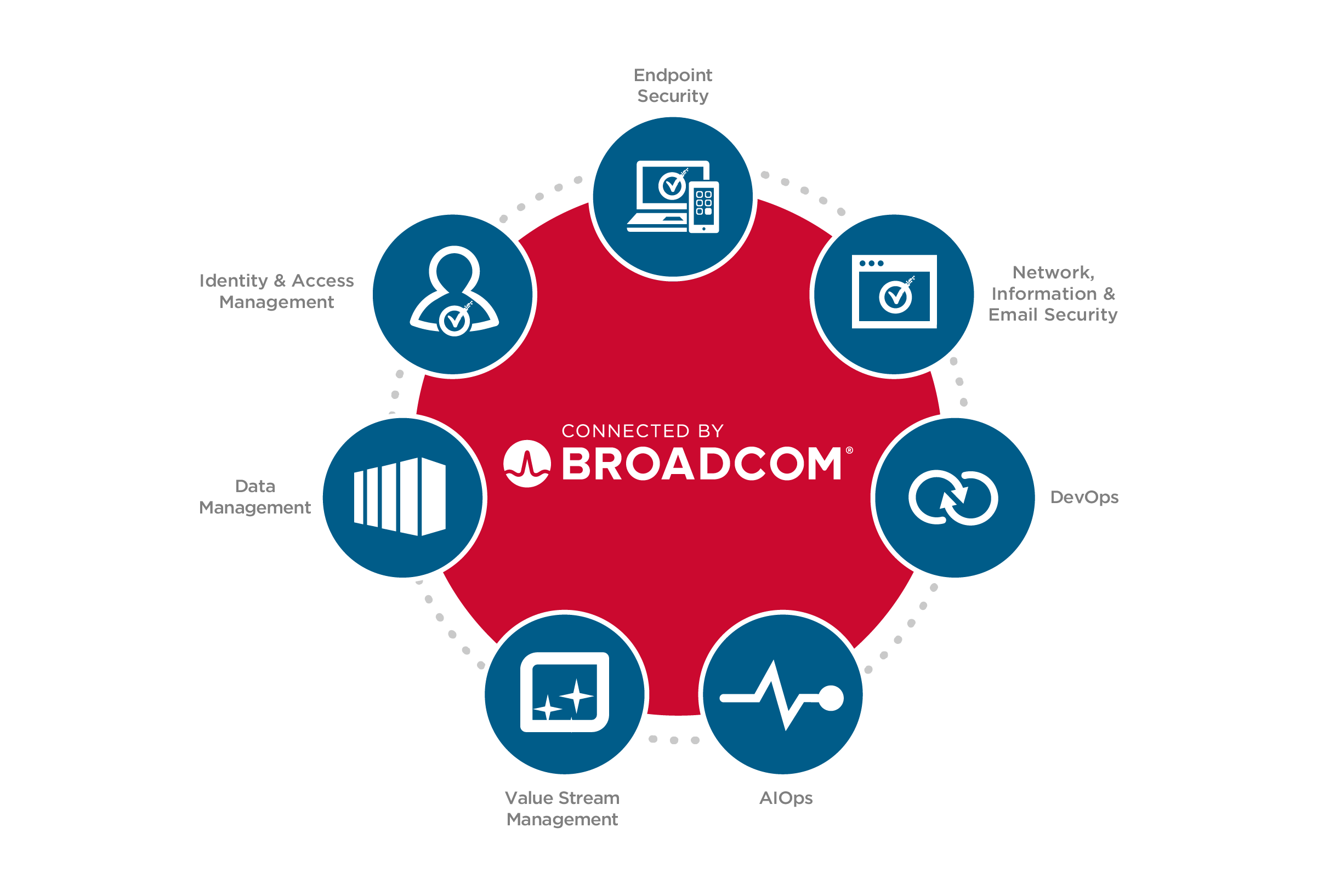
Broadcom’s Infrastructure Software Empire
While its semiconductor roots are deep, Broadcom’s strategic pivot into enterprise software has created a formidable “software empire” that now forms a significant and growing portion of its revenue and strategic focus. This segment is characterized by mission-critical applications that support the backbone of large organizations globally, from mainframes to the cloud.
Enterprise Software Solutions
Broadcom’s software portfolio is designed to address the complex needs of modern enterprises, spanning a wide range of functionalities:
- Mainframe Software: Acquired primarily through CA Technologies, this segment provides essential software for mainframe operations. This includes tools for system management, performance monitoring, security, and application development on IBM z/OS mainframes. While often perceived as legacy technology, mainframes remain central to the operations of many financial institutions, governments, and large corporations due to their unparalleled reliability and processing power for high-volume transactions. Broadcom’s software ensures these critical systems run efficiently and securely.
- Cybersecurity: With the acquisition of Symantec’s enterprise security division, Broadcom gained a robust suite of cybersecurity products. These include endpoint protection, network security, data loss prevention (DLP), and identity management solutions. These tools are vital for enterprises to defend against an ever-evolving threat landscape, protecting sensitive data, intellectual property, and ensuring operational continuity. Broadcom aims to integrate these security solutions more deeply into its broader infrastructure offerings.
- Infrastructure Software (pre-VMware): This category, also largely from CA Technologies, encompasses a variety of tools for IT operations management (ITOM), automation, and application development. These solutions help organizations manage their complex IT environments, optimize performance, and streamline development processes across various platforms, including hybrid cloud environments. They are crucial for ensuring the smooth and efficient operation of enterprise IT services.
Broadcom’s strategy for its software business is highly focused: identify market-leading products within stable, mission-critical enterprise segments, optimize their operations for profitability, and integrate them into a more cohesive offering for core customers.
VMware: A Game-Changing Acquisition
The acquisition of VMware represents the pinnacle of Broadcom’s software strategy and fundamentally reshapes its identity and market position. VMware is a global leader in cloud computing and virtualization technology, providing the foundational software for countless data centers and cloud environments worldwide.
- Cloud Computing and Virtualization Dominance: VMware’s software creates virtual machines, virtual networks, and virtual storage, allowing organizations to run multiple operating systems and applications on a single physical server. This virtualization is the bedrock of modern data centers and cloud infrastructure, enabling greater efficiency, flexibility, and resilience. With VMware, Broadcom instantly became a dominant force in the hybrid cloud market, offering solutions that span on-premises data centers and public clouds.
- Strategic Implications: The integration of VMware allows Broadcom to offer an unparalleled end-to-end solution for enterprise customers. It can now provide the silicon (networking, storage controllers) that powers the hardware, the virtualization software (VMware vSphere, NSX, vSAN) that creates the cloud environment, and the management and security software (from CA and Symantec) that runs on top. This creates a deeply integrated ecosystem that is highly appealing to large enterprises looking to simplify their IT stack and improve operational efficiency.
- Broadcom’s Operational Model for Software: Broadcom typically focuses on a smaller number of large, strategic enterprise customers for its software offerings. Post-acquisition, Broadcom has been working to integrate VMware’s product portfolio and sales channels into its existing structure, emphasizing subscription-based models and streamlined offerings. This approach aims to maximize profitability and long-term customer value from its software assets.
The VMware acquisition has catapulted Broadcom into a new league, solidifying its role as a critical provider of the infrastructure that underpins virtually all modern digital services. It underscores Broadcom’s vision to be indispensable to the world’s largest and most demanding technology users.
Broadcom’s Impact and Future Trajectories in the Tech Landscape
Broadcom’s journey has cemented its position as an indispensable player in the global technology ecosystem. Its products, both hardware and software, form critical layers of the digital infrastructure, often working silently behind the scenes but enabling the advanced capabilities we take for granted. Understanding its influence is key to appreciating the intricacies of modern tech.
Pervasive Presence in Everyday Technology
The reach of Broadcom’s technology is far more extensive than many realize. While consumers might not see a “Broadcom Inside” sticker, the company’s components are fundamental to the operation of numerous devices and services:
- Smartphones and Consumer Devices: Broadcom’s Wi-Fi and Bluetooth chips are embedded in a vast number of smartphones, tablets, and smart home devices, providing the essential wireless connectivity that defines modern consumer electronics.
- Networking Infrastructure: Every time data flows over a network, chances are a Broadcom chip is involved. From the Ethernet ports in our laptops and the Wi-Fi in our routers to the complex switches and routers in internet service provider networks and hyperscale data centers, Broadcom’s silicon is orchestrating the movement of information.
- Data Centers and Cloud Computing: Broadcom’s Fibre Channel controllers, Ethernet switches, and storage components are the lifeblood of data centers. With the VMware acquisition, its software is now managing the virtualization and cloud environments where vast amounts of data are stored, processed, and delivered. This means Broadcom is powering the very infrastructure that hosts streaming services, social media, online banking, and enterprise applications.
- Automotive and IoT: As cars become more connected and autonomous, and as the Internet of Things expands, Broadcom’s high-performance communication and networking chips are finding their way into new applications, enabling secure and reliable data exchange in these emerging markets.
Broadcom’s role is foundational. It provides the building blocks—the “picks and shovels” of the digital gold rush—that allow other companies to innovate and deliver services. Without Broadcom’s contributions, much of the digital world as we know it would simply not function at its current speed or scale.
Challenges and Opportunities Ahead
Like any tech giant, Broadcom navigates a landscape filled with both significant challenges and immense opportunities.
Challenges:
- Market Dynamics and Competition: The semiconductor industry is highly competitive and cyclical. Broadcom faces constant pressure from rivals and market shifts. Similarly, the enterprise software market, especially post-VMware, has strong competitors and evolving customer demands.
- Geopolitical Factors and Supply Chain: Global trade tensions, geopolitical risks, and the inherent complexities of global supply chains pose ongoing challenges for chip manufacturing and distribution.
- Integration of Acquisitions: Successfully integrating massive acquisitions like VMware is a complex undertaking, requiring careful management of product roadmaps, sales channels, and corporate cultures to realize the full strategic value.
- Customer Relationships: Broadcom’s strategy of focusing on a smaller number of large enterprise customers requires deep, trust-based relationships and tailored support, which can be resource-intensive.
Opportunities:
- AI/ML and 5G: The rise of Artificial Intelligence, Machine Learning, and 5G wireless technology presents enormous opportunities for Broadcom. Its high-speed networking chips, storage solutions, and infrastructure software are critical enablers for AI/ML workloads and 5G network deployments.
- Edge Computing and Hybrid Cloud: As computing increasingly moves closer to the data source (edge computing) and as hybrid cloud strategies become standard, Broadcom’s integrated hardware and software solutions are well-positioned to capitalize on these trends. VMware’s expertise in hybrid cloud management is particularly valuable here.
- Enhanced Software Portfolio: With the integration of VMware, Broadcom has a powerful, cohesive software portfolio that can drive recurring revenue growth and offer significant cross-selling opportunities to its enterprise customer base.
- Strategic Focus on Mission-Critical: By focusing on providing essential components and software for mission-critical applications in large enterprises, Broadcom aims for stable, defensible market positions with high barriers to entry.
In conclusion, “BRCM,” or Broadcom Inc., is far more than just a chipmaker. It is a diversified technology titan whose semiconductor innovations underpin global communications and storage, and whose rapidly expanding software empire, significantly bolstered by VMware, now manages the very fabric of enterprise cloud and IT infrastructure. Broadcom is a strategic architect of the digital age, a company whose pervasive influence, though often unseen, is absolutely fundamental to how we connect, compute, and interact in the modern world. Its continuous evolution through strategic acquisitions positions it as a resilient and indispensable force shaping the future of technology.
aViewFromTheCave is a participant in the Amazon Services LLC Associates Program, an affiliate advertising program designed to provide a means for sites to earn advertising fees by advertising and linking to Amazon.com. Amazon, the Amazon logo, AmazonSupply, and the AmazonSupply logo are trademarks of Amazon.com, Inc. or its affiliates. As an Amazon Associate we earn affiliate commissions from qualifying purchases.