
In the contemporary landscape of commerce, the relationship between a company and its audience has evolved far beyond the simple exchange of goods for currency. We have entered an era defined by the “experience economy,” where the value of a brand is measured not just by the quality of its products, but by the depth of the connection it fosters with its community. This connection is what marketing professionals and brand strategists call brand engagement.
At its core, brand engagement is the process of forming an emotional or rational attachment between a consumer and a brand. It is the sum of all interactions that build a relationship, foster loyalty, and ultimately turn a casual buyer into a dedicated advocate. Unlike brand awareness, which simply measures how many people know a name exists, brand engagement measures the quality of the interactions people have with that name. It is the difference between a person recognizing a logo and a person feeling a sense of pride when they use a product associated with that logo.
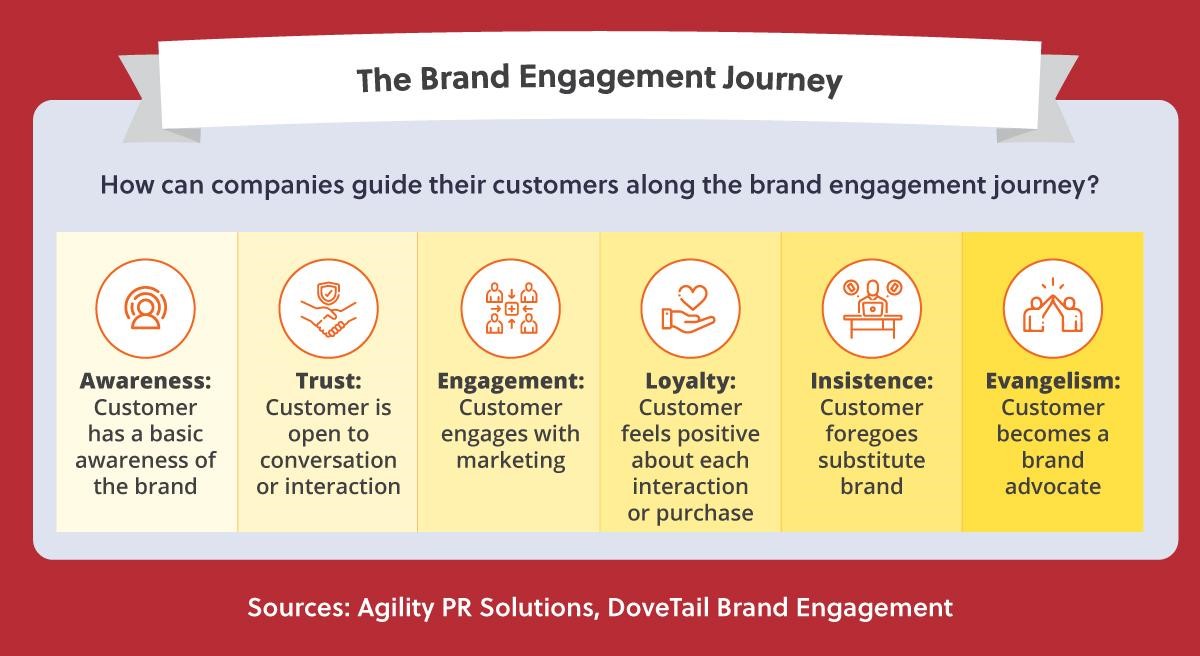
Understanding brand engagement requires a shift in perspective. It is not a one-way broadcast from a corporation to a passive audience; rather, it is a dynamic, two-way dialogue. In a world saturated with advertisements and digital noise, engagement is the currency that buys a brand the most valuable asset of all: the consumer’s attention and trust.
Understanding the Essence of Brand Engagement
To master brand strategy, one must first distinguish between mere interaction and true engagement. A consumer might click an ad or follow a social media page out of curiosity, but these are often fleeting moments. True engagement is characterized by consistency, intent, and emotional resonance.
Interaction vs. Emotional Investment
An interaction is a single touchpoint—a visit to a website, a like on a photo, or a purchase at a checkout counter. While these are necessary components of the customer journey, they do not guarantee a long-term relationship. Brand engagement occurs when these interactions accumulate into a sense of investment. When a customer feels that a brand understands their needs, reflects their values, or contributes positively to their lifestyle, they move from being a “user” to a “fan.”
This emotional investment is the bedrock of brand equity. A brand that successfully engages its audience creates a buffer against competition. When a consumer is emotionally engaged, they are less likely to switch to a competitor based on price alone because the relationship they have with the brand provides a level of psychological satisfaction that a cheaper alternative cannot replicate.
The Shift from Transactional to Experiential
Historically, branding was focused on the “Unique Selling Proposition” (USP)—telling the customer why a product was functionally better than the rest. Today, the focus has shifted to the “Brand Experience.” Engagement is the vehicle through which this experience is delivered.
Modern consumers, particularly younger demographics, prioritize how a brand makes them feel. They look for brands that offer community, inspiration, and purpose. Consequently, brand engagement strategies must focus on creating “moments of delight” throughout the customer lifecycle. Whether it is through an intuitive unboxing experience, a responsive customer service interaction, or a compelling brand story told through video, every touchpoint is an opportunity to deepen the engagement.
The Psychological Foundations of Brand Loyalty
Brand engagement is not a random occurrence; it is rooted in human psychology. To drive engagement, brand strategists often look at three specific dimensions: cognitive, affective, and behavioral engagement.
Cognitive Engagement: The Power of Information
Cognitive engagement refers to the mental effort a consumer spends thinking about a brand. This happens when a brand provides high-value information, solves a complex problem, or positions itself as a thought leader in its industry. For instance, a skincare brand that publishes deep-dive articles into the science of ingredients is engaging its audience’s intellect.
By educating the consumer, the brand establishes authority. When a consumer learns something from a brand, a level of trust is built. This cognitive bond ensures that when the consumer is ready to make a purchase decision, the brand is the “top-of-mind” choice because it has already proven its expertise and utility.
Affective Engagement: The Emotional Resonance
Affective engagement is perhaps the most powerful form of connection. It deals with how a brand makes a person feel. Brands that tap into universal emotions—such as joy, nostalgia, security, or belonging—create deep-seated loyalty.
This is often achieved through storytelling. When a brand shares its “why”—its mission, its origin story, or its commitment to a cause—it invites the consumer to share in that purpose. Affective engagement is why people stay loyal to certain brands for decades; the brand has become a part of their identity. The brand is no longer just a vendor; it is a reflection of who the consumer is or who they aspire to be.
Activation: Turning Engagement into Advocacy
Behavioral engagement, often called activation, is the tangible manifestation of the relationship. This includes repeated purchases, participating in brand-led events, and, most importantly, word-of-mouth advocacy.
An engaged customer becomes a brand ambassador. They don’t just use the product; they recommend it to friends, defend it on social media, and provide constructive feedback. This level of engagement is the ultimate goal of any brand strategy, as it creates a self-sustaining marketing engine fueled by the community itself.
Core Strategies for Driving Deep Engagement
Developing a strategy for brand engagement requires a multi-faceted approach that integrates design, messaging, and community management.

Narrative and Storytelling as a Brand Tool
Humans are hardwired for stories. A brand without a narrative is just a commodity. To engage an audience, a brand must weave a consistent story across all platforms. This story should not be about the brand being the hero, but rather about the brand being the “guide” that helps the consumer (the hero) achieve their goals.
Effective storytelling involves a clear brand voice and a consistent visual identity. Whether a brand is playful and irreverent or professional and authoritative, that personality must be felt in every piece of copy, every advertisement, and every email. Consistency builds familiarity, and familiarity is a prerequisite for engagement.
Creating Community and Shared Values
One of the most effective ways to foster engagement is to build a community around the brand. This can be achieved through digital forums, social media groups, or exclusive membership programs. By facilitating connections between customers, the brand becomes the facilitator of a social ecosystem.
Furthermore, engagement is driven by shared values. Modern consumers expect brands to take a stand on social and environmental issues. When a brand aligns itself with the values of its target audience—such as sustainability, inclusivity, or innovation—it creates a powerful reason for the audience to engage. People want to support brands that they feel are making the world a better place in ways that matter to them.
The Role of User-Generated Content
User-generated content (UGC) is a cornerstone of modern brand engagement. When customers share their own photos, videos, or reviews of a product, they are participating in the brand’s story. Encouraging and featuring UGC is a powerful way to show the community that their voices are heard and valued.
UGC acts as social proof, which is incredibly persuasive for potential customers. But more importantly, for the person creating the content, the act of sharing strengthens their own bond with the brand. It is an active form of engagement that signals a high level of satisfaction and brand affinity.
Quantifying Engagement: Metrics That Matter
While engagement is often an emotional concept, it must be measured with data to ensure the effectiveness of a brand strategy. Brands must look beyond “vanity metrics” like total follower counts to see how the audience is actually behaving.
Social Media Metrics and Beyond
On social platforms, engagement is measured through likes, comments, shares, and saves. However, the most telling metric is the “engagement rate”—the ratio of interactions to the total number of followers or impressions. A high engagement rate indicates that the content is resonating deeply with the audience.
Beyond social media, brands should look at website metrics such as “time on page,” “bounce rate,” and “repeat visitors.” If users are spending significant time reading a brand’s blog or returning to the site multiple times without a direct incentive, they are cognitively engaged.
Customer Lifetime Value (CLV) and Retention
From a corporate perspective, the ultimate measure of brand engagement is Customer Lifetime Value (CLV). Engaged customers buy more frequently and stay with a brand longer than unengaged ones.
Additionally, monitoring the Net Promoter Score (NPS) can provide insights into how likely customers are to recommend the brand to others. A high NPS is a clear indicator of successful behavioral engagement. By tracking these metrics, brand managers can identify which strategies are working and which need adjustment to better serve the audience’s needs.
Navigating the Future of Brand Relationships
As technology and consumer expectations continue to evolve, the nature of brand engagement will also transform. The future belongs to brands that can balance digital efficiency with a human touch.
Personalization at Scale
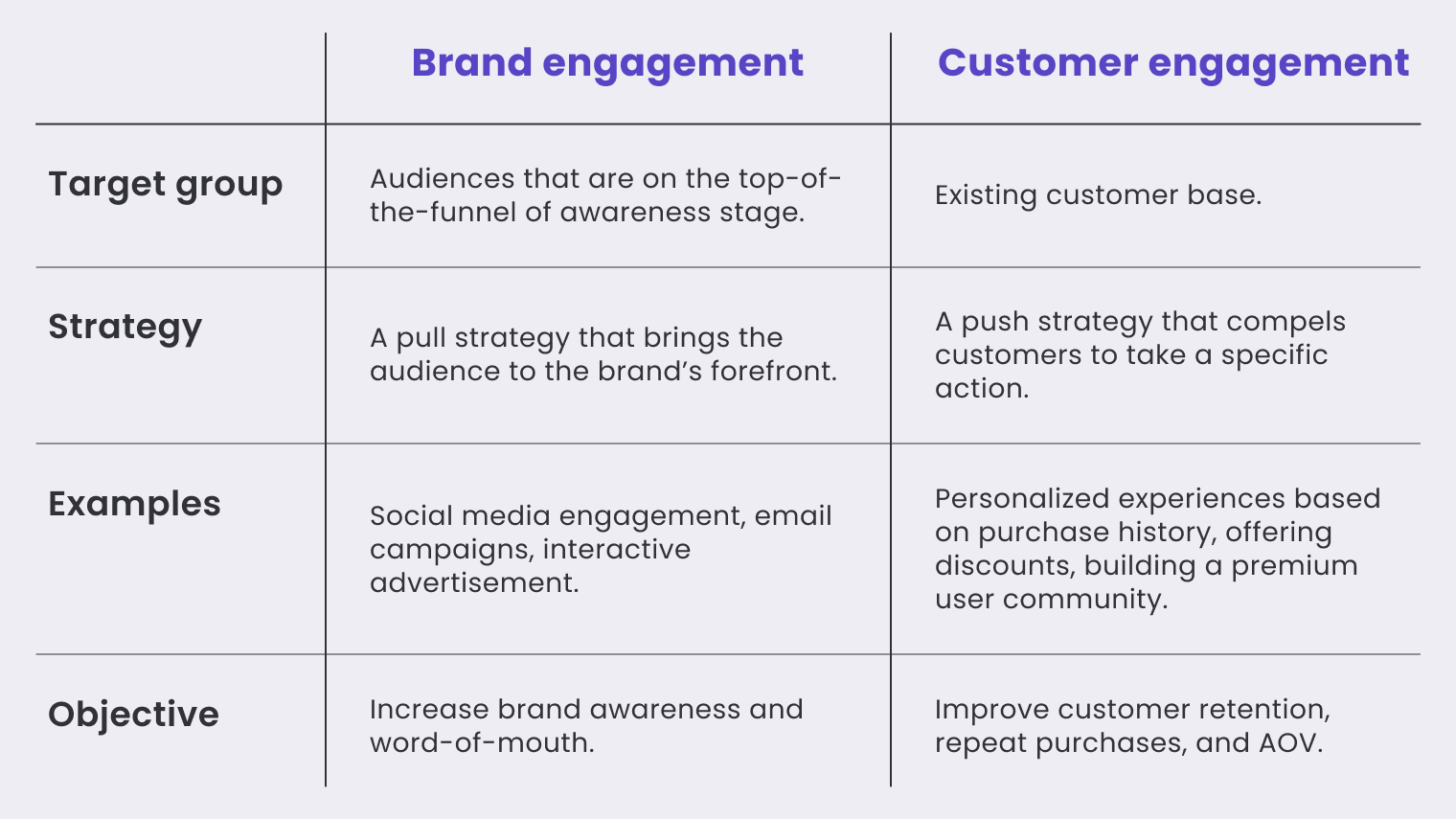
Mass marketing is becoming increasingly ineffective. The future of engagement lies in personalization—the ability to deliver the right message to the right person at the right time. This doesn’t just mean putting a customer’s name in an email; it means understanding their preferences, their history with the brand, and their current needs to provide a bespoke experience.
When a brand can anticipate what a customer wants before they even ask for it, it creates a sense of being “seen” and “valued.” This level of personalization is a major driver of engagement, as it removes friction from the customer journey and makes the interaction feel more like a relationship and less like a transaction.
Transparency and the Human Brand
In an age of skepticism, transparency is a vital component of engagement. Consumers are looking for “human” brands—companies that are honest about their processes, their mistakes, and their goals. Being transparent about how products are made, how data is used, and how the company treats its employees builds a foundation of trust that is essential for long-term engagement.
A brand that shows its “behind-the-scenes” reality—the people, the challenges, and the successes—is much easier to engage with than a faceless corporate entity. By humanizing the brand, companies invite consumers to connect on a person-to-person level, which is the strongest form of engagement possible.
In conclusion, brand engagement is the lifeblood of a successful modern brand. It is a multi-dimensional effort that requires a deep understanding of psychology, a commitment to consistent storytelling, and a focus on building genuine community. By prioritizing engagement over simple transactions, brands can cultivate a loyal audience that will support, defend, and grow the brand for years to come. In a world of infinite choice, the brands that win are those that manage to capture not just the wallets, but the hearts and minds of their consumers.
aViewFromTheCave is a participant in the Amazon Services LLC Associates Program, an affiliate advertising program designed to provide a means for sites to earn advertising fees by advertising and linking to Amazon.com. Amazon, the Amazon logo, AmazonSupply, and the AmazonSupply logo are trademarks of Amazon.com, Inc. or its affiliates. As an Amazon Associate we earn affiliate commissions from qualifying purchases.