
In the rapidly evolving landscape of software development, the barrier to entry for aspiring creators has never been lower. One of the most significant contributors to this democratization of technology is block coding. Often referred to as visual programming, block coding transforms the abstract, syntax-heavy world of traditional programming into a tactile, intuitive, and highly accessible experience. By using a “drag-and-drop” interface, it allows users to focus on the logic and structure of software rather than the meticulous placement of semicolons or parentheses.
As technology continues to permeate every facet of modern life, understanding how these systems are built is becoming a fundamental skill. Block coding serves as the bridge between curiosity and professional software engineering, providing a framework that is as powerful as it is approachable.
Understanding the Fundamentals of Block-Based Programming
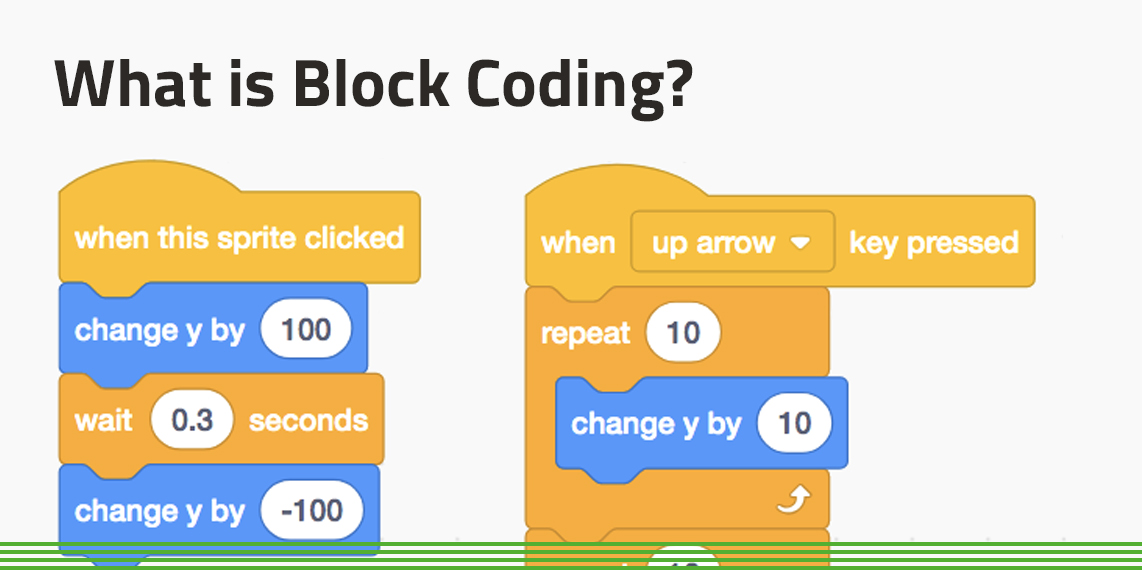
At its core, block coding is a method of creating computer programs where instructions are represented as interlocking visual blocks. If traditional coding is like writing an essay in a foreign language, block coding is like building a structure with LEGO bricks. Each block contains a specific command or logic piece that can only connect with other compatible blocks, preventing many of the “syntax errors” that often discourage beginners.
The Visual Logic System
The visual logic system is the defining characteristic of block coding. Instead of typing lines of code, users select blocks from a palette—categorized by function—and snap them together in a workspace. These blocks are color-coded to signify their purpose: for example, blue might represent movement, yellow might represent events, and orange might represent variables. This visual categorization helps the brain process complex logic sequences faster, as the user can identify the “type” of instruction just by looking at the color and shape of the block.
How Blocks Represent Syntax
In traditional programming languages like Python, Java, or C++, a single misplaced character can cause an entire application to crash. Block coding eliminates this frustration by embedding the syntax directly into the physical shape of the blocks. A “Loop” block, for instance, might have a “mouth” or a “C-shape” that physically encapsulates the actions it is meant to repeat. If a block doesn’t fit into a specific slot, it is because that logic is mathematically or structurally unsound. This provides immediate, real-time feedback to the user, reinforcing correct programming principles without the need for an IDE (Integrated Development Environment) to flag a text error.
The Core Components of Block Coding Environments
While block coding may look simple, it is built upon the same fundamental principles used by professional software engineers. Most block-based platforms are “Turing complete,” meaning they can perform any computation that a text-based language can. Understanding the components of these environments reveals the sophisticated technology beneath the surface.
Event Handlers and Triggers
The foundation of any interactive program is the “Event.” In block coding, event blocks act as the starting point for any script. These might include “When Green Flag Clicked,” “When Key Pressed,” or “When Sprite Touches Object.” These blocks are the triggers that tell the computer when to begin executing a specific sequence of logic. By teaching event-driven programming visually, users learn how modern software responds to user input and external stimuli—a concept central to app development and user interface (UI) design.
Control Structures: Loops and Conditionals
Control structures are the “brain” of a program, dictating the flow of execution. Block coding simplifies these into manageable visual chunks.
- Conditionals: “If-Then-Else” blocks allow the program to make decisions. For example, “If the player’s score is 10, then show the ‘You Win’ screen.”
- Loops: “Repeat” or “Forever” blocks allow a set of instructions to run multiple times.
By visually nesting these blocks inside one another, programmers learn the concept of hierarchy and flow control, which is essential for optimizing software performance and handling complex data sets.
Variables and Data Management
Even in a visual environment, data management is crucial. Blocks allow users to create variables—placeholders for information like scores, timers, or player names. In a block-based interface, a variable is often a “reporter” block that can be dropped into other blocks to provide information. This teaches the user how data flows through a system and how information can be stored, modified, and retrieved throughout the lifecycle of an application.
Leading Platforms Driving the Block Coding Revolution
The rise of block coding is largely due to the development of robust, high-performance platforms that have scaled from simple educational tools to powerful development environments. These platforms have become the standard for introducing computer science to the next generation of tech innovators.
Scratch: The Pioneer of Creative Coding
Developed by the MIT Media Lab, Scratch is arguably the most famous block coding platform in the world. It was designed with a focus on “remixing”—allowing users to see the underlying blocks of any project on the site, learn from them, and build their own versions. Scratch’s impact on technology education cannot be overstated; it has introduced millions to the logic of programming, fostering a global community of young developers who understand the architecture of software long before they learn their first text-based language.
Blockly: Google’s Modular Framework
While Scratch is a standalone platform, Google’s Blockly is a library that allows developers to add block-based coding editors to their own applications. Blockly is unique because it can export the visual blocks directly into clean, executable code in languages like JavaScript, Python, PHP, or Dart. This makes it a professional-grade tool used by tech companies to create “low-code” interfaces for their customers, proving that block coding is not just for children but a viable tool for industrial-scale software development.
Code.org and Educational Outreach
Code.org has utilized block coding to create a standardized curriculum for computer science. Their “Hour of Code” initiative uses block-based tutorials featuring popular tech icons and gaming characters to demystify programming. By using blocks to solve puzzles, users are taught the fundamentals of algorithms and problem-solving. The platform’s success demonstrates that visual programming is the most effective way to scale tech literacy across diverse populations.
The Educational and Professional Impact of Block Coding
Beyond the immediate thrill of making a character move on a screen, block coding has profound implications for how we develop human capital in the tech sector. It shifts the focus from “learning a language” to “learning how to think.”
Developing Computational Thinking Skills
Computational thinking is the process of breaking down a complex problem into smaller, manageable parts—a skill essential for any software architect or systems engineer. Block coding facilitates this through:
- Decomposition: Breaking a game into movement, scoring, and sound.
- Pattern Recognition: Identifying that multiple characters need the same “gravity” logic.
- Abstraction: Using a single block to represent a complex set of hidden instructions.
These cognitive frameworks are the bedrock of high-level engineering, and block coding provides the perfect sandbox to practice them without the cognitive load of syntax.
Bridging the Gap to Text-Based Languages
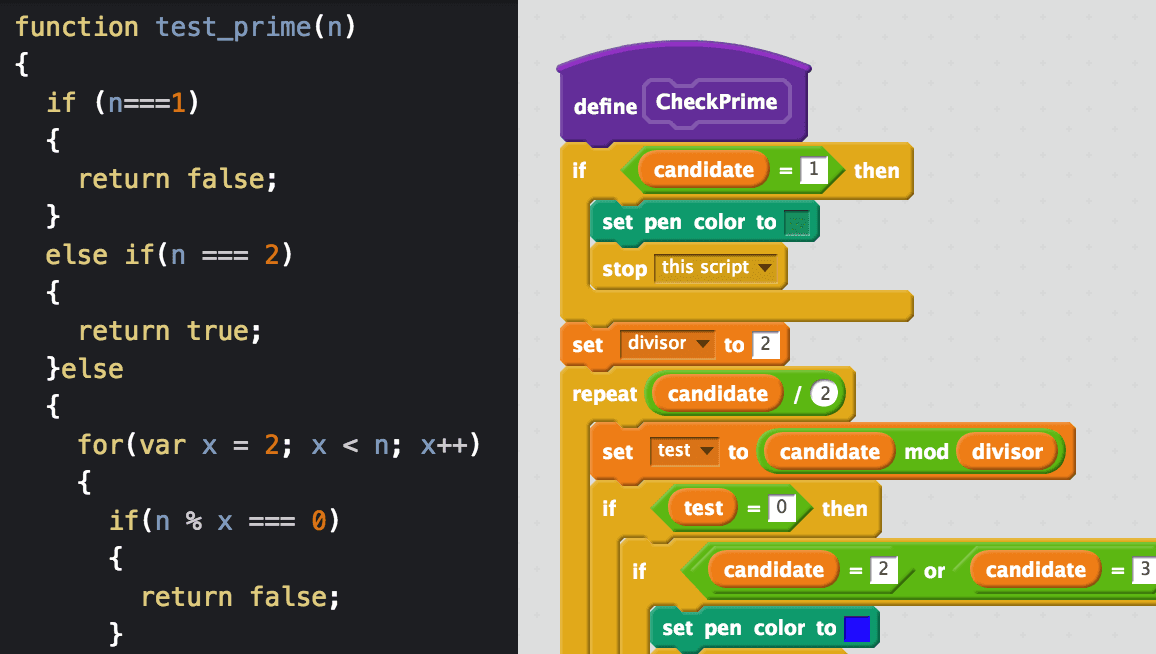
A common misconception is that block coding is a dead-end. In reality, it is a high-speed ramp to professional languages. Many modern tools now offer a “side-by-side” view where changes in the block editor are reflected in a Python or JavaScript window in real-time. This allows learners to see the direct relationship between a visual block and its textual counterpart. This transition is vital for the tech industry, as it accelerates the pipeline of developers who can move from visual prototyping to enterprise-level coding.
The Rise of Low-Code and No-Code in Enterprise Tech
In the professional tech world, time-to-market is everything. This has led to the explosion of “Low-Code” and “No-Code” platforms (like Zapier, Webflow, or Microsoft Power Apps). These enterprise tools use the principles of block coding to allow business analysts and non-engineers to build automated workflows and internal apps. By abstracting the complex backend code into visual modules, companies can innovate faster, reducing the burden on their core engineering teams.
Future Trends: From Educational Toys to AI Integration
As we look toward the future, block coding is evolving beyond the screen and integrating with the most advanced technologies of our time, from the Internet of Things (IoT) to Artificial Intelligence.
Integrating Hardware and Robotics
Block coding is the primary interface for many modern robotics kits, such as LEGO Mindstorms and VEX Robotics. By snapping blocks together, users can program sensors (ultrasonic, touch, infrared) to interact with the physical world. This intersection of software and hardware is critical for the future of automation and smart manufacturing, providing a gateway into the world of embedded systems and mechanical engineering.

AI-Assisted Block Programming
The next frontier for visual programming is the integration of AI. We are beginning to see environments where AI can suggest the next block in a sequence or convert natural language descriptions (“make the ball bounce when it hits the wall”) into a complete block-based script. Furthermore, platforms are introducing “AI blocks” that allow users to easily integrate machine learning models—like image recognition or sentiment analysis—into their projects. This lowers the barrier to entry for AI development, ensuring that the next generation of software is not only programmed logically but also intelligently.
In conclusion, block coding is far more than an educational gimmick; it is a fundamental shift in how humans interact with machines. By prioritizing logic over syntax and visual intuition over rote memorization, it has opened the doors of the tech industry to a wider, more diverse audience. Whether it’s a student building their first game in Scratch or a professional developer using a low-code platform to automate a multi-million dollar workflow, the principles of block coding are shaping the future of the digital world.
aViewFromTheCave is a participant in the Amazon Services LLC Associates Program, an affiliate advertising program designed to provide a means for sites to earn advertising fees by advertising and linking to Amazon.com. Amazon, the Amazon logo, AmazonSupply, and the AmazonSupply logo are trademarks of Amazon.com, Inc. or its affiliates. As an Amazon Associate we earn affiliate commissions from qualifying purchases.