
The journey to law school is often paved with demanding exams, and the Law School Admission Test (LSAT) stands as a formidable gatekeeper. Success on the LSAT hinges not just on raw intelligence, but on a strategic approach to study and practice. Among the most potent methodologies for score improvement is “Blind Review.” Far from a mere re-check of answers, Blind Review is an intensive, analytical process designed to unearth deeper understanding and systematically eliminate weaknesses. In an increasingly digital study landscape, understanding how to leverage technology to enhance this critical technique is paramount for any aspiring law student. This isn’t just a study tip; it’s a performance optimization strategy that becomes even more powerful when integrated with modern digital tools and workflows.
The Core Concept of LSAT Blind Review: A Performance Optimization Strategy
At its heart, LSAT Blind Review is a sophisticated self-assessment and learning protocol. It transcends the superficial act of correcting mistakes and delves into the cognitive processes that led to initial incorrect or uncertain answers. The goal is to develop a robust understanding of why an answer is correct and why all other options are incorrect, without the biasing influence of an answer key. This strategic approach transforms practice tests from simple diagnostic tools into profound learning experiences.
Beyond Simple Score-Checking
Many students complete a practice test, check their score against the answer key, and then briefly review the questions they got wrong. This method, while better than nothing, misses the profound insights available through Blind Review. Score-checking alone only tells you what you got wrong; Blind Review endeavors to reveal why you got it wrong, why you thought your incorrect answer was right, and why the correct answer is unequivocally superior. It forces a complete deconstruction of your reasoning process for every challenging question.
The Cognitive Advantages
Implementing Blind Review cultivates several critical cognitive skills essential for the LSAT:
- Metacognition: It trains you to think about your thinking, identifying patterns in your errors and reasoning gaps.
- Deep Understanding: Rather than memorizing rules, it fosters an intuitive grasp of LSAT logic across Logical Reasoning, Reading Comprehension, and Logic Games.
- Confidence in Uncertainty: By forcing you to justify answers without external validation, it builds confidence in your analytical abilities, a crucial element for exam day.
- Bias Reduction: It mitigates confirmation bias, preventing you from merely accepting the correct answer and instead demanding a rigorous internal defense of it.
- Strategic Growth: It shifts the focus from merely “doing” practice problems to actively “learning” from them, turning every question into a teaching moment.
Implementing Blind Review: A Step-by-Step Digital Workflow
The power of Blind Review truly shines when integrated with a systematic, technology-driven workflow. Digital platforms, apps, and analytical tools can streamline the process, enhance data collection, and provide deeper insights than traditional pen-and-paper methods.
Initial Attempt & Self-Assessment (Digital Exam Simulation)
Begin by taking a full, timed LSAT section or full practice test using a digital platform. Many LSAT prep companies offer official digital tests that mimic the actual exam interface. As you work through questions:
- Mark for Review: Use the digital “mark for review” feature for any question you are unsure about, even if you ultimately choose an answer.
- Confidence Rating: Before moving to the next question, digitally assign a confidence level (e.g., on a scale of 1-5, or simply “certain” vs. “uncertain”). Some platforms allow custom tagging or notes.
- Initial Rationale (Optional but Recommended): Briefly type out your reasoning for your chosen answer in a dedicated digital scratchpad or note field if the platform supports it. This initial thought capture is invaluable for later comparison.
The Unfettered Re-Evaluation (Leveraging Digital Annotation Tools)
Immediately after completing the timed section, before checking any answers, embark on the Blind Review phase. This is where digital tools become particularly powerful:
- Revisit Marked Questions: Go back through every question you marked for review, and critically re-evaluate your chosen answer.
- Re-Answer and Re-Justify: Without timing constraints, attempt to re-solve the question as if it were brand new. Re-read the stimulus, question stem, and all answer choices meticulously.
- Digital Annotation: Use highlighting, underlining, and margin notes within your digital test platform or a separate annotation app to dissect the problem. Highlight premises, conclusions, logical indicators, and key phrases.
- Formulate a New Answer: If your initial answer feels incorrect upon review, select a new answer and clearly record it, along with a thorough written explanation of why you now believe this new answer is correct and why other options are wrong. Documenting this reasoning in a digital journal or dedicated note-taking app is crucial. This step is about proving the answer to yourself, not guessing.
The Critical Comparison and Learning Phase (Analytical Software & Spreadsheets)
Only after completing the full untimed re-evaluation and formulating justifications for all your answers (including those you didn’t mark for review but still want to check) should you consult the official answer key.
- Score and Analyze: Input your answers (both initial and blind review) into a dedicated LSAT analytics software or a custom spreadsheet. This allows for immediate comparison and tracking.
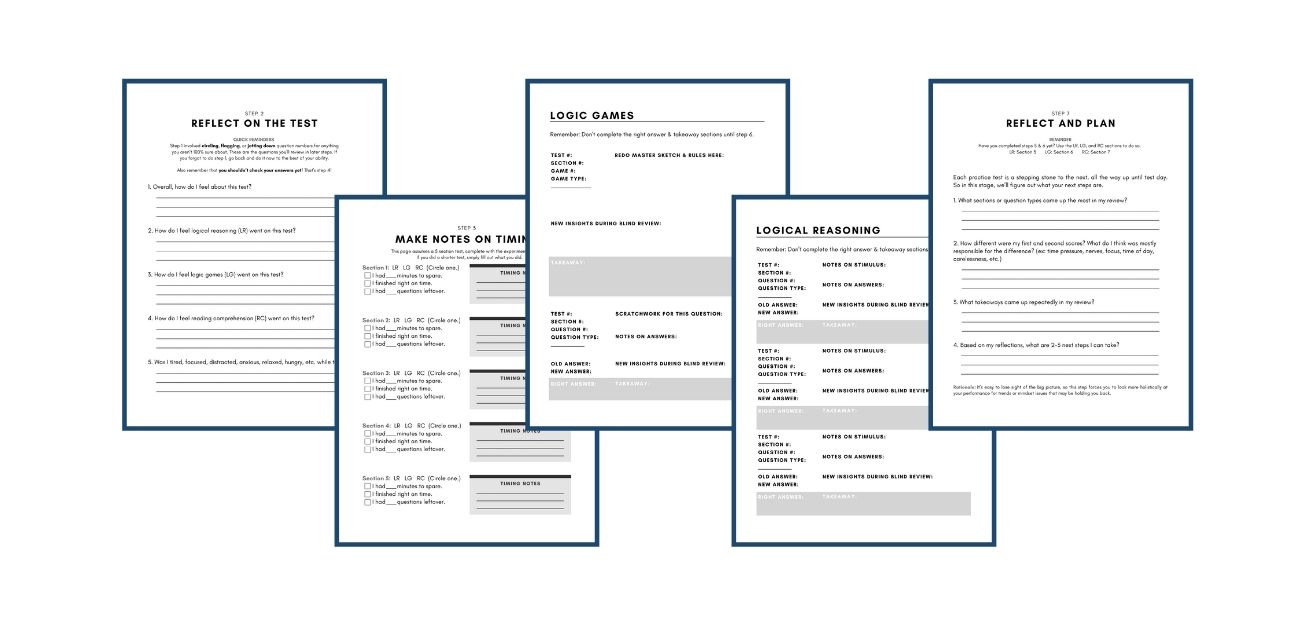
- Detailed Error Logging: For every question, log the following in your digital system:
- Question Type: (e.g., Main Point, Strengthen, Must Be True, Pattern Matching Game)
- Section: (LR, RC, LG)
- Initial Answer vs. Correct Answer: Did you get it right initially?
- Blind Review Answer vs. Correct Answer: Did you get it right during Blind Review?
- Confidence Level: Your initial self-assessment.
- Category of Error: (e.g., misread stimulus, logical flaw, rushed, trapped by distractor, timing issue, complex language). Many analytics tools offer predefined categories.
- Detailed Rationale: Compare your initial and Blind Review justifications to the official explanation. Identify precisely where your reasoning diverged or was incomplete.
- Key Takeaways/Action Items: Note down specific principles, question types, or strategies to focus on in future study.
- Review All Questions (Even Correct Ones): Don’t skip questions you answered correctly. During Blind Review, if you marked a question as “uncertain” but still got it right, critically examine why you were unsure. Was it a lucky guess? Was your reasoning sound but you doubted yourself? This builds confidence and solidifies correct reasoning.
Tech Tools Enhancing the Blind Review Process

The digital age provides an array of tools that can supercharge your Blind Review process, turning it from a tedious chore into an insightful, data-driven learning experience.
Digital LSAT Platforms & Practice Tests
Modern LSAT prep is almost entirely digital. Platforms like LSAC LawHub (which hosts official digital LSATs), 7Sage, Khan Academy, Blueprint LSAT, and others offer digital practice tests that mirror the actual exam interface. These platforms often include:
- Timed Practice: Simulates exam conditions.
- Mark for Review Functionality: Essential for the initial phase of Blind Review.
- Digital Scratchpad: For capturing initial thoughts during the timed section.
- Integrated Explanations: Accessible after you’ve completed your Blind Review, providing immediate feedback.
Advanced Analytics and Performance Tracking Software
Beyond basic scoring, specialized LSAT analytics tools and spreadsheet templates offer deep insights:
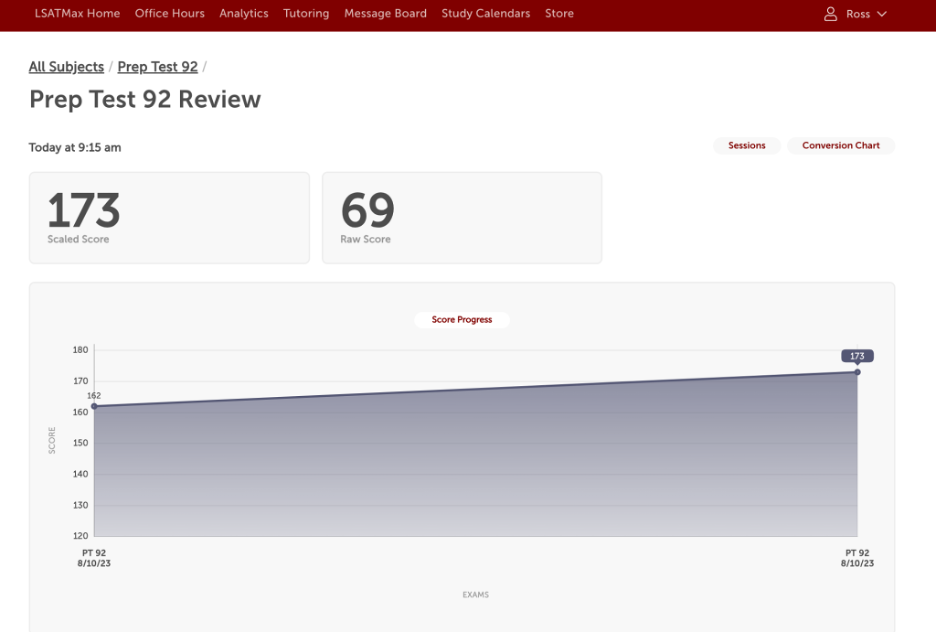
- Score Tracking: Chart your progress over time, section by section.
- Error Pattern Identification: Automatically categorize mistakes by question type, difficulty, or logical flaw. This can pinpoint persistent weaknesses (e.g., consistently struggling with “Necessary Assumption” questions or certain types of Logic Games).
- Pacing Analysis: Some tools can track how long you spent on each question, identifying if timing is a critical factor in specific question types.
- Customizable Reports: Generate reports that highlight areas for targeted study.
- Examples: Many prep courses integrate their own analytics, but independent tools or even sophisticated custom Excel/Google Sheets can be built to track detailed metrics.
Custom Digital Journals and Note-Taking Apps
For documenting your reasoning and insights, robust note-taking applications are invaluable:
- Evernote, Notion, OneNote: These apps allow you to create structured notebooks, tag entries, link to external resources (like specific LSAT questions), and search your notes efficiently.
- Mind Mapping Software: For complex Logic Games or Reading Comprehension passages, tools like XMind or Miro can help visualize relationships and arguments during your untimed re-evaluation.
- Dedicated LSAT Journals: Create a digital “error log” where you meticulously document every missed question, your initial thought process, your Blind Review process, the correct answer, and a concise summary of the key lesson learned. This serves as a personalized textbook of your own weaknesses.
AI-Powered Feedback and Explanations (Emerging Tech)
While still developing, AI is beginning to play a role in personalized LSAT prep:
- Intelligent Tutoring Systems: Some platforms use AI to adapt practice questions based on your performance, identifying weak areas more efficiently.
- Automated Explanation Generation: AI can sometimes provide alternative explanations or rephrase complex concepts, though human-vetted explanations remain the gold standard.
- Personalized Study Plans: AI algorithms can analyze your performance data from Blind Review and suggest highly personalized study modules or drills.
Maximizing Efficiency and Insights with Technology
Integrating technology into your Blind Review routine isn’t just about digitizing existing practices; it’s about unlocking new levels of efficiency and insight.
Identifying Patterns and Weaknesses
The detailed data captured during a tech-enabled Blind Review allows for a granular analysis of your performance. You can quickly filter your error log by question type, logical flaw, or difficulty to see recurring issues. For example, if your analytics show you consistently miss questions involving conditional logic in Logical Reasoning, or struggle with certain diagramming techniques in Logic Games, you can dedicate focused practice to those specific areas. This targeted approach is far more effective than general practice.
Personalized Study Plans
With robust analytics at your fingertips, you can move beyond generic study schedules. Your tech-powered Blind Review data becomes the foundation for a truly personalized study plan. If your review indicates a weakness in Main Point questions in Reading Comprehension, your plan can prioritize drilling those specific question types. If you’re consistently running out of time on the last few questions of a section, you can practice pacing drills focusing on those question positions. Technology empowers you to convert broad goals into actionable, data-driven tasks.
Time Management and Consistency
Digital tools can help manage the significant time commitment Blind Review demands. Scheduling apps and reminders can ensure you consistently allocate time for this crucial process. Furthermore, the detailed logging process, while initially time-consuming, actually saves time in the long run by making your study efforts highly focused and efficient. The consistency enabled by a structured digital workflow ensures that Blind Review remains an integral, rather than occasional, part of your LSAT preparation. By systematically harnessing technology, Blind Review transforms from a challenging exercise into an indispensable strategic advantage on your path to law school.
aViewFromTheCave is a participant in the Amazon Services LLC Associates Program, an affiliate advertising program designed to provide a means for sites to earn advertising fees by advertising and linking to Amazon.com. Amazon, the Amazon logo, AmazonSupply, and the AmazonSupply logo are trademarks of Amazon.com, Inc. or its affiliates. As an Amazon Associate we earn affiliate commissions from qualifying purchases.