
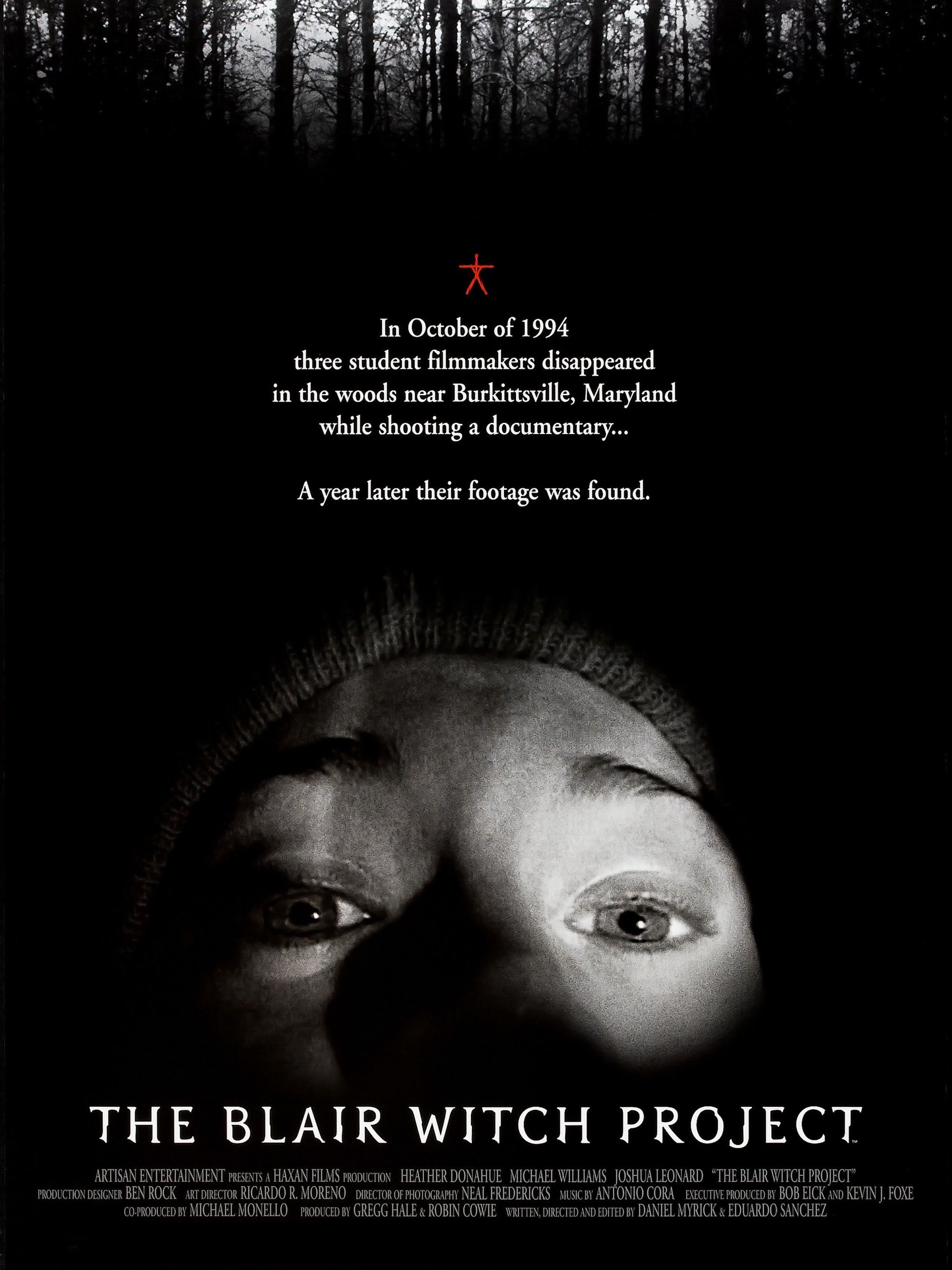
To the casual observer, the question “What is Blair Witch about?” yields a simple answer: it is a story about three filmmakers who disappeared in the woods near Burkittsville, Maryland, while shooting a documentary about a local legend. However, from a brand strategy and marketing perspective, the answer is far more complex. The Blair Witch Project is not just a film; it is a masterclass in disruptive branding, a pioneer of viral marketing, and a case study in how to build an immersive intellectual property (IP) from the ground up on a shoestring budget.

The Blair Witch brand represents one of the most significant shifts in how entertainment is sold to the public. By blurring the lines between fiction and reality, the creators didn’t just release a movie; they launched a cultural phenomenon that redefined the relationship between a brand and its audience.
The Birth of Viral Marketing: How Blair Witch Redefined Brand Perception
Before the advent of Facebook, Twitter, or TikTok, the Blair Witch brand achieved what modern marketers call “virality” through a calculated and innovative digital strategy. At its core, the brand was built on the concept of “The Found Footage” aesthetic, but its success was rooted in its ability to manipulate perception through online storytelling.
Leveraging Mystery as a Brand Identity
Most brands strive for clarity, but Blair Witch found its power in ambiguity. In 1998, a year before the film’s release, the creators launched a website that treated the disappearance of the filmmakers as a genuine missing persons case. There were police reports, interviews with “distraught” family members, and grainy photos of the “evidence.”
This established a brand identity rooted in mystery. Instead of selling a product (a horror movie), they sold a mystery that the audience felt compelled to solve. In branding terms, this is known as “curiosity-gap marketing.” By withholding information and presenting the narrative as fact, the brand cultivated an air of authenticity that traditional Hollywood marketing campaigns could never replicate.
The Power of Transmedia Storytelling
The Blair Witch brand was one of the first to successfully utilize transmedia storytelling—the process of telling a single story or story experience across multiple platforms and formats. Before audiences ever stepped into a theater, they had already consumed the brand through a dedicated website, faux-documentaries on television (like Curse of the Blair Witch on Sci-Fi Channel), and printed “journal entries.”
This approach ensured that the brand lived outside the confines of a 90-minute film. It created a world that the audience could inhabit. For modern brand strategists, this remains a foundational lesson: a brand is most powerful when it exists as an ecosystem rather than a singular touchpoint.
Cultivating Community: The Role of Authenticity in Brand Loyalty
The genius of the Blair Witch brand was its ability to foster a sense of community among its “believers.” During the late 1990s, the internet was a burgeoning frontier where the rules of truth were still being written. The brand capitalized on this by creating a grassroots movement that felt organic rather than corporate.
Breaking the Fourth Wall
Traditional branding creates a wall between the producer and the consumer. The Blair Witch brand shattered that wall by staying in character. The actors—Heather Donahue, Michael Williams, and Joshua Leonard—were listed as “missing” or “deceased” on IMDb and in promotional materials.
This commitment to the bit allowed the brand to achieve a level of “earned media” that is nearly impossible to buy. Word-of-mouth became the primary driver of the brand’s growth. People weren’t just recommending a movie; they were debating a reality. From a brand management perspective, this demonstrates the power of authenticity—even if that authenticity is carefully manufactured. When a brand stays true to its internal logic, the audience is more likely to buy into the narrative.
Narrative-First Marketing vs. Product-First Marketing
Most corporate branding focuses on the “product”—its features, its benefits, and its price. Blair Witch flipped this script by focusing entirely on the “narrative.” The “product” (the film) was merely the final chapter of a story that the audience had already been following for months.
By the time the film was released, the brand had already established emotional resonance with its audience. This narrative-first approach built a level of brand equity that allowed a $60,000 production to gross over $248 million. It proved that in the attention economy, a compelling story is the most valuable asset a brand can possess.
Franchise Sustainability: Managing Brand Equity Over Decades
Following the astronomical success of the original 1999 release, the challenge for the Blair Witch brand shifted from “how do we get noticed?” to “how do we survive?” Maintaining the integrity of a brand built on mystery is notoriously difficult once the mystery has been solved.
Expanding the Universe Through Cross-Platform Integration
As the brand evolved into a franchise, it expanded into books, comic books, and eventually, highly sophisticated video games. The 2019 Blair Witch video game, developed by Bloober Team, is a prime example of how to maintain brand equity while modernizing for a new generation.
The game leveraged the brand’s core visual language—the woods, the stick figures, and the camcorder—to create an immersive experience that felt consistent with the original brand identity. By integrating technology such as binaural audio and psychological horror mechanics, the brand was able to re-engage an audience that had grown cynical of found-footage tropes. This cross-platform integration is essential for any brand looking to survive beyond its initial “hype” cycle.
The Risks of Brand Dilution in Horror Sequels
The history of the Blair Witch brand also serves as a cautionary tale regarding brand dilution. The immediate sequel, Book of Shadows: Blair Witch 2 (2000), was widely criticized for abandoning the brand’s core pillars of realism and mystery in favor of a traditional cinematic style.
This misalignment between the brand’s promise (authentic, raw, found-footage) and its delivery (glossy, scripted, studio-horror) led to a significant loss of brand trust. It took over a decade for the brand to recover. This highlights a critical lesson in corporate identity: when you deviate too far from the core values that made your brand successful, you risk alienating your most loyal advocates.
Lessons for Modern Brand Managers: Applying Blair Witch Tactics in a Digital Age
The landscape of marketing has changed since 1999, but the psychological principles that drove the Blair Witch brand are more relevant than ever. In an era of “fake news,” influencer marketing, and algorithmic saturation, the Blair Witch playbook offers a blueprint for standing out.
The “Less is More” Approach to Visual Branding
In an age of high-definition 4K visuals, the Blair Witch brand thrived on what was not shown. The iconic stick man logo is a masterpiece of minimalist branding. It is simple, recognizable, and deeply unsettling.
Modern brands often overcomplicate their visual identity. The Blair Witch teaches us that a single, powerful symbol can do more to establish a brand’s “vibe” than a million-dollar CGI campaign. By leaving room for the audience’s imagination, the brand becomes a co-creation between the creator and the consumer.
Building Hype Through Intentional Information Gaps
Social media has created a culture of over-sharing, where brands often bombard consumers with content. The Blair Witch brand utilized “intentional information gaps.” They gave the audience just enough information to get them hooked, but not enough to satisfy them.
In a modern context, this translates to “drop culture” and “tease campaigns.” Whether it’s a tech company hinting at a new product feature or a fashion brand teasing a limited collaboration, the strategy of withholding information to build demand remains a potent tool. The Blair Witch brand proved that the most powerful word in marketing isn’t “Buy,” but “Why?”

Conclusion: The Lasting Legacy of a Manufactured Myth
What is Blair Witch about? From a strategic standpoint, it is about the power of belief. It is about how a brand can transcend its medium to become a part of the cultural zeitgeist. By utilizing viral marketing, staying committed to a narrative-first identity, and leveraging the psychology of mystery, the Blair Witch creators built a brand that remains a topic of study twenty-five years later.
For brand managers, marketers, and entrepreneurs, the lesson is clear: your brand is not just what you sell; it is the story you tell and the way you make your audience feel. The Blair Witch Project didn’t just scare a generation; it showed the world that with a brilliant strategy, even the smallest brand can cast a very long shadow.
aViewFromTheCave is a participant in the Amazon Services LLC Associates Program, an affiliate advertising program designed to provide a means for sites to earn advertising fees by advertising and linking to Amazon.com. Amazon, the Amazon logo, AmazonSupply, and the AmazonSupply logo are trademarks of Amazon.com, Inc. or its affiliates. As an Amazon Associate we earn affiliate commissions from qualifying purchases.