
In the world of finance, precision is often the difference between a comfortable retirement and a perpetual struggle to keep pace with inflation. When we look at the mathematical gap between 1/2 and 3/4—or 50% and 75%—we aren’t just looking at fractions on a number line. We are looking at the most critical transition zone in wealth management: the shift from a balanced, conservative posture to an aggressive, growth-oriented strategy.
Navigating the space between a 50/50 asset allocation and a 75/25 split requires more than just a calculator; it requires a deep understanding of risk tolerance, market cycles, and the psychological nuances of investing. This “middle ground” is where most wealth is built, preserved, and eventually optimized.
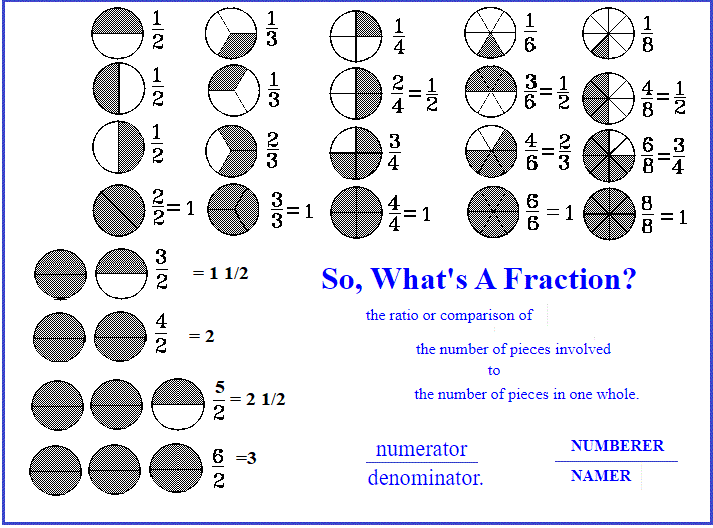
Understanding the Fractional Approach to Wealth Management
To understand what lies between 1/2 and 3/4, we must first define the anchors. In financial terms, a 1/2 (50%) allocation typically refers to the “Classic Balanced” approach. This is often the starting point for conservative investors or those nearing retirement who want to ensure that half of their capital is shielded from market volatility through fixed income, while the other half captures equity growth.
On the other side, 3/4 (75%) represents a “Growth” or “Aggressive Growth” posture. This is the domain of the long-term builder—someone who is willing to endure significant market swings in exchange for the compounding power of the stock market.
The 1/2 Principle: Conservative Stability
The 50% threshold is a psychological safety net. When an investor commits to a 1/2 strategy, they are essentially saying that capital preservation is just as important as capital appreciation. In this niche, we see the heavy use of Treasury bonds, high-yield savings accounts, and blue-chip dividend stocks. The goal here is not to beat the S&P 500 by a wide margin, but to ensure that even in a catastrophic market downturn, half of the portfolio remains relatively unscathed. This is the “sleep well at night” strategy, but it often carries the risk of underperforming inflation over long horizons.
The 3/4 Principle: Aggressive Growth Pursuits
Scaling up to 3/4 equity exposure changes the fundamental physics of a portfolio. At 75% equity, the portfolio is highly sensitive to market movements. This is the strategy utilized by those in the accumulation phase of their careers. The logic is simple: historically, the equity market provides the highest returns over 20- to 30-year periods. By committing three-quarters of your capital to growth assets, you are maximizing your “beta”—your correlation to the market’s upward trajectory.
Navigating the Middle Ground: The Search for 5/8 and Beyond
Mathematically, the midpoint between 1/2 and 3/4 is 5/8, or 62.5%. In the financial sector, this is the “Sweet Spot.” It is most commonly manifested in the traditional 60/40 portfolio—a strategy that has been the cornerstone of institutional investing for decades.
Modern Portfolio Theory and the Efficient Frontier
The space between 50% and 75% is where Modern Portfolio Theory (MPT) truly shines. MPT suggests that there is an “efficient frontier”—a line on a graph representing the highest possible return for a given level of risk. Most investors find their personal efficient frontier somewhere between 1/2 and 3/4.
When you move from 50% to 60% or 65% equities, you are not just adding risk; you are strategically increasing your exposure to the “Equity Risk Premium.” This is the excess return that investing in the stock market provides over a risk-free rate, such as government bonds. For many, the 62.5% mark (the 5/8 point) offers the perfect calibration: enough growth to outpace inflation significantly, but enough of a fixed-income cushion to prevent a total emotional collapse during a bear market.
Risk Tolerance vs. Risk Capacity
One of the most profound insights found in this middle zone is the distinction between what an investor thinks they can handle (tolerance) and what their financial situation actually allows (capacity).
A young professional may have a high risk capacity because they have 40 years of earning potential ahead of them, yet they might have a low risk tolerance, feeling panicked by a 5% market dip. Conversely, a retiree might have a high tolerance for risk due to years of experience, but a low capacity because they cannot replace lost capital. Navigating the space between 1/2 and 3/4 is a process of reconciling these two factors. Moving toward 3/4 requires high capacity, while staying near 1/2 respects lower tolerance or lower capacity.
Diversification Strategies for the Balanced Investor
Once an investor decides to operate in the corridor between 1/2 and 3/4, the question becomes: what assets should fill that space? It is no longer a simple choice between “cash” and “stocks.”

Equities and Fixed Income: The Classic Tug-of-War
In the modern era, the “fixed income” portion of the 1/2 to 3/4 equation has become more complex. With fluctuating interest rates, traditional bonds no longer provide the guaranteed safety they once did. This has led many investors to look at “Growth at a Reasonable Price” (GARP) stocks or Real Estate Investment Trusts (REITs) as a way to bridge the gap.
For instance, an investor might keep 50% in an S&P 500 index fund, 10% in international emerging markets (taking them toward that 3/4 mark), and the remaining 40% in a mix of short-term corporate bonds and liquid cash. This creates a nuanced 60/40 split that leans toward the growth side of the spectrum while maintaining a defensive core.
Alternative Investments: Bridging the Gap
The space between 1/2 and 3/4 is also where “Alternatives” come into play. This includes private equity, venture capital, gold, and even certain digital assets. For the sophisticated investor, these aren’t just “gambles”; they are uncorrelated assets that help smooth out the volatility curve.
If you have 50% in traditional stocks and 25% in bonds, the “missing” 12.5% (to reach 7/8 or even just staying within our 3/4 limit) might be allocated to private credit or real estate. These assets often provide higher yields than bonds but less volatility than public stocks, acting as the structural “glue” that holds the 5/8 portfolio together.
Psychological Barriers in Financial Decision Making
The reason many people struggle to stay “between 1/2 and 3/4” is largely psychological. Humans are prone to binary thinking: we want to be “all in” when the market is rising and “all out” when it is falling.
The Paradox of Choice in Investment Platforms
Modern fintech tools have made it incredibly easy to shift allocations with a single swipe. However, this accessibility often leads to “tinkering.” An investor who should be at a steady 65% equity allocation might see a headline about a tech boom and jump to 85%, or see a headline about a recession and drop to 30%.
The discipline required to stay in the middle—to maintain that 5/8 position—is significant. It requires ignoring the “noise” of the daily news cycle and focusing on the long-term data. Professional wealth managers often add value not by picking the right stocks, but by acting as a behavioral barrier, preventing clients from drifting outside their designated 1/2 to 3/4 corridor.
Overcoming FOMO and Conservative Paralysis
The “Fear of Missing Out” (FOMO) often pushes investors toward the 3/4 mark and beyond during bull markets. They see their peers making 20% returns and feel that their 50/50 or 60/40 split is “lazy.” On the flip side, “Conservative Paralysis” happens after a market crash, where the fear of further loss prevents an investor from rebalancing back up to their 1/2 target, leaving them stuck in cash while the market recovers.
Finding the middle ground means accepting that you will never be the “biggest winner” in a bull market, but you will also never be the “biggest loser” in a bear market. It is the path of the “Satisficer”—someone who seeks a good-enough outcome that reliably meets their goals.
Implementing a Scalable Financial Roadmap
Knowing that the best strategy lies between 1/2 and 3/4 is only half the battle. The final step is implementation. This involves creating a system that manages itself, allowing the investor to focus on their career and personal life.
Automating the Middle Path
Automated investment platforms (robo-advisors) are built entirely on the premise of staying between 1/2 and 3/4. When you take a risk assessment on these platforms, they assign you a score—usually from 1 to 10. A “5” is your 1/2 (50/50) and an “8” is roughly your 3/4 (80/20). By automating contributions and dividend reinvestments, these tools ensure that your portfolio stays within your target range regardless of market fluctuations.

Periodic Rebalancing: Staying Between the Lines
The most critical tactical move for any investor in this niche is the “Rebalance.” If you start with a 60/40 allocation and the stock market has a stellar year, your portfolio might naturally drift to a 75/25 split. While this looks like a win, you are now more exposed to risk than your plan allows.
Rebalancing involves selling a portion of your winners (the 3/4 side) and buying more of your underperformers (the 1/2 side) to return to your 5/8 midpoint. This forced “sell high, buy low” discipline is what separates professional-grade investing from amateur speculation. It ensures that you are always taking profits when the market is overextended and adding protection when the market is undervalued.
Ultimately, what lies between 1/2 and 3/4 is the essence of sustainable wealth. It is the balance of ambition and caution, the intersection of mathematical probability and personal psychology. By identifying where you sit on this spectrum, you can move away from the anxiety of the extremes and toward a future of financial clarity.
aViewFromTheCave is a participant in the Amazon Services LLC Associates Program, an affiliate advertising program designed to provide a means for sites to earn advertising fees by advertising and linking to Amazon.com. Amazon, the Amazon logo, AmazonSupply, and the AmazonSupply logo are trademarks of Amazon.com, Inc. or its affiliates. As an Amazon Associate we earn affiliate commissions from qualifying purchases.