
In the popular imagination, the word “radiation” often conjures images of cooling towers, hazard symbols, and science fiction tropes. However, in the realm of modern technology, radiation is not merely a byproduct to be managed; it is a precision tool. Specifically, beta radiation—the emission of high-energy, high-speed electrons or positrons—has emerged as a cornerstone for innovations in power generation, material science, and data security.
As we push the boundaries of what is possible in hardware miniaturization and deep-space exploration, understanding the technical application of beta radiation becomes essential. This article explores how this subatomic phenomenon is being harnessed within the “Tech” niche to solve some of the most pressing engineering challenges of our time.

1. The Mechanics of Beta Radiation: A Technical Overview
To understand why beta radiation is so valuable to the technology sector, we must first look at its physical properties through a technical lens. Unlike alpha particles, which are heavy and easily stopped, or gamma rays, which are highly penetrating electromagnetic waves, beta particles occupy a “sweet spot” of reactivity and kinetic energy.
The Physics of Beta Minus and Beta Plus Decay
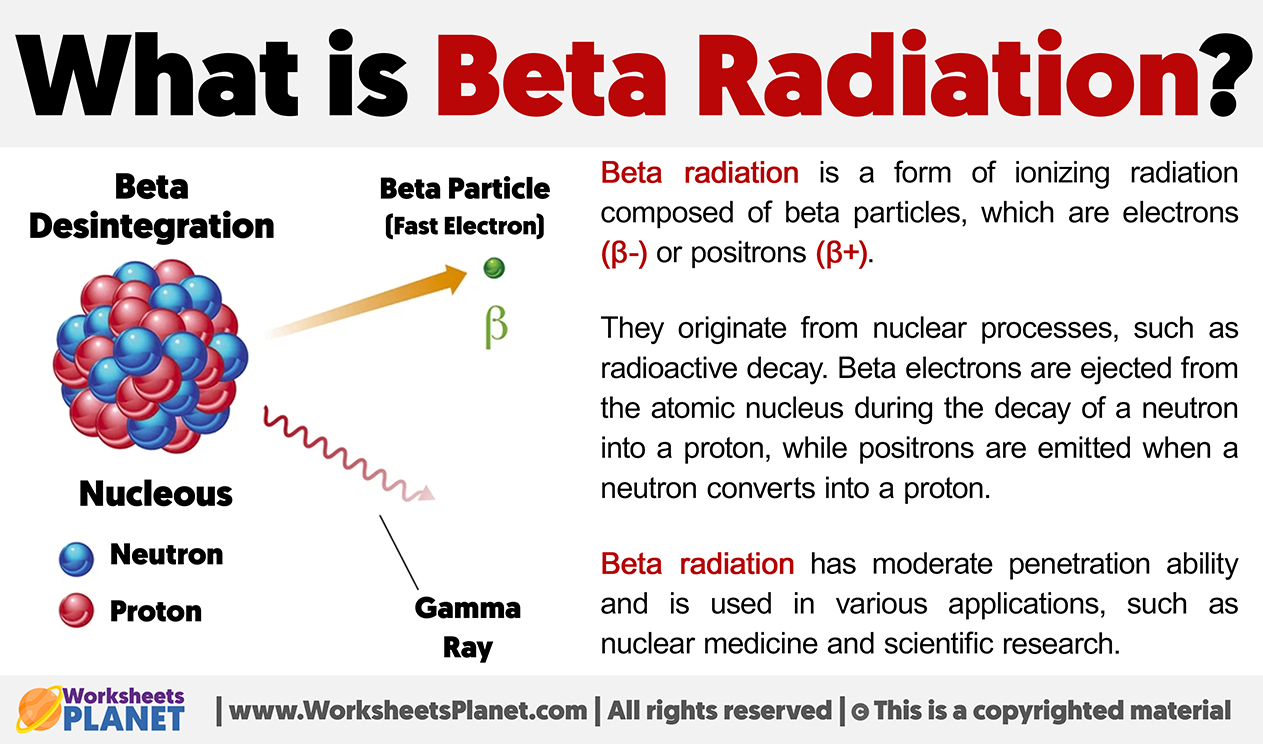
In the context of technology development, we primarily deal with Beta Minus (β-) decay. This occurs when a neutron in an unstable nucleus transforms into a proton, emitting an electron and an antineutrino. For tech hardware, this emitted electron is essentially a mobile charge carrier.
Conversely, Beta Plus (β+) decay involves the emission of a positron (the antimatter counterpart of an electron). While less common in consumer tech, this form of radiation is the functional heart of Positron Emission Tomography (PET) scanning technology, representing a massive sub-sector of medical tech.
Ionization and Penetration Power
Technologically, the utility of beta radiation lies in its ionization energy. Beta particles travel at significant fractions of the speed of light. They can penetrate several millimeters of aluminum or a few centimeters of biological tissue. This moderate penetration depth allows engineers to contain the radiation easily within small tech components while still utilizing the kinetic energy of the particles for internal processes.
2. Betavoltaics: Powering the Future with Nuclear Batteries
Perhaps the most exciting tech application of beta radiation is the development of betavoltaic cells. As the world seeks alternatives to traditional lithium-ion batteries—which suffer from degradation and limited life cycles—betavoltaics offer a “set it and forget it” power solution that can last for decades.
How Betavoltaic Cells Work
A betavoltaic cell operates similarly to a solar (photovoltaic) cell, but instead of using photons from the sun to knock electrons loose in a semiconductor, it uses beta particles emitted from a radioactive isotope (such as Tritium or Nickel-63).
When these high-energy electrons strike a semiconductor junction (typically made of silicon or silicon carbide), they create electron-hole pairs. This flow of electrons creates a steady electrical current. Because the decay of isotopes is a constant, predictable process governed by half-lives, these “nuclear batteries” can provide a continuous stream of power for 10 to 20 years without ever needing a recharge.
Applications in Extreme Environments
While you won’t find a betavoltaic battery in your smartphone just yet—due to the low current they currently produce—they are revolutionary for “hard-to-reach” tech.
-
Space Exploration: Satellites and deep-space probes use beta-decay heat or direct electron conversion to power sensors where solar panels are ineffective.
-
Deep-Sea Sensors: For Internet of Things (IoT) devices placed on the ocean floor to monitor tectonic activity, the cost of replacing batteries is astronomical. Betavoltaics provide a multi-decade solution.
-
Medical Implants: Future pacemakers and neurostimulators are being designed with beta-power sources to eliminate the need for invasive battery-replacement surgeries.
The Rise of Nano-Diamond Batteries (NDB)
A recent breakthrough in the tech world involves “Diamond Nuclear Batteries.” By encasing radioactive isotopes inside man-made lab diamonds, tech startups are creating ultra-safe, ultra-durable power cells. The diamond structure acts both as a semiconductor to collect charge and as a nearly indestructible shield, preventing any radiation leakage into the environment.
3. Precision Manufacturing and Quality Control in Tech Hardware
Beyond power, beta radiation serves as an invisible “ruler” in the manufacturing of high-tech components. The way beta particles interact with matter makes them ideal for non-destructive testing and precision measurement.
Thickness Gauging in Semiconductor and Film Production
In the production of ultra-thin materials, such as the films used in OLED screens or the copper foils in high-capacity batteries, mechanical calipers are too clumsy and can damage the product. Tech manufacturers use “Beta Gauges.”
By placing a beta source on one side of a moving material and a detector on the other, the system measures how many particles are absorbed. Because the absorption rate is precisely linked to the material’s density and thickness, the system can detect deviations of a fraction of a micrometer in real-time. This allows for automated adjustments in the assembly line, ensuring perfect hardware consistency.
Static Elimination in Cleanrooms
The tech industry relies on cleanrooms where static electricity is a major enemy. A single static discharge can fry a microprocessor during the fabrication process. Beta-emitting isotopes are often used in high-end static elimination bars. The radiation ionizes the surrounding air, creating a path for static charges to neutralize safely before they can damage sensitive silicon wafers.
4. Cybersecurity and Quantum Randomness
In an era where AI and encryption are paramount, the quest for “true randomness” has led computer scientists back to the subatomic level. Beta radiation is currently being used to bolster digital security through the generation of entropy.
The Problem with Pseudo-Randomness
Most software-based random number generators are “pseudo-random.” They follow an algorithm that, if known, can be predicted. This is a vulnerability in high-stakes cryptography and blockchain technology. If a hacker can predict the “random” key, the encryption is broken.
Beta Decay as a Source of Entropy
Radioactive decay is one of the few truly random processes in the known universe. It is impossible to predict exactly when a specific nucleus will emit a beta particle. Tech firms are now developing “Quantum Random Number Generators” (QRNG) that use a small beta source.
A sensor detects the timing between beta emissions and converts that timing into a string of binary code. Because the source of the data is a quantum event (beta decay), the resulting numbers are fundamentally unpredictable. This provides an unhackable foundation for the next generation of digital security protocols.
5. Safety, Regulation, and the “Green” Tech Narrative
The integration of beta radiation into consumer and industrial tech is often met with skepticism regarding safety. However, the technical reality of beta radiation makes it uniquely suited for safe integration into the modern tech ecosystem.
Shielding and Consumer Safety
One of the technical advantages of beta radiation is the ease of shielding. Unlike gamma radiation, which requires thick lead or concrete, beta particles can be stopped by a thin sheet of plastic, glass, or even the casing of a device. In betavoltaic batteries, the semiconductor and the outer housing absorb all emitted particles, meaning the device emits zero external radiation. From a tech-safety standpoint, a betavoltaic cell is often safer than a lithium battery, which poses a significant fire and explosion risk if punctured.
Environmental Impact and Lifecycle Management
As the tech industry moves toward a “circular economy,” the lifecycle of beta-powered tech is under scrutiny. While the isotopes used are radioactive, they are often “recycled” from nuclear waste. By repurposing these materials into batteries and sensors, the tech industry is essentially upcycling hazardous waste into high-value components. Furthermore, the longevity of these components reduces the “e-waste” generated by millions of discarded chemical batteries every year.

Conclusion: The Invisible Infrastructure
What is beta radiation in the context of technology? It is more than just a scientific definition; it is a versatile energy source, a precision measuring tool, and a guardian of digital privacy.
While the general public may still view radiation with caution, the tech industry recognizes it as a vital pillar of future innovation. From the “diamond batteries” that may one day power our wearables for a lifetime, to the quantum entropy engines securing our global financial data, beta radiation is the silent engine of the modern digital age. As we continue to refine our ability to manipulate the subatomic world, the role of beta radiation in technology will only continue to expand, proving that the smallest particles can indeed drive the largest changes.
aViewFromTheCave is a participant in the Amazon Services LLC Associates Program, an affiliate advertising program designed to provide a means for sites to earn advertising fees by advertising and linking to Amazon.com. Amazon, the Amazon logo, AmazonSupply, and the AmazonSupply logo are trademarks of Amazon.com, Inc. or its affiliates. As an Amazon Associate we earn affiliate commissions from qualifying purchases.