
In the contemporary landscape of digital subscriptions, few entities have reshaped consumer behavior as profoundly as Amazon Prime. While often viewed through the lens of retail convenience, Amazon Prime is fundamentally a sophisticated technological ecosystem. It represents a masterclass in software integration, data-driven personalization, and cloud infrastructure. By examining the benefits of Amazon Prime through a technical lens, we can see how the service leverages the vast capabilities of Amazon Web Services (AWS), artificial intelligence (AI), and Internet of Things (IoT) connectivity to create a seamless user experience that transcends simple e-commerce.

The Architecture of Entertainment: High-Performance Streaming and AWS Integration
The most visible technological benefit of an Amazon Prime membership is the access to Prime Video and Prime Music. However, the true value lies in the backend infrastructure that supports these services. Unlike many competitors, Amazon owns the very ground it builds upon: Amazon Web Services (AWS). This integration allows for a level of technical optimization that provides a superior end-user experience.
Prime Video: Leveraging Edge Computing for Low-Latency Delivery
Prime Video is not merely a library of content; it is a global content delivery network (CDN) optimized for 4K Ultra HD and HDR streaming. By utilizing AWS’s global footprint, Amazon places content at the “edge” of the network—physically closer to the user. This reduces latency and minimizes buffering, even during peak usage hours. The technical benefit here is the implementation of adaptive bitrate streaming (ABS) algorithms, which monitor a user’s bandwidth in real-time and adjust the video quality dynamically to prevent interruptions.
X-Ray Technology: Real-Time Data Integration
A standout feature of the Prime Video interface is “X-Ray,” powered by IMDb (an Amazon subsidiary). From a tech perspective, X-Ray is a sophisticated metadata integration tool. It uses facial recognition and machine learning to identify actors and music in real-time as the video plays. This requires massive synchronization between the video stream and a relational database, providing a multi-layered interactive experience that elevates the platform from a passive viewing tool to an informative digital application.
Cognitive Commerce: AI-Driven Personalization and the A9 Algorithm
At the heart of the Amazon Prime experience is the ability to surface relevant content and products from a catalog of hundreds of millions of items. This is made possible by the A9 search algorithm and a suite of machine learning models that evolve with every click, purchase, and stream.
Predictive Modeling and Anticipatory Shipping
One of the most complex technological benefits of Prime is “Anticipated Shipping.” Amazon uses predictive analytics to forecast what a Prime member is likely to buy before they even click “order.” These AI models analyze historical data, search trends, and even how long a cursor hovers over an item. Technologically, this allows Amazon to move inventory to local fulfillment centers in advance. The benefit to the user is the near-instantaneous “Same-Day Delivery,” a feat made possible by data science rather than just logistical speed.
Recommendation Engines and Neural Networks
Whether it is a product recommendation or a suggested playlist on Amazon Music, the underlying tech relies on deep learning neural networks. These systems perform “collaborative filtering,” comparing your behavior with millions of other Prime users to find patterns. This technical synergy ensures that the Prime ecosystem becomes more valuable the more it is used, as the AI refines its understanding of the user’s digital persona, effectively reducing “search friction” across all Amazon platforms.
The Internet of Things (IoT) and the Connected Household
Amazon Prime acts as the connective tissue for a vast array of hardware devices, turning a standard home into a “Smart Home.” Through the integration of Alexa, Fire TV, and Ring devices, Prime members benefit from a cohesive IoT environment that prioritizes automation and voice-controlled utility.

Alexa and Voice Commerce (V-Commerce)
The technical integration of Alexa with a Prime account transforms a smart speaker into a sophisticated procurement tool. Utilizing Natural Language Processing (NLP), Alexa can access a user’s Prime order history to reorder household essentials. This requires a secure, high-speed API connection between the voice-processing cloud and the retail database. For the user, the technological benefit is “frictionless commerce,” where the interface is invisible, and the transaction is handled entirely by AI.
Device Interoperability: Fire TV and Kindle
The Prime ecosystem excels in hardware-software synergy. Fire TV devices serve as a hub for the Prime digital suite, utilizing a modified Android-based OS (Fire OS) designed for rapid content discovery. Similarly, Kindle devices leverage “Whispersync” technology, a cloud-based synchronization protocol that tracks reading progress, notes, and highlights across multiple devices. This ensures that a Prime member can transition from an e-reader to a smartphone app without losing their place, demonstrating a robust cloud-syncing architecture.
Logistics as a Software Solution: Robotics and the Last-Mile Innovation
While delivery is a physical process, the systems managing Amazon Prime’s fulfillment are among the most advanced examples of robotics and automation in the world. Prime members benefit from a supply chain that is managed by software from the moment an order is placed until the package arrives at the door.
Fulfillment Center Automation and Kiva Robotics
Inside Amazon’s warehouses, thousands of autonomous robots—originally developed by Kiva Systems—coordinate the movement of inventory. These robots use computer vision and sensor fusion to navigate, ensuring that Prime orders are picked and packed in a fraction of the time a human-led system would require. This high-density automated storage and retrieval system (ASRS) is the technical backbone that makes “Prime Shipping” a viable reality rather than a logistical impossibility.
The Evolution of Last-Mile Tech: Drones and Sidewalk Robots
Looking toward the future, Amazon continues to pilot “Prime Air,” a drone delivery service that utilizes sophisticated “sense and avoid” technology. These drones are essentially flying IoT devices equipped with LiDAR and AI to navigate complex suburban environments. Furthermore, the integration of Amazon Map Tracking provides users with real-time geolocation data of their delivery drivers, a feature that relies on GPS integration and real-time fleet management software.
Digital Security and Cloud-Based Sovereignty
As users integrate more of their lives into the Prime ecosystem, the importance of digital security and data management becomes paramount. Amazon Prime offers several tech-centric benefits designed to protect user data while providing high-utility cloud storage.
Amazon Photos: Encrypted Cloud Storage
A often-overlooked benefit for Prime members is unlimited full-resolution photo storage. This service is built on the Amazon S3 (Simple Storage Service) architecture, the same industry-grade storage used by major corporations. It employs 256-bit AES encryption to ensure data privacy. Beyond mere storage, the application uses image recognition software to categorize photos by faces, locations, and objects, allowing users to search their personal libraries with the same efficiency as a web search.
Secure Access and Identity Management
Prime members benefit from Amazon’s robust Identity and Access Management (IAM) protocols. With features like Two-Factor Authentication (2FA) and “Amazon Sign-In,” the ecosystem provides a secure gateway not just for shopping, but for accessing third-party apps and services. This creates a “Single Sign-On” (SSO) experience that reduces the attack surface for potential security breaches, as users can rely on one highly-secured credential set rather than dozens of weaker passwords across different sites.
Conclusion: The Holistic Value of the Tech Suite
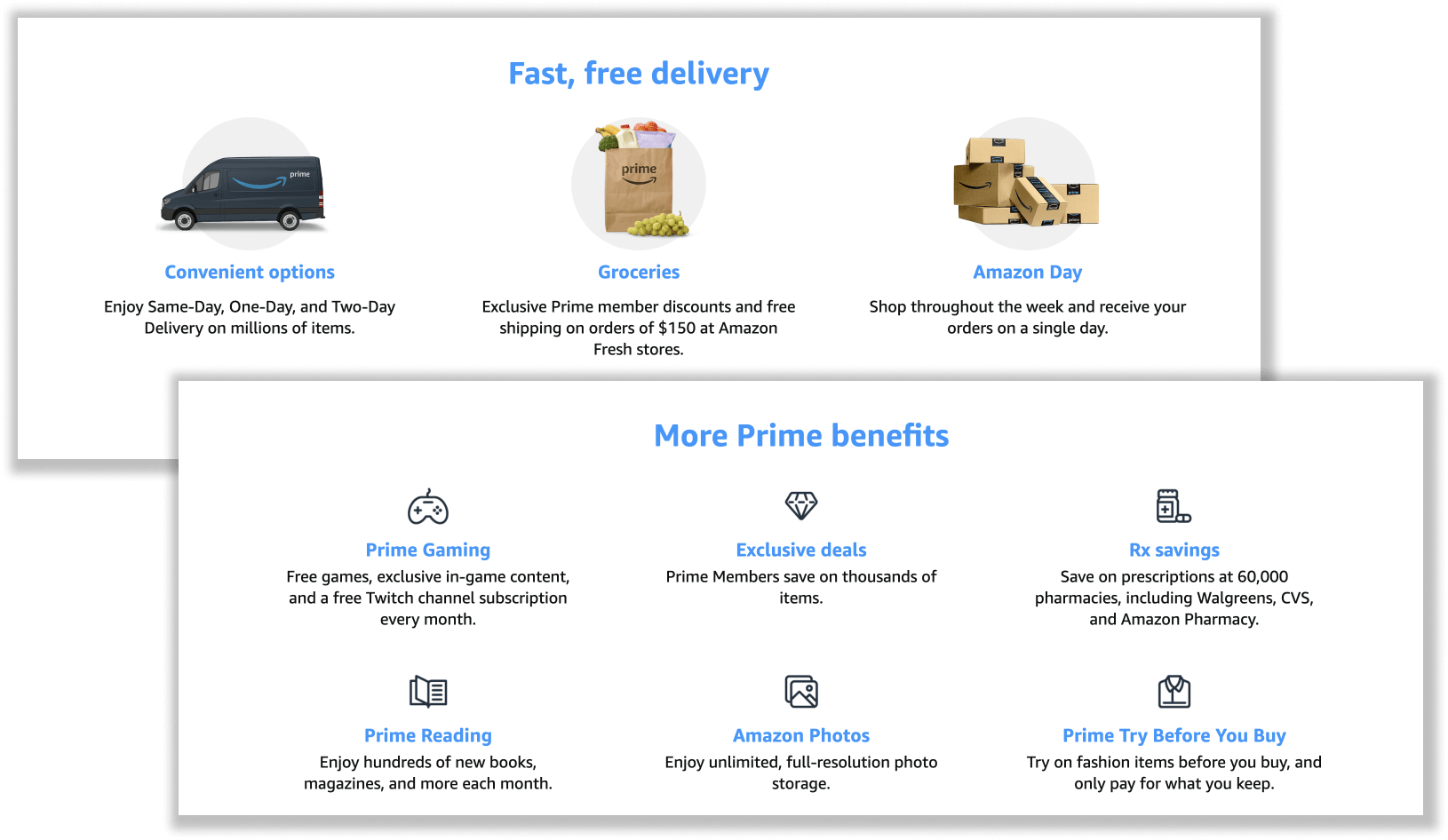
In summary, the benefits of Amazon Prime extend far beyond “free shipping” or “free movies.” From a technological perspective, Prime is an expansive, integrated platform that leverages the cutting edge of AI, cloud computing, and IoT. It is a service that transforms the home into a node within a global digital network, where machine learning anticipates needs, AWS ensures seamless streaming, and robotics revolutionize the physical movement of goods.
For the modern consumer, a Prime membership is an investment in a high-performance digital lifestyle. As Amazon continues to iterate on its software and hardware, the Prime ecosystem will likely remain the benchmark for how technology can be synthesized to provide unparalleled convenience, security, and entertainment in a unified package. The true benefit of Prime is not just what it gives you, but the invisible, sophisticated technological web it builds around your digital existence.
aViewFromTheCave is a participant in the Amazon Services LLC Associates Program, an affiliate advertising program designed to provide a means for sites to earn advertising fees by advertising and linking to Amazon.com. Amazon, the Amazon logo, AmazonSupply, and the AmazonSupply logo are trademarks of Amazon.com, Inc. or its affiliates. As an Amazon Associate we earn affiliate commissions from qualifying purchases.