
In the landscape of modern corporate performance management and academic assessment, the term “bell curve grading”—formally known as forced distribution—remains a polarizing yet influential methodology. While often discussed in the context of educational institutions, its most profound impacts are felt within the sphere of human resources and organizational development. Understanding this system is crucial for professionals navigating high-stakes performance environments, as it dictates how talent is rewarded, retained, and calibrated against peer benchmarks.
The Mechanics of the Forced Distribution Model
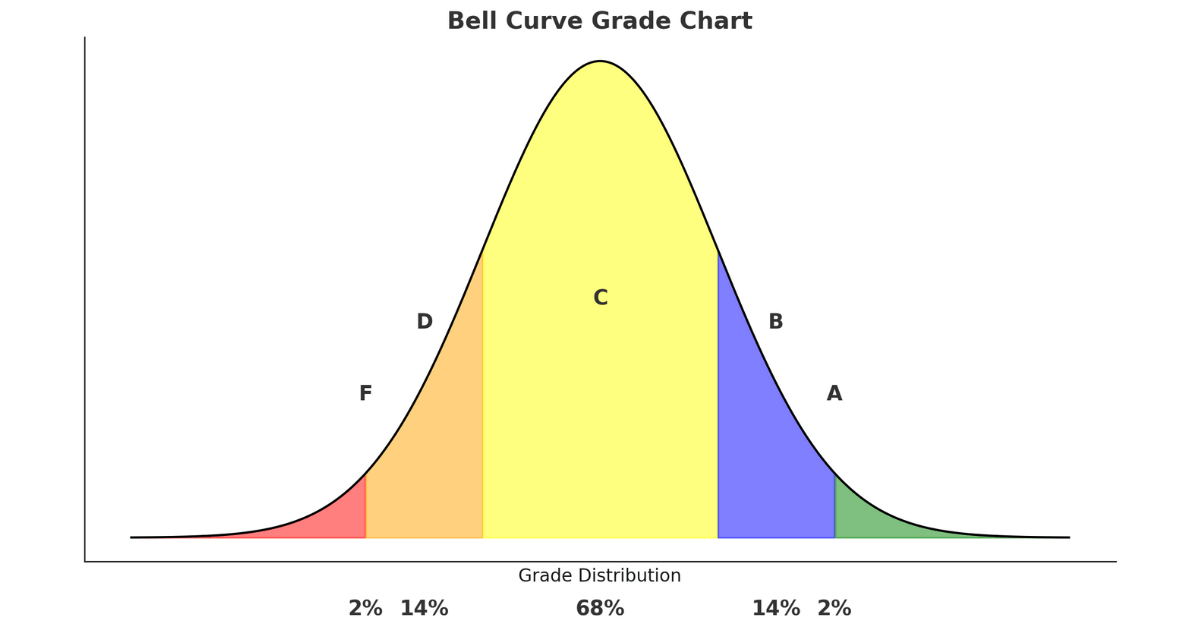
At its core, bell curve grading relies on the statistical principle of the normal distribution, or the Gaussian distribution. In a perfectly executed forced distribution model, an organization mandates that a predetermined percentage of employees or students must fall into specific performance categories.
The Statistical Framework
The distribution is typically visualized as a symmetrical curve where the bulk of the population resides in the middle—the “average” or “meets expectations” tier. Moving outward toward the tails of the curve, the numbers diminish. A common configuration involves assigning, for example, 10% to the top tier (high performers), 80% to the middle tier (solid contributors), and 10% to the bottom tier (underperformers). By enforcing these percentages, the system ensures that a company does not suffer from “grade inflation,” where every employee receives a stellar rating, effectively rendering the performance appraisal process useless for salary differentiation or talent identification.
Calibration and Normalization
To achieve this, managers engage in calibration sessions. These are high-stakes meetings where leadership teams compare individual employee evaluations against one another. If a department head attempts to label 50% of their staff as “outstanding,” the bell curve model forces them to defend these assessments against the organizational standard. The goal is to normalize performance ratings across departments, ensuring that an “excellent” rating in Engineering carries the same weight as an “excellent” rating in Marketing. This process removes individual bias, or at least attempts to, by creating a relative rather than absolute standard of success.
Strategic Advantages in Corporate Talent Management
Proponents of bell curve grading argue that it provides an objective anchor in a subjective sea of managerial assessment. By creating clear distinctions between top-tier talent and those struggling, organizations can make data-driven decisions regarding compensation and development.
Identifying High-Potential Talent
The primary benefit of a rigid distribution is the forced recognition of excellence. In environments where high performance can be masked by team-wide success, the bell curve pulls the best employees into the light. This allows human resources and executive leadership to earmark high-potential individuals for accelerated development tracks, leadership training, and equity incentives. When you are forced to rank employees against one another, the truly exceptional contributors become impossible to ignore.
Managing Underperformance
Conversely, the bell curve acts as a structural tool for addressing performance gaps. In many corporate cultures, managers avoid the uncomfortable conversations necessary to correct underperformance. Forced distribution necessitates a review of the bottom 10%. This creates a clear timeline for performance improvement plans (PIPs) or, in cases where the individual is fundamentally misaligned with the role, facilitates their transition out of the organization. By requiring the identification of the bottom tier, the system prevents “dead weight” from accumulating over multiple fiscal years.
The Cultural Pitfalls and Organizational Risks
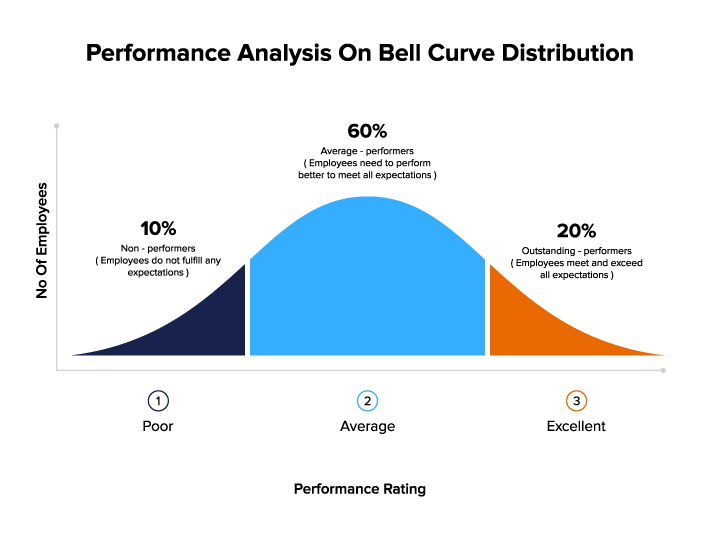
Despite the structural appeal of forced distribution, the model has faced significant scrutiny over the last decade. As corporate values have shifted toward collaboration, psychological safety, and agility, the bell curve has increasingly been viewed as a relic of the industrial age that can cause irreparable harm to modern team dynamics.
The Erosion of Collaboration
When an organization pits its employees against one another in a zero-sum game, collaboration often suffers. If an employee knows that their success is statistically tied to the potential failure of a peer, the incentive to share knowledge, mentor subordinates, or assist with cross-functional projects vanishes. In environments driven by the bell curve, “knowledge hoarding” becomes a rational defensive strategy. If your team is judged against a curve, helping your coworker succeed might inadvertently push you toward the bottom tier.
Impact on Psychological Safety and Retention
The bell curve can foster a culture of fear rather than growth. When employees perceive that their performance rating is predetermined by a statistical formula rather than their actual output, motivation decreases. This is particularly damaging for high-performing, mission-driven talent who value autonomy and mastery. If the system dictates that only a small fraction can be “top-rated,” and that status is awarded based on comparative ranking rather than objective achievement, the organization risks losing top talent to competitors who prioritize individual growth over forced stratification.
Furthermore, forced distribution can unintentionally demoralize the middle 80%. When an employee is consistently told they are “average” simply because the curve dictates the size of the middle bucket, they may disengage, feeling that their efforts to exceed expectations are effectively ignored or neutralized by the statistical model.
Evolving Alternatives: Beyond the Curve
Recognizing the flaws inherent in strict statistical grading, many modern organizations are pivoting toward more flexible, dialogue-driven appraisal systems. The transition is not necessarily away from accountability, but away from the rigidities of the curve.
Continuous Feedback Loops
Instead of annual or semi-annual ranking sessions, leading firms are adopting continuous performance management. This model replaces the bell curve with ongoing, low-stakes check-ins between managers and reports. The focus shifts from “ranking” to “coaching.” By discussing goals and obstacles in real-time, the organization maintains high standards without the need for forced distributions. Performance is measured against absolute goals—Did you meet the target? Did you deliver on the project?—rather than against the performance of a colleague in another department.
The Shift Toward Impact-Based Rewards
As companies move away from forced distributions, compensation models are evolving to reflect impact rather than relative rank. High performance is identified through specific, quantifiable deliverables, and rewards are distributed based on organizational success and individual contributions to that success. This approach aligns the employee’s incentives with the company’s goals. By removing the pressure to “fit the curve,” managers are empowered to reward every high-achieving employee without being constrained by an arbitrary quota of “top ratings.”

Conclusion: Balancing Data and Human Capital
The concept of bell curve grading serves as a fascinating study in the tension between efficiency and equity. Statistically, it offers a clean, manageable way to distribute rewards and identify talent. However, the human cost—the potential destruction of trust, the stifling of cooperation, and the alienation of a talented workforce—cannot be ignored.
For organizations, the lesson is clear: data should inform human capital decisions, but it should not dictate them. While some form of calibration is necessary to ensure fairness in promotion and pay cycles, the strict adherence to a forced distribution curve often does more harm than good in a modern, collaborative workspace. The most successful organizations are those that move beyond the limitations of the curve, utilizing performance management as a bridge for growth and alignment rather than a barrier to success. Whether your organization uses a formal bell curve or has transitioned to a more fluid model, the goal remains the same: fostering a culture where excellence is not just tracked on a graph, but actively cultivated at every level of the business.
aViewFromTheCave is a participant in the Amazon Services LLC Associates Program, an affiliate advertising program designed to provide a means for sites to earn advertising fees by advertising and linking to Amazon.com. Amazon, the Amazon logo, AmazonSupply, and the AmazonSupply logo are trademarks of Amazon.com, Inc. or its affiliates. As an Amazon Associate we earn affiliate commissions from qualifying purchases.