
In the rapidly evolving landscape of human optimization, the term “Ayahuasca” (often searched as “ayawaska”) has transcended its origins as a traditional Amazonian brew to become a focal point of intense interest within the technology and bio-hacking communities. For developers, data scientists, and Silicon Valley visionaries, Ayahuasca is increasingly viewed not just as a cultural artifact, but as a potent “biological software update” capable of rewiring the human brain for enhanced creativity, problem-solving, and emotional intelligence.
As we move deeper into an era defined by Artificial Intelligence and neural interfaces, the tech world is looking toward entheogens as a means of exploring the final frontier: human consciousness itself. This article examines Ayahuasca through the lens of modern technology, neuro-hacking, and the digital tools emerging to bridge the gap between ancient wisdom and future innovation.
The Intersection of Ancient Ritual and Modern Neuro-Technology
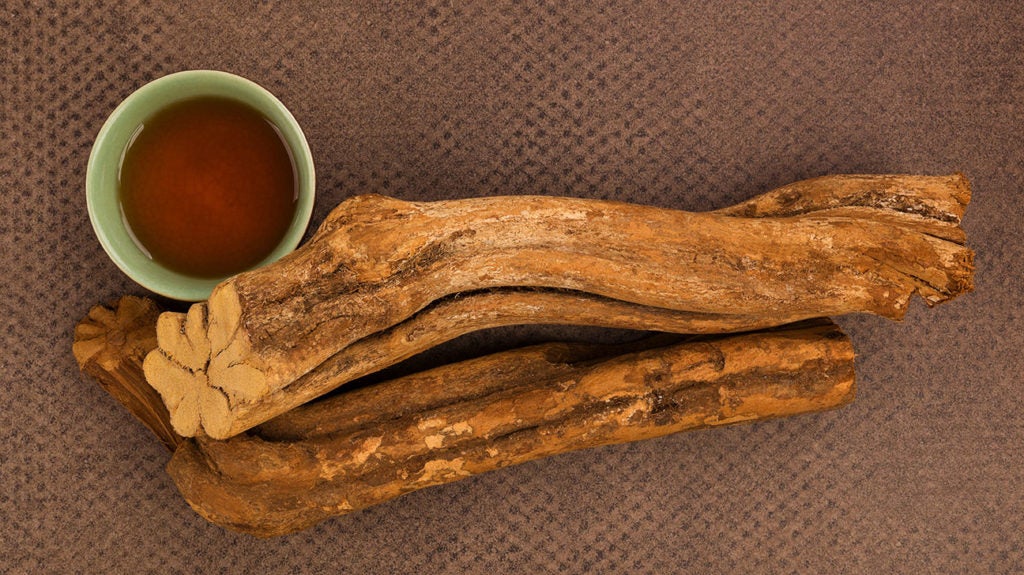
To understand Ayahuasca in a tech context, one must first look at it as a complex biochemical system. The brew is a combination of the Banisteriopsis caapi vine and the Psychotria viridis leaf. In technological terms, this is a sophisticated dual-component delivery system where one part (the MAO inhibitor) acts as the “enabler” or security bypass, allowing the primary “payload” (DMT) to cross the blood-brain barrier and interface with the neural network.
Decoding the Neural Pathways
Modern neuro-tech researchers are utilizing advanced fMRI (functional Magnetic Resonance Imaging) and EEG (electroencephalography) to map exactly what happens during an Ayahuasca session. What they have found is a phenomenon known as “decreased activity in the Default Mode Network (DMN).” In the language of systems architecture, the DMN is the “background processing” of the human brain—the source of the ego and repetitive thought patterns. By temporarily taking the DMN offline, Ayahuasca allows for a massive increase in global functional connectivity. This is akin to removing the firewalls between different departments in a corporation, allowing data to flow freely between regions of the brain that rarely communicate.
The Digital Twin Approach to Psychedelic Research
One of the most exciting developments in the “PsyTech” space is the creation of “Digital Twins” of the human brain to simulate the effects of substances like Ayahuasca. By using high-fidelity data sets, researchers can model how the alkaloids in the brew interact with serotonin receptors at a molecular level. This computational neurobiology allows tech companies to predict outcomes and tailor “protocols” that maximize cognitive benefits while minimizing the hardware strain on the body. This data-driven approach is transforming Ayahuasca from a mysterious ritual into a measurable, optimizable process for mental clarity.
Bio-hacking the Brain: Ayahuasca as a Software Update
In the high-stakes world of software engineering and tech entrepreneurship, “burnout” is a common system failure. Bio-hackers are increasingly turning to Ayahuasca as a method of “debugging” the human operating system. When the brain is stuck in loops of anxiety or creative blocks, Ayahuasca acts as a hard reset, forcing the system to re-evaluate its core code.
Neuroplasticity and Rewiring the Human OS
The primary technological appeal of Ayahuasca lies in its ability to promote neuroplasticity. The brew stimulates the production of Brain-Derived Neurotrophic Factor (BDNF), a protein that acts like “fertilizer” for neurons. From a tech perspective, this is the ultimate hardware upgrade. It facilitates the growth of new dendritic spines and strengthens synaptic connections. For a programmer or a strategic thinker, this means an increased capacity for complex pattern recognition and the ability to learn new languages or frameworks at an accelerated rate. We are seeing a shift where “consciousness hacking” is becoming as standardized as “growth hacking.”
Wearable Tech and Monitoring the Experience
The modern bio-hacker rarely enters an Ayahuasca experience without their suite of biometric monitors. Using high-precision wearables like the Oura Ring, Whoop strap, or continuous glucose monitors (CGMs), individuals are now tracking the physiological impact of the experience in real-time. They monitor heart rate variability (HRV) as a metric for nervous system resilience and sleep architecture to see how the experience alters REM cycles. This integration of hardware with the Ayahuasca experience allows for a granular analysis of how these “biological downloads” impact long-term physical performance and cognitive output.
The Rise of Psychedelic-Tech Platforms
As the “Ayahuasca” keyword gains traction in the wellness and tech sectors, a new industry is emerging: PsyTech. This niche focuses on creating digital tools that support the preparation, navigation, and integration of the psychedelic experience. No longer is the experience confined to a hut in the jungle; it is being augmented by sophisticated digital platforms.
VR-Assisted Integration
“Integration” is the process of making sense of the insights gained during an Ayahuasca experience and applying them to one’s life. Tech startups are now developing Virtual Reality (VR) environments designed specifically for this purpose. By using immersive 3D landscapes and spatial audio, VR can help a user return to the “state of mind” they achieved during their session, making it easier to download and save the “data” they received. These VR tools act as a bridge, ensuring that the profound insights gained in an altered state are not lost when the user returns to their standard digital workflow.
AI and Data-Driven Insights into Subjective Experiences
Natural Language Processing (NLP) and AI are being leveraged to analyze the “trip reports” and journals of those who use Ayahuasca. By feeding thousands of accounts into a machine learning model, researchers can identify recurring themes, linguistic patterns, and psychological breakthroughs. This AI-driven analysis provides a roadmap for others, identifying which “modules” of the Ayahuasca experience are most effective for solving specific cognitive problems, such as overcoming a “logic loop” in a complex coding project or navigating a high-pressure corporate merger.
Security, Ethics, and the Digital Future of Consciousness
With the digitization of the Ayahuasca experience comes a new set of challenges regarding digital security and data privacy. As we begin to map the deepest reaches of the human mind, the data generated becomes the most sensitive “intellectual property” an individual possesses.
Protecting Bio-metric and Neural Data
If an individual uses a neural interface or a high-end wearable during an Ayahuasca ceremony, that data is potentially vulnerable. The tech industry is currently grappling with the ethics of “Neuro-rights.” Who owns the data generated by your brain while it is in an altered state? As Ayahuasca becomes more integrated into the tech-driven wellness industry, we must develop robust encryption and decentralized storage solutions (such as blockchain-based health records) to ensure that a person’s “consciousness data” cannot be exploited by third-party advertisers or bad actors.

The Ethics of Digital Shamanism
The final frontier of this intersection is the concept of the “Digital Shaman.” As AI becomes more sophisticated, we are seeing the emergence of AI-driven guides that can lead a person through a meditative or psychedelic-like state using binaural beats and visual entrainment. However, the tech community must ask: can a machine replicate the intuitive “human-to-human” interface of a traditional healer? The professional consensus in the tech-bio-hacking world suggests that while AI can provide the “technical support,” the human element remains a critical piece of the “hardware” for a successful and safe Ayahuasca experience.
In conclusion, “what is Ayahuasca” is a question that, in the 21st century, must be answered through the lens of technology. It is a biological tool for neuro-optimization, a catalyst for neuroplasticity, and a new data set for the burgeoning field of PsyTech. As we continue to refine the tools used to explore the human mind, Ayahuasca stands as a bridge between our ancestral past and a hyper-digital future, offering a unique “tech stack” for the evolution of human consciousness.
aViewFromTheCave is a participant in the Amazon Services LLC Associates Program, an affiliate advertising program designed to provide a means for sites to earn advertising fees by advertising and linking to Amazon.com. Amazon, the Amazon logo, AmazonSupply, and the AmazonSupply logo are trademarks of Amazon.com, Inc. or its affiliates. As an Amazon Associate we earn affiliate commissions from qualifying purchases.