
For many individuals planning for a secure financial future, the Roth IRA stands out as a powerful retirement savings vehicle. Its unique tax advantages, particularly the ability to withdraw funds tax-free in retirement, make it an attractive option for long-term wealth accumulation. However, a common question that arises when considering or managing a Roth IRA is: “What is the average rate of return?”
Understanding the average rate of return on a Roth IRA is not as straightforward as looking up a single number. It’s a nuanced concept influenced by a myriad of factors, including investment choices, market performance, economic conditions, and individual investor behavior. This article delves into what constitutes the “average” return, the elements that shape it, and how you can optimize your Roth IRA’s performance to achieve your retirement goals.
Understanding the Roth IRA and Its Core Benefits
Before we dissect returns, it’s crucial to grasp the fundamental nature of a Roth IRA and why it’s such a valuable tool in retirement planning. It’s not just another savings account; it’s a strategic component of a well-rounded financial strategy.
What is a Roth IRA?
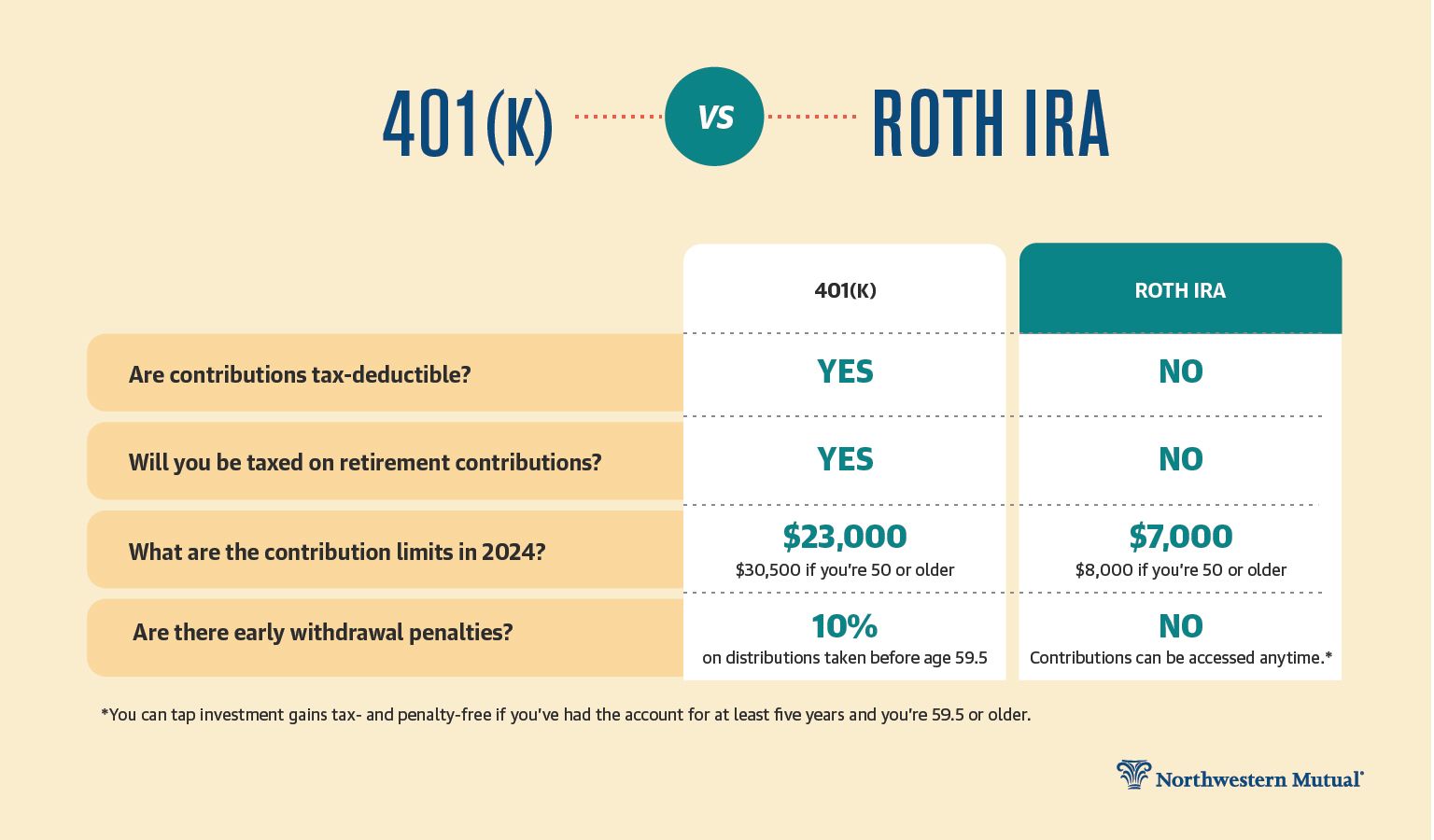
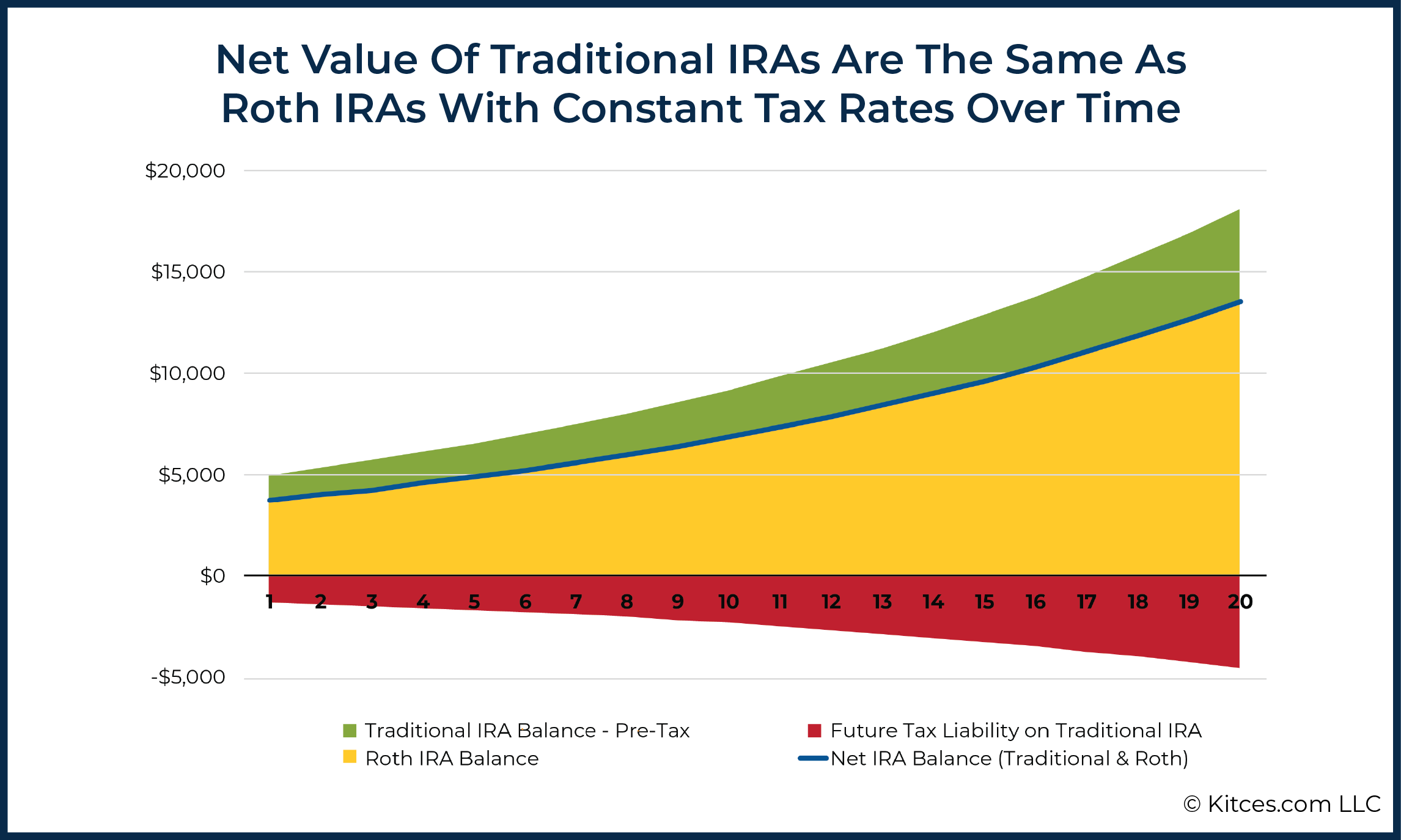
A Roth Individual Retirement Account (IRA) is a retirement savings plan that allows individuals to contribute after-tax dollars. The key differentiator from a Traditional IRA is how taxes are handled. While contributions to a Traditional IRA might be tax-deductible (reducing your taxable income now), withdrawals in retirement are taxed. With a Roth IRA, you pay taxes on your contributions upfront, but qualified withdrawals in retirement—including all earnings—are completely tax-free. This characteristic makes it particularly appealing to those who anticipate being in a higher tax bracket during their retirement years than they are today.
Tax Advantages and Retirement Planning
The primary allure of a Roth IRA lies in its potent tax advantages. Imagine a scenario where your investments grow for 30, 40, or even 50 years, potentially doubling or tripling your initial contributions. With a Roth IRA, all of that growth, along with your original contributions, can be withdrawn without incurring a single penny in federal income tax (and often state taxes, depending on your location), provided certain conditions are met (e.g., account open for five years and account holder is 59½ or older).
This tax-free growth and withdrawal feature offers immense peace of mind. It means you have a predictable stream of income in retirement that won’t be eroded by unexpected tax liabilities, allowing for more precise financial planning. Moreover, unlike Traditional IRAs, Roth IRAs do not have required minimum distributions (RMDs) during the original owner’s lifetime, offering greater flexibility in managing your legacy and estate.
Contribution Limits and Eligibility
Like most tax-advantaged accounts, Roth IRAs come with specific rules regarding who can contribute and how much. Contribution limits are set annually by the IRS and can vary based on your age (with catch-up contributions allowed for those 50 and older). Eligibility for direct Roth IRA contributions is also subject to income limitations. If your modified adjusted gross income (MAGI) exceeds certain thresholds, your ability to contribute directly to a Roth IRA may be reduced or eliminated. However, for those ineligible for direct contributions, a “backdoor Roth IRA” strategy is often utilized, which involves contributing to a Traditional IRA and then converting it to a Roth IRA. Understanding these rules is essential to ensure you’re maximizing your savings within the regulatory framework.
Deconstructing “Average Rate of Return”
The term “average rate of return” can be misleading if not properly understood. It doesn’t imply a fixed, guaranteed return, but rather a historical or projected benchmark against which individual performance can be measured.
Historical Market Performance as a Benchmark
When people ask about an average rate of return, they are often referring to the historical performance of broad market indices. The S&P 500, for instance, which tracks the performance of 500 of the largest U.S. publicly traded companies, is frequently cited. Over long periods (e.g., several decades), the S&P 500 has historically delivered an average annual return of approximately 8% to 12%, though this figure includes dividends and varies significantly based on the specific time frame analyzed.
It’s critical to understand that this is an average over extended periods and encompasses significant volatility, including booms and busts. A single year could see returns of +20% or -30%, yet the long-term average smooths out these fluctuations. Your Roth IRA’s return will largely mirror the performance of the underlying investments you choose within it, which may or may not perfectly align with a broad market index.
The Impact of Asset Allocation
Perhaps the single most significant determinant of your Roth IRA’s average rate of return is your asset allocation strategy. This refers to how you divide your investment portfolio among different asset classes, such as stocks, bonds, and cash equivalents.
- Stocks (Equities): Historically, stocks have offered the highest potential for long-term growth but also come with greater short-term volatility and risk. A portfolio heavily weighted towards stocks, especially growth stocks, may aim for higher average returns but must also stomach larger price swings.
- Bonds (Fixed Income): Bonds generally offer lower returns than stocks but also lower volatility. They provide a degree of stability and income, often serving as a ballast in a diversified portfolio.
- Cash Equivalents: While safe and liquid, cash equivalents typically offer minimal returns, often struggling to keep pace with inflation. They are usually held for emergency funds or very short-term goals, not for long-term growth in a Roth IRA.
An aggressive asset allocation (more stocks) might target a higher average return (e.g., 9-10%+), while a conservative allocation (more bonds) might aim for a lower, more stable return (e.g., 4-6%). Your ideal allocation depends on your age, risk tolerance, and time horizon until retirement.
Distinguishing Between Realized and Expected Returns
It’s important to differentiate between realized returns and expected returns. Realized returns are the actual returns your Roth IRA investments have generated over a specific past period. These are concrete numbers derived from historical data. Expected returns, on the other hand, are projections of what investments might yield in the future. These are based on financial models, economic forecasts, and assumptions about market conditions.
While historical returns provide valuable context and help establish benchmarks, they are not guarantees of future performance. Markets evolve, economic cycles shift, and unforeseen events can dramatically impact investment outcomes. Therefore, when discussing an “average rate of return,” it’s often a blend of historical performance used to set realistic expectations for the future, while acknowledging that actual outcomes can and will vary.
Factors Influencing Your Roth IRA’s Performance
Beyond broad market averages and asset allocation, several specific factors directly impact the rate of return you personally experience within your Roth IRA.
Investment Choices: Stocks, Bonds, Mutual Funds, ETFs
The specific investments you select within your Roth IRA will dictate its performance. You have a wide array of options:
- Individual Stocks: Investing in individual company stocks offers the potential for high returns if those companies perform well, but also carries significant company-specific risk.
- Bonds: Individual bonds, bond funds, or ETFs provide income and stability but typically lower growth potential.
- Mutual Funds: Professionally managed portfolios of stocks, bonds, or other assets. They offer diversification but come with management fees.
- Exchange-Traded Funds (ETFs): Similar to mutual funds but trade like stocks on an exchange. Many track indices (e.g., S&P 500 ETF), offering low-cost diversification.
- Target-Date Funds: A type of mutual fund that automatically adjusts its asset allocation to become more conservative as you approach a specific retirement year. These are popular for set-it-and-forget-it retirement planning.
Each of these choices has a different risk-reward profile, and a blend, tailored to your circumstances, is usually optimal. For instance, an S&P 500 index ETF or mutual fund would likely mirror the S&P 500’s average return (minus fees), while a highly concentrated portfolio of speculative growth stocks could deliver much higher or much lower returns.
Diversification and Risk Management
Effective diversification is paramount for managing risk and achieving a stable average return over the long term. This means spreading your investments across different asset classes, industries, geographic regions, and company sizes. A diversified portfolio is less susceptible to the poor performance of any single investment, smoothing out returns and potentially enhancing long-term growth.
Risk management also involves understanding your personal tolerance for loss. If you’re highly risk-averse, a more conservative portfolio with a higher allocation to bonds might be appropriate, even if it means aiming for a lower average return. Conversely, if you have a high-risk tolerance and a long time horizon, a more aggressive, growth-oriented portfolio could be justified.
Market Volatility and Long-Term vs. Short-Term Views
Investment markets are inherently volatile. Prices can fluctuate wildly over short periods due to economic news, geopolitical events, or shifts in investor sentiment. While short-term volatility can be unnerving, it’s crucial to adopt a long-term perspective for a Roth IRA. These accounts are designed for decades of growth. Over extended periods, market fluctuations tend to average out, and the power of compounding allows your investments to recover from downturns and continue growing. Trying to time the market (buying low and selling high) is notoriously difficult and often leads to lower returns than a consistent, long-term buy-and-hold strategy.
Fees and Expense Ratios
One of the most insidious detractors from your average rate of return is fees. Even seemingly small fees can significantly erode your returns over decades. Common fees include:
- Expense Ratios for Mutual Funds/ETFs: An annual percentage charged by the fund manager for operating the fund. A 0.50% expense ratio might seem small, but over 30 years, it can reduce your total wealth by tens of thousands of dollars compared to a fund with a 0.10% expense ratio.
- Trading Commissions: Fees charged when buying or selling investments (less common with commission-free trading now prevalent).
- Advisory Fees: If you use a financial advisor, they will charge a fee, typically a percentage of assets under management (e.g., 1%).
Always be aware of the fees associated with your investments and choose low-cost options whenever possible. Vanguard, Fidelity, and Charles Schwab are known for offering a wide range of low-cost index funds and ETFs, which can significantly boost your net average return.
Benchmarking and Setting Realistic Expectations
Setting realistic expectations for your Roth IRA’s average rate of return is vital for successful long-term investing. It prevents disappointment during market downturns and encourages consistency.
S&P 500 as a Common Benchmark
As mentioned, the S&P 500 is often used as a benchmark for diversified U.S. stock portfolios. Over the past 60-70 years, its average annual return (including dividends) has hovered around 10-12%. However, it’s important to acknowledge the range: the best 10-year period saw returns above 18% per year, while the worst 10-year period (including the dot-com bubble and 2008 financial crisis) saw returns closer to 0%. This highlights the non-linear nature of investing and the importance of long-term commitment.
A more conservative blended portfolio (e.g., 60% stocks, 40% bonds) might realistically aim for an average return of 7-9% over the very long term. These figures are not guaranteed, but they provide a reasonable basis for financial planning.
Personalized vs. Generalized Averages
It’s crucial to understand that while broad market averages provide a general idea, your Roth IRA’s return will be unique to you. It’s a personalized average, depending on:
- Your specific investment selections: Are you in broad market index funds, or sector-specific ETFs?
- Your timing of contributions: Dollar-cost averaging (investing a fixed amount regularly) tends to smooth out market entry points over time.
- Any rebalancing decisions: Actively managing your asset allocation can impact returns.
- The fees you pay: As discussed, these directly reduce your net return.
Therefore, while benchmarks are useful, focus on managing your own portfolio effectively rather than fixating on a generic number.
The Power of Compounding
The true magic behind long-term investing, especially in a tax-advantaged account like a Roth IRA, is the power of compounding. Compounding refers to earning returns not only on your initial investment but also on the accumulated interest and earnings from previous periods.
Consider this: if you invest $6,500 annually (current limit for under 50) for 30 years at an average annual return of 8%, you would have contributed $195,000. However, due to compounding, your account balance could grow to over $735,000, with over $540,000 of that being tax-free earnings! The longer your money has to grow and compound, the more significant the effect. This underscores why starting early and consistently contributing to your Roth IRA is often more impactful than trying to chase the “highest” average return in any given year.
Strategies to Optimize Your Roth IRA Returns
While you can’t control market movements, you can control your investment strategy and behavior, which are pivotal in optimizing your Roth IRA’s average rate of return over time.
Consistent Contributions and Dollar-Cost Averaging
The single most effective strategy for many investors is to contribute consistently to their Roth IRA, ideally maxing it out each year. By investing a fixed amount regularly (e.g., monthly or bi-weekly), you employ a technique called dollar-cost averaging. This means you buy more shares when prices are low and fewer shares when prices are high, effectively averaging out your purchase price over time. This approach mitigates the risk of investing a large lump sum at an market peak and historically leads to more consistent, favorable returns over the long haul.
Regular Portfolio Review and Rebalancing
Your ideal asset allocation isn’t static; it evolves with your age, financial goals, and market conditions. Periodically (e.g., once a year), review your Roth IRA portfolio to ensure it still aligns with your risk tolerance and objectives. If one asset class has significantly outperformed others, your portfolio might have drifted from its target allocation. Rebalancing involves selling some of the outperforming assets and buying more of the underperforming ones to bring your portfolio back to its desired mix. This not only manages risk but also allows you to “buy low and sell high” systematically.
Avoiding Emotional Investing
One of the biggest pitfalls for individual investors is emotional decision-making. Panicking during market downturns and selling off investments, or chasing hot stocks during bull markets, often leads to suboptimal returns. Successful long-term investing requires discipline, patience, and the ability to stick to your investment plan even when markets are volatile. Remember that Roth IRAs are for retirement—a goal decades away—so short-term market noise should not dictate your long-term strategy.
Seeking Professional Advice (When Needed)
While many resources are available for self-directed investors, there are times when seeking professional advice can be beneficial. A qualified financial advisor can help you:
- Determine your risk tolerance and appropriate asset allocation.
- Select suitable low-cost investment options.
- Develop a comprehensive financial plan that integrates your Roth IRA.
- Navigate complex financial situations or major life changes.
- Provide behavioral coaching to help you stay disciplined during market fluctuations.
Even if you choose to manage your Roth IRA yourself, a one-time consultation with a fee-only financial planner can provide valuable insights and affirm your strategy.
Conclusion
The “average rate of return on a Roth IRA” is not a fixed number but rather a dynamic outcome influenced by a confluence of factors, including investment choices, asset allocation, market conditions, and investor behavior. While historical market benchmarks like the S&P 500 offer a general idea (often 8-12% annually over long periods), your individual experience will vary.
The true power of a Roth IRA lies not just in its growth potential, but in the unparalleled advantage of tax-free withdrawals in retirement. By understanding the core benefits of this account, making informed investment choices, embracing diversification, minimizing fees, and committing to a disciplined, long-term approach, you can significantly enhance your Roth IRA’s performance. Focus on consistent contributions, periodic rebalancing, and avoiding emotional decisions, and your Roth IRA can become a cornerstone of a financially secure and tax-efficient retirement.
aViewFromTheCave is a participant in the Amazon Services LLC Associates Program, an affiliate advertising program designed to provide a means for sites to earn advertising fees by advertising and linking to Amazon.com. Amazon, the Amazon logo, AmazonSupply, and the AmazonSupply logo are trademarks of Amazon.com, Inc. or its affiliates. As an Amazon Associate we earn affiliate commissions from qualifying purchases.