
The term “auto diesel” evokes a powerful image of robust engines and the distinctive scent of fuel that has powered transportation for over a century. While the general understanding might be limited to the fuel itself, a deeper dive reveals a fascinating intersection of engineering, economics, and evolving technology. For the purposes of this discussion, we will focus on the Tech aspect of auto diesel, exploring its technical intricacies, its role in automotive engineering, and the advancements shaping its future. This perspective allows us to understand not just what auto diesel is, but how it functions and where it’s headed in the ever-evolving landscape of vehicle propulsion.
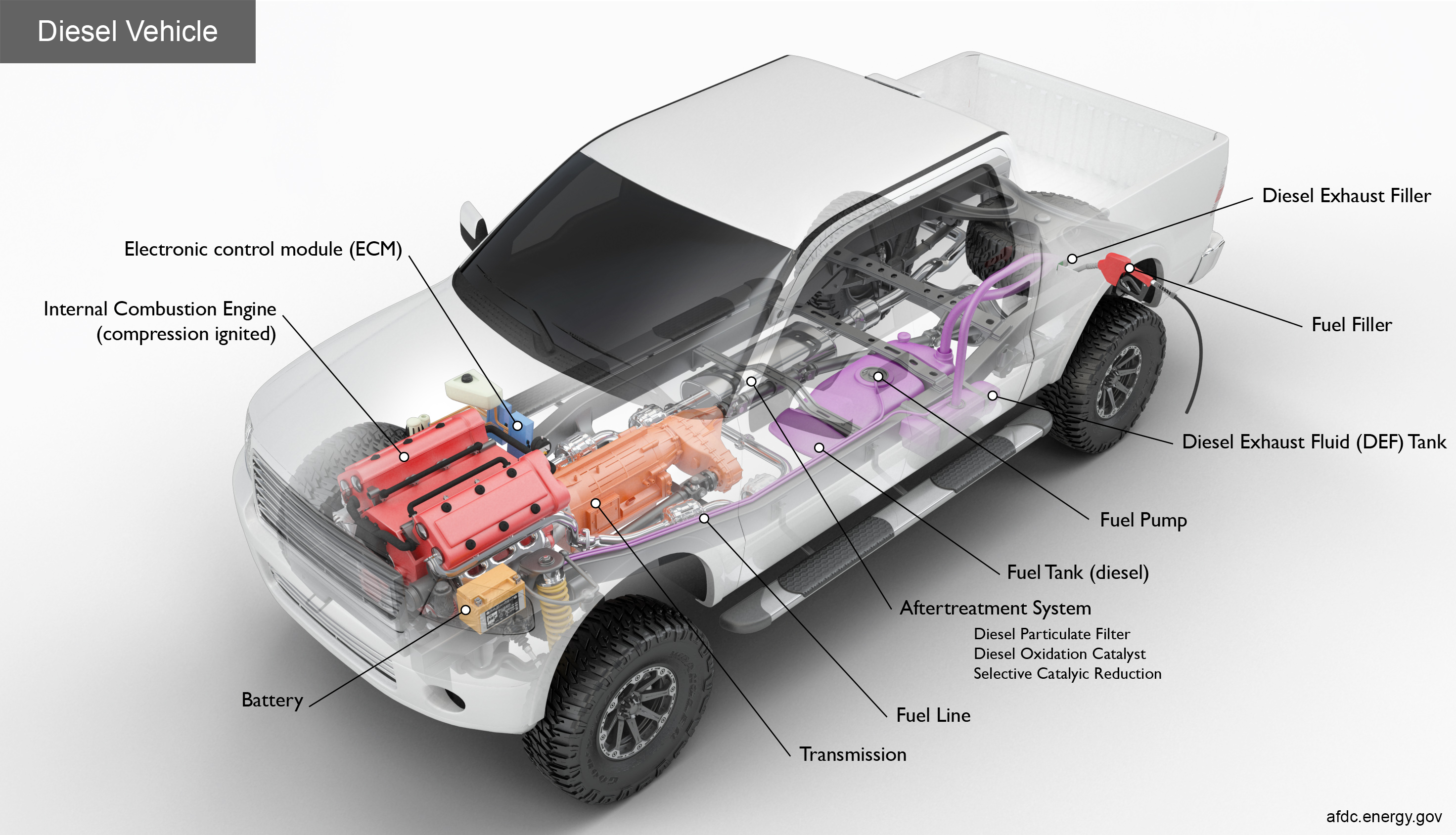
The Core of Compression Ignition: Understanding the Diesel Engine
At its heart, “auto diesel” refers to the fuel used in diesel engines, but understanding the engine itself is crucial to appreciating the fuel’s significance. Unlike gasoline engines that rely on spark plugs to ignite the fuel-air mixture, diesel engines operate on a principle known as compression ignition. This fundamental difference dictates the design and performance characteristics of diesel vehicles.
The Principle of Compression Ignition
The diesel engine’s operation is a testament to the physics of compressing gases. The process begins with the intake stroke, where only air is drawn into the cylinder. During the compression stroke, this air is compressed to an extremely high pressure, raising its temperature significantly, typically to around 700-900 degrees Celsius (1300-1650 degrees Fahrenheit). At the precise moment when the air is at its hottest and most compressed, diesel fuel is injected directly into the combustion chamber. The intense heat of the compressed air causes the finely atomized fuel to ignite spontaneously, without the need for a spark. This rapid combustion generates the power that drives the piston and, ultimately, the vehicle.
Key Components and Their Roles
Several key components work in concert to enable this sophisticated combustion process:
- Cylinders and Pistons: The heart of the engine where combustion takes place. Pistons move up and down within the cylinders, driven by the expanding gases.
- Fuel Injectors: These high-precision devices are responsible for delivering a precisely measured amount of diesel fuel directly into the combustion chamber at extremely high pressures and at the opportune moment. The design and atomization capability of injectors are critical for efficient combustion.
- High-Pressure Fuel Pump: This pump generates the immense pressure required for direct fuel injection, ensuring the fuel is atomized into a fine mist for optimal mixing with air and efficient ignition.
- Turbocharger (Often Present): Many modern diesel engines incorporate turbochargers. These devices use exhaust gases to spin a turbine, which in turn drives a compressor. The compressor forces more air into the cylinders, allowing for more fuel to be burned and thus increasing power output and efficiency.
- Glow Plugs: While diesel engines don’t use spark plugs, glow plugs are essential for cold starts. They are small heating elements located in the combustion chamber that preheat the air when the engine is cold, ensuring sufficient temperature for spontaneous ignition. Once the engine is running, the heat generated by compression is usually sufficient.
The Advantages of the Diesel Cycle
The compression ignition principle offers several inherent advantages that have made diesel engines popular, particularly in commercial and heavy-duty applications:
- Higher Fuel Efficiency: Diesel engines are generally more fuel-efficient than their gasoline counterparts. This is due to a combination of factors, including the higher energy density of diesel fuel and the leaner fuel-air mixtures used during combustion, which result in less heat loss.
- Higher Torque: Diesel engines typically produce more torque at lower RPMs. Torque is the rotational force, which translates to better pulling power and acceleration from a standstill, making them ideal for towing and hauling heavy loads.
- Durability and Longevity: Diesel engines are built to withstand the higher pressures and temperatures associated with compression ignition. This often results in more robust construction and a longer lifespan compared to gasoline engines.
The Chemistry and Composition of Auto Diesel Fuel
While the engine is a marvel of mechanical engineering, the fuel itself, auto diesel, is a complex mixture of hydrocarbons with specific properties that enable the diesel engine’s unique combustion process. Understanding its composition and properties is key to appreciating its performance and environmental considerations.
Hydrocarbon Makeup of Diesel Fuel
Diesel fuel is a distillate of crude oil, meaning it’s a product of petroleum refining. Unlike gasoline, which is lighter and more volatile, diesel fuel is heavier and less volatile. Its composition is primarily a blend of alkanes, cycloalkanes, and aromatic hydrocarbons, with carbon chains typically ranging from C12 to C20. The precise blend can vary depending on regional standards and the intended application.
Key Properties Influencing Performance
Several critical properties define the quality and performance of auto diesel:

- Cetane Number: This is arguably the most important property for diesel fuel. The cetane number measures the fuel’s ignition quality – how readily it ignites and burns when injected into the hot compressed air. A higher cetane number indicates a shorter ignition delay and smoother combustion. Fuels with a cetane number of 40-55 are common. Higher cetane numbers lead to easier starting, smoother idling, and reduced engine noise and emissions.
- Energy Density: Diesel fuel has a higher energy density by volume than gasoline, meaning it contains more energy per gallon. This contributes to the better fuel economy observed in diesel vehicles.
- Viscosity: Viscosity refers to a fluid’s resistance to flow. Diesel fuel needs to have appropriate viscosity to ensure proper atomization by the fuel injectors and to lubricate the fuel system components.
- Flash Point: The flash point is the lowest temperature at which the fuel’s vapors can ignite when exposed to an open flame. Diesel fuel has a significantly higher flash point than gasoline, making it less flammable and safer to handle.
- Sulfur Content: Historically, diesel fuel contained higher levels of sulfur. However, environmental regulations have driven a significant reduction in sulfur content to minimize harmful emissions like sulfur dioxide (SO2). Ultra-low sulfur diesel (ULSD) is now the standard in most developed countries, containing less than 15 parts per million (ppm) of sulfur.
Additives for Enhanced Performance and Protection
Modern diesel fuels often contain a package of additives designed to improve their performance and protect the engine:
- Cetane Improvers: These additives can boost the cetane number of the fuel, leading to better ignition characteristics.
- Detergents: Help to keep fuel injectors clean, preventing clogging and ensuring proper fuel spray patterns for optimal combustion.
- Lubricity Improvers: As sulfur has been reduced, diesel fuel has become less naturally lubricating. These additives restore lubricity to protect fuel pump and injector components from wear.
- Cold Flow Improvers: In colder climates, diesel fuel can form wax crystals that can clog fuel filters. These additives modify the wax crystal formation to prevent this issue.
- Corrosion Inhibitors: Protect fuel system components from rust and corrosion.
Technological Advancements and the Future of Auto Diesel
While diesel engines have a long and established history, they are far from static. Continuous technological advancements are being made to improve their efficiency, reduce emissions, and adapt to evolving global energy landscapes. The future of auto diesel is intertwined with innovation in engine design, fuel technology, and emission control systems.
Emissions Control Technologies: The Modern Imperative
A significant focus in diesel technology development has been on mitigating emissions. The combustion process in diesel engines can produce nitrogen oxides (NOx) and particulate matter (PM), which are harmful to human health and the environment. Modern diesel vehicles employ sophisticated emission control systems:
- Diesel Particulate Filters (DPFs): These devices trap soot (particulate matter) from the exhaust gases. Periodically, the DPF undergoes a “regeneration” process where the trapped soot is burned off at high temperatures, effectively cleaning the filter.
- Selective Catalytic Reduction (SCR): SCR systems work by injecting a diesel exhaust fluid (DEF), commonly known as AdBlue, into the exhaust stream before it reaches a catalytic converter. DEF, typically a urea solution, reacts with NOx in the exhaust to convert it into harmless nitrogen gas and water vapor.
- Exhaust Gas Recirculation (EGR): EGR systems recirculate a portion of the exhaust gas back into the intake manifold. This dilutes the incoming air-fuel mixture, lowering combustion temperatures and thereby reducing NOx formation.
Innovations in Fuel Injection and Combustion
The precision and control over fuel injection are critical for both performance and emissions. Advancements here include:
- Common Rail Direct Injection: This widely adopted system utilizes a high-pressure accumulator (the “common rail”) that stores fuel at a constant high pressure. Electronically controlled injectors can then precisely meter and inject fuel into the cylinders at multiple times per combustion cycle. This allows for finer control over the injection rate, pressure, and timing, leading to more complete combustion, reduced noise, and lower emissions.
- Variable Geometry Turbochargers (VGTs): VGTs allow the turbocharger to adjust its geometry based on engine speed and load. This optimizes the airflow to the engine across a wider operating range, improving responsiveness and efficiency.
- Advanced Combustion Strategies: Researchers are exploring various combustion strategies, such as homogeneous charge compression ignition (HCCI) and low-temperature combustion (LTC), which aim to achieve diesel-like efficiency with gasoline-like emissions. These strategies involve precise control over fuel injection and air-fuel mixing to achieve a more uniform combustion process that inherently produces fewer NOx and PM.
The Role of Biodiesel and Synthetic Fuels
While petroleum-based diesel remains dominant, the landscape is evolving with the development and integration of alternative diesel fuels:
- Biodiesel: Produced from vegetable oils or animal fats, biodiesel can be blended with conventional diesel fuel or used on its own. It offers a renewable alternative and can help reduce net greenhouse gas emissions. However, its cold-weather performance and compatibility with older fuel systems can be considerations.
- Synthetic Diesel (GTL/BTL): Gas-to-Liquids (GTL) and Biomass-to-Liquids (BTL) processes convert natural gas or biomass into liquid fuels that are chemically similar to conventional diesel. These fuels can offer significant reductions in particulate matter and NOx emissions, with excellent combustion properties. Their production, however, is often more energy-intensive and costly.

Electrification and the Diesel’s Future
The automotive industry is undergoing a significant shift towards electrification. While battery-electric vehicles (BEVs) are gaining traction, diesel engines are likely to remain relevant for certain applications, particularly in commercial transport and heavy-duty sectors where their torque, efficiency, and refueling infrastructure advantages are crucial. However, even in these sectors, hybrid powertrains incorporating diesel engines with electric motors are becoming more common, offering further efficiency gains and emissions reductions. The long-term future may see diesel engines primarily serving as range extenders or in highly specialized applications where their unique characteristics are indispensable.
In conclusion, “auto diesel” is more than just a fuel; it represents a complex and evolving technological system. From the fundamental principles of compression ignition and the intricate engineering of diesel engines to the chemical composition of the fuel and the ongoing innovations in emission control and alternative fuel sources, the world of auto diesel is rich with technical detail and forward-looking development. As the automotive industry navigates the transition to cleaner and more sustainable transportation, the role of diesel technology, while perhaps changing, is far from over.
aViewFromTheCave is a participant in the Amazon Services LLC Associates Program, an affiliate advertising program designed to provide a means for sites to earn advertising fees by advertising and linking to Amazon.com. Amazon, the Amazon logo, AmazonSupply, and the AmazonSupply logo are trademarks of Amazon.com, Inc. or its affiliates. As an Amazon Associate we earn affiliate commissions from qualifying purchases.