
In today’s complex and interconnected business environment, organizations are grappling with an ever-growing inventory of assets, from physical infrastructure and machinery to digital licenses and cloud resources. Effectively managing these diverse assets is not merely a logistical challenge but a strategic imperative that directly impacts operational efficiency, cost control, compliance, and overall business performance. This is where asset management software (AMS) becomes indispensable. At its core, asset management software is a sophisticated technological solution designed to track, monitor, manage, and optimize the lifecycle of an organization’s assets. It serves as a centralized digital hub, providing a comprehensive overview and granular control over every asset, ensuring they deliver maximum value throughout their existence.

Defining Asset Management Software
Asset management software is a category of enterprise applications engineered to help organizations systematically manage their assets. While the term “asset” can encompass a vast range of items, from tangible fixed assets like buildings, vehicles, and equipment, to intangible assets such as software licenses, patents, and digital media files, AMS provides the framework to oversee them all.
The fundamental objective of AMS is to provide a single source of truth for all asset-related information. This includes details about an asset’s acquisition, location, maintenance history, performance metrics, financial data, and eventual disposal. By centralizing this information and automating various management processes, AMS empowers businesses to make informed decisions, mitigate risks, and optimize resource utilization. It moves beyond simple inventory tracking, offering capabilities for lifecycle management, predictive analytics, compliance reporting, and strategic planning.
Organizations leverage AMS to achieve several key goals: reduce operational costs by optimizing maintenance schedules and extending asset lifespans, improve asset utilization by understanding usage patterns, ensure compliance with regulatory requirements, enhance security by tracking physical and digital assets, and support data-driven decision-making across departments.
Core Features and Functionalities
The power of asset management software lies in its robust suite of features, which vary depending on the specific type of AMS but generally include a common set of capabilities designed to provide comprehensive asset oversight.
Asset Tracking and Inventory Management
At the heart of any AMS is its ability to accurately track and manage an asset inventory. This functionality allows organizations to log every asset with detailed attributes such as make, model, serial number, purchase date, cost, location, and custodian. Modern AMS solutions integrate with technologies like barcodes, QR codes, RFID tags, and GPS to enable real-time tracking, automating the process of locating assets and updating their status. This eliminates manual data entry errors and provides an up-to-the-minute view of an organization’s asset landscape, whether assets are static in a data center or mobile across various sites.
Lifecycle Management
Asset management software supports the entire lifecycle of an asset, from its initial procurement to its final disposal. This includes capabilities for planning asset needs, managing acquisition processes, facilitating deployment and configuration, scheduling and tracking maintenance activities, managing upgrades and transfers, and ultimately overseeing decommissioning or sale. By managing the full lifecycle, organizations can ensure assets are utilized effectively, maintained optimally, and disposed of responsibly and cost-effectively, maximizing their return on investment.
Maintenance and Work Order Management
For physical assets, maintenance management is a critical component. AMS often includes features for planning preventative maintenance schedules, creating and assigning work orders for reactive repairs, tracking labor and parts costs, and managing maintenance history. Advanced systems can integrate with IoT sensors to enable predictive maintenance, alerting teams to potential failures before they occur, thereby minimizing downtime and extending asset longevity. This proactive approach significantly reduces unexpected repair costs and operational disruptions.
Performance Monitoring and Analytics
Modern AMS platforms are equipped with powerful analytics and reporting tools. They collect performance data from assets, offering insights through customizable dashboards and detailed reports. This allows stakeholders to monitor key performance indicators (KPIs) such as asset utilization rates, uptime, downtime, maintenance costs, and return on investment. The ability to analyze historical data and identify trends helps in forecasting future needs, optimizing operational strategies, and making data-driven decisions regarding asset acquisition, maintenance, and replacement.
Compliance and Security Management
Asset management software plays a crucial role in ensuring regulatory compliance and enhancing security. It helps organizations maintain accurate records for audits, track software licenses to avoid non-compliance penalties, and manage security configurations for IT assets. For physical assets, it helps ensure safety standards are met. By providing comprehensive audit trails and robust reporting capabilities, AMS simplifies the process of demonstrating compliance to internal and external auditors, reducing legal and financial risks.
Integration Capabilities
To function effectively within an enterprise ecosystem, AMS solutions are designed to integrate seamlessly with other core business systems. Common integrations include Enterprise Resource Planning (ERP) systems for financial and supply chain management, Customer Relationship Management (CRM) systems for customer-facing assets, Human Resources (HR) systems for employee-assigned assets, and various financial and accounting software. These integrations facilitate data flow, automate workflows, and provide a holistic view of operations, eliminating data silos and improving overall business intelligence.
Types of Asset Management Software
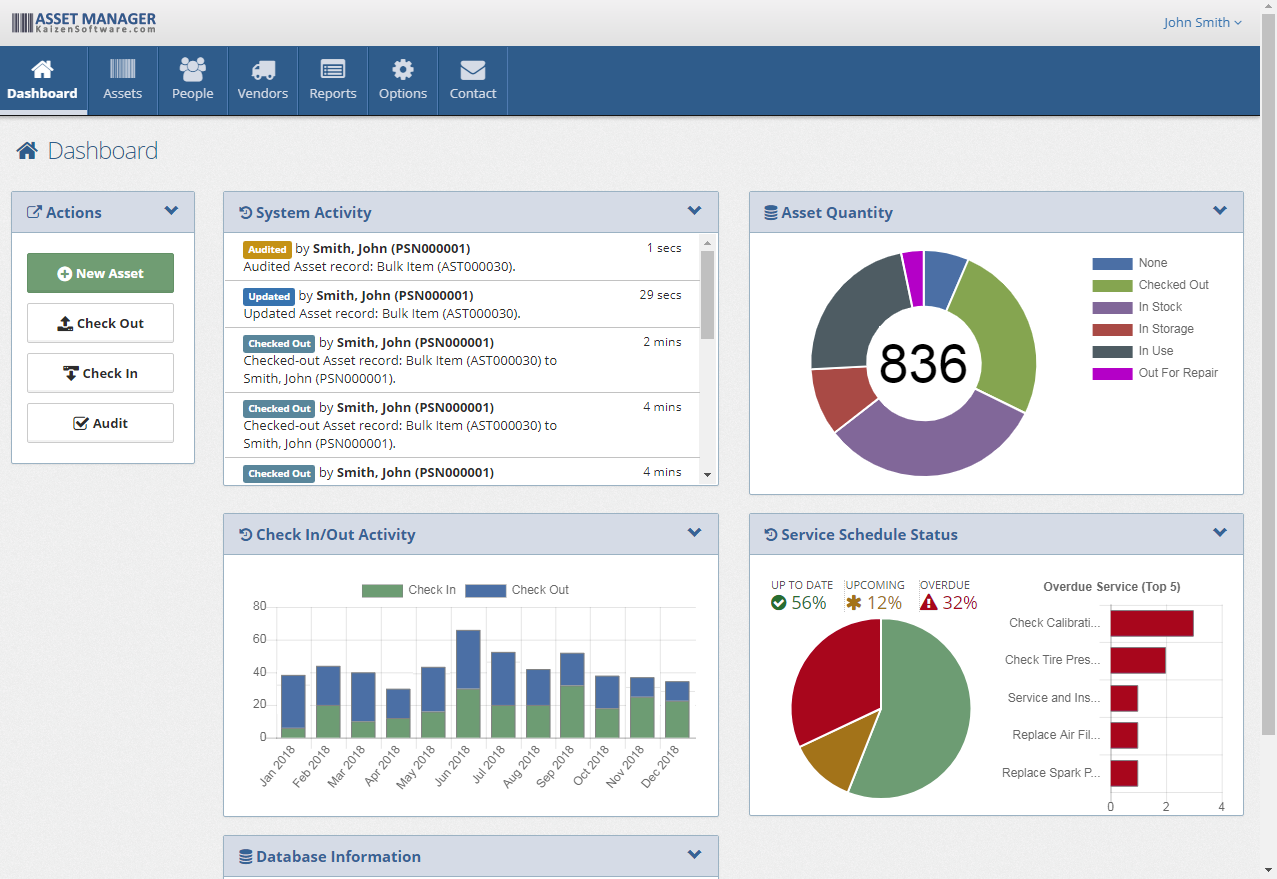
While the core principles of asset management remain consistent, specialized software categories have emerged to address the unique needs of different types of assets and organizational functions.
IT Asset Management (ITAM)
ITAM software focuses specifically on managing an organization’s information technology assets. This includes hardware (servers, laptops, desktops, network devices, mobile devices), software licenses, cloud resources, and virtual machines. ITAM helps organizations optimize their IT spending, mitigate security risks, and ensure compliance with software licensing agreements. A key sub-category is Software Asset Management (SAM), which tracks software installations, usage, and licenses to prevent overspending on unused licenses and avoid penalties for under-licensing. Hardware Asset Management (HAM) focuses on the physical tracking and lifecycle of hardware.
Enterprise Asset Management (EAM)
EAM software offers a broader scope, managing the physical assets of an enterprise, often those crucial to operations like heavy machinery, vehicles, infrastructure (buildings, utilities), and specialized equipment across various industries (manufacturing, utilities, transportation, healthcare). EAM extends beyond mere tracking to include robust maintenance management capabilities (preventive, predictive, reactive), supply chain management for parts, and integration with financial systems. Computerized Maintenance Management Systems (CMMS) are often considered a core component or a closely related precursor to EAM, focusing specifically on maintenance activities.
Fixed Asset Management (FAM)
FAM software primarily focuses on the financial and accounting aspects of fixed assets. It helps organizations track the value of long-term tangible assets (e.g., land, buildings, equipment) for financial reporting, depreciation calculation, tax purposes, and compliance with accounting standards (e.g., GAAP, IFRS). While it includes tracking physical location and status, its main utility lies in automating financial calculations, managing asset depreciation schedules, and providing accurate data for financial audits.
Digital Asset Management (DAM)
DAM software specializes in organizing, storing, and retrieving digital assets such as images, videos, audio files, documents, and other rich media content. It is crucial for marketing, creative, and media-intensive organizations. DAM systems include features for metadata tagging, version control, access management, and distribution of digital content, ensuring brand consistency and efficient content workflows.
The Technological Benefits of Implementing AMS
Implementing asset management software offers a multitude of technological advantages that translate directly into operational and strategic benefits for businesses.
Enhanced Data Accuracy and Visibility
AMS provides a centralized, single source of truth for all asset-related data. This eliminates data inconsistencies that arise from disparate spreadsheets or manual records, ensuring high data accuracy. Real-time dashboards and reporting offer unprecedented visibility into asset locations, status, performance, and financial metrics, allowing for immediate insights and informed decision-making.
Automation and Efficiency
A significant benefit of AMS is the automation of routine and complex tasks. From automatically generating work orders based on predefined schedules or sensor data, to updating asset records upon transfer or disposal, AMS streamlines numerous workflows. This reduces manual effort, minimizes human error, and frees up personnel to focus on more strategic initiatives, leading to substantial gains in operational efficiency.
Optimized Resource Utilization
By providing granular data on asset usage and performance, AMS helps organizations optimize their resource allocation. It identifies underutilized assets that can be repurposed or divested, and highlights assets nearing capacity that may require upgrades or additional investment. This data-driven approach ensures assets are deployed where they can deliver the most value, preventing unnecessary purchases and maximizing the lifespan of existing resources.
Improved Decision-Making
With comprehensive, real-time data and powerful analytics, AMS empowers stakeholders to make more intelligent and data-driven decisions. Whether it’s deciding when to repair or replace an asset, optimizing maintenance schedules, planning future acquisitions, or managing budget allocations, the insights provided by AMS are invaluable for strategic planning and operational excellence.
Cost Savings and Risk Mitigation
Technologically, AMS contributes significantly to cost savings by facilitating proactive maintenance, which reduces costly emergency repairs and extends asset lifespans. It also optimizes inventory for spare parts, reduces downtime, and helps manage software licenses to avoid overspending and non-compliance fines. Furthermore, by providing audit trails and enforcing regulatory compliance, AMS mitigates legal and financial risks associated with asset mismanagement. Its capabilities in tracking asset security configurations for IT assets also bolster an organization’s overall cybersecurity posture.
Scalability and Future-Proofing
Modern AMS solutions are typically built with scalability in mind, able to manage growing asset inventories and evolving business needs. Many leverage cloud-based architectures, offering flexibility and accessibility. Furthermore, the ability of AMS to integrate with emerging technologies like the Internet of Things (IoT) for real-time data collection, artificial intelligence (AI) for predictive analytics, and blockchain for secure asset tracking, positions organizations to adapt to future technological advancements and maintain a competitive edge.

Key Considerations When Choosing AMS
Selecting the right asset management software requires careful evaluation of an organization’s specific needs, existing infrastructure, and long-term goals. Key considerations include the software’s scalability and flexibility to adapt to future growth, its deployment model (cloud-based vs. on-premise), and its ability to integrate seamlessly with existing enterprise systems like ERP, CRM, and financial software. The user interface and ease of use are crucial for adoption rates, while the vendor’s reputation, support, and security features are paramount. Finally, evaluating the software’s customization options ensures it can be tailored to unique operational requirements, making it a powerful tool for optimizing asset performance and driving business success.
aViewFromTheCave is a participant in the Amazon Services LLC Associates Program, an affiliate advertising program designed to provide a means for sites to earn advertising fees by advertising and linking to Amazon.com. Amazon, the Amazon logo, AmazonSupply, and the AmazonSupply logo are trademarks of Amazon.com, Inc. or its affiliates. As an Amazon Associate we earn affiliate commissions from qualifying purchases.