
In the realm of effective communication, particularly within the technical and digital landscape, the concept of “assertion” plays a pivotal role. While often associated with formal writing, assertion, when applied to the context of technology, refers to the clear, confident, and well-supported declaration of a point, feature, capability, or claim. This isn’t merely stating a fact; it’s presenting information in a way that aims to convince, inform, and establish credibility, especially when discussing the intricacies of software, AI, or digital solutions. Understanding assertion in technical writing is crucial for developers, marketers, product managers, and anyone involved in communicating the value and functionality of technology. It forms the bedrock of persuasive product descriptions, impactful technical documentation, and compelling marketing collateral.
The Cornerstone of Technical Claims: Defining Assertion in a Tech Context
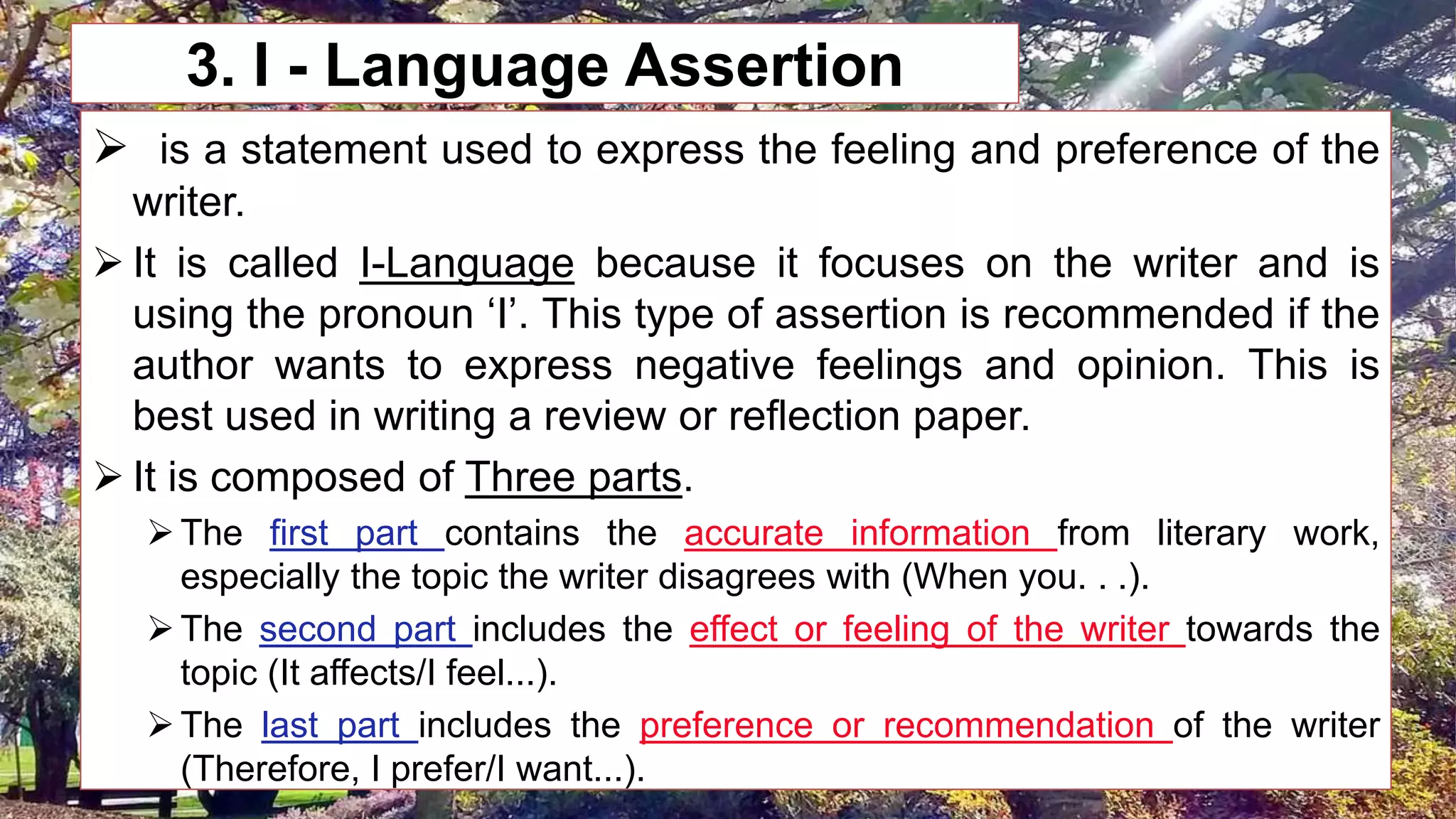
At its core, assertion in technical writing is the act of stating a claim or belief with confidence and authority. This confidence, however, is not gratuitous; it must be underpinned by evidence, logic, and a deep understanding of the subject matter. In the fast-paced world of technology, where innovation is constant and competition is fierce, the ability to make strong, verifiable assertions is paramount. Whether it’s highlighting the superior performance of a new algorithm, the robust security features of a software application, or the transformative potential of an AI tool, the assertion serves as the initial hook, drawing the reader in and signaling that valuable information is about to be presented.
Distinguishing Assertion from Simple Statements
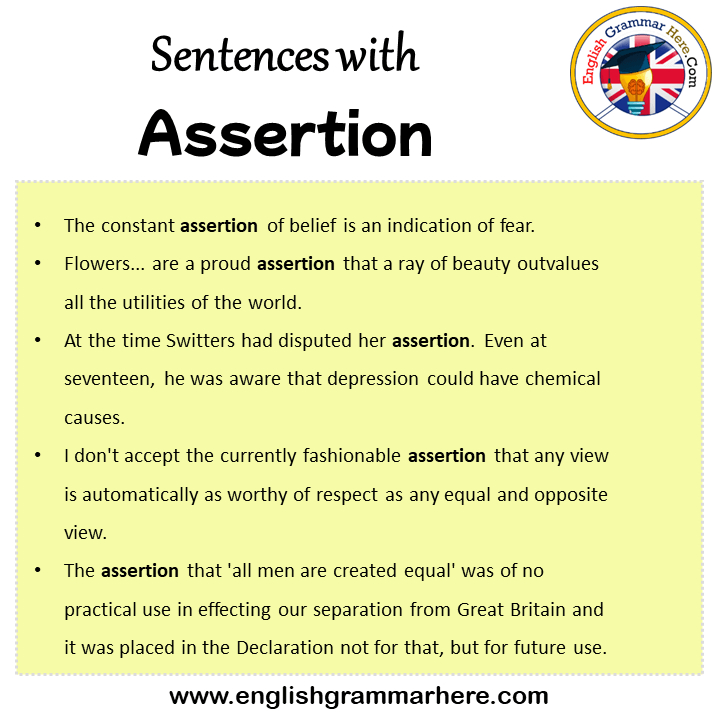
It’s important to differentiate a true assertion from a mere statement of fact. A simple statement like “Our software runs on Windows” is factual but lacks the persuasive weight of an assertion. An assertion would elevate this to something like: “Our software guarantees seamless integration with all major Windows versions, ensuring uninterrupted workflow for enterprise users.” This assertion goes beyond a basic fact; it implies a benefit (seamless integration, uninterrupted workflow) and targets a specific audience (enterprise users), adding a layer of persuasive intent. The confidence in the statement is derived from the underlying engineering, testing, and understanding of user needs.
The Role of Evidence and Validation
Crucially, assertions in technical writing are not made in a vacuum. They are intrinsically linked to evidence and validation. A powerful assertion is one that can be readily supported by data, benchmarks, user testimonials, case studies, or demonstrable performance metrics. For instance, claiming “Our AI model achieves 99.9% accuracy in image recognition” is a strong assertion, but its effectiveness is amplified if it’s accompanied by details about the dataset used for training, the validation methodology, and perhaps a comparison with industry standards. Without this supporting evidence, an assertion can come across as unsubstantiated hype, eroding trust rather than building it.
Communicating Value Through Confident Declarations
In the competitive technology market, developers and companies often need to assert the unique value proposition of their products and services. This involves making confident declarations about what makes their offering superior or more effective than alternatives. For example, a cybersecurity firm might assert: “Our proprietary encryption protocol offers unparalleled protection against advanced persistent threats.” This assertion aims to convince potential clients of the product’s exceptional security capabilities, prompting them to investigate further. The language used – “unparalleled protection,” “advanced persistent threats” – conveys a sense of authority and urgency, designed to resonate with decision-makers concerned about digital security.
Crafting Assertions for Impact: Principles and Best Practices
The effectiveness of an assertion is not solely determined by its content but also by how it is crafted and presented. In technical writing, where clarity, precision, and credibility are paramount, specific principles guide the creation of impactful assertions. These principles ensure that assertions are not only convincing but also ethically sound and contribute to a clear understanding of technological offerings.
Clarity and Specificity: The Foundation of Trust
Ambiguity is the enemy of effective technical communication. Assertions must be clear, concise, and free from jargon that might alienate a significant portion of the intended audience. Specificity is equally important. Instead of a vague assertion like “Our app is fast,” a more effective assertion would be: “Our app launches in under two seconds on average, significantly reducing user wait times compared to industry benchmarks.” This specificity provides a tangible metric that the reader can understand and evaluate, building trust in the claim being made. Vague assertions, conversely, can suggest a lack of concrete performance or a deliberate attempt to obscure details.
Supporting Assertions with Data and Proof Points
As previously mentioned, evidence is the backbone of any strong assertion. In technical writing, this often translates to:
- Benchmark Data: Presenting performance metrics from standardized tests or comparisons against competitors. For example, “Our cloud service boasts a 20% lower latency than leading competitors, as demonstrated by our recent network performance analysis.”
- Scientific or Technical Studies: Referencing research, algorithms, or methodologies that support a claim. “The predictive accuracy of our forecasting algorithm is derived from advanced deep learning models, validated through extensive testing on historical datasets.”
- User Testimonials and Case Studies: Real-world experiences can be powerful proofs. “Enterprise clients using our project management software have reported an average productivity increase of 15% within the first quarter.”
- Demonstrable Features: Highlighting specific functionalities that directly support an assertion. “The system’s automated fault detection, enabled by our real-time monitoring engine, ensures continuous uptime for critical operations.”
Avoiding Over-Assertion and Hyperbole
While confidence is key, it’s crucial to avoid over-assertion, which can manifest as hyperbole or exaggerated claims. Assertions should remain grounded in reality and be demonstrably true. Claims like “the most revolutionary AI ever created” or “guaranteed to solve all your problems” are not only difficult to substantiate but also undermine credibility. Responsible technical writers focus on factual advantages and measurable benefits rather than sensationalism. Over-assertion can lead to skepticism and damage the reputation of the product and the company.
Tailoring Assertions to the Audience

The audience for technical writing can vary widely, from highly specialized engineers to business decision-makers. Assertions should be tailored to the knowledge level and interests of the intended audience. For an engineering team, an assertion might delve into technical specifications and algorithmic details. For a marketing team or potential investor, the assertion might focus on business outcomes, competitive advantages, and return on investment. For example, an assertion about a new data processing technology might be presented to engineers as “Our new streaming architecture supports petabytes of data with sub-millisecond processing latency,” while to business leaders it might be presented as “Our data analytics platform enables real-time insights, driving faster and more informed business decisions.”
The Strategic Application of Assertions in Tech Communication
Assertions are not just isolated statements; they are strategic tools used across various forms of technical communication to achieve specific objectives. Their effective deployment can significantly influence perception, drive adoption, and establish market leadership.
Marketing and Sales Collateral: The Persuasive Power of Claims
In marketing materials, product descriptions, website copy, and sales pitches, assertions are used to highlight the benefits and unique selling propositions of a technology product or service. A well-crafted assertion can capture attention, pique interest, and motivate a potential customer to learn more. For instance, an assertion on a software-as-a-service (SaaS) platform’s homepage might read: “Empower your team with our intuitive collaborative tools, designed to streamline project workflows and boost productivity by up to 30%.” This assertion combines a benefit (empowerment, streamlined workflows, boosted productivity) with a quantifiable outcome, making it highly persuasive.
Technical Documentation: Ensuring Clarity and Reliability
Within technical documentation, such as user manuals, API references, and developer guides, assertions are used to explain the functionality, capabilities, and limitations of a system or software. These assertions must be accurate, unambiguous, and verifiable. For example, a statement within an API documentation might assert: “The getUserProfile endpoint securely retrieves user data, adhering to industry-standard OAuth 2.0 authentication protocols.” This assertion informs developers about the endpoint’s purpose, its security features, and the underlying standards, ensuring they can integrate with the API confidently and correctly.
Product Development and Roadmapping: Defining Vision and Goals
During the product development lifecycle, assertions often inform the vision and roadmap. Product managers and engineers make assertions about what the product will achieve, what problems it will solve, and what unique value it will offer. These assertions guide development priorities and feature prioritization. For instance, a product team might assert: “Our next-generation platform will leverage generative AI to automate content creation, reducing manual effort by over 50%.” This assertion sets a clear goal and direction for the engineering team, driving innovation and resource allocation towards achieving that specific outcome.
Competitive Analysis and Market Positioning: Establishing Superiority
In competitive analysis, assertions are used to articulate a company’s strengths and differentiate its offerings from those of competitors. By making strong, evidence-based assertions about their product’s performance, features, or cost-effectiveness, companies can position themselves favorably in the market. For example, a white paper comparing different cloud infrastructure providers might assert: “Our serverless computing offering provides superior cost efficiency for event-driven workloads, delivering up to 40% savings compared to traditional virtual machine instances.” This assertion directly addresses a key concern for businesses (cost) and positions their offering as a more advantageous choice.
The Ethical Dimension of Assertion in Technical Writing
While the goal of assertion is to persuade and inform, there’s an inherent ethical dimension that technical writers must always consider. The pursuit of compelling assertions should never come at the expense of honesty, transparency, or user well-being.
The Importance of Truthfulness and Accuracy
The most fundamental ethical principle governing assertion in technical writing is truthfulness. All claims made must be accurate and verifiable. Misrepresenting the capabilities of a technology, exaggerating its performance, or omitting critical limitations can have severe consequences, ranging from customer dissatisfaction and product returns to legal repercussions and irreparable damage to a brand’s reputation. For instance, asserting that a piece of software is “virus-free” when it contains even minor vulnerabilities is ethically problematic and potentially harmful.
Transparency About Limitations and Risks
Effective technical communication also involves being transparent about a technology’s limitations and potential risks. While asserting its strengths, it’s equally important to acknowledge what it cannot do or where potential challenges might arise. For example, if an AI system is prone to bias under certain conditions, this limitation should be clearly stated. An assertion might be: “While our facial recognition system achieves high accuracy in controlled lighting conditions, performance may degrade in low-light environments.” This transparency builds trust and allows users to make informed decisions about how to best utilize the technology.
Avoiding Deceptive Language and “Dark Patterns”
Deceptive language, often referred to as “dark patterns” in user interface design, is antithetical to ethical assertion. This includes using misleading phrasing to trick users into making unintended choices, such as subscribing to services without clear consent or making it difficult to cancel subscriptions. Ethical assertions are clear, straightforward, and empower users with accurate information, rather than manipulating them. For instance, instead of an assertion designed to obscure cancellation options, ethical practice would involve a clear statement about the terms of service and easy access to cancellation procedures.
The Role of Assertions in Building Long-Term Credibility
Ultimately, the consistent practice of making honest, evidence-based, and transparent assertions is what builds long-term credibility for individuals, teams, and companies within the technology sector. When an audience knows that your assertions are reliable, they are more likely to engage with your content, trust your products, and become loyal customers. Conversely, a history of unsubstantiated or misleading claims can quickly dismantle even the most promising technological innovation. Therefore, the ethical dimension of assertion is not just a matter of compliance but a strategic imperative for sustained success in the tech landscape.
aViewFromTheCave is a participant in the Amazon Services LLC Associates Program, an affiliate advertising program designed to provide a means for sites to earn advertising fees by advertising and linking to Amazon.com. Amazon, the Amazon logo, AmazonSupply, and the AmazonSupply logo are trademarks of Amazon.com, Inc. or its affiliates. As an Amazon Associate we earn affiliate commissions from qualifying purchases.