
In the modern era of technology, where high-level programming languages like Python, JavaScript, and Swift dominate the landscape, the inner workings of a computer often feel like magic. We write a few lines of code, click a button, and complex applications come to life. However, beneath these layers of abstraction lies a fundamental language that communicates directly with the hardware: Assembly Language. Often referred to as “low-level” programming, Assembly is the bridge between the logical intentions of a human programmer and the physical execution of a microprocessor.
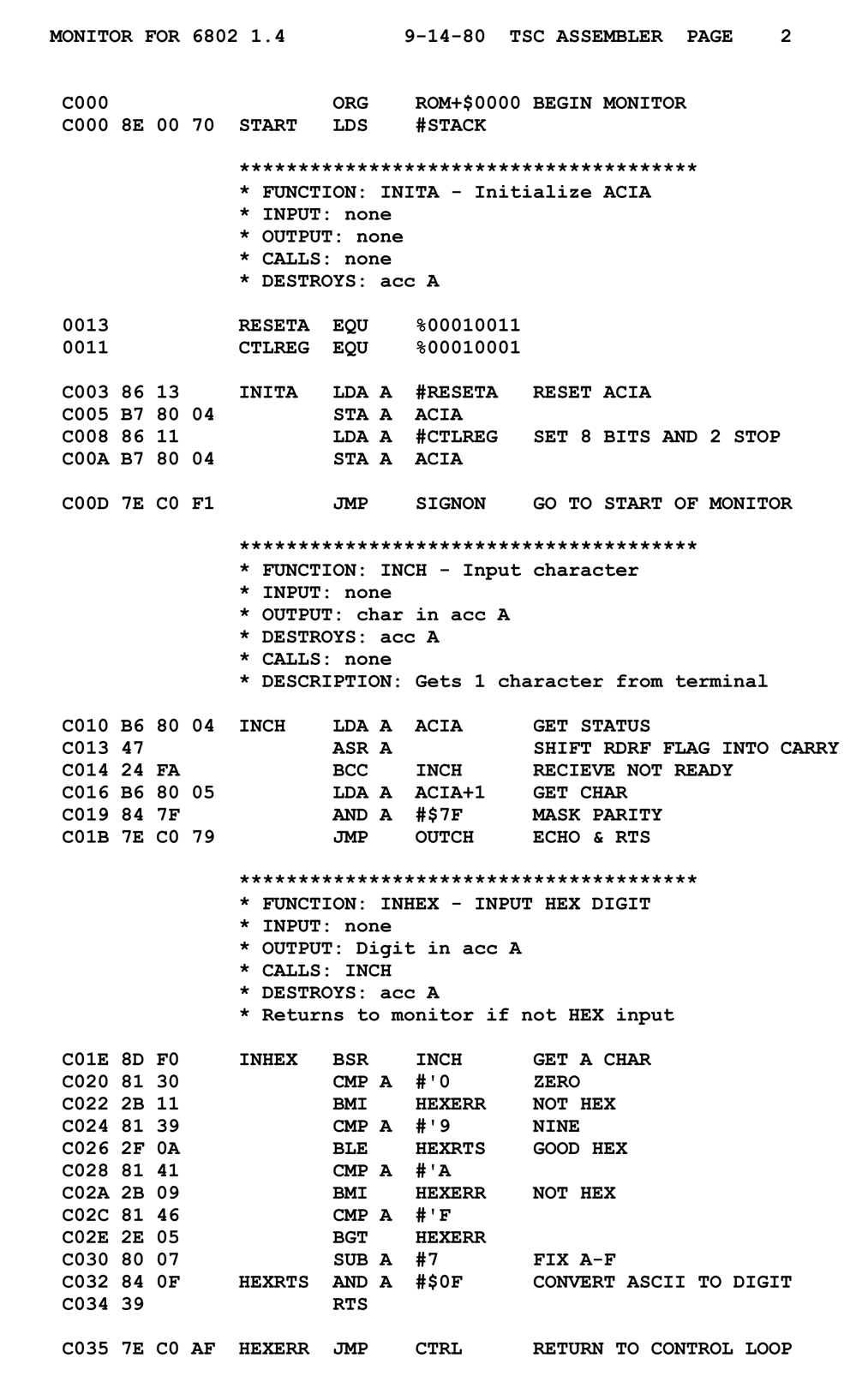
Understanding Assembly Language is essential for anyone looking to master the technical nuances of software engineering, cybersecurity, and hardware optimization. It is not merely a relic of the past; it is the definitive language of performance and control.
1. The Architecture of Language: Defining Assembly in the Tech Hierarchy
To understand what Assembly Language is, one must first understand the hierarchy of computer languages. At the very bottom is Machine Code—a stream of binary digits (0s and 1s) that the Central Processing Unit (CPU) executes directly. Machine code is impossible for humans to read or write efficiently. Assembly Language was created as a human-readable representation of this machine code.
The Bridge Between Human Logic and Machine Code
Assembly Language acts as a direct map to a processor’s instruction set. Every command in Assembly corresponds to a specific operation performed by the CPU. While a high-level language might use a single command like print("Hello World"), which involves thousands of underlying instructions, Assembly deals with the movement of data between registers, the addition of specific memory addresses, and the management of the stack. It provides the programmer with a granular level of control that no other language can offer.
Mnemonics and Operands: The Syntax of the Machine
The syntax of Assembly is built on “mnemonics.” Instead of writing binary strings, programmers use short, descriptive abbreviations. Common examples include MOV (move data), ADD (addition), SUB (subtraction), and JMP (jump to a different section of code). These mnemonics are followed by “operands,” which specify the data or the locations (registers or memory addresses) to be acted upon. For example, MOV AX, 10 is an instruction to move the value 10 into the ‘AX’ register.
Architecture Specificity: x86 vs. ARM
One of the most defining characteristics of Assembly is that it is not universal. Unlike Java, which can run on any device with a Virtual Machine, Assembly is tied to a specific processor architecture. Assembly written for an Intel x86 processor (found in most PCs) will not run on an ARM processor (found in iPhones and M-series Macs). Each architecture has its own Instruction Set Architecture (ISA), meaning an Assembly programmer must deeply understand the specific hardware they are targeting.
2. How Assembly Language Works: The Role of the Assembler and Registers
While Assembly is more readable than binary, the computer still cannot execute it directly. This necessitates a translation process that is distinct from the “compilation” seen in higher-level languages.
The Translation Process
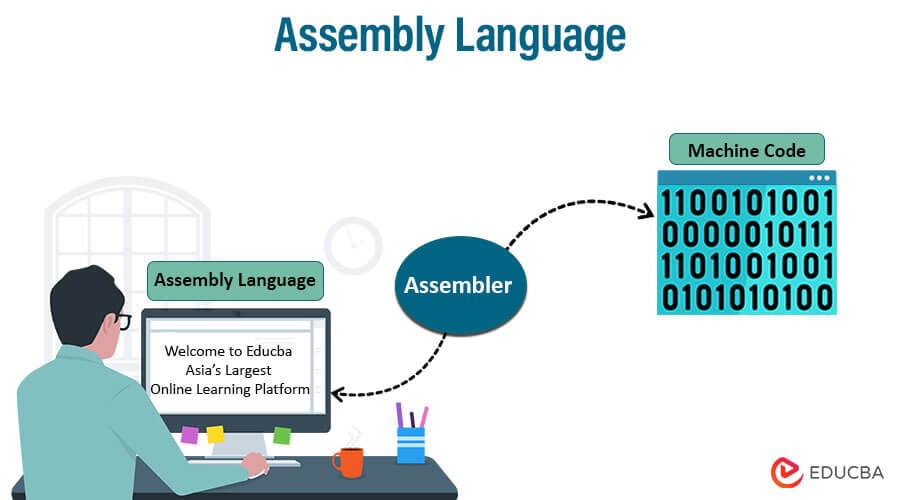
The tool used to convert Assembly code into Machine Code is called an Assembler. Unlike a compiler for C++, which might perform complex optimizations and transform logic into various structures, an Assembler has a much simpler task. It performs a nearly one-to-one translation. Each line of Assembly code is converted into its corresponding binary opcode. This ensures that the programmer has total transparency regarding what the hardware is doing at any given microsecond.
Registers and Memory Management
In high-level languages, memory management is often automated through garbage collection or scope rules. In Assembly, the programmer is the manager. The CPU uses “Registers”—extremely fast, small storage locations built directly into the processor—to hold data that is being actively processed. Learning Assembly involves mastering how to move data from the RAM (Random Access Memory) into these registers, performing calculations, and moving the result back. This “manual” management is what makes Assembly-coded programs incredibly fast and memory-efficient.
One-to-One Mapping vs. High-Level Abstraction
In Python, the line x = y + z hides a great deal of complexity involving type checking, memory allocation, and overflow handling. In Assembly, that same operation requires explicit instructions: load y into a register, add z to that register, and then store the register’s value into the memory location for x. This lack of abstraction is a double-edged sword: it requires more lines of code and more effort, but it eliminates the overhead that slows down modern software.
3. Why Learn Assembly in the Age of AI and Modern Tools?
With the rise of Artificial Intelligence and powerful compilers, one might wonder if Assembly is still relevant. The truth is that the most critical components of our digital world still rely on it.
Unparalleled Performance and Optimization
When performance is the primary constraint, Assembly is king. In industries like high-frequency trading, AAA gaming engines, and video encoding, even a few wasted CPU cycles can result in significant financial loss or poor user experience. Developers use Assembly to write “hot paths”—sections of code that run millions of times per second—to ensure they are as lean and fast as physically possible.
Embedded Systems and Hardware Interaction
The “Internet of Things” (IoT) runs on Assembly. Small microcontrollers found in medical devices, automotive engine control units, and thermostats often have extremely limited memory (sometimes only a few kilobytes). High-level languages are often too “heavy” for these environments. Assembly allows developers to squeeze every bit of functionality out of limited hardware, ensuring that a pacemaker or an anti-lock braking system operates with 100% reliability and zero latency.
Cybersecurity and Reverse Engineering
For tech professionals in the digital security space, Assembly is a mandatory skill. Most malware is not distributed as source code; it arrives as a compiled binary. To understand what a virus does, security researchers must “disassemble” the binary back into Assembly Language. By reading the Assembly, they can trace exactly how the malware steals data or bypasses security protocols. Similarly, finding “buffer overflow” vulnerabilities—the root of many hacks—requires an understanding of how the stack and registers operate at the low level.
4. Assembly vs. High-Level Languages: A Technical Comparison
To truly appreciate Assembly, it is helpful to contrast it with the languages most developers use today. This comparison highlights why different tools are used for different jobs in the tech ecosystem.
Code Readability and Development Speed
High-level languages are designed for humans. They use English-like syntax and provide massive libraries that allow for rapid prototyping. A task that takes ten lines of Python might take five hundred lines of Assembly. Consequently, Assembly is rarely used to build entire applications. Instead, it is used strategically. In modern tech, the “90/10 rule” often applies: 90% of the app is written in a high-level language for speed of development, while the critical 10% is written in Assembly or C for speed of execution.
Portability Across Different Platforms
As mentioned, Assembly is platform-dependent. If you write an application in Assembly for a Windows PC, porting it to a PlayStation or an Android phone requires a complete rewrite of the core logic. In contrast, languages like Java or C# are designed to be “write once, run anywhere.” This portability is why high-level languages are preferred for general consumer software, while Assembly is reserved for system-specific tasks.
Resource Consumption and Efficiency
Modern software is often criticized for being “bloated”—using gigabytes of RAM for simple tasks. This is because high-level languages prioritize developer convenience over machine efficiency. Assembly is the antidote to bloat. Because it lacks the “runtime” environments and heavy abstractions of modern frameworks, Assembly programs are incredibly small and use the absolute minimum amount of energy and memory.
5. The Future of Assembly: Evolution and the Rise of WebAssembly
Assembly is not a static field; it is evolving alongside modern web and AI trends. The most exciting development in recent years is the emergence of WebAssembly (Wasm).
The Rise of WebAssembly (Wasm)
WebAssembly is a new type of code that can be run in modern web browsers. It is a low-level, assembly-like language with a compact binary format that runs with near-native performance. This allows developers to take heavy applications—like AutoCAD, Google Earth, or high-end games—and run them directly in a browser at speeds that were previously impossible with JavaScript alone. It represents the “Assembly spirit” brought to the world of web development.
Specialized AI Hardware and Legacy Systems
As we move into the era of specialized AI chips (like Google’s TPUs or NVIDIA’s latest GPUs), new forms of Assembly are being developed to talk to these specific processors. Furthermore, the world’s financial and governmental infrastructure still relies on legacy systems running code written decades ago. Maintaining and securing these systems requires a steady supply of engineers who understand the low-level mechanics of the machine.

Conclusion
Assembly Language is the “source of truth” in computing. While it may be challenging to learn and time-consuming to write, it provides an intimacy with the hardware that no other language can replicate. In a tech world increasingly defined by layers of abstraction and AI-generated code, the ability to understand and manipulate the machine at its most fundamental level remains one of the most valuable skills a technologist can possess. Whether it is for optimizing a high-performance engine, securing a network against advanced threats, or pushing the boundaries of what the web can do, Assembly Language remains the foundation upon which the entire digital world is built.
aViewFromTheCave is a participant in the Amazon Services LLC Associates Program, an affiliate advertising program designed to provide a means for sites to earn advertising fees by advertising and linking to Amazon.com. Amazon, the Amazon logo, AmazonSupply, and the AmazonSupply logo are trademarks of Amazon.com, Inc. or its affiliates. As an Amazon Associate we earn affiliate commissions from qualifying purchases.