
In the contemporary landscape of visual communication, brands are increasingly moving beyond the two-dimensional constraints of digital screens and printed graphics. As markets become saturated with homogenized visual content, the sensory and tactile nature of “art textiles” has emerged as a powerful tool for brand differentiation. Art textiles—a discipline that bridges the gap between traditional craft, fine art, and commercial design—represent a sophisticated medium through which organizations can communicate heritage, innovation, and luxury.
To understand what art textiles are within a branding context, one must look past the utility of fabric. While traditional textiles serve a functional purpose, art textiles focus on the expressive potential of fiber, structure, and surface manipulation. For a brand, this means moving from “product” to “experience.” It is the difference between a mass-produced uniform and a hand-woven tapestry that hangs in a corporate headquarters, telling the story of the company’s evolution through thread and texture.
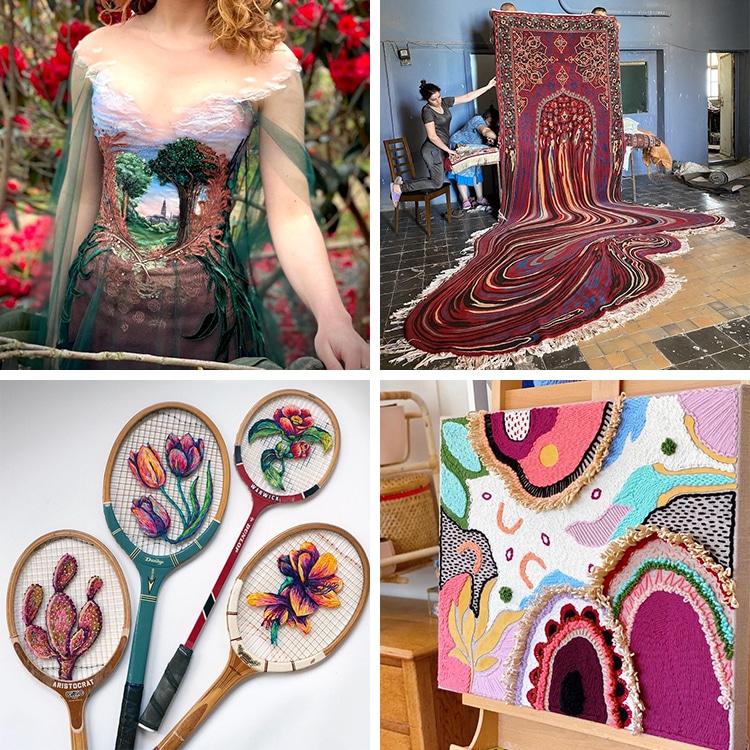
Defining Art Textiles in the Modern Branding Landscape
At its core, art textiles involve the use of plant, animal, or synthetic fibers to create objects that are intended to be appreciated for their aesthetic and conceptual value. In the world of brand strategy, art textiles serve as a physical manifestation of a brand’s values. Unlike a digital logo, which is reproducible and infinitely scalable, art textiles possess a “singular” quality. They carry the weight of human labor, time, and intentionality.
From Craft to Corporate Identity
The transition of textiles from domestic craft to corporate identity reflects a broader shift in consumer psychology. Modern consumers are increasingly wary of “faceless” corporations. In response, brands are utilizing the inherent warmth and humanity of textiles to soften their image. When a luxury hotel chain commissions a series of bespoke fiber installations, they are not merely decorating a lobby; they are signaling a commitment to craftsmanship and local culture. This strategic use of art textiles allows a brand to inhabit a physical space with more authority and nuance than a standard vinyl wall wrap ever could.
The Intersection of Texture and Narrative
Every thread in an art textile piece can be seen as a data point in a brand’s narrative. The choice of material—whether it is raw silk, recycled industrial polyester, or hand-spun wool—communicates a specific message. A brand focusing on sustainability might utilize art textiles made from ocean-bound plastics or regenerative hemp. Here, the “art” lies in the transformation of raw material into a conceptual statement. By integrating these pieces into their physical environments or limited-edition product lines, brands create a “tactile language” that speaks to the audience’s subconscious.
The Strategic Value of Art Textiles for Premium Brands
For premium and luxury brands, the primary challenge is maintaining an aura of exclusivity and “the extraordinary.” Art textiles provide a unique solution to this challenge because they are inherently difficult to replicate. The irregularities in a hand-dyed weave or the intricate complexity of a multi-layered felted sculpture provide a visual richness that signals high value.
Authenticity and the “Handmade” Appeal
In an era of AI-generated imagery and automated manufacturing, the “handmade” has become a new currency of luxury. Art textiles are perhaps the most direct way to showcase this authenticity. When a brand integrates textile art into its visual strategy, it aligns itself with the “Slow Movement”—a commitment to quality over quantity and process over speed. This positioning is invaluable for brands in the fashion, interior design, and artisanal goods sectors. It tells the consumer that the brand values the time it takes to create something meaningful, which in turn justifies a premium price point.
Sustainable Branding and Material Innovation
Sustainability is no longer a peripheral concern for brands; it is a core component of brand equity. Art textiles are at the forefront of material innovation, often serving as a testing ground for sustainable practices. Brands that collaborate with textile artists often find themselves exploring bio-fibers, natural dyes, and zero-waste construction techniques. These explorations can then be translated into larger brand stories. An art textile installation created from a company’s own manufacturing waste, for example, serves as a powerful visual proof point for a brand’s circular economy initiatives.

Case Studies: Textiles as the Voice of the Brand
The most successful applications of art textiles in branding are those where the medium is inseparable from the message. Across various industries, we see textiles being used not just as accents, but as the primary narrators of a brand’s legacy and future.
Luxury Fashion and Heritage Craft
High-fashion houses like Hermès and Loewe have long understood that their brand power resides in the “intelligence of the hand.” These brands do not just sell products; they sell the mastery of textiles. By commissioning textile artists to create window displays or runway backdrops, they reinforce their position as patrons of craft. These art textiles serve as a halo for the commercial products. When a customer sees a complex, hand-tufted tapestry in a flagship store, the perceived value of the machine-stitched bag nearby is elevated by association. The textile art validates the brand’s claim to artisanal excellence.
Hospitality and Immersive Environments
In the hospitality sector, brand identity is defined by the “guest experience.” Art textiles are uniquely suited to creating environments that feel curated and residential rather than clinical and commercial. Boutique hotel brands often use large-scale fiber art to anchor their interior design schemes. These pieces absorb sound, soften the hard angles of modern architecture, and provide a sense of place. For instance, a hotel in the American Southwest might use woven art textiles that incorporate local wool and indigenous patterns, thereby grounding the brand in its geographic location and offering guests a sense of cultural immersion that a standard corporate branding package could not provide.
Implementing Art Textiles into Your Visual Strategy
Incorporating art textiles into a brand strategy requires a departure from traditional graphic design workflows. It involves a shift from thinking about “assets” to thinking about “artifacts.”
Collaborations with Fiber Artists
The most effective way for a brand to leverage art textiles is through direct collaboration with artists. This is not a simple work-for-hire arrangement; it is a creative partnership. Brands must be willing to give artists the freedom to interpret the brand’s core values through their specific medium. These collaborations can result in one-off installations, limited-edition product packaging, or even “textile-first” branding kits where the textures of the fabric inform the brand’s digital and print aesthetic. The key is to ensure that the artist’s work feels like a natural extension of the brand, rather than a forced addition.
Scaling Tactile Experiences for Digital Platforms
A common concern for brand managers is how to translate the physical, tactile nature of art textiles into the digital realm. The solution lies in high-fidelity documentation and “macro” visual storytelling. By using macro photography and high-definition video to capture the details of the fibers, the tension of the weave, and the play of light over textured surfaces, brands can convey the “feeling” of the textile to a global audience. This creates a “digital haptic” experience, where the viewer can almost feel the texture through the screen. This approach adds a layer of depth to Instagram feeds and websites that are typically dominated by flat, vector-based graphics.

The Future of Branded Materiality
As we move further into the digital age, the “hunger for the real” will only intensify. Art textiles represent a bridge between our physical heritage and our digital future. We are already seeing the emergence of “smart textiles” and 3D-knitted structures that combine the ancient logic of weaving with the precision of modern software. For brands, this represents an exciting frontier where technology and craft converge.
The brands of the future will not just be seen or heard; they will be felt. By embracing art textiles, a brand can build a multi-sensory identity that resonates on a deeply human level. Whether it is through a monumental fiber installation in a corporate atrium or a subtle, hand-woven detail on a product’s packaging, art textiles offer a way to anchor a brand in the physical world. In a marketplace where attention is the most scarce resource, the quiet, commanding presence of a beautifully crafted textile is a brand’s greatest asset. It is an invitation to slow down, to touch, and to connect with the story behind the material.
aViewFromTheCave is a participant in the Amazon Services LLC Associates Program, an affiliate advertising program designed to provide a means for sites to earn advertising fees by advertising and linking to Amazon.com. Amazon, the Amazon logo, AmazonSupply, and the AmazonSupply logo are trademarks of Amazon.com, Inc. or its affiliates. As an Amazon Associate we earn affiliate commissions from qualifying purchases.