
Area code 438 is a key component of the telecommunications infrastructure serving the greater Montréal region in Quebec, Canada. It operates within the North American Numbering Plan (NANP), a system that standardizes telephone numbering across 20 countries, primarily the United States, Canada, and several Caribbean nations. Far from being a mere three-digit identifier, area code 438 represents a critical facet of network management, geographic routing, and the evolution of digital communication technologies in a densely populated urban environment. Its existence, alongside other area codes, underscores the technical challenges and solutions involved in maintaining a robust and scalable communication network in the modern era.

The Role of Area Codes in Modern Telecommunications
Area codes are foundational to how telephone networks route calls and manage numbering resources. Their primary function, historically, was to enable long-distance direct dialing by identifying the geographic region of the dialed number. In an increasingly interconnected world, their role has evolved, but their underlying technical significance remains paramount, particularly in the context of network planning and resource allocation.
Geographic Routing and Numbering Plans
The North American Numbering Plan (NANP) dictates a structured approach to assigning telephone numbers, with the area code serving as the initial component. Each area code maps to a specific geographic territory, allowing the Public Switched Telephone Network (PSTN) to route calls efficiently. When a user dials a phone number, the network’s switches use the area code to determine the correct regional switchboard or central office to forward the call to, before processing the local seven-digit number. This hierarchical structure is fundamental to the scalability and reliability of telecommunications.
However, the proliferation of communication devices – landlines, mobile phones, fax machines, and increasingly, VoIP lines – has placed immense pressure on the finite supply of available telephone numbers. This demand necessitates careful planning by regulatory bodies, such as the Canadian Radio-television and Telecommunications Commission (CRTC) in Canada, to ensure adequate numbering resources without exhausting the pool. Area codes are not merely identifiers; they are crucial components of the logical addresses that facilitate communication across vast and complex networks.
Evolution from PSTN to VoIP and Mobile Networks
While originally designed for the circuit-switched PSTN, area codes have seamlessly integrated into modern Voice over Internet Protocol (VoIP) and mobile cellular networks. For mobile numbers, the area code often signifies the region where the mobile service was initially activated, though mobility means the user might be physically anywhere. In VoIP, area codes allow providers to offer “local” numbers to users regardless of their physical location, effectively creating a virtual presence in a specific region. This flexibility is a testament to the adaptability of the numbering plan, enabling traditional numbering conventions to coexist with IP-based communication technologies.
The transition from purely physical routing to data packet-based communication via the internet has added layers of complexity and opportunity. VoIP systems, for instance, still rely on area codes to interface with the legacy PSTN when calls cross between the two networks. Moreover, software applications and digital platforms often utilize area codes for user registration, location services, and even spam filtering algorithms, demonstrating their continued relevance beyond traditional phone calls into the broader digital ecosystem.
Deconstructing Area Code 438: Location and Overlay
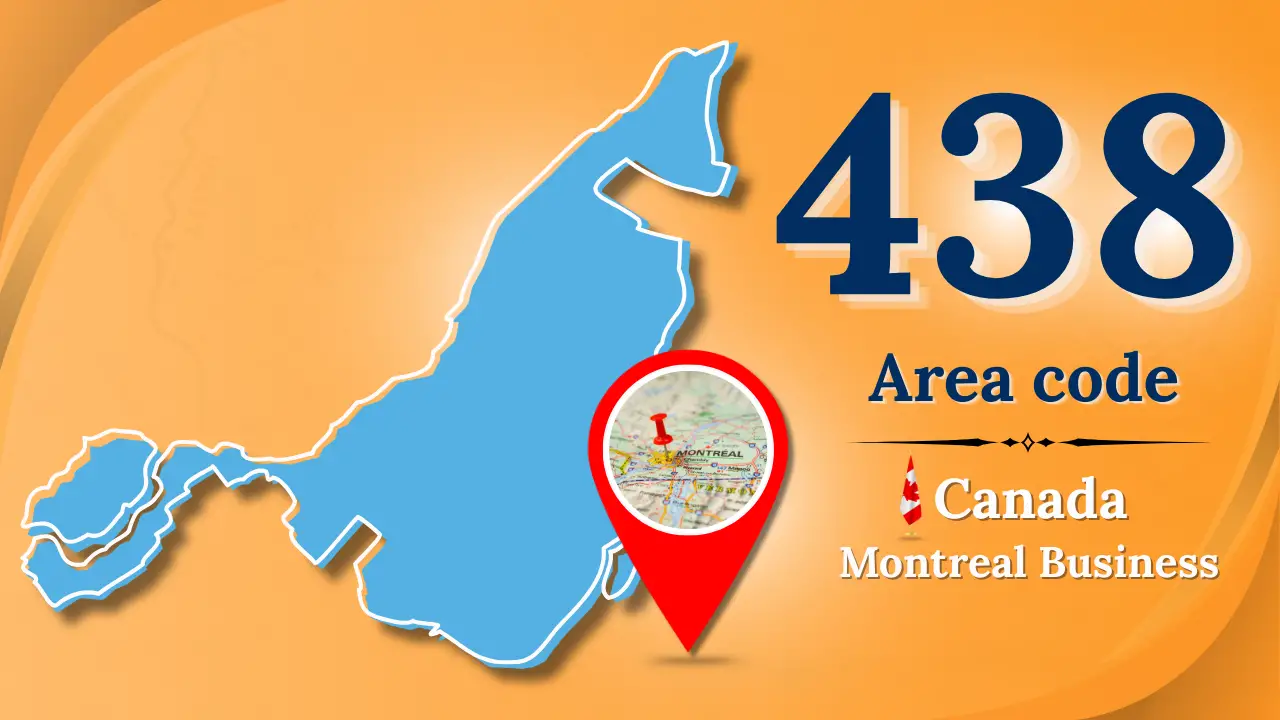
Area code 438 is specifically assigned to the Montréal region of Quebec, Canada. Its implementation is a direct response to the escalating demand for telephone numbers in one of Canada’s most populous and economically vibrant cities. Unlike traditional geographic area codes that might cover a distinct, standalone region, 438 operates as an “overlay” code, a modern solution to number exhaustion.
Geographic Coverage: Montréal and Surrounding Regions
Area code 438 serves the entire island of Montréal, Laval, and surrounding communities in southwestern Quebec. This dense urban and suburban landscape is characterized by a high concentration of residential, commercial, and governmental entities, all requiring diverse communication services. Businesses often seek local numbers to establish a presence, and residents expect a sufficient supply of personal lines. The geographic scope of 438 is identical to that of its predecessor, area code 514, and the concurrently launched 289, indicating a shared service area rather than a distinct new territory. This shared coverage is the defining characteristic of an overlay plan.
The Necessity of Overlay Codes

The introduction of 438 in 2006 was necessitated by the impending exhaustion of numbers under the original 514 area code, which had served Montréal since 1947. Rather than “splitting” the existing 514 territory into two distinct geographic areas (a “split” method, where existing numbers change), an “overlay” plan was implemented. In an overlay, a new area code (438) is introduced into the same geographic region as an existing one (514). This means that new telephone numbers assigned in the Montréal area could receive either the 514 or the 438 area code.
The primary implication of an overlay is the mandatory 10-digit dialing requirement for all local calls within the overlay region, even between two numbers sharing the same local exchange but different area codes (e.g., a 514 number calling another 514 number, or a 514 number calling a 438 number). This ensures that the network has enough information to distinguish between numbers when multiple area codes exist in the same local calling area. From a technical standpoint, overlays allow for maximum utilization of available numbering resources without the disruptive process of reassigning numbers for existing subscribers. They represent a pragmatic and sophisticated approach to numbering plan administration in high-growth areas, leveraging advanced switching and routing logic within telecommunications networks.
Practical Implications for Users and Businesses
For end-users and businesses alike, area code 438, and overlay codes in general, have several practical implications that touch upon connectivity, digital security, and strategic communication. Understanding these nuances is crucial in navigating the contemporary communication landscape.
Local Presence and Connectivity
For businesses, having a local area code like 438 can be strategically important for establishing a local presence in the Montréal market. Even with the prevalence of toll-free numbers and national brands, a local number can signal accessibility and community integration, which can be particularly beneficial for small and medium-sized enterprises (SMEs) targeting local clientele. This also extends to individual users; while mobile numbers often retain the area code of their initial registration, some individuals prefer to maintain a local number for family and community connections. Connectivity in an overlay region means adjusting to 10-digit dialing, which, while initially a change, quickly becomes standard practice, seamlessly integrated into smartphone dialing interfaces and contact lists.
Identifying Call Origins and Digital Security Concerns
Area codes play a role in identifying call origins, which can be useful for various purposes, including digital security. While an area code indicates the general region of a number, caller ID spoofing—a technique used by malicious actors to display a false originating number—can make it challenging to trust caller ID information implicitly. Scammers often use local area codes to trick recipients into answering calls, creating a false sense of familiarity. This highlights the need for users to remain vigilant, employing call filtering apps and being cautious with unsolicited calls, even those appearing to originate from a familiar local area code like 438. From a technical perspective, network operators and security software developers continuously work on improving caller ID authentication protocols to combat spoofing, relying on mechanisms that verify the legitimate origination of a call beyond just the displayed number.
Impact on Mobile Communication and Apps
Modern smartphones and communication applications have largely abstracted away the complexity of area codes for the average user. Dialing a number from a contact list or a website often automatically formats it with the correct country and area code. However, area codes still inform various app functionalities. Location-based services might use area code data to refine regional results, and messaging apps sometimes display an area code if the contact is not in the user’s address book. Furthermore, for users setting up virtual numbers for business or personal use via VoIP apps, the choice of an area code like 438 allows them to secure a local Montréal number without physically being in the city, enabling a global reach with a localized identity. This demonstrates how underlying technical infrastructure, like area codes, continues to empower advanced software functionalities.
The Future of Area Codes in a Connected World
The landscape of telecommunications is continuously evolving, driven by technological advancements and shifting user behaviors. While the traditional role of area codes may seem less prominent in an era dominated by global IP-based communication, their fundamental necessity for network organization and identification persists.
The Rise of Virtual Numbers and Digital Communication Platforms
The growth of VoIP and digital communication platforms has introduced “virtual numbers,” which are not tied to a physical location but can carry any area code. This flexibility allows businesses and individuals to establish a local presence anywhere in the world, unconstrained by geography. For example, a tech startup based in Silicon Valley could acquire a 438 area code number to cater to a client base in Montréal without needing a physical office there. This capability, enabled by sophisticated routing algorithms over the internet, underscores the abstract yet powerful nature of area codes in a digital context. Platforms like Zoom, Microsoft Teams, and various contact center software leverage this virtual numbering capability to offer localized phone services globally, streamlining communication and expanding market reach.
Continued Relevance in a Globalized Digital Landscape
Despite predictions of their obsolescence, area codes, including 438, maintain significant relevance. They are critical for interfacing between the vast traditional telephone network and the expanding digital communication sphere. Regulatory bodies still rely on area codes for numbering resource management, and they remain a default identifier in many administrative and security protocols. As the world becomes more interconnected, the precision offered by area codes helps in segmenting communication, managing bandwidth, and enforcing localized regulations. In a globalized digital landscape, where the origin and destination of communications can be highly fluid, the structured identification provided by area codes ensures an underlying order, facilitating efficient data transmission and robust communication pathways across diverse technologies and geographies. Area code 438 is not just a legacy artifact but a living part of an intricate global technological network.
aViewFromTheCave is a participant in the Amazon Services LLC Associates Program, an affiliate advertising program designed to provide a means for sites to earn advertising fees by advertising and linking to Amazon.com. Amazon, the Amazon logo, AmazonSupply, and the AmazonSupply logo are trademarks of Amazon.com, Inc. or its affiliates. As an Amazon Associate we earn affiliate commissions from qualifying purchases.