
In the financial world, few questions ignite as much curiosity and debate as the valuation of tech giants, and Apple Inc. stands at the pinnacle of this discussion. When investors, analysts, and the general public ask “What is Apple’s net worth?”, they are delving into more than just a simple number. They are seeking to understand the intricate financial tapestry of one of the world’s most valuable companies, encompassing its vast assets, strategic liabilities, formidable revenue streams, and its overall economic footprint. While “net worth” for a private individual is straightforward – assets minus liabilities – for a publicly traded corporate behemoth like Apple, the definition becomes more nuanced, often intersecting with concepts like market capitalization and shareholder equity. This article will dissect Apple’s financial stature, exploring the various components that contribute to its monumental value and clarify the distinct metrics used to gauge its financial might.

Decoding Corporate Valuation: Beyond the Simple “Net Worth”
Understanding Apple’s financial standing requires a clear definition of terms, especially when discussing “net worth” in a corporate context. For publicly traded companies, “net worth” is commonly understood as shareholders’ equity on the balance sheet, representing the residual value after total liabilities are subtracted from total assets. However, this accounting book value often differs significantly from how the market values the company, which is expressed through its market capitalization.
The Balance Sheet Perspective: Assets Minus Liabilities
At its core, a company’s net worth from an accounting perspective is derived directly from its balance sheet. This crucial financial statement provides a snapshot of an organization’s financial health at a specific point in time, detailing what it owns (assets), what it owes (liabilities), and the owners’ stake (equity).
Assets for Apple comprise a staggering array of resources. These range from highly liquid current assets like cash and cash equivalents, marketable securities (often held overseas), and accounts receivable from customers, to long-term assets such as property, plant, and equipment (PPE) – including its iconic retail stores, corporate campuses, data centers, and manufacturing infrastructure. Furthermore, Apple boasts significant intangible assets, including patents, trademarks, and perhaps most importantly, its globally recognized brand equity, which, while not always explicitly quantified on the balance sheet at its full market value, is undeniably a powerful economic asset contributing to pricing power and customer loyalty. Investments in subsidiaries, joint ventures, and other strategic ventures also constitute long-term assets.
Liabilities represent Apple’s financial obligations. These include current liabilities such as accounts payable to suppliers, accrued expenses, deferred revenue (money received for services or products yet to be delivered, like AppleCare plans or App Store subscriptions), and short-term debt. Long-term liabilities comprise significant amounts of corporate bonds and other long-term borrowings, lease obligations, and deferred tax liabilities. Apple has strategically used debt, often at favorable interest rates, to fund share buybacks and dividends, rather than repatriating vast amounts of overseas cash which would incur significant tax penalties.
Subtracting these total liabilities from total assets yields the shareholders’ equity, which is Apple’s accounting net worth or book value. This figure provides a fundamental baseline but often understates the true market perception of the company’s value, especially for innovative growth companies with strong intangible assets not fully reflected on the balance sheet.
Distinguishing Net Worth from Market Capitalization
While shareholders’ equity provides a crucial internal measure of financial health, the concept of “net worth” for a public company is frequently conflated with market capitalization (market cap). Market cap is arguably a more relevant and dynamic indicator of a public company’s value in the eyes of investors. It is calculated simply by multiplying the current share price by the total number of outstanding shares.
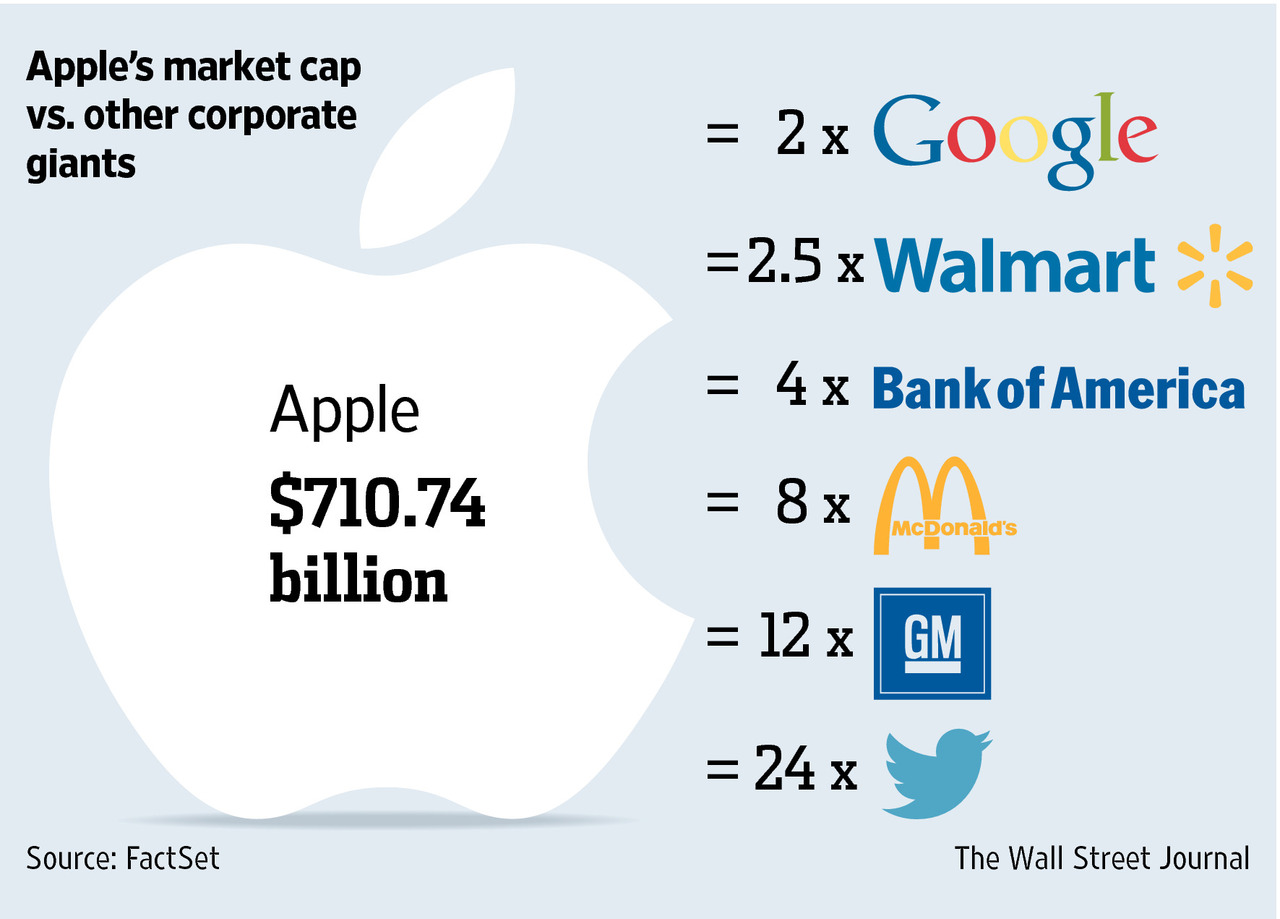
Apple’s market capitalization frequently fluctuates, often crossing the multi-trillion-dollar threshold, making it one of the most valuable companies globally. This figure reflects what investors are collectively willing to pay for ownership in Apple right now, taking into account its future earnings potential, brand strength, innovation pipeline, and overall market sentiment. Unlike the relatively stable book value, market cap is highly volatile, reacting instantly to financial reports, product announcements, economic news, and broader market trends. For instance, Apple’s market cap has seen monumental growth over the past two decades, powered by the success of the iPhone, expansion into services, and a robust capital allocation strategy that includes significant share buybacks, which reduce the number of outstanding shares and can boost earnings per share.
The key distinction is that book value (accounting net worth) is backward-looking, based on historical costs and accounting principles, while market capitalization is forward-looking, reflecting market expectations and future prospects. For a company like Apple, with immense brand loyalty, a vast ecosystem, and a history of disruptive innovation, its market cap almost always significantly exceeds its book value, indicating that investors value its future earnings potential and intangible assets far beyond their accounting representation.
Apple’s Financial Colossus: A Deep Dive into its Balance Sheet
Apple’s balance sheet is a testament to its extraordinary success, reflecting decades of strategic financial management and unparalleled product leadership. The sheer scale of its assets and the carefully managed structure of its liabilities paint a picture of a company with immense financial flexibility and resilience.
A Mountain of Assets: Cash, Investments, and IP
Apple’s asset base is truly staggering, providing it with an unparalleled war chest for strategic maneuvers, R&D, and shareholder returns. The company typically holds hundreds of billions of dollars in cash and marketable securities. These highly liquid assets are managed through a sophisticated treasury operation, often invested in a diversified portfolio of corporate bonds, government securities, and other short-to-long-term investments. This massive cash hoard grants Apple considerable financial independence, allowing it to self-fund ambitious projects, weather economic downturns, and pursue acquisitions without significant external financing pressure.
Beyond liquid assets, Apple’s intellectual property (IP) is a cornerstone of its long-term value. While patents for innovative hardware and software are tangible assets, the true financial power lies in its proprietary technologies, industrial designs, and the comprehensive iOS ecosystem. This IP protects its market position and fosters differentiation, directly contributing to its high profit margins and competitive advantage. Furthermore, the Apple brand itself, while an intangible asset, is arguably one of the most valuable in the world, enabling premium pricing and fostering an incredibly loyal customer base.
The company’s property, plant, and equipment (PPE) include hundreds of retail stores globally, vast data centers supporting its services empire, advanced research and development facilities, and corporate campuses like Apple Park. These physical assets are crucial for its operations, distribution, and innovation efforts, representing significant long-term investments that underpin its global presence and operational capabilities.
Navigating Liabilities: Debt, Payables, and Deferred Revenue
Despite its colossal cash reserves, Apple strategically utilizes debt as part of its capital structure. It has frequently issued bonds, taking advantage of low interest rates to fund dividends and share buyback programs, particularly using overseas cash that would otherwise face high repatriation taxes. This approach allows Apple to efficiently return capital to shareholders while maintaining its domestic cash for operational needs and investments. The company’s strong credit rating ensures it can borrow at highly favorable terms, further optimizing its cost of capital.
Accounts payable represent amounts owed to suppliers for components and services, reflecting the intricate global supply chain Apple manages. Efficient management of payables allows Apple to maintain strong relationships with its suppliers while optimizing its working capital. Deferred revenue is another significant liability, especially with the growth of its services segment. This represents money collected from customers for services or products that will be delivered in the future (e.g., AppleCare warranties, annual subscriptions to Apple Music or iCloud storage). As these services are rendered, the deferred revenue is recognized as actual revenue. This liability highlights the recurring nature of a substantial portion of Apple’s business, which is highly prized by investors for its predictability and stability.
The Engine of Value: Apple’s Diverse Revenue Streams and Profitability
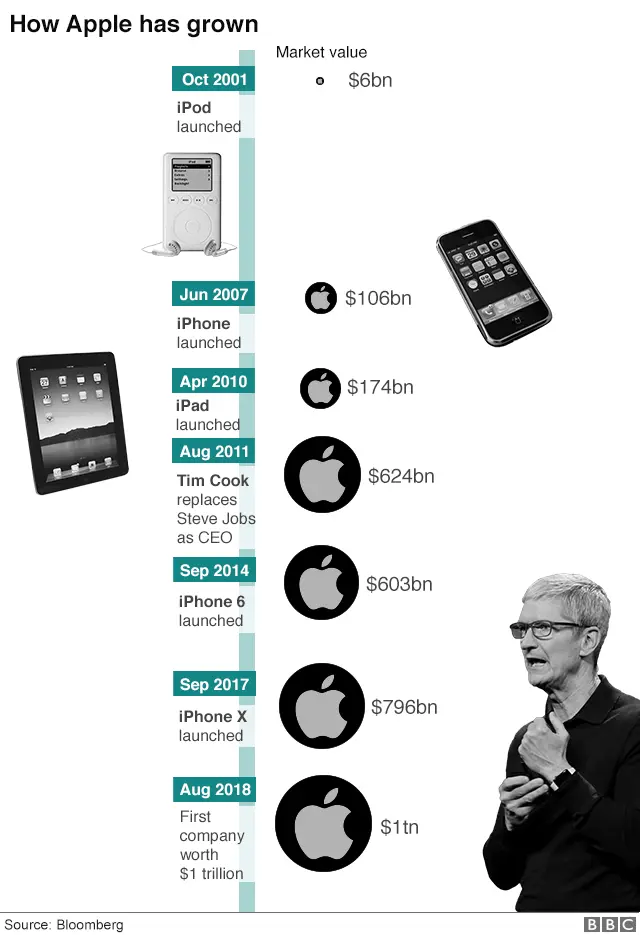
Apple’s financial strength is not just in its static balance sheet; it is dynamically generated through its incredibly diverse and powerful revenue streams, which are consistently among the highest in the world. The company has masterfully built an ecosystem that drives both initial product sales and sustained, high-margin service revenue.
Product Powerhouse: The Enduring Dominance of Hardware
For many years, Apple’s identity and financial success have been synonymous with its revolutionary hardware. The iPhone remains the undisputed king of its product portfolio, consistently generating over half of the company’s total revenue. Its premium pricing, coupled with an unparalleled brand perception and ecosystem integration, ensures robust profitability. Alongside the iPhone, Mac computers, iPad tablets, and the rapidly growing Wearables, Home, and Accessories category (including Apple Watch, AirPods, and HomePod) contribute significantly to the top line. This product segment is characterized by high research and development investment, sophisticated supply chain management, and a relentless focus on design and user experience, enabling Apple to command premium prices and maintain healthy profit margins despite intense competition. The sheer volume and aspirational quality of its hardware products create a vast installed base, which in turn fuels the growth of its services segment.
The Services Empire: Driving Recurring Revenue and Ecosystem Lock-in
In recent years, Apple has strategically diversified its revenue streams, with the Services segment emerging as a critical growth engine and a key driver of its overall valuation. This segment includes highly profitable offerings such as the App Store (taking a commission on digital sales), Apple Music, iCloud storage, Apple Pay, Apple TV+, Apple Arcade, and Apple News+. The beauty of the services model lies in its recurring revenue nature, which provides greater predictability and higher gross margins compared to hardware sales.
The strength of Apple’s services is deeply intertwined with its massive installed base of active devices. Each iPhone, iPad, and Mac user is a potential subscriber to multiple Apple services, reinforcing the “ecosystem lock-in.” This strategic shift towards services not only provides a more stable revenue stream but also enhances customer loyalty, making it harder for users to switch to competing platforms. The growth in services revenue has been a major point of focus for investors, as it represents a more resilient and less cyclical revenue source, contributing significantly to Apple’s long-term financial stability and market valuation.
Cash Flow Generation and Capital Allocation Strategies
Apple’s ability to generate free cash flow is nothing short of phenomenal. This metric, representing the cash a company generates after accounting for cash outflows to support operations and maintain its capital assets, highlights Apple’s incredible operational efficiency and profitability. This enormous free cash flow provides Apple with immense financial power and flexibility.
The company employs a disciplined and shareholder-friendly capital allocation strategy. A significant portion of its cash flow is reinvested back into the business through research and development (fueling future innovations), capital expenditures (expanding its physical infrastructure), and strategic acquisitions of smaller technology companies. Crucially, Apple is also one of the most generous companies in terms of returning capital to shareholders. It consistently pays out substantial dividends and executes massive share buyback programs. Share buybacks reduce the number of outstanding shares, thereby increasing earnings per share (EPS) and often boosting the stock price, directly benefiting shareholders. This balanced approach to capital allocation underscores Apple’s commitment to both long-term growth and immediate shareholder value creation, further cementing its appeal to investors.
The Influence of Market Dynamics on Apple’s Valuation
While Apple’s internal financial health is robust, its market capitalization and perceived “net worth” are continually shaped by external market dynamics. These factors can significantly influence investor sentiment, growth prospects, and ultimately, the stock’s valuation.
Innovation, Competition, and Economic Headwinds
Apple operates in highly competitive and rapidly evolving markets. Its ability to maintain its premium pricing and market leadership hinges on continuous innovation. New product cycles (like the introduction of new iPhone models or ventures into augmented reality) directly impact sales forecasts and investor optimism. The competitive landscape, with formidable rivals like Samsung, Google, and Microsoft constantly vying for market share across hardware and software segments, puts continuous pressure on Apple to differentiate and excel.
Furthermore, global economic conditions play a significant role. Factors such as inflation, consumer spending power, interest rates, and geopolitical stability can impact demand for premium products, supply chain costs, and overall investor confidence. Economic slowdowns or recessions can lead to reduced consumer discretionary spending, affecting Apple’s hardware sales, while currency fluctuations can impact its international earnings. The resilience of Apple’s supply chain, particularly its reliance on manufacturing in certain regions, also remains a critical factor, susceptible to geopolitical tensions, trade policies, and global health crises.
Investor Sentiment and Future Growth Prospects
The market’s valuation of Apple is heavily influenced by investor sentiment and the perception of its future growth prospects. Analysts constantly scrutinize Apple’s earnings reports, product pipelines, and market share trends. Positive sentiment often stems from strong sales figures, increasing services revenue, and promising new technologies (e.g., potential ventures into AR/VR headsets, autonomous vehicles, or health tech). Conversely, concerns about slowing iPhone sales, increased regulatory scrutiny, or major competitive threats can lead to negative sentiment and a downward revaluation.
ESG (Environmental, Social, and Governance) considerations are also increasingly impactful. Apple’s commitments to sustainability, ethical supply chain practices, and diversity are not just PR efforts; they contribute to its brand reputation and appeal to a growing segment of socially conscious investors. Maintaining a positive ESG profile can mitigate risks and enhance long-term shareholder value. The company’s ability to identify and capitalize on new growth vectors beyond its core offerings will be pivotal for sustaining its multi-trillion-dollar valuation in the decades to come.
The Bottom Line: Understanding Apple’s True Financial Stature
Ultimately, understanding “what is Apple’s net worth” is a journey through complex financial metrics, strategic business decisions, and dynamic market forces. While its accounting net worth (shareholders’ equity) provides a fundamental baseline, it is the company’s colossal market capitalization, driven by its exceptional profitability, diverse revenue streams, unparalleled brand equity, and relentless innovation, that truly reflects its extraordinary financial stature in the global economy.
Why Metrics Matter: Beyond the Headline Number
For investors and financial enthusiasts, it’s crucial to look beyond a single headline number. A holistic financial analysis of Apple involves examining a multitude of metrics: its gross margins across products and services, its free cash flow generation, its return on invested capital, its debt-to-equity ratio, and its price-to-earnings multiple, among others. These figures, when viewed in context, provide a comprehensive picture of Apple’s operational efficiency, financial leverage, and valuation relative to its peers and historical performance. Understanding the distinction between book value, market cap, and how these are influenced by cash flow, revenue growth, and capital allocation strategies is key to truly grasping Apple’s immense financial power.
Apple’s Enduring Legacy as a Financial Behemoth
Apple Inc. stands as a testament to the power of innovation, brand building, and shrewd financial management. Its ability to consistently generate massive profits, accumulate vast cash reserves, and strategically return capital to shareholders has solidified its position as one of the most financially formidable companies in history. Whether viewed through the lens of its accounting net worth or its staggering market capitalization, Apple’s financial prowess remains a dominant force, influencing global markets and setting benchmarks for corporate success in the 21st century. Its enduring legacy is not just in the products it creates, but in the immense wealth it generates and manages, making it a pivotal subject for anyone interested in business finance and investment.
aViewFromTheCave is a participant in the Amazon Services LLC Associates Program, an affiliate advertising program designed to provide a means for sites to earn advertising fees by advertising and linking to Amazon.com. Amazon, the Amazon logo, AmazonSupply, and the AmazonSupply logo are trademarks of Amazon.com, Inc. or its affiliates. As an Amazon Associate we earn affiliate commissions from qualifying purchases.