
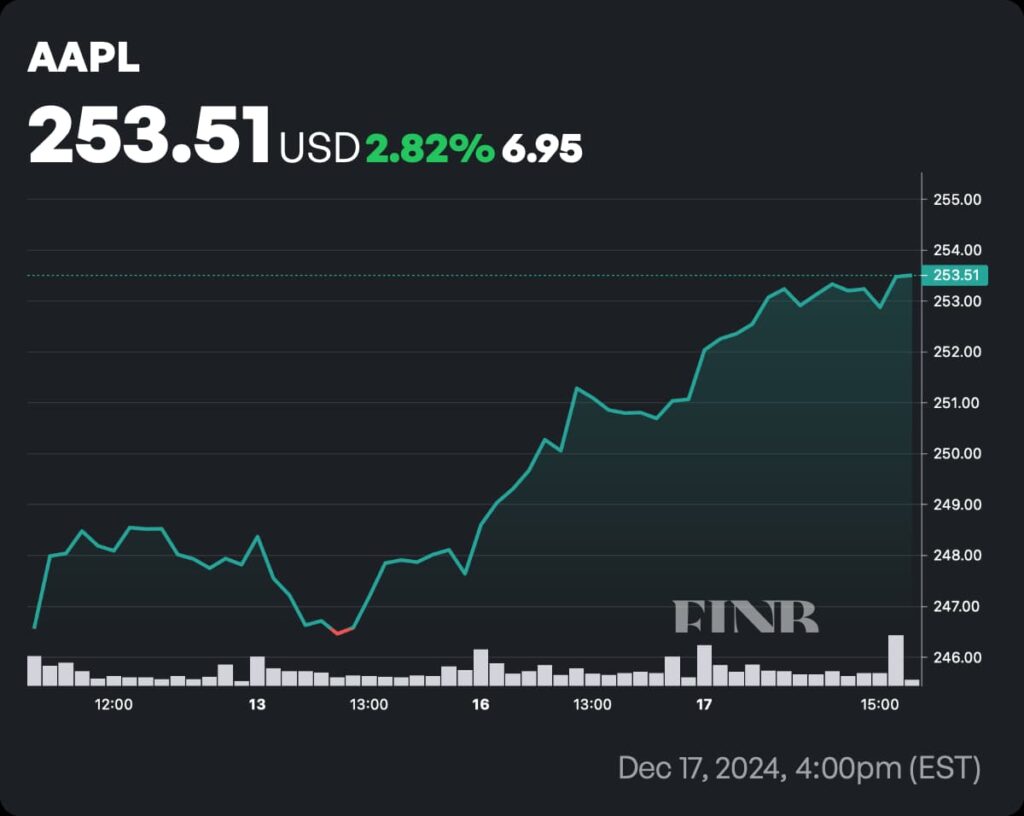
For many retail and institutional investors, checking “what is Apple stock today” is a daily ritual. As one of the most valuable companies in the world and a cornerstone of the S&P 500 and the Nasdaq-100, Apple Inc. (AAPL) serves as a barometer for the broader health of the technology sector and the global economy. However, understanding Apple stock requires looking far beyond the flashing green or red numbers on a brokerage app.
To truly grasp the value of Apple today, an investor must look at the convergence of its massive cash reserves, its evolving revenue mix, and its strategic position within the global financial markets. This guide explores the financial intricacies of AAPL, moving past the surface-level price to analyze the underlying mechanics that drive its valuation.
The Pillars of Apple’s Financial Valuation
When an investor asks about Apple stock today, they are essentially asking about the market’s current appraisal of the company’s future cash flows. Apple is no longer just a hardware company; it is a financial powerhouse that operates with the efficiency of a high-yield software firm combined with the scale of a global consumer staple.
Market Capitalization and Index Weighting
Apple’s market capitalization frequently hovers around the $3 trillion mark, making it a “mega-cap” stock. For the individual investor, this scale is significant because of “index weighting.” Because Apple represents a substantial percentage of major indices, when the market moves, Apple often moves with it—and vice versa. Today, owning a diversified mutual fund or ETF almost certainly means you own a piece of Apple. This systemic importance provides a level of price stability that smaller tech firms lack.
The Shift from Hardware to Services
Historically, Apple’s stock price was tied strictly to iPhone launch cycles. Today, the financial narrative has shifted toward the “Services” segment. This includes the App Store, iCloud, Apple Music, and Apple Pay. From a money management perspective, Services are highly attractive because they offer high margins (often exceeding 70%) and recurring revenue. Investors value this predictability more than the “lumpy” revenue associated with one-time hardware purchases.
Institutional Ownership and Stability
A significant portion of AAPL is held by institutional investors, including pension funds, hedge funds, and massive asset managers like BlackRock and Vanguard. This high level of institutional backing often acts as a floor for the stock price during periods of market volatility. When you look at Apple stock today, you are looking at a security that is viewed by the world’s most sophisticated money managers as a “safe haven” within the equity markets.
Key Financial Metrics Every AAPL Investor Must Track
To understand if Apple stock is a “buy,” “hold,” or “sell” at its current price, one must look at specific financial ratios. These metrics provide context to the stock price, indicating whether the company is overvalued or undervalued relative to its earnings and growth potential.
Price-to-Earnings (P/E) Ratio
The P/E ratio is the most common lens through which Apple is viewed. It measures the current share price relative to its per-share earnings. Historically, Apple traded at a lower P/E (around 12x to 15x) when it was seen as a hardware-only company. Today, it often trades at a premium (25x to 30x or higher). This expansion reflects the market’s willingness to pay more for every dollar of Apple’s profit, thanks to its ecosystem lock-in and service-based growth.
Dividend Yield and Growth
While Apple is a tech company, it also appeals to income-focused investors. Apple’s dividend yield may seem modest compared to utility stocks, but the growth of that dividend is what matters. The company has a track record of consistent annual increases, making it a favorite for “dividend growth” portfolios. For those looking at Apple stock today, the dividend provides a small but reliable “total return” component regardless of price fluctuations.
Free Cash Flow (FCF)
In the world of finance, “cash is king,” and Apple is the undisputed monarch. Apple generates tens of billions of dollars in free cash flow every quarter. This liquidity allows the company to self-fund its research and development, acquire smaller companies without taking on massive debt, and, most importantly, return capital to shareholders through massive buyback programs.
The Impact of Capital Allocation: Buybacks and Debt
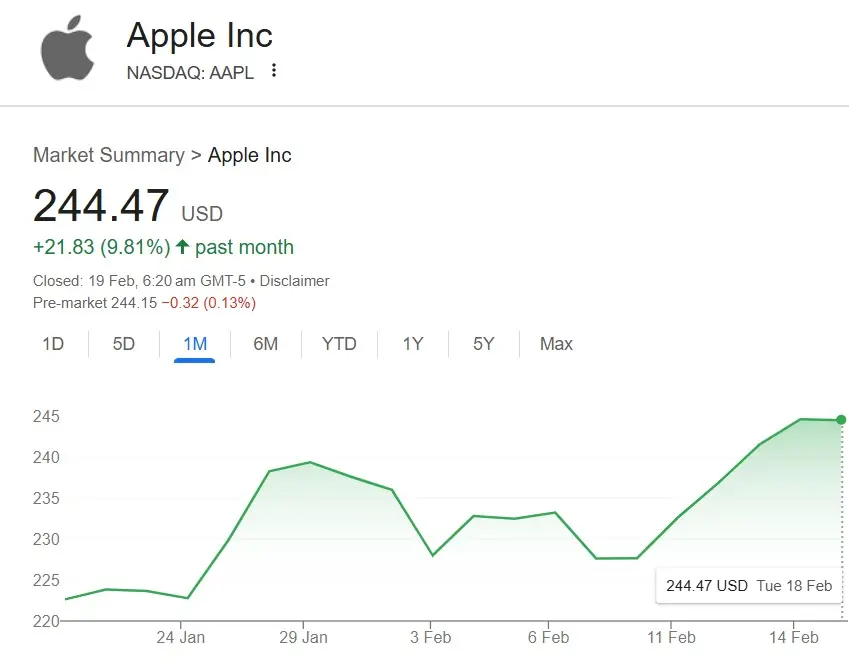
One of the most critical factors influencing Apple’s stock price today is its capital allocation strategy. Apple’s management team is focused on achieving a “cash neutral” position, which involves returning its massive cash pile to shareholders.
The Power of Share Repurchases
Apple has spent hundreds of billions of dollars over the last decade buying back its own stock. From a financial standpoint, this is a major tailwind for the stock price. When Apple retires shares, the remaining shares become more valuable because they represent a larger piece of the earnings “pie.” Even in years where net income remains flat, earnings per share (EPS) can rise because there are fewer shares outstanding. This “financial engineering” is a core reason why Apple stock remains a staple in long-term portfolios.
Strategic Debt Utilization
Despite having billions in cash, Apple frequently issues corporate bonds. To a casual observer, this might seem counterintuitive. However, from a business finance perspective, it is a brilliant move. Apple uses its high credit rating to borrow money at low interest rates, then uses that capital to fund buybacks or operations, while keeping its own cash offshore or invested in higher-yielding instruments. This optimization of the balance sheet is a hallmark of Apple’s sophisticated financial management.
Total Shareholder Return
When evaluating Apple stock today, one must consider the “Total Shareholder Return” (TSR). This includes the stock’s price appreciation, dividends paid, and the indirect benefit of share buybacks. For over a decade, Apple’s TSR has consistently outperformed the broader market, making it a benchmark for successful corporate financial management.
Risks and Headwinds in the Financial Outlook
No investment is without risk, and Apple faces several financial hurdles that could impact its stock price in the short and long term. Investors must weigh these factors against the company’s strengths.
Regulatory and Antitrust Scrutiny
Governments around the world, particularly in the EU and the US, are increasingly looking at Apple’s “walled garden” and App Store fees. Major legal rulings or new regulations could force Apple to change its business model, potentially cutting into its high-margin Services revenue. Any threat to the 30% “Apple Tax” on digital goods is a significant risk factor for the stock’s valuation.
Supply Chain and Geopolitical Exposure
Apple’s manufacturing base is heavily concentrated in certain geographic regions. Geopolitical tensions or supply chain disruptions can lead to inventory shortages, which directly impact quarterly revenue. For an investor, these “macro” risks are unpredictable but can cause sudden, sharp drops in the stock price.
Innovation Plateau
The market prices Apple at a premium because it expects continued innovation. If the market perceives that the iPhone has reached a point of diminishing returns and that new products (like spatial computing or AI-integrated devices) cannot fill the gap, the stock’s P/E ratio could “compress,” leading to a lower share price even if earnings remain stable.
The Long-Term Investment Thesis for AAPL
So, what is Apple stock today in the context of a five or ten-year horizon? For most financial analysts, the answer lies in the company’s “moat”—a term popularized by Warren Buffett to describe a business’s competitive advantage.
Ecosystem Lock-in and Customer Lifetime Value
Apple’s greatest financial asset is its ecosystem. Once a user is integrated into iMessage, iCloud, and the Apple Watch, the “switching costs” to move to a competitor are incredibly high. This creates a high Customer Lifetime Value (CLV). From a money management perspective, this makes Apple a “recurring revenue” story, similar to a utility but with the growth rates of a tech company.
Emerging Markets and Middle-Class Growth
While the US and European markets are relatively saturated, Apple has significant “runway” in emerging economies like India and parts of Southeast Asia. As the middle class grows in these regions, the iPhone becomes a premier aspirational purchase. Tapping into these billions of potential new customers provides a long-term growth lever that many other mature tech companies lack.
The Role of Artificial Intelligence in Monetization
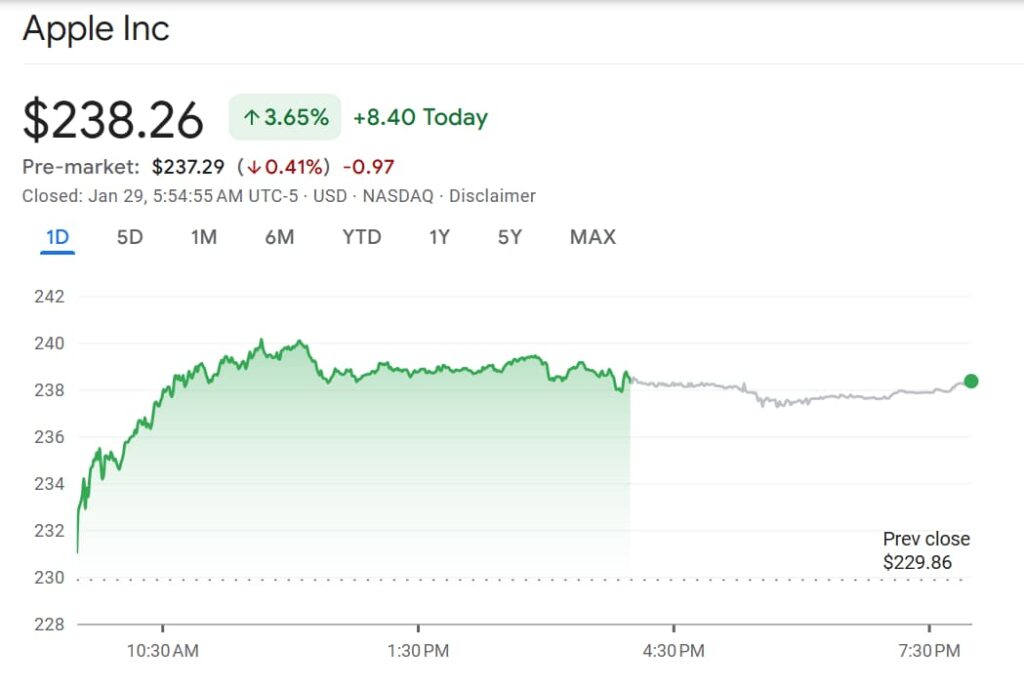
As we look at Apple stock today, the integration of AI is the next frontier. Apple’s approach is to integrate AI directly into the hardware, potentially sparking a massive “upgrade cycle” for iPhones and Macs. If Apple can successfully monetize AI through premium services or by selling more hardware, it will secure its next decade of financial dominance.
In conclusion, “what is Apple stock today” is not just a question of a dollar amount. It is an inquiry into the strength of the world’s most successful consumer ecosystem, the efficiency of its capital allocation, and its ability to navigate a complex global regulatory environment. For the disciplined investor, Apple remains a study in financial excellence—a company that generates unparalleled cash flow and returns it to those who believe in its long-term vision.
aViewFromTheCave is a participant in the Amazon Services LLC Associates Program, an affiliate advertising program designed to provide a means for sites to earn advertising fees by advertising and linking to Amazon.com. Amazon, the Amazon logo, AmazonSupply, and the AmazonSupply logo are trademarks of Amazon.com, Inc. or its affiliates. As an Amazon Associate we earn affiliate commissions from qualifying purchases.