
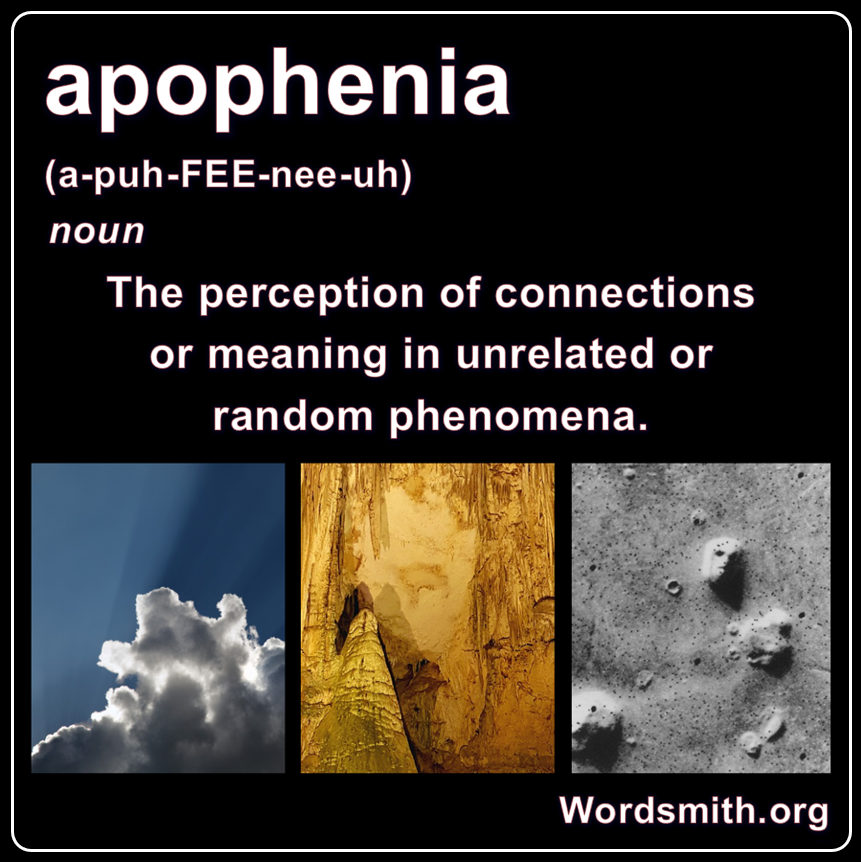
Apophenia, a term coined by German neurologist Klaus Conrad in 1958, refers to the tendency to perceive meaningful connections between unrelated phenomena. It’s the human brain’s remarkable, yet sometimes misleading, ability to find patterns and order even in pure randomness. While this cognitive bias can manifest in many aspects of life, its implications in the realm of finance and investing are particularly profound, often leading individuals astray from sound financial decisions. Understanding apophenia is crucial for anyone navigating the complexities of personal finance, investment markets, and even the allure of online income schemes.
The Psychology Behind Seeing Patterns in Financial Chaos
Our brains are wired to detect patterns. This innate ability served our ancestors well, helping them identify predators, find food sources, and understand their environment. In the modern financial world, however, this pattern-seeking drive can become a significant liability, leading to misinterpretations of market data, economic indicators, and investment opportunities.

Defining Apophenia: False Correlations
At its core, apophenia is about perceiving connections that don’t objectively exist. It’s the sensation that “everything is connected,” even when statistical analysis or logical reasoning indicates otherwise. In finance, this might involve seeing a recurring pattern in stock price movements that is actually random noise, or believing that a particular news event is directly responsible for a market shift when numerous complex factors are at play. The human mind seeks causality and meaning, and when confronted with overwhelming data or uncertainty, it often invents them. This tendency can make individuals vulnerable to their own biases and to external influences that exploit this pattern-seeking behavior.
Evolutionary Roots and Modern Financial Decisions
Our brains evolved in environments where recognizing patterns, even imperfect ones, offered a survival advantage. A rustle in the grass might be a predator; correlating certain weather patterns with successful harvests was beneficial. This hardwired mechanism, while effective for basic survival, is ill-equipped for the sophisticated, often random, nature of financial markets. The financial world operates on probabilities, complex algorithms, and human psychology, much of which lacks the neat, predictable patterns our brains crave. Consequently, we often impose order where there is none, leading to flawed financial models and investment choices. This psychological predisposition impacts everything from how we react to daily market fluctuations to our long-term financial planning.
When Randomness Feels Like a Message
The stock market, by its very nature, exhibits a high degree of randomness, particularly in the short term. Daily price movements are influenced by an myriad of factors, many of which are unpredictable. Yet, when faced with such randomness, our minds often search for underlying messages or predictive signals. An investor might interpret a series of slight gains as the beginning of a bull run, or a few days of losses as a sure sign of an impending crash, even when these movements fall well within the bounds of normal market volatility. This perception of hidden meaning can lead to impulsive trading decisions, emotional investing, and a general lack of discipline, all of which are detrimental to financial success. The discomfort with true randomness drives us to construct narratives and theories that offer a false sense of control and understanding.
Apophenia’s Dangerous Grip on Investing
The investment world is ripe for apophenia. The sheer volume of data, the constant fluctuations, and the inherent uncertainty create a fertile ground for individuals to see patterns, trends, and signals that do not objectively exist. This cognitive bias can have significant negative consequences for portfolio performance and financial well-being.
Chart Patterns and Technical Analysis: A Double-Edged Sword
Technical analysis, a popular method for forecasting future price movements based on historical price and volume data, often relies heavily on the recognition of chart patterns. Concepts like “head and shoulders,” “double tops,” or “death crosses” are believed by some to be reliable indicators of market direction. While some robust technical indicators exist, apophenia can lead investors to overemphasize or misinterpret less reliable patterns, seeing predictive power where there is merely coincidence. The human brain’s ability to pick out shapes and sequences can transform random market noise into seemingly definitive signals. This can lead to frequent, unnecessary trades based on perceived patterns, eroding capital through transaction costs and poor timing. The subjective interpretation of these patterns, without rigorous statistical backing, often becomes a prime example of apophenia in action.
The Illusion of Market Trends and Predictability
Beyond specific chart patterns, apophenia contributes to the broader illusion that financial markets are inherently predictable. Investors might look at past performance and extrapolate future returns, despite prominent disclaimers that past results are not indicative of future performance. They might perceive long-term market cycles based on limited historical data, or believe they can “time the market” by identifying the peaks and troughs of economic booms and busts. While markets do have underlying dynamics, the precision with which some individuals claim to predict them often stems from apophenia – seeing consistent trends where there is significant underlying randomness and unpredictability, especially in the short to medium term. This false sense of predictability often encourages aggressive, high-risk strategies that can backfire dramatically.
Confirmation Bias and Echo Chambers in Financial News
Apophenia is often exacerbated by confirmation bias, where individuals actively seek out and interpret information in a way that confirms their existing beliefs or perceived patterns. If an investor believes they’ve identified a “sure thing” pattern in a particular stock, they will subconsciously seek out news articles, analyst reports, or social media posts that validate this belief, while ignoring contradictory evidence. This can lead to the formation of financial echo chambers, especially in online communities and social media groups dedicated to specific investments (e.g., meme stocks, specific cryptocurrencies). Within these echo chambers, shared apophenic interpretations become reinforced, creating a powerful psychological force that can lead to collective irrationality and significant financial losses when the perceived patterns inevitably fail to materialize.

From Personal Finance to Scams: Real-World Impacts
The influence of apophenia extends beyond sophisticated investment strategies, touching personal financial decisions and even making individuals vulnerable to elaborate financial scams.
Misinterpreting Personal Financial Data
Even in personal finance, apophenia can lead to poor decisions. An individual might notice that every time they receive a bonus, a significant unexpected expense arises shortly after, leading them to believe their bonuses are “cursed.” Or they might see a slight correlation between buying a certain brand of coffee and having a productive week, mistakenly attributing financial success or well-being to unrelated habits. While self-reflection and habit formation are important, attributing causal links where only coincidence exists can lead to superstitions or an avoidance of sound financial practices based on perceived bad luck rather than objective budgeting or saving strategies. This can prevent individuals from making rational choices about spending, saving, and debt management.
The Allure of “Get Rich Quick” Schemes and Ponzi Scams
Perhaps one of the most insidious impacts of apophenia is its role in making people susceptible to “get rich quick” schemes and investment scams. Promoters of Ponzi schemes or other fraudulent investments often present seemingly complex “patterns” or “algorithms” that guarantee high returns. They leverage the human desire to find shortcuts and exploit the tendency to see logical connections in misleading data. Victims, convinced by the perceived pattern and the promise of easy money, ignore red flags, such as unusually high returns or a lack of transparency. The scammer’s narrative provides a comforting, albeit false, explanation for how money is being generated, appealing directly to the apophenic desire for order and predictability in financial outcomes. When faced with a persuasive narrative that appears to explain complex market behavior, apophenia makes people more likely to suspend critical judgment.
Cryptocurrency and the Quest for Hidden Signals
The nascent and highly volatile cryptocurrency market is a prime example of an environment where apophenia can run rampant. With daily price swings of 10% or more being common, and a constant stream of new projects and coins, the market presents an overwhelming amount of data and noise. Investors frequently search for patterns in highly speculative assets, interpreting minor price fluctuations, social media sentiment, or even the timing of anonymous online posts as “signals” for future movements. The rapid-fire nature of crypto trading, combined with the lack of traditional financial metrics for many tokens, encourages reliance on perceived patterns and anecdotal evidence. This environment can lead to significant speculative losses as individuals chase perceived trends that are, in reality, driven by random noise, hype, or pump-and-dump schemes. The decentralized and often opaque nature of this market further fuels the search for hidden patterns and insider signals.
Strategies to Combat Apophenia in Your Financial Life
Recognizing apophenia is the first step; actively mitigating its effects is crucial for sound financial decision-making. By adopting a disciplined, evidence-based approach, you can reduce the impact of this cognitive bias.
Embracing Randomness and Probability
A fundamental strategy is to accept and understand that much of what happens in financial markets, especially in the short term, is random. Instead of trying to find a hidden order, embrace the principles of probability. Understand that a streak of good luck doesn’t guarantee future success, nor does a series of losses signify an impending financial doom. Focus on long-term trends and averages rather than obsessing over daily or weekly fluctuations. Learning basic statistics and probability theory can provide a robust framework for evaluating financial claims and avoiding the trap of perceived patterns. Acknowledge that truly random events do occur and don’t necessarily carry a deeper meaning or predictive power.
Data-Driven Decisions vs. Gut Feelings
Countering apophenia requires a commitment to data-driven decision-making. Instead of relying on gut feelings, perceived patterns, or anecdotal evidence, base your financial choices on rigorous analysis, verified data, and established financial principles. For investments, this means looking at fundamentals, diversification strategies, and risk assessment rather than chasing “hot” stocks based on someone’s interpretation of a chart. For personal finance, it means adhering to a budget based on actual income and expenses, and making saving and spending decisions based on clear financial goals, not on superstitious beliefs or perceived omens. When evaluating new income opportunities or financial products, demand verifiable data and scrutinize claims with a skeptical, analytical mind.
Diversification and Long-Term Planning
One of the most effective ways to mitigate the risks associated with apophenia in investing is through diversification and a long-term investment horizon. Diversification across various asset classes, industries, and geographies reduces the impact of any single investment’s unpredictable performance. A long-term perspective inherently acknowledges and smooths out short-term randomness and volatility. Instead of reacting to perceived daily patterns, a long-term plan encourages patience and adherence to a strategy designed to ride out market fluctuations. This approach recognizes that trying to predict and profit from short-term patterns is often a losing game, and that consistent, disciplined investing over decades is far more reliable.
Seeking Objective Counsel
Finally, seeking advice from objective, fee-only financial advisors can provide an external check against your own cognitive biases. A professional advisor can help you create a financial plan based on your actual circumstances and goals, rather than on perceived market signals or emotional reactions. They can offer a rational perspective when you might be tempted to act on an unsubstantiated pattern or fall prey to a tempting, but fraudulent, scheme. They are trained to look at the data objectively and guide you towards sound financial practices, helping you avoid the pitfalls of apophenia and make more informed, disciplined choices with your money.
aViewFromTheCave is a participant in the Amazon Services LLC Associates Program, an affiliate advertising program designed to provide a means for sites to earn advertising fees by advertising and linking to Amazon.com. Amazon, the Amazon logo, AmazonSupply, and the AmazonSupply logo are trademarks of Amazon.com, Inc. or its affiliates. As an Amazon Associate we earn affiliate commissions from qualifying purchases.