
In the modern era, an election is as much a feat of data engineering as it is a democratic exercise. When people ask, “What is AP in election?” they are often referring to the Associated Press (AP), an organization that has become the de facto technological backbone of election results globally. While many view the AP as a traditional news wire, in the context of 21st-century voting, it functions as a high-stakes technology provider. It operates a massive, proprietary network of software, data pipelines, and cybersecurity protocols designed to ingest, verify, and distribute election data in real-time.
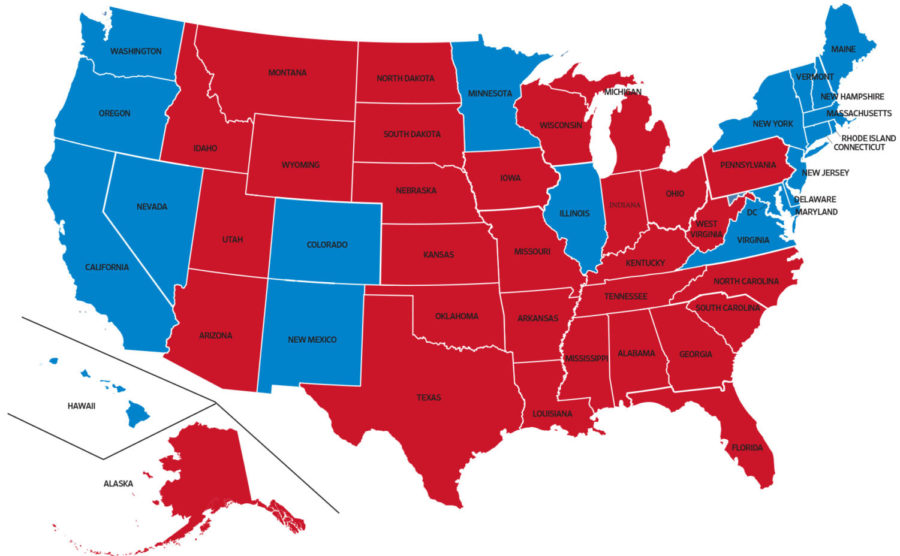
The technology behind the AP’s election operations is a masterclass in software scalability and data integrity. This article explores the technical infrastructure, the algorithmic models, and the digital security measures that define the AP’s role in the electoral process.
The Technological Infrastructure of Election Tabulation
The sheer volume of data generated during an election is staggering. In the United States alone, thousands of local precincts report results using disparate systems. The AP’s primary technological achievement is its ability to aggregate this fragmented data into a single, cohesive stream.
Real-Time Data Ingestion and API Integration
At the heart of the AP’s election tech is a robust data ingestion engine. This system is designed to interface with thousands of different county and state-level databases. Because there is no centralized federal voting system, the AP utilizes a hybrid of automated API calls and secure manual entry interfaces to gather data.
For jurisdictions with modern digital infrastructure, the AP’s software connects directly to election night reporting (ENR) systems via APIs. These connections allow for sub-second updates, ensuring that as soon as a local official hits “upload,” the data is normalized and pushed into the AP’s global feed. The engineering challenge here is “normalization”—the process of taking diverse data formats (JSON, XML, CSV, or even legacy database formats) and converting them into a standardized schema that can be consumed by newsrooms and tech platforms worldwide.
Cloud Computing and Scalability During Peak Loads
Election night represents one of the most extreme “burst” scenarios in the world of computing. For 364 days a year, the traffic to election data servers is negligible. On election night, that traffic spikes by millions of percentage points.
To handle this, the AP leverages sophisticated cloud computing architectures, primarily utilizing Amazon Web Services (AWS) or similar high-availability environments. These systems use auto-scaling groups that spin up thousands of virtual instances in response to real-time demand. Load balancers distribute the incoming data requests to ensure that the “Decision Desk” software never experiences latency, as even a five-second delay in data transmission can have massive repercussions for financial markets and global news cycles.
Algorithmic Integrity: How Software Calls the Race
When the AP “calls” a race, it isn’t a human making a gut-level guess. It is the result of a complex interplay between historical data sets and real-time predictive modeling software. This is where the intersection of data science and software engineering becomes most visible.
The “Decision Desk” Logic and Predictive Modeling
The software used by the AP’s Decision Desk is a proprietary suite of analytical tools. These tools compare incoming “live” votes against a massive database of historical voting patterns, demographic shifts, and exit polling data (now largely replaced by the “AP VoteCast” system).
The algorithm employs Bayesian statistical models to determine the probability of a candidate’s victory. A race is only called when the software determines there is no statistically significant path for the trailing candidate to catch up. This involves “isolating” the remaining uncounted votes—a process that requires the software to know exactly how many precincts have yet to report and what the historical “lean” of those specific precincts is. The tech must account for variables such as mail-in ballots versus day-of voting, which often have different processing speeds and demographic signatures.
Eliminating Human Error through Automated Verification
To maintain its 100% accuracy standard, the AP uses “double-entry” and automated verification software. When data is ingested, it is automatically cross-referenced against expected ranges. For example, if a county with only 10,000 registered voters suddenly reports 15,000 votes, the system’s “anomaly detection” layer flags the data immediately.
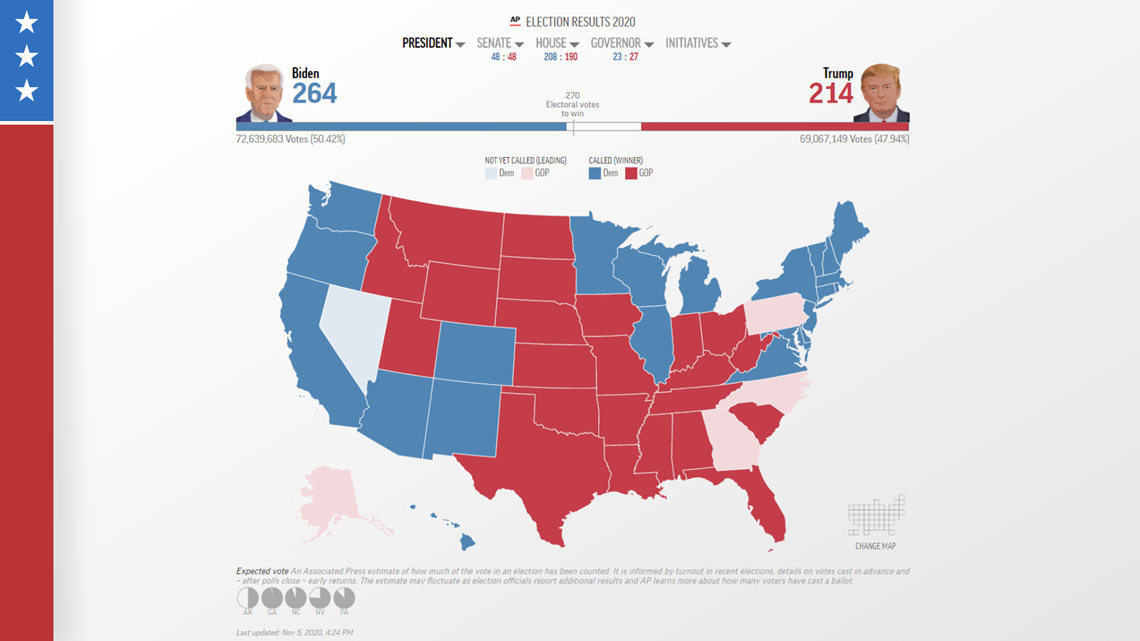
This automated auditing is crucial. It prevents “fat-finger” errors—human entry mistakes at the local level—from propagating through the system. The software acts as a gatekeeper, requiring human intervention only when its heuristic models detect a deviation from logic or historical norms.
Cybersecurity and Data Integrity in the Digital Age
In an era of heightened concerns regarding foreign interference and hacking, the AP’s election technology must be a fortress. The “AP in election” refers not just to a reporter, but to a secure data pipeline that must remain uncompromised under the threat of sophisticated cyberattacks.
Protecting the Pipeline from Disinformation and Hacks
The AP employs a “Zero Trust” security architecture for its election data systems. Every point of data entry, whether automated or manual, must be authenticated through multiple layers of encryption. Data in transit is protected using TLS 1.3 (Transport Layer Security), ensuring that “man-in-the-middle” attacks cannot intercept or alter the vote counts as they move from a county server to the AP’s headquarters.
Furthermore, the AP utilizes “air-gapping” for certain critical components of its decision-making software. This means that the core logic used to call races is often separated from the public-facing internet, preventing external bad actors from triggering a false race call. Distributed Denial of Service (DDoS) protection is also a major focus, with the AP using enterprise-grade scrubbing services to ensure that the flow of information remains uninterrupted even if the network comes under a massive botnet attack.
Blockchain and Future Prospects for Election Tech
While the AP currently relies on traditional relational databases and secure cloud environments, there is ongoing research into the use of blockchain for “immutable auditing.” In a future iteration of election tech, every update to a vote tally could be recorded as a “block” on a private ledger. This would provide a transparent, unchangeable audit trail that could prove, beyond a mathematical doubt, that the data has not been tampered with since its original ingestion. While not yet fully implemented for national elections, this represents the next frontier in the AP’s technological evolution.
The Evolution of Election Software: From Teletype to AI
The history of the AP in elections is a history of communication technology. From the early days of teletype machines to today’s AI-driven insights, the goal has remained the same: speed and accuracy.
Natural Language Processing in News Distribution
Once the data is processed and a race is called, the AP doesn’t just send out a raw number. It uses Natural Language Generation (NLG) software to automatically draft news bulletins. These AI tools take the structured data (e.g., “Candidate A wins with 52%”) and transform it into a readable sentence: “The Associated Press declares Candidate A the winner in the state of X.”
This use of NLG allows the AP to distribute news to thousands of member organizations in milliseconds. By the time a human editor could finish typing a headline, the AP’s software has already distributed the news across the globe, translated it into multiple languages, and formatted it for various digital platforms, from mobile apps to smart-TV tickers.
The Role of Machine Learning in Voter Trend Analysis
Beyond just counting votes, the AP uses machine learning (ML) to provide deeper insights into why an election resulted in a certain way. By feeding decades of census data and economic indicators into ML models, the AP can identify shifts in voter behavior in real-time.
For instance, if a specific demographic is turning out in higher-than-expected numbers in a “bellwether” county, the ML models can flag this as a significant trend long before it becomes apparent to human analysts. This predictive capability allows the AP to provide its subscribers with a “tech-first” perspective on the election, moving beyond simple tallying to sophisticated socio-political forecasting.
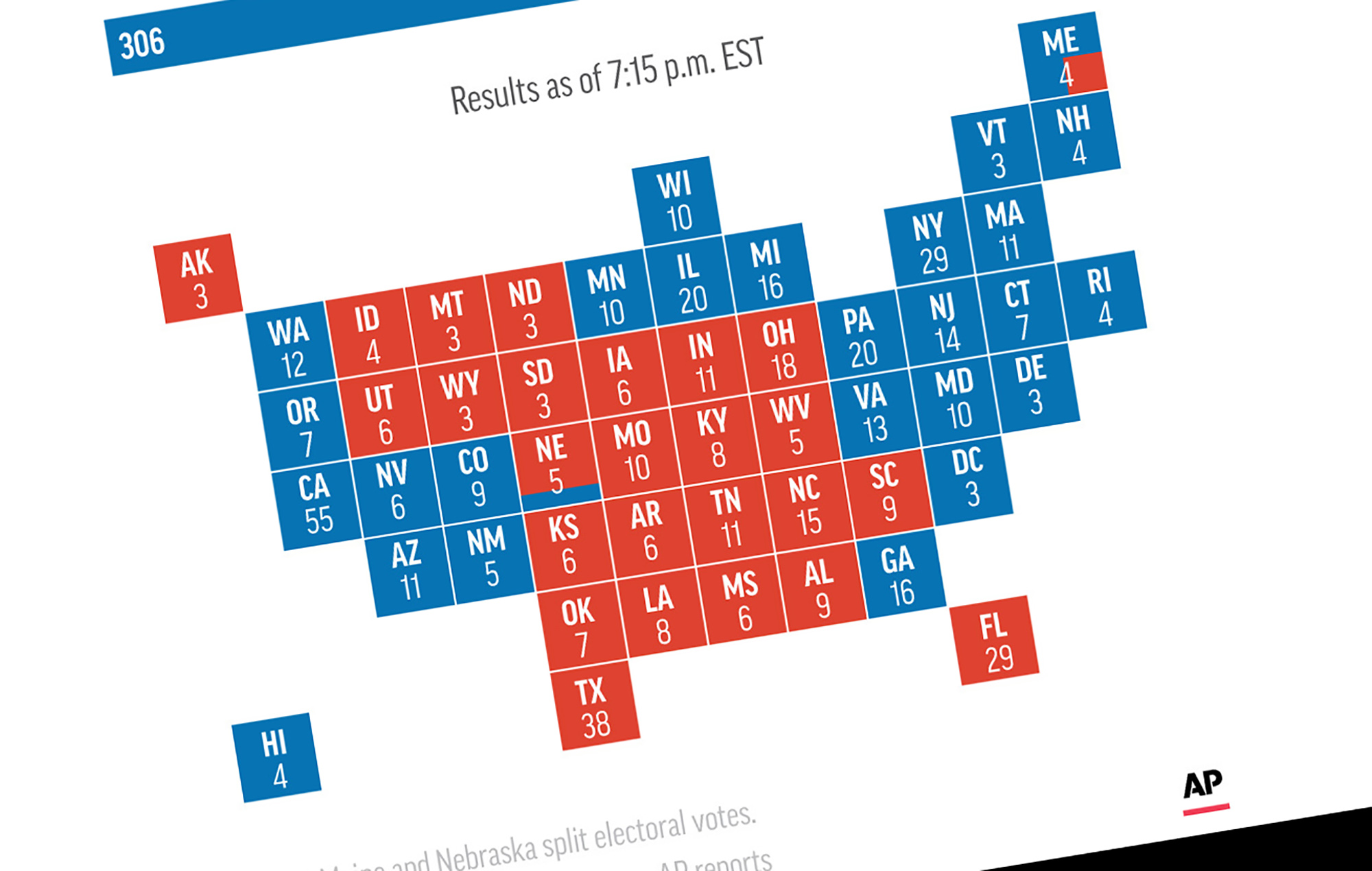
Conclusion: The Digital Safeguard of Democracy
When we ask what “AP in election” means, we are looking at the pinnacle of modern data engineering. It is a system built on the principles of high availability, data integrity, and extreme scalability. By combining sophisticated API integrations, cloud-native architectures, and rigorous algorithmic verification, the Associated Press ensures that the global community receives election results that are both instantaneous and beyond reproach.
As technology continues to advance, the AP’s role will likely expand further into the realms of Artificial Intelligence and decentralized verification. For now, its technological stack remains the gold standard, proving that in the digital age, the most important part of an election isn’t just the vote itself—it’s the technology that counts it.
aViewFromTheCave is a participant in the Amazon Services LLC Associates Program, an affiliate advertising program designed to provide a means for sites to earn advertising fees by advertising and linking to Amazon.com. Amazon, the Amazon logo, AmazonSupply, and the AmazonSupply logo are trademarks of Amazon.com, Inc. or its affiliates. As an Amazon Associate we earn affiliate commissions from qualifying purchases.