
Anti-Submarine Warfare (ASW) represents a critical and highly complex domain within naval operations, focused on detecting, tracking, and neutralizing submarines. Far from a simple cat-and-mouse game, modern ASW is a sophisticated technological arms race, driven by advancements in acoustics, sensor technology, data science, artificial intelligence, and autonomous systems. It is an ever-evolving field where the stealth capabilities of submarines are constantly challenged by new detection and engagement technologies, making it a cornerstone of naval technology and digital security.
The Technological Imperative of Modern ASW
At its core, ASW is a technological challenge against the physics of the ocean. Water, being an excellent medium for sound but poor for electromagnetic waves, dictates the primary sensory tools. Submarines, designed for silence and deep-sea concealment, push the boundaries of stealth, demanding equally advanced and often ingenious technological countermeasures.
Sonar Systems: The Ears of the Deep
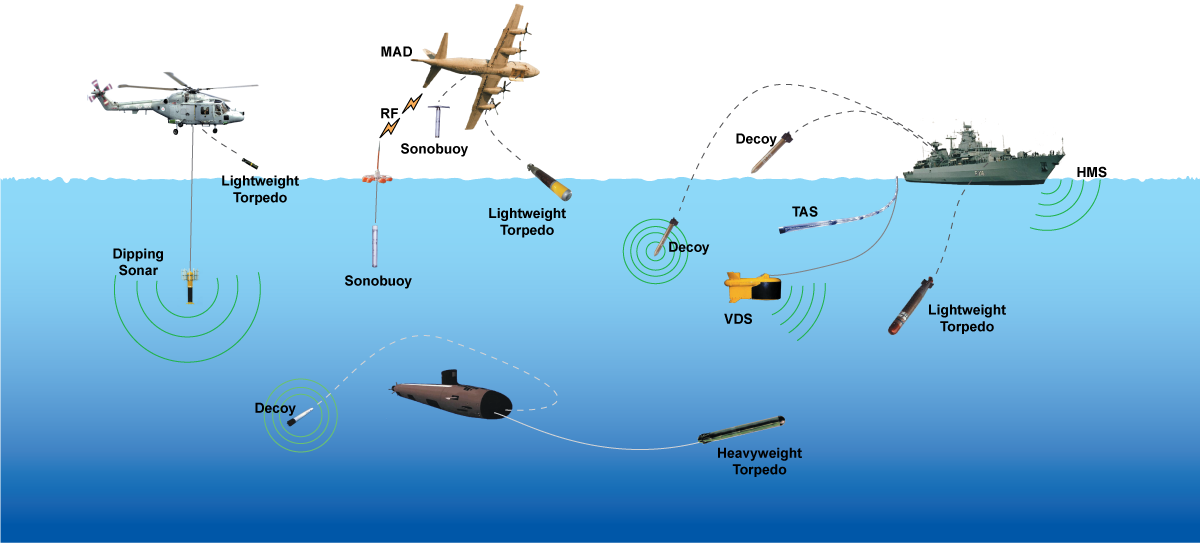
Sonar (Sound Navigation and Ranging) remains the primary technology for submarine detection. Its evolution is central to ASW.
- Passive Sonar: This technology listens for sounds emitted by the submarine itself, such as propulsion noise, machinery vibrations, or crew activities. Advances in hydrophone arrays – encompassing towed arrays, hull-mounted systems, and distributed seabed sensors – coupled with sophisticated signal processing algorithms, allow for the detection of ever-quieter submarines at greater ranges. Digital signal processing, often accelerated by specialized hardware and AI-driven filtering, can extract faint submarine signatures from background ocean noise, identify specific sound characteristics (acoustic fingerprints), and track their movement.
- Active Sonar: Emitting sound pulses and listening for echoes, active sonar provides a more definitive detection and localization, especially against very quiet submarines. However, it reveals the emitter’s position and can be affected by the ocean’s thermal layers and topography. Low-Frequency Active Sonar (LFAS) systems, using powerful low-frequency transducers, can achieve longer ranges by exploiting sound channels in the ocean, though their use is often controversial due to potential environmental impacts. Multi-static active sonar, where multiple dispersed receivers listen for echoes from a single or multiple active sources, enhances detection probability and reduces the risk to individual platforms.
- Non-Acoustic Sensors: While less primary, non-acoustic technologies play supplementary roles. Magnetic Anomaly Detectors (MAD) can identify distortions in the Earth’s magnetic field caused by the submarine’s large ferrous hull. Infrared (IR) sensors might detect subtle thermal plumes left by a submarine, particularly when close to the surface. Synthetic Aperture Radar (SAR) can sometimes detect subtle surface disturbances (wakes, internal waves) caused by a submerged submarine, although this remains highly challenging and dependent on environmental conditions.
Advanced Sensor Fusion and Data Processing
The sheer volume and complexity of data generated by diverse ASW sensors necessitate advanced data fusion techniques. Information from multiple passive sonar arrays, active sonar pings, MAD data, and even intelligence reports must be aggregated, correlated, and analyzed in real-time. This is where advanced computing and AI algorithms become indispensable. Machine learning models can be trained on vast datasets of acoustic signatures, environmental conditions, and historical submarine behaviors to improve detection accuracy, reduce false positives, and predict submarine movements. The goal is to paint a comprehensive, coherent picture of the underwater battlespace, enabling quicker and more informed decision-making.
Airborne and Surface Platforms for ASW
Effective ASW requires a multi-platform approach, leveraging the strengths of different assets:
- Aircraft (Fixed-wing and Rotary): Maritime patrol aircraft (MPA) like the P-8 Poseidon and ASW helicopters like the MH-60R Seahawk are critical. They deploy sonobuoys (disposable sonar systems dropped into the water to transmit acoustic data), carry MAD systems, and can quickly respond to potential contacts. Their speed and range allow them to cover vast ocean areas.
- Surface Vessels (Frigates, Destroyers): Warships are equipped with powerful hull-mounted and towed array sonars. They serve as command and control hubs for ASW operations, capable of deploying and recovering unmanned systems, and are primary platforms for delivering anti-submarine weaponry.
- Submarines (Hunter-Killers): Attack submarines, designed for stealth and equipped with advanced sonar, are often the most effective ASW platforms, capable of silently stalking and engaging enemy submarines in their own domain.
Weapons and Countermeasures in Modern ASW
The engagement phase of ASW also relies heavily on sophisticated technology, aimed at overcoming the challenges of underwater targeting and destruction.
Torpedoes and Depth Charges
- Torpedoes: Modern torpedoes are highly advanced, self-propelled underwater missiles. They feature sophisticated guidance systems, including active and passive sonar seekers, wire guidance (allowing the launching platform to update target data mid-course), and wake-homing capabilities. Electric or thermal propulsion systems enable high speeds and long ranges, while advanced warheads are designed for optimal underwater effect. Counter-countermeasures, such as advanced acoustic processing to defeat decoys, are also continuously developed.
- Depth Charges: While historically prominent, conventional depth charges have largely been supplanted by modern torpedoes for direct engagements. However, some specialized applications still exist, and smaller, rapidly deployed anti-torpedo torpedoes (ATTs) are a form of defensive depth charge.
Decoys and Evasion Technologies
Submarines don’t just hide; they actively evade. Decoys are a crucial part of this. Acoustic decoys emit sounds designed to mimic a submarine’s signature or confuse hostile sonar systems, drawing away incoming torpedoes. Countermeasures also include advanced maneuvering, emission control (reducing radiated noise), and specialized coatings or hull designs that absorb or deflect sonar pings, enhancing stealth.
The Role of AI and Automation in ASW
Artificial intelligence and automation are rapidly transforming ASW, moving it from labor-intensive analysis to highly autonomous, data-driven operations.
Predictive Analytics and Anomaly Detection
AI algorithms excel at processing vast amounts of sensory data, identifying subtle patterns, and distinguishing genuine submarine signatures from environmental noise or marine life. Machine learning models can predict potential submarine behaviors based on historical data, operational context, and real-time sensor inputs, significantly reducing the “fog of war” underwater. This includes anomaly detection for unusual acoustic events or deviations from expected patterns.
Autonomous Underwater Vehicles (AUVs) and Unmanned Surface Vessels (USVs)
AUVs and USVs are game-changers for ASW, offering persistent presence, reduced risk to human personnel, and the ability to operate in dangerous or remote areas.
- AUVs: These uncrewed submersibles can carry various sonar payloads, operating silently and autonomously for extended periods. They can form distributed sensor networks, expanding coverage area and providing multi-aspect data that is difficult for a single platform to achieve. AI guides their navigation, mission execution, and initial data processing, allowing them to identify contacts of interest before alerting human operators.
- USVs: Operating on the surface, USVs can deploy sonobuoys, tow sonar arrays, and act as communication relays for AUVs. They offer a cost-effective way to patrol vast maritime areas and augment the sensor capabilities of crewed warships.
Human-Machine Teaming
The future of ASW lies in effective human-machine teaming. AI systems will handle the monotonous tasks of raw data analysis, pattern recognition, and initial threat assessment, presenting human operators with distilled, actionable intelligence. This frees human experts to focus on higher-level strategic decision-making, complex problem-solving, and the nuanced interpretation of situations that still require human intuition and experience.
Digital Security and Cyber Resilience in ASW
Given the interconnected nature of modern ASW systems and the reliance on digital data, cybersecurity is paramount. A compromised ASW system could render entire fleets blind or provide adversaries with critical intelligence.
Protecting Sensor Networks
The integrity of sonar data, especially from distributed sensor networks (e.g., seabed arrays, sonobuoy fields), is vital. Encryption and secure communication protocols are essential to prevent adversaries from intercepting, spoofing, or manipulating sensor readings. Jamming and deception techniques against ASW sensors are also cyber-physical threats that must be mitigated.
Secure Data Transmission and Processing
ASW operations generate vast amounts of sensitive data, from acoustic signatures to operational plans. Secure data links, encrypted storage, and robust network architectures are necessary to protect this information from cyber espionage or sabotage. Furthermore, the AI models themselves must be resilient against adversarial attacks, where subtle data manipulations could lead to misidentification or false negatives. Supply chain security for hardware and software components used in ASW systems is also a growing concern.
Future Trends and Emerging Technologies
The ASW landscape is in constant flux, driven by technological innovation and evolving threats.
Quantum Sensing and Communication
Emerging quantum technologies hold promise for revolutionary ASW capabilities. Quantum sensors could offer unprecedented sensitivity, detecting minuscule changes in gravity or magnetic fields at ranges previously thought impossible. Quantum communication, with its inherent security features, could provide uninterceptable links for ASW platforms, particularly vital for stealth operations.
Advanced Materials and Stealth Technology
Material science continues to advance both submarine stealth and ASW counter-stealth. New anechoic coatings for submarines aim to absorb sonar pings even more effectively, while advanced composite materials might reduce magnetic signatures. Conversely, ASW research explores new material-based sensors that can operate more effectively in challenging ocean environments.

Network-Centric Warfare Integration
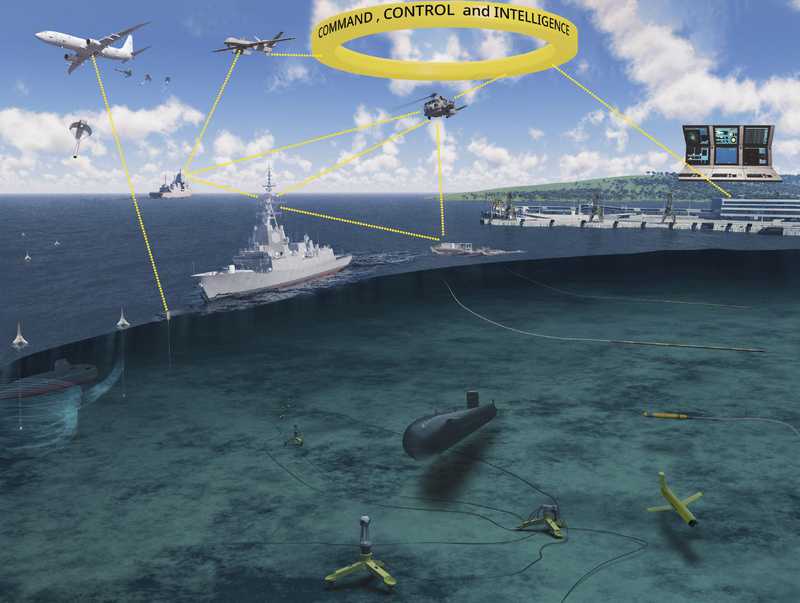
The complete integration of all ASW assets – satellites, aircraft, surface ships, manned submarines, AUVs, and shore-based command centers – into a single, cohesive, and secure network is the ultimate goal. This network-centric approach leverages shared situational awareness, rapid data exchange, and collaborative decision-making, ensuring that every asset contributes to a unified and optimized ASW effort. This requires robust, resilient, and secure communication infrastructures and sophisticated command and control software.
In conclusion, Anti-Submarine Warfare is a microcosm of advanced naval technology, continually pushing the boundaries of what is possible in detection, tracking, and engagement in the challenging underwater environment. Its future will be defined by further integration of AI, autonomous systems, quantum technologies, and robust cybersecurity measures, ensuring its continued relevance in global maritime security.
aViewFromTheCave is a participant in the Amazon Services LLC Associates Program, an affiliate advertising program designed to provide a means for sites to earn advertising fees by advertising and linking to Amazon.com. Amazon, the Amazon logo, AmazonSupply, and the AmazonSupply logo are trademarks of Amazon.com, Inc. or its affiliates. As an Amazon Associate we earn affiliate commissions from qualifying purchases.