
In an age where digital interaction forms the bedrock of personal communication, commerce, and enterprise, the specter of cyber threats looms larger than ever. Among the most insidious and pervasive of these threats is phishing – a sophisticated form of cyberattack designed to trick individuals into divulging sensitive information. The answer to this persistent menace lies in anti-phishing: a comprehensive suite of strategies, technologies, and practices aimed at detecting, preventing, and mitigating phishing attempts. Understanding anti-phishing is not merely about technical jargon; it’s about safeguarding digital identities, financial assets, and organizational integrity in an increasingly interconnected world.

Phishing, at its core, is a social engineering attack where malicious actors impersonate a trustworthy entity to deceive victims. This can range from an email seemingly from your bank requesting login credentials to a text message (smishing) urging you to click a malicious link for a package delivery. The consequences of falling victim can be severe, leading to financial loss, identity theft, data breaches, and reputational damage for individuals and organizations alike. Anti-phishing, therefore, is not a luxury but an indispensable component of modern digital security, evolving constantly to counter the ever-growing sophistication of attackers.
Understanding the Phishing Landscape: The Enemy Within and Without
To effectively combat phishing, one must first grasp its multifaceted nature. Phishing attacks are not monolithic; they employ a variety of tactics and target different vulnerabilities, making a multi-layered defense absolutely critical.
The Evolution of Phishing Techniques
Initially, phishing attacks were broad and often easily identifiable due to poor grammar or suspicious links. Today, they are highly sophisticated, leveraging advanced social engineering tactics, compromised accounts, and even AI-generated content to appear legitimate.
-
Email Phishing: The most common form, involving deceptive emails designed to trick recipients into revealing sensitive data or clicking malicious links. These often mimic legitimate organizations, complete with logos and branding.
-
Spear Phishing: A more targeted attack focusing on specific individuals or organizations, often preceded by reconnaissance to gather personal information that makes the communication appear highly credible.
-
Whaling: A type of spear phishing attack specifically targeting high-profile individuals within an organization, such as CEOs or CFOs, due to the potential for significant financial gain or access to critical data.
-
Smishing (SMS Phishing): Attacks conducted via text messages, often containing malicious links or phone numbers designed to trick users into divulging information or downloading malware.
-
Vishing (Voice Phishing): Phishing attacks carried out over the phone, where attackers impersonate legitimate entities (e.g., tech support, bank representatives) to extract sensitive information.
-
Website Spoofing/Cloning: Creating fake websites that perfectly mimic legitimate ones to trick users into entering their credentials, which are then harvested by the attackers.
-
Business Email Compromise (BEC): A highly damaging form of spear phishing where attackers compromise a business email account to impersonate an executive and trick employees or partners into transferring funds or sensitive data.
The sheer variety and evolving nature of these attacks underscore the need for dynamic and comprehensive anti-phishing strategies that go beyond simple technical fixes.
Pillars of a Robust Anti-Phishing Strategy
An effective anti-phishing framework is built upon several foundational pillars, combining technological solutions with human intelligence and proactive measures. No single solution can fully protect against all forms of phishing; rather, it’s the synergy of these components that creates resilience.
Technological Defenses: The Digital Shield
Technological tools form the first line of defense, designed to intercept, analyze, and block phishing attempts before they reach the end-user.
-
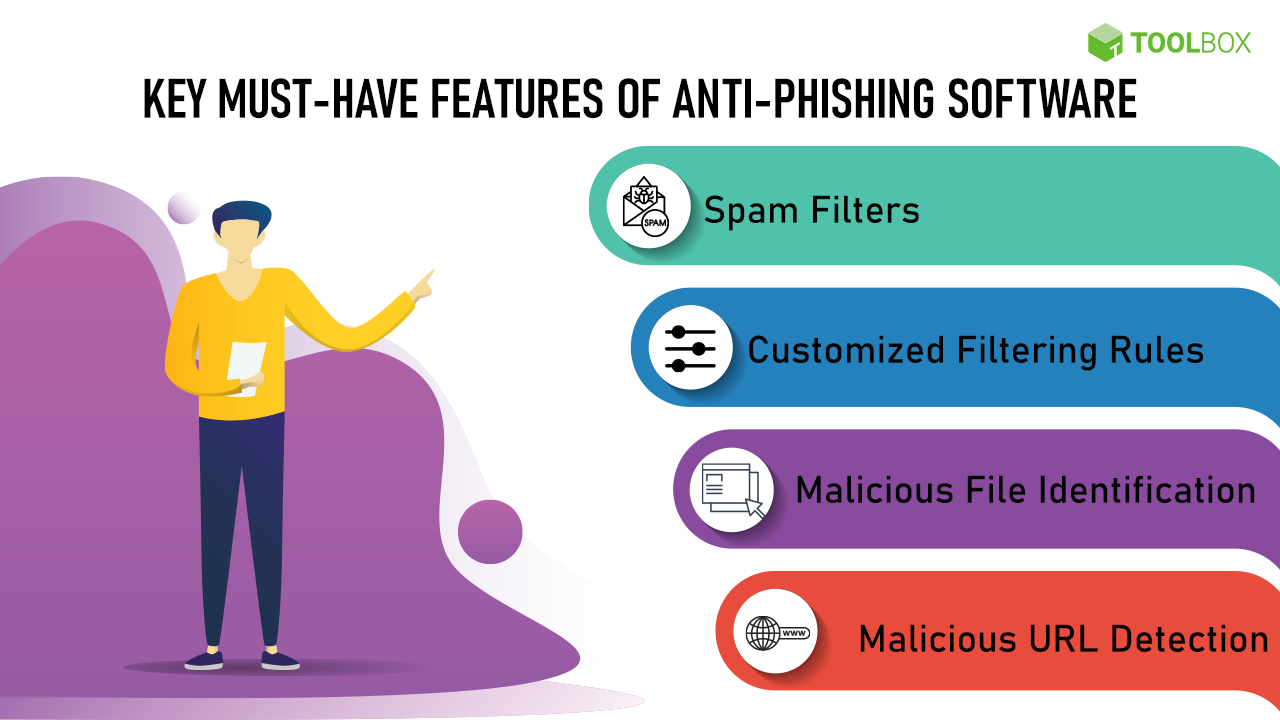
Email Filtering and Gateway Security: These systems analyze incoming emails for suspicious characteristics such as spoofed sender addresses, malicious links, suspicious attachments, and known phishing patterns. Advanced filters use AI and machine learning to identify novel threats.
- SPF (Sender Policy Framework), DKIM (DomainKeys Identified Mail), DMARC (Domain-based Message Authentication, Reporting & Conformance): These email authentication protocols help legitimate senders prevent spoofing of their domains, allowing receiving mail servers to verify the authenticity of an email’s sender.
-
Web Filters and DNS Security: These tools block access to known malicious websites and prevent users from navigating to spoofed sites that host phishing content. They often integrate with threat intelligence feeds to stay updated on new threats.
-
Multi-Factor Authentication (MFA): Even if credentials are compromised through a phishing attack, MFA provides an additional layer of security by requiring a second form of verification (e.g., a code from a mobile app, a fingerprint scan) before granting access. This significantly reduces the impact of credential theft.
-
Endpoint Detection and Response (EDR): EDR solutions monitor endpoints (computers, mobile devices) for malicious activity, including attempts by malware downloaded via phishing links to establish persistence or exfiltrate data.
-
Threat Intelligence Platforms: These platforms aggregate and analyze data on emerging threats, including new phishing campaigns, malicious domains, and attacker tactics, techniques, and procedures (TTPs). This proactive intelligence helps organizations stay ahead of evolving threats.
-
Secure Browsers and Browser Extensions: Some browsers incorporate built-in phishing protection, warning users about suspicious websites. Various browser extensions also offer added layers of security, such as identifying malicious URLs or warning against untrusted sites.

Human Element: The Crucial Last Line of Defense
While technology provides powerful defenses, the human element remains both the primary target and the ultimate defense against phishing. No technological solution is foolproof, and a well-trained, vigilant workforce or individual is indispensable.
-
Security Awareness Training: Regular, engaging, and comprehensive training programs are vital to educate users about the latest phishing tactics, how to recognize red flags, and the importance of reporting suspicious activity.
- Simulated Phishing Attacks: Conducting controlled phishing simulations helps organizations assess employee vulnerability, reinforce training, and identify areas for improvement without real-world consequences.
-
Establishing a Reporting Culture: Encouraging users to report any suspicious email, text, or call creates an early warning system, allowing security teams to quickly identify and neutralize threats before they can spread.
-
Clear Policies and Procedures: Implementing clear guidelines on how to handle sensitive information, verify requests, and report incidents ensures a consistent and secure response to potential threats.
Implementing and Maintaining Anti-Phishing Measures
An effective anti-phishing strategy is not a one-time implementation but an ongoing process of adaptation, monitoring, and improvement. The threat landscape is constantly changing, and defenses must evolve in tandem.
Proactive Monitoring and Incident Response
Continuous monitoring for phishing indicators and having a robust incident response plan are critical for minimizing damage when an attack inevitably occurs.
-
Email and Network Monitoring: Actively scan email traffic and network activity for anomalies that could indicate a phishing attempt or a successful breach.
-
Security Information and Event Management (SIEM) Systems: SIEM solutions aggregate and analyze security logs from various sources, providing a centralized view of an organization’s security posture and helping detect suspicious patterns.
-
Incident Response Plan: A well-defined plan outlining steps to take immediately after a phishing incident (e.g., isolating affected systems, password resets, communication protocols) can significantly limit the damage.
Continuous Adaptation and Improvement
The cat-and-mouse game between attackers and defenders demands constant vigilance and adaptation.
-
Regular Threat Landscape Assessment: Stay informed about new phishing trends, emerging attack vectors, and specific threats targeting your industry or region.
-
Feedback Loops and Adjustments: Use insights from simulated attacks, reported incidents, and security audits to refine training programs, update technical controls, and adjust policies.
-
Vendor Management: Evaluate and select security vendors whose anti-phishing solutions are robust, continuously updated, and integrate well with existing infrastructure.
The Future of Anti-Phishing: AI, Machine Learning, and Beyond
As phishing techniques become more sophisticated, leveraging AI to craft convincing lures and evade traditional defenses, anti-phishing solutions must also harness advanced technologies.
-
AI and Machine Learning for Threat Detection: AI and ML algorithms are increasingly used to analyze vast quantities of data to identify subtle patterns indicative of phishing, often detecting threats that human eyes or rule-based systems might miss. This includes analyzing email headers, content, sender behavior, and even image recognition for logo spoofing.
-
Behavioral Analytics: Monitoring user behavior (e.g., unusual login times, atypical data access patterns) can help identify compromised accounts or insider threats that might stem from a successful phishing attack.
-
Automated Remediation: Future anti-phishing systems will likely offer more automated remediation, such as automatically quarantining suspicious emails, blocking access to malicious URLs, and even initiating password resets for compromised accounts under specific conditions.
-
Blockchain for Identity Verification: While nascent, blockchain technology holds promise for creating immutable, verifiable digital identities, making it significantly harder for attackers to spoof legitimate entities.
In conclusion, “what is anti-phishing?” is far more than a simple definition; it’s a critical inquiry into the strategic defense of our digital lives. It encompasses a dynamic interplay of advanced technological safeguards, rigorous human training, and proactive security practices. As cybercriminals relentlessly innovate their phishing tactics, the commitment to comprehensive and evolving anti-phishing measures remains paramount. Only through a multi-layered approach that empowers both technology and people can we hope to navigate the treacherous waters of the digital world securely and confidently, transforming potential victims into vigilant defenders.
aViewFromTheCave is a participant in the Amazon Services LLC Associates Program, an affiliate advertising program designed to provide a means for sites to earn advertising fees by advertising and linking to Amazon.com. Amazon, the Amazon logo, AmazonSupply, and the AmazonSupply logo are trademarks of Amazon.com, Inc. or its affiliates. As an Amazon Associate we earn affiliate commissions from qualifying purchases.