
For many individuals approaching their golden years, the primary concern shifts from wealth accumulation to wealth preservation and, more importantly, income sustainability. As traditional pensions become increasingly rare, the onus of funding a thirty-year retirement falls squarely on the individual. This is where the concept of an annuity becomes a cornerstone of financial strategy. Understanding what an annuity means is the first step toward securing a predictable, lifelong income stream that shields you from the volatility of market cycles.
Defining the Annuity: The Basics of Contractual Security
At its simplest level, an annuity is a contract between an individual and an insurance company. You make a payment—either a lump sum or a series of periodic contributions—to the insurer. In exchange, the insurance company agrees to provide you with a series of future payments. Think of it as a private pension plan that you purchase yourself.
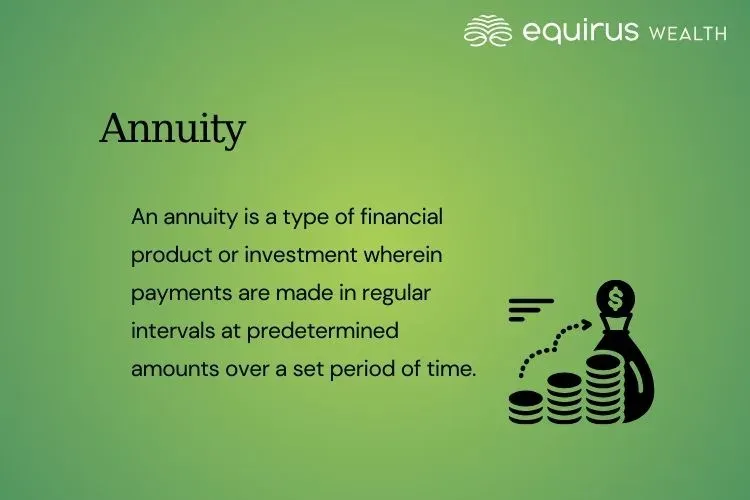
The fundamental purpose of an annuity is to transfer the risk of outliving your money from the individual to the insurance company. By pooling the mortality risk of many participants, insurance companies can guarantee payments for a specific period, or, in the case of a lifetime annuity, for as long as you live, regardless of how long that may be.
The Mechanism of Accumulation and Annuitization
Most annuity contracts are structured in two distinct phases: the accumulation phase and the annuitization (or distribution) phase.
During the accumulation phase, your contributions grow. Depending on the type of annuity, this growth might be based on a fixed interest rate, the performance of a sub-account portfolio of mutual funds, or an index linked to the broader market. During this time, your earnings are generally tax-deferred, meaning you do not pay taxes on the interest or market gains until you begin withdrawing the money.
The annuitization phase begins when you decide to start receiving the income stream. At this point, the contract is converted into a stream of payments. Once this election is made, you are essentially trading your lump sum for the promise of guaranteed income. It is important to note that for many traditional immediate annuities, this transition is irrevocable; you no longer have access to the underlying principal, but you have gained the security of a paycheck for life.
Types of Annuities: Navigating the Spectrum of Risk and Reward
Not all annuities are created equal. The financial industry categorizes them based on when the payments start and how the underlying funds are managed. Understanding these nuances is critical to determining which, if any, annuity fits into your broader financial portfolio.
Fixed Annuities: Predictability and Stability
A fixed annuity offers a guaranteed rate of interest for a specified period. This is the most conservative option, ideal for individuals who prioritize the safety of their principal above all else. Because the interest rate is locked in, the primary risk here is inflation; if the cost of living rises significantly, the fixed payment may lose its purchasing power over time.
Variable Annuities: The Potential for Market Participation
Variable annuities allow you to invest your premium in various sub-accounts, which are similar to mutual funds. Your account value fluctuates based on the performance of these investments. While this offers the potential for higher returns, it also introduces market risk. If the underlying investments perform poorly, your account value—and potentially your future income—could decrease. To mitigate this, many variable annuities offer optional riders that provide a “floor” for your income, though these usually come with additional fees.

Indexed Annuities: A Middle Ground
Fixed-indexed annuities (FIAs) offer a hybrid approach. The returns are linked to a specific market index, such as the S&P 500. You are credited with interest based on the index’s performance, but with a cap on the upside and a floor (often 0%) on the downside. This protects you from market crashes while allowing you to capture some of the growth when the markets are bullish.
Immediate vs. Deferred Annuities
The distinction between immediate and deferred annuities relates to the timing of the payout. A Single Premium Immediate Annuity (SPIA) begins paying you shortly after your initial deposit—usually within 30 days. This is designed for those who have a lump sum and need immediate cash flow. Conversely, a deferred annuity allows the funds to sit and grow for years before you eventually trigger the income phase, making it a powerful tool for long-term retirement planning.
The Role of Annuities in a Diversified Retirement Portfolio
Financial advisors often debate the “annuity question.” Critics point to high commission structures and surrender charges, while proponents highlight the peace of mind that comes with guaranteed income. To understand the utility of an annuity, one must view it not as a replacement for other investments, but as a “floor” for your essential expenses.
Covering Essential Expenses vs. Lifestyle Needs
A common strategy is to use Social Security and annuity payments to cover your “non-discretionary” expenses—housing, utilities, food, and healthcare. Once these baseline costs are covered by guaranteed income, you have greater flexibility with the remainder of your investment portfolio. You can afford to take more risk with your equity investments because your “survival” income is already secured. This psychological comfort can prevent investors from panic-selling during market downturns.
Tax Advantages and Constraints
The tax-deferred growth of an annuity is a significant advantage. Because you are not paying taxes on gains every year, your money can compound more efficiently over time. However, it is vital to remember that when you eventually withdraw the money, those earnings are taxed as ordinary income, not at the lower long-term capital gains rates. Furthermore, if you withdraw money before age 59½, you may be subject to a 10% IRS tax penalty in addition to potential surrender charges imposed by the insurance company.
Evaluating the Fine Print: Costs, Fees, and Riders
Annuities are complex financial instruments, and their complexity is often reflected in the fee structure. Before committing to a contract, you must look beyond the glossy marketing materials.
Understanding the Cost Structure
Annuity fees can include mortality and expense (M&E) charges, administrative fees, and investment management fees for the underlying sub-accounts. Additionally, “riders”—optional add-ons that provide benefits like enhanced death benefits or guaranteed minimum withdrawal benefits—carry their own costs. While these features can be valuable, they can also significantly erode the potential growth of your account if not carefully managed.
The Importance of the “Surrender Period”
Most annuities have a surrender period—a window of time, often ranging from 5 to 10 years—during which you are penalized if you try to withdraw more than a certain percentage of your money. These penalties can be substantial, sometimes starting at 7% or higher. Because of this, an annuity should only be purchased with money that you are certain you will not need for liquid emergencies.

Final Considerations: Is an Annuity Right for You?
Determining whether an annuity belongs in your financial plan requires a honest assessment of your retirement goals, your risk tolerance, and your longevity expectations. If you are a disciplined investor who prefers full control over your assets and the ability to pass them on to heirs as a legacy, an annuity’s lack of liquidity and complex structure might not align with your preferences.
However, if your primary goal is to ensure that you never run out of money in your final years, an annuity can provide a level of security that stocks and bonds cannot match. It serves as a personal insurance policy against the unpredictable nature of longevity and market volatility.
As you evaluate your options, look for highly rated insurance companies, compare the fee structures of various products, and consider consulting with a fiduciary advisor who can look at your entire financial picture. An annuity is a significant commitment, but when utilized correctly, it provides the most precious commodity of all in retirement: the assurance that no matter how long you live, your financial foundation will remain stable.
aViewFromTheCave is a participant in the Amazon Services LLC Associates Program, an affiliate advertising program designed to provide a means for sites to earn advertising fees by advertising and linking to Amazon.com. Amazon, the Amazon logo, AmazonSupply, and the AmazonSupply logo are trademarks of Amazon.com, Inc. or its affiliates. As an Amazon Associate we earn affiliate commissions from qualifying purchases.