
In the landscape of modern technology, few innovations have had as profound an impact on science, security, and industry as the X-ray. While most people associate the term with a trip to the doctor’s office following a sports injury, the X-ray is fundamentally a masterpiece of electromagnetic engineering. From its accidental discovery in the late 19th century to the integration of artificial intelligence and cloud computing today, X-ray technology represents a critical pillar of our digital and physical infrastructure.
To understand what an X-ray is in a contemporary context, one must look beyond the black-and-white film of the past. Today, X-ray technology is a sophisticated suite of hardware and software tools designed to visualize the invisible, utilizing high-energy radiation to penetrate matter and deliver actionable data.
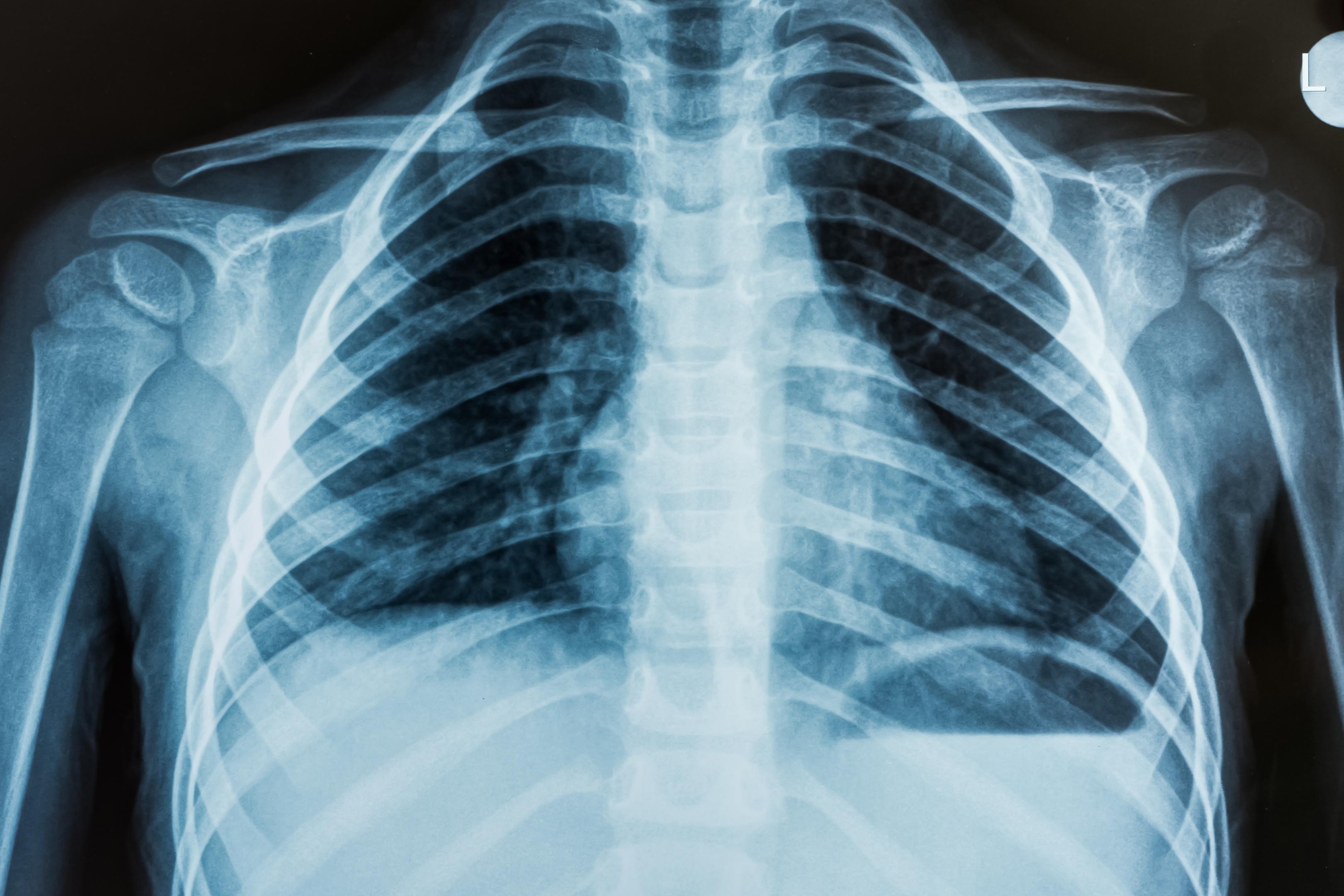
The Physics and Fundamentals of X-ray Technology
At its core, an X-ray is a form of electromagnetic radiation, similar to visible light but with a much shorter wavelength and significantly higher energy. This energy allows X-ray photons to pass through objects that are opaque to the human eye, such as soft tissue, plastic, and even thin layers of metal.
The Discovery and Nature of Electromagnetic Radiation
The story of the X-ray began in 1895 with Wilhelm Conrad Röntgen, who noticed that a cathode-ray tube could make a fluorescent screen glow even when there was a thick piece of cardboard between them. He dubbed these mysterious emissions “X-rays,” with the “X” signifying the unknown.
Technically, X-rays sit on the spectrum between ultraviolet light and gamma rays. Because they possess such high frequency, they do not reflect off surfaces in the way light does; instead, they are absorbed or scattered based on the density of the material they encounter. This phenomenon, known as attenuation, is what allows us to create images. Dense materials like calcium (bones) or lead absorb more X-rays, appearing white on a detector, while less dense materials like skin or air allow more rays to pass through, appearing darker.
How Modern X-ray Tubes Function
The hardware responsible for generating these rays has evolved from crude glass vacuum tubes to highly calibrated digital generators. A modern X-ray machine functions by accelerating electrons at high speeds and smashing them into a metal target, usually made of tungsten.
When these high-speed electrons collide with the atoms of the target, the sudden deceleration releases energy in the form of X-ray photons. Modern tech focuses on precision: controlling the kilovoltage (kVp) to manage the “hardness” or penetrating power of the beam, and the milliamperage (mAs) to control the quantity of photons. This precision ensures that the technology provides the highest possible image resolution while minimizing exposure to ionizing radiation.
From Film to Digital: The Digital Transformation of Radiography
For nearly a century, X-ray images were captured on physical film that required chemical processing in a darkroom. However, the digital revolution has completely overhauled this workflow, shifting the “X-ray” from a physical artifact to a digital data set. This transition is known as Digital Radiography (DR).
Computed Radiography (CR) vs. Direct Digital Radiography (DR)
The move toward digital imaging occurred in two major technological waves. First came Computed Radiography (CR), which used a photostimulable phosphor plate. After exposure, the plate was run through a laser scanner to digitize the image. While an improvement over film, it was still a multi-step process.
The current gold standard is Direct Digital Radiography (DR). DR systems use flat-panel detectors (FPDs) containing a layer of scintillators. These sensors convert X-rays directly into an electric charge, which is immediately processed into a digital image. This tech allows for “instant” imaging, reducing the time a patient or a technician spends waiting for results and significantly increasing the throughput of busy facilities.
Cloud-Based Image Storage and PACS Systems
In the tech world, an X-ray is no longer just an image; it is a file within a massive ecosystem. Picture Archiving and Communication Systems (PACS) are the software backbones that store and distribute these images.
By leveraging cloud computing, modern X-ray technology allows a specialist in London to review a scan taken in a rural clinic in real-time. This interconnectedness is powered by the DICOM (Digital Imaging and Communications in Medicine) protocol, a technical standard that ensures X-ray data remains consistent across different software platforms, hardware manufacturers, and security layers.
The Intersection of AI and X-ray Diagnostics

The most significant contemporary trend in X-ray technology is the integration of Artificial Intelligence (AI) and Machine Learning (ML). We are moving from a world where humans merely look at images to a world where software assists in the interpretation of those images.
Computer-Aided Detection (CAD) and Deep Learning
AI algorithms are now being trained on millions of existing X-ray images to identify patterns that might be invisible to the human eye. Deep learning models, specifically Convolutional Neural Networks (CNNs), are exceptionally good at pattern recognition.
In a tech-driven clinical environment, AI can act as a “first reader.” For example, if an X-ray reveals a potential pneumothorax (collapsed lung) or a specific type of bone fracture, the software can flag that image for immediate priority review. This doesn’t replace the human expert but provides a powerful technological safety net, reducing the “diagnostic fatigue” often experienced by radiologists.
Enhancing Workflow Efficiency with Automation
Beyond diagnostic assistance, AI is being used to optimize the tech behind the image capture itself. Smart X-ray systems can now automatically detect the body part being imaged and adjust the radiation dose accordingly. They can also detect if a patient is positioned incorrectly or if the image is likely to be blurry due to movement, prompting the technician to adjust before the exposure is even completed. This level of automation reduces “retakes,” thereby lowering radiation exposure and improving technological efficiency.
Beyond Medicine: Industrial and Security Applications
While “what is an X-ray” is usually answered in a medical context, the technology is equally vital in the industrial and security sectors. In these niches, X-ray tech is used for “Non-Destructive Testing” (NDT) and high-stakes screening.
Non-Destructive Testing (NDT) in Engineering
In the aerospace, automotive, and construction industries, X-ray technology is used to inspect the integrity of materials without damaging them. High-energy industrial X-rays can penetrate thick steel welds or turbine blades to look for microscopic cracks, porosities, or inclusions.
This application of X-ray tech is critical for safety. Before a jet engine is cleared for flight, its internal components often undergo X-ray inspection to ensure structural perfection. Digital detectors in this space have reached such high resolutions that they can detect flaws measured in microns, representing the pinnacle of industrial imaging hardware.
Advanced Security Screening and Computed Tomography (CT)
In the realm of security technology, X-rays are our primary defense against illicit goods and threats. Modern airport scanners have moved beyond simple 2D projection. We now see the deployment of Computed Tomography (CT) for baggage screening.
Unlike a standard X-ray, which provides a flat image, CT technology rotates an X-ray source around an object to create a 3D reconstruction. Software algorithms then analyze the “atomic number” of the objects inside a bag. This allows the system to automatically distinguish between harmless liquids and explosive compounds based on their density and effective atomic mass—a feat of high-speed data processing and physics.
The Future of X-ray Technology: Innovation and Safety
As we look toward the future, X-ray technology is becoming smaller, safer, and more precise. The trend is moving toward “molecular” imaging and extreme portability.
Low-Dose Imaging and Photon-Counting Detectors
A major frontier in X-ray tech is the development of photon-counting detectors (PCDs). Current digital detectors integrate the energy of all X-rays falling on a pixel, which can lose some data in the process. Photon-counting detectors, however, “count” every single X-ray photon and measure its specific energy.
This technological leap allows for much higher contrast and resolution at a significantly lower radiation dose. It essentially provides “color” X-rays, where different materials can be more clearly distinguished by their specific energy signatures, leading to a new era of spectral imaging.

Portability and the Rise of Point-of-Care (POC) Imaging
Finally, the hardware itself is shrinking. Traditionally, X-ray machines were massive, lead-lined rooms. Today, we are seeing the rise of handheld X-ray devices and mobile units that can be wheeled into a patient’s room or out into the field during a disaster.
These portable units utilize “Cold Cathode” technology, which replaces the traditional heated filament with carbon nanotubes. This allows the X-ray source to be much smaller and more energy-efficient, meaning it can run on battery power. This democratization of X-ray technology ensures that high-level diagnostic tools are available not just in major tech hubs, but in remote corners of the globe.
In conclusion, an X-ray is far more than just a medical scan. It is a sophisticated, evolving technology that bridges the gap between physics and digital data. Whether it is helping an AI identify a disease, ensuring a plane is safe to fly, or scanning a suitcase for threats, X-ray technology remains one of the most indispensable tools in the modern technological arsenal. As we continue to refine the sensors, algorithms, and hardware, the “unknown ray” will continue to provide clarity in an increasingly complex world.
aViewFromTheCave is a participant in the Amazon Services LLC Associates Program, an affiliate advertising program designed to provide a means for sites to earn advertising fees by advertising and linking to Amazon.com. Amazon, the Amazon logo, AmazonSupply, and the AmazonSupply logo are trademarks of Amazon.com, Inc. or its affiliates. As an Amazon Associate we earn affiliate commissions from qualifying purchases.