
In the landscape of modern digital security, the SF86 (Standard Form 86) serves as the gatekeeper for the most sensitive information held by the United States government. For technology professionals, cybersecurity experts, and software engineers aiming to work within the defense or intelligence communities, the SF86 is more than just a questionnaire; it is the foundational document for obtaining a national security clearance. As the tech industry becomes increasingly intertwined with national defense—ranging from AI development to cloud infrastructure—understanding the technical and procedural nuances of the SF86 is essential for any high-level career in digital security.

The Digital Backbone of National Security: Understanding the SF86
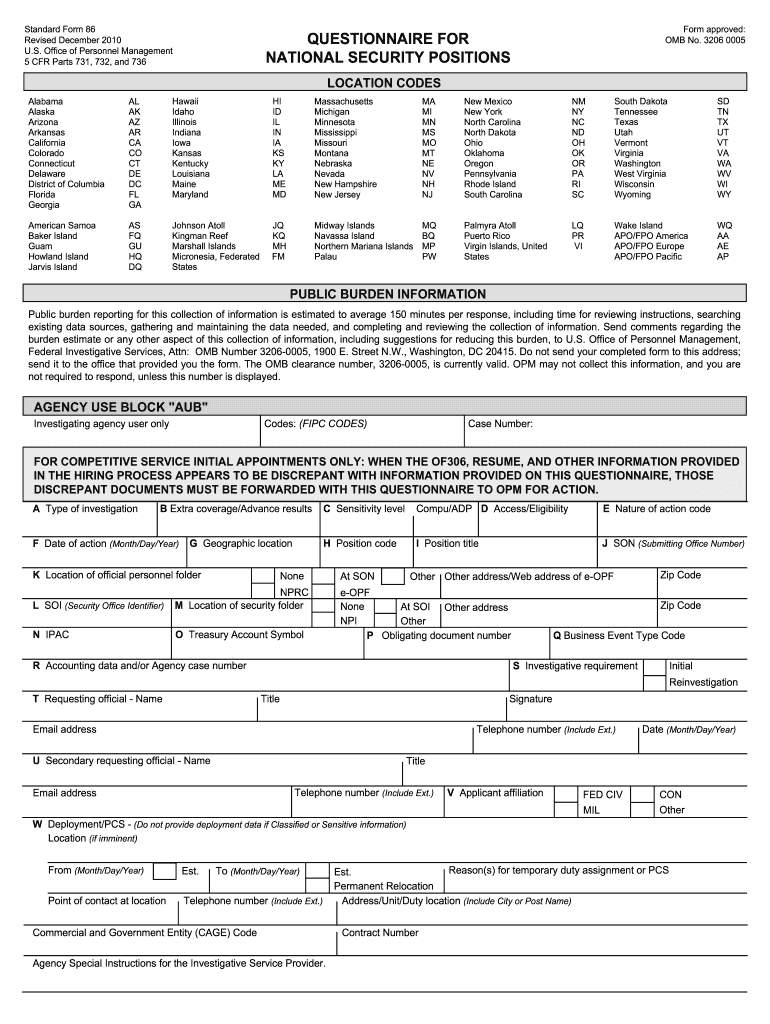
The SF86, formally titled the “Questionnaire for National Security Positions,” is a comprehensive document used by the U.S. government to conduct background investigations. These investigations determine whether an individual is eligible for access to classified information or can hold a sensitive position. In the context of technology, this form is the first step toward securing roles that involve protecting the nation’s digital infrastructure.
From Paper to e-QIP and eApp: The Tech Evolution
Historically, the SF86 was a daunting stack of paper that candidates filled out by hand. However, in line with modern digital transformation efforts, the process has moved almost entirely online. For years, the Electronic Questionnaires for Investigations Processing (e-QIP) was the standard platform. Today, the government is transitioning to a more modern, intuitive interface known as eApp.
eApp represents a significant upgrade in user experience (UX) and data validation. Unlike its predecessor, eApp utilizes “branching logic,” ensuring that users only see questions relevant to their previous answers. This technological shift reduces errors and speeds up the data entry process, illustrating how the government is applying modern software principles to legacy administrative tasks.
Why Cybersecurity Professionals Need Clearance
As cyber warfare becomes a primary theater of international conflict, the demand for cleared tech talent has skyrocketed. Whether it is a software developer building encryption protocols for the Department of Defense or a data scientist working on threat detection for the NSA, these roles require a high level of trust.
A security clearance—facilitated by the SF86—verifies that an individual is not susceptible to foreign influence, blackmail, or criminal activity. In the tech sector, where a single vulnerability can compromise an entire national network, the SF86 acts as a human “firewall,” vetting the individuals who have the “root access” to the nation’s most critical systems.
Navigating the Data-Intensive Vetting Process
The SF86 is notoriously long, often exceeding 130 pages if printed. It requires an exhaustive history of an individual’s life, covering everything from residence history to foreign travel and digital interactions. For tech professionals, the data requirements are particularly stringent regarding foreign contacts and technological usage.
Personal Identifiable Information (PII) and the SF86
The form asks for deep dives into an applicant’s life, including social security numbers, past employment, and detailed accounts of family members. Because the SF86 collects such a massive amount of Personal Identifiable Information (PII), the security of the platforms used to host this data (like eApp) is paramount. Applicants are essentially trusting the government’s digital security protocols to protect a roadmap of their entire lives. For those in the tech industry, this process often highlights the critical importance of secure data storage and encryption.
Foreign Influence and Digital Footprints
In an era of global connectivity, tech workers often collaborate with international teams or contribute to open-source projects with global contributors. The SF86 requires applicants to disclose “close and continuing” contact with foreign nationals.
In the digital age, this extends to online interactions. Investigators may look at a candidate’s digital footprint, including professional networking on platforms like LinkedIn or GitHub, to ensure that their connections do not pose a risk of corporate espionage or state-sponsored hacking. For a developer, being mindful of their digital associations is a key component of maintaining eligibility for high-level security clearances.
The Technological Infrastructure of Background Investigations
The process that follows the submission of an SF86 is a masterpiece of data integration and investigative technology. Once the form is submitted, it triggers a multi-agency investigation that leverages both human intelligence and automated systems.
Continuous Vetting (CV) and Real-Time Monitoring
One of the most significant shifts in the security clearance world is the move from “periodic reinvestigations” to Continuous Vetting (CV). In the past, a Top Secret clearance holder would be re-investigated every five years. Today, the government employs automated systems to monitor clearance holders in near real-time.
Continuous Vetting uses automated data feeds to check for “flags” such as new criminal records, significant changes in financial status, or suspicious travel. This transition from a manual, time-bound process to an automated, data-driven monitoring system mirrors the “Continuous Integration/Continuous Deployment” (CI/CD) pipelines used in modern software development. It ensures that security is an ongoing state rather than a one-time check.
Data Integration: How the Government Cross-References Information
When an investigator receives an SF86, they don’t just take the applicant’s word. The government utilizes advanced data matching algorithms to cross-reference the SF86 against a variety of databases, including:
- Credit Bureau Reports: To check for financial instability or high debt loads.
- Law Enforcement Databases: To verify criminal history.
- Public Records: To confirm property ownership and legal proceedings.
- Customs and Border Protection Records: To verify the foreign travel listed on the form.
This level of data synthesis requires a robust backend infrastructure, capable of handling millions of records while maintaining the highest levels of digital security.
Best Practices for Digital Security Specialists Completing the SF86
For those in the tech industry, the SF86 should be approached with the same precision one would apply to writing code or configuring a secure server. Errors, omissions, or “bugs” in the data can lead to significant delays or even a denial of clearance.
Accuracy and Transparency in the Digital Age
The most common reason for clearance denial is not the presence of “red flags” (like past drug use or financial debt), but rather the failure to disclose them. In a world where “everything is digital,” it is nearly impossible to hide past indiscretions from a federal investigator.
Tech professionals should maintain a “log” of their foreign travel and international professional contacts. When filling out the SF86, the goal is total transparency. Investigators value honesty because it demonstrates that the individual cannot be coerced or blackmailed. In the cybersecurity world, we call this reducing the “attack surface”—by disclosing everything, you leave no hidden vulnerabilities for an adversary to exploit.
Protecting Your Personal Data During the Process
Because the SF86 requires you to gather sensitive information about yourself and others, you must practice excellent digital hygiene during the preparation phase.
- Use Encrypted Storage: If you are keeping a draft of your residence history or foreign contacts, ensure it is stored in an encrypted password manager or a secure, offline document.
- Verify Official Portals: Only enter SF86 data into official “.gov” portals. Be wary of phishing attempts that mimic clearance processing sites.
- Secure Communication: When discussing your clearance with a Security Office (SO) or Facility Security Officer (FSO), use secure, encrypted communication channels whenever possible.

Conclusion: The Future of Security Clearances in a Tech-Driven World
The SF86 is much more than a bureaucratic hurdle; it is a critical component of the United States’ digital defense strategy. As technology continues to evolve, the SF86 and the investigations that follow will become even more data-reliant and automated.
For the modern tech professional, obtaining a security clearance through the SF86 opens doors to some of the most challenging and rewarding work in the industry. Whether you are defending against state-sponsored cyberattacks, building AI for the next generation of defense systems, or managing the migration of classified data to the cloud, your journey begins with this form. By understanding the tech-driven processes behind the SF86 and approaching it with the rigor of a security professional, you can successfully navigate the vetting process and contribute to the technological vanguard of national security.
aViewFromTheCave is a participant in the Amazon Services LLC Associates Program, an affiliate advertising program designed to provide a means for sites to earn advertising fees by advertising and linking to Amazon.com. Amazon, the Amazon logo, AmazonSupply, and the AmazonSupply logo are trademarks of Amazon.com, Inc. or its affiliates. As an Amazon Associate we earn affiliate commissions from qualifying purchases.