
The SF 52, or Standard Form 52, serves as a pivotal administrative document within large organizations, particularly prominent in federal government agencies like the Department of Defense (DoD). While primarily known as a “Request for Personnel Action,” its true significance extends deeply into the realm of financial management. Far from being a mere bureaucratic formality, the SF 52 acts as a critical financial tool, initiating and documenting changes to an organization’s most substantial expenditure: its human capital. Understanding the SF 52 is therefore not just about navigating personnel procedures, but about comprehending a fundamental mechanism of business finance, budget allocation, and expenditure control.
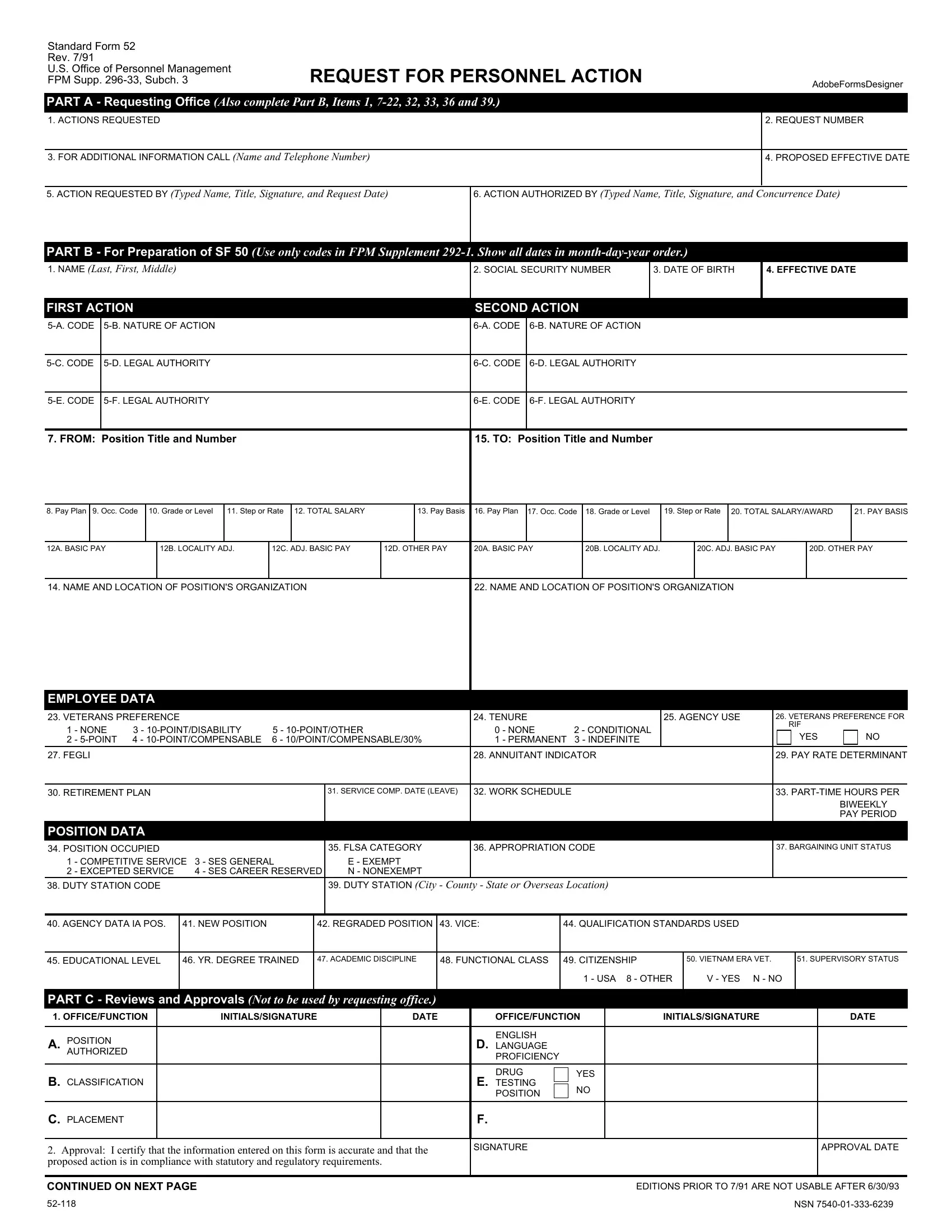
The SF 52: A Critical Financial Enabler in Personnel Management
At its core, the SF 52 is a standardized form used to propose, request, and document a wide array of personnel actions. These actions can include everything from new hires, promotions, demotions, transfers, and reassignments to extensions of temporary appointments, changes in work schedules, and terminations. Each of these actions, without exception, carries a direct and often substantial financial implication for the organization.
The very act of initiating an SF 52 is, in essence, an initiation of a financial obligation or adjustment. A new hire means new salary outlays, benefit costs, and potentially recruitment expenses. A promotion translates into a higher salary base and increased associated payroll taxes and retirement contributions. Even a lateral transfer might involve relocation costs or changes in locality pay. Thus, the SF 52 functions as the financial linchpin for managing an organization’s labor budget, making it an indispensable instrument for financial planners, budget analysts, and accounting departments. It provides the formal documentation required to authorize spending against personnel budgets, ensuring that all payroll and benefits expenditures are properly justified, recorded, and aligned with organizational financial strategy.
Detailing Financial Implications of Personnel Actions
The financial ramifications of personnel actions initiated via an SF 52 are multifaceted and pervasive, touching various aspects of an organization’s financial health.
Salary and Wage Adjustments
One of the most immediate financial impacts of an SF 52 relates to salary and wage adjustments. When an employee is promoted, demoted, or undergoes a change in pay grade, the SF 52 is the formal instrument that authorizes these modifications. For a promotion, the SF 52 triggers an increase in the employee’s base salary, directly impacting the organization’s payroll expenditures. This isn’t just a marginal adjustment; across a large workforce, numerous promotions can significantly elevate the annual salary budget. Conversely, a demotion, while less common, would result in a reduction of salary outlay.
Beyond the base salary, these adjustments also affect associated costs such as employer-paid payroll taxes (e.g., Social Security, Medicare), which are calculated as a percentage of wages. Higher salaries mean higher payroll tax contributions, further adding to the organization’s financial burden. For organizations operating under specific pay scales or locality pay systems, an SF 52 might also authorize adjustments based on geographical location or cost-of-living increases, each carrying distinct financial implications that must be meticulously budgeted for and tracked. Without the SF 52, such changes would lack formal authorization, leading to payroll discrepancies and potential financial mismanagement.
Benefits and Entitlements
Personnel actions documented through an SF 52 also have profound effects on employee benefits and entitlements, which represent a significant portion of total compensation costs. A new hire, for instance, means the organization incurs new costs for health insurance premiums, life insurance, retirement plan contributions (e.g., 401k matching, pension plans), and potentially other fringe benefits like vision or dental care. The SF 52 provides the official record to initiate these benefit enrollments and associated financial obligations.
Furthermore, changes in employment status or work schedule – such as moving from part-time to full-time, or changes in tenure – can alter eligibility for certain benefits or the employer’s contribution levels. For example, a shift to full-time status might unlock comprehensive health benefits, leading to a substantial increase in per-employee benefit costs. The SF 52 is instrumental in documenting these changes, ensuring that financial departments can accurately forecast and allocate funds for these critical employee compensation components. Mismanagement here can lead to unexpected financial liabilities or non-compliance with benefit regulations.

Budget Allocation and Reallocation
Perhaps one of the most strategic financial roles of the SF 52 lies in its influence on budget allocation and reallocation. When a department requests a new position or seeks to fill a vacant one, an SF 52 is prepared. This action initiates a demand for a specific portion of the overall budget to be allocated towards the salary, benefits, and operational costs associated with that position. Financial controllers and budget managers rely on these forms to understand upcoming financial commitments and to adjust departmental budgets accordingly.
Conversely, when an employee resigns or is terminated, an SF 52 documents this change, often freeing up budget resources that were previously allocated to that position. These freed-up funds can then be reallocated to other critical areas, held as savings, or used to backfill other positions. The continuous flow of SF 52s provides a dynamic picture of an organization’s personnel financial commitments, enabling agile budget management and ensuring that financial resources are optimally distributed to support strategic objectives. It transforms abstract budget numbers into tangible commitments tied to specific roles and individuals.
Operational Costs
Beyond direct salaries and benefits, certain personnel actions documented by an SF 52 can trigger additional operational costs. For instance, a temporary assignment or a transfer to a different geographical location might necessitate travel expenses, temporary living allowances, or even relocation packages. These are significant expenditures that need to be pre-authorized and budgeted for. The SF 52, by documenting the personnel action, provides the financial department with foresight into these impending costs, allowing for proper accruals and cash flow planning. Similarly, certain roles might require specialized training, and if an SF 52 documents a placement into such a role, it could implicitly trigger training budget allocations. These indirect costs, while not part of the payroll itself, are directly consequential of personnel decisions initiated by the SF 52.
The SF 52’s Role in Budgetary Control and Financial Reporting
The diligent processing and tracking of SF 52s are fundamental to maintaining robust budgetary control and ensuring accurate financial reporting. These forms provide the granular data necessary for financial departments to project future personnel costs with greater precision. By analyzing the volume and nature of approved SF 52s, organizations can forecast payroll trends, anticipate fluctuations in benefit expenditures, and proactively adjust their financial strategies. This forward-looking capability is crucial for sustainable financial planning, particularly for entities with large, complex workforces where personnel costs dominate the budget.
Furthermore, SF 52s are indispensable during financial audits. They serve as primary source documents, validating personnel expenditures and ensuring compliance with approved labor budgets, internal financial policies, and external regulatory requirements. Auditors examine SF 52s to trace authorization for salary changes, new hires, and benefit enrollments, ensuring that all financial transactions related to personnel are legitimate and properly supported. Their existence contributes significantly to the integrity of financial statements, particularly concerning accrued liabilities for wages, benefits, and pension obligations.
Navigating the Financial Approval Chain for SF 52s
The journey of an SF 52 through an organization is a structured process designed with critical financial oversight in mind. It typically begins with a supervisor or hiring manager, who initiates the request. However, before any action can be formally approved, the SF 52 must pass through a rigorous approval chain that invariably includes financial stakeholders. Department heads or budget officers must sign off, confirming that the requested personnel action aligns with their allocated budget and strategic priorities.
Crucially, the finance department often has a dedicated role in reviewing SF 52s, specifically to verify the availability of funds, proper accounting codes, and the long-term financial impact of the proposed action. This financial review ensures that personnel decisions do not inadvertently overspend or create unforeseen budget deficits. The SF 52 often includes fields for specific funding lines or cost centers, making it a direct link between a personnel action and the financial ledger. This multi-layered approval process acts as a vital control mechanism, safeguarding the organization’s financial resources and reinforcing accountability for personnel-related expenditures.

Optimizing SF 52 Processes for Financial Efficiency
Given the profound financial implications of the SF 52, optimizing its processing is paramount for overall organizational financial efficiency. Accuracy in completing the SF 52 is critical; errors can lead to incorrect payroll disbursements, benefit enrollment mistakes, and budget discrepancies, all of which require costly reconciliation efforts. Organizations invest significant resources in training personnel on proper SF 52 completion to minimize such financial inefficiencies.
The trend towards digitalization of the SF 52 process is a major stride towards greater financial efficiency. Moving from paper-based forms to integrated digital HR and financial systems streamlines the entire workflow. Electronic SF 52s can automatically route for approvals, integrate directly with payroll and budgeting software, and reduce manual data entry errors. This not only accelerates personnel actions but also provides real-time data for financial analysis, enhances reporting capabilities, and ensures better alignment between human capital management and financial planning. By embracing such technologies, organizations can transform the SF 52 from a necessary administrative hurdle into a powerful, agile tool for strategic financial management.
aViewFromTheCave is a participant in the Amazon Services LLC Associates Program, an affiliate advertising program designed to provide a means for sites to earn advertising fees by advertising and linking to Amazon.com. Amazon, the Amazon logo, AmazonSupply, and the AmazonSupply logo are trademarks of Amazon.com, Inc. or its affiliates. As an Amazon Associate we earn affiliate commissions from qualifying purchases.